Best Domain Registrars: Who Stays Cheap After Renewal?
Compare Cloudflare, Porkbun, and Namecheap by renewal pricing, DNS control, support needs, and transfer requirements before choosing a registrar.

- domains
- guide
- comparison

For a renewal-focused shortlist, compare Cloudflare Registrar, Porkbun, and Namecheap using the exact domain and extension you need. Cloudflare publishes an at-cost pricing model. Porkbun and Namecheap publish separate registration and renewal columns. Cloudflare's pricing explanation, Porkbun's price list, and Namecheap's table provide direct comparison routes.
There is no universal winner without the exact renewal quote and your control requirements. A suitable registrar must also support the DNS arrangement, account access, and recovery process your project needs. This comparison explains which questions can decide the choice.
Three official pricing routes create a practical shortlist
Use these official pages as starting points. The table compares documented purchasing considerations rather than claiming a live lowest-price ranking.
| Candidate | Why include the candidate | What to verify before checkout |
|---|---|---|
| Cloudflare Registrar | Published registration and renewal model without registrar markup | Exact extension support and acceptance of Cloudflare nameservers |
| Porkbun | Separate registration, renewal, and transfer columns | Exact name, premium status, renewal quote, and support fit |
| Namecheap | Separate purchase and renewal quotes | Promotional conditions, renewal quote, and extension-specific privacy eligibility |
Cloudflare requires domains registered through its registrar to use Cloudflare nameservers. Customers cannot choose another provider's nameservers while keeping Cloudflare as registrar. The restriction appears in its registration documentation.
Namecheap describes privacy subscriptions for eligible registrations and transfers, with registry restrictions for some extensions. Check the eligibility terms for the exact extension. Avoid treating an included feature as universal across every name.
An existing provider can belong in the shortlist too. Add that provider when account administration or support already fits your organization. Compare the actual quote rather than assuming that a familiar brand must cost more or less.
Renewal costs need a common period and a common currency
Choose the holding period before comparing quotes. Add the initial registration charge, the renewals needed to reach the same end date, and required services. Use the final checkout currency for every candidate.
Keep standard and premium registrations in separate comparisons. Porkbun explicitly scopes its listed annual registration and renewal prices to non-premium domains. Its pricing notes explain the distinction.
Do not compare one provider's first-year promotion with another provider's renewal. Also check whether a discount requires a longer registration term or another product. A monthly display can obscure the amount charged today.
Save the renewal quote and date. The quote supports today's decision, rather than guaranteeing future prices. The domain cost worksheet provides a more detailed budget method.
If the domain already belongs to another registrant, separate the acquisition price from ongoing registrar costs. If you already own the domain, use the transfer quote rather than a new-registration promotion.
DNS requirements can eliminate a low-price candidate
Decide where authoritative DNS should run. A project may need a particular provider's record types, automation, or account controls. Write those requirements before choosing the registrar.
Cloudflare's nameserver requirement makes this question concrete. The registration can fit a project that accepts Cloudflare DNS. A project that requires another authoritative DNS provider needs a different arrangement. The documented requirement should inform the choice.
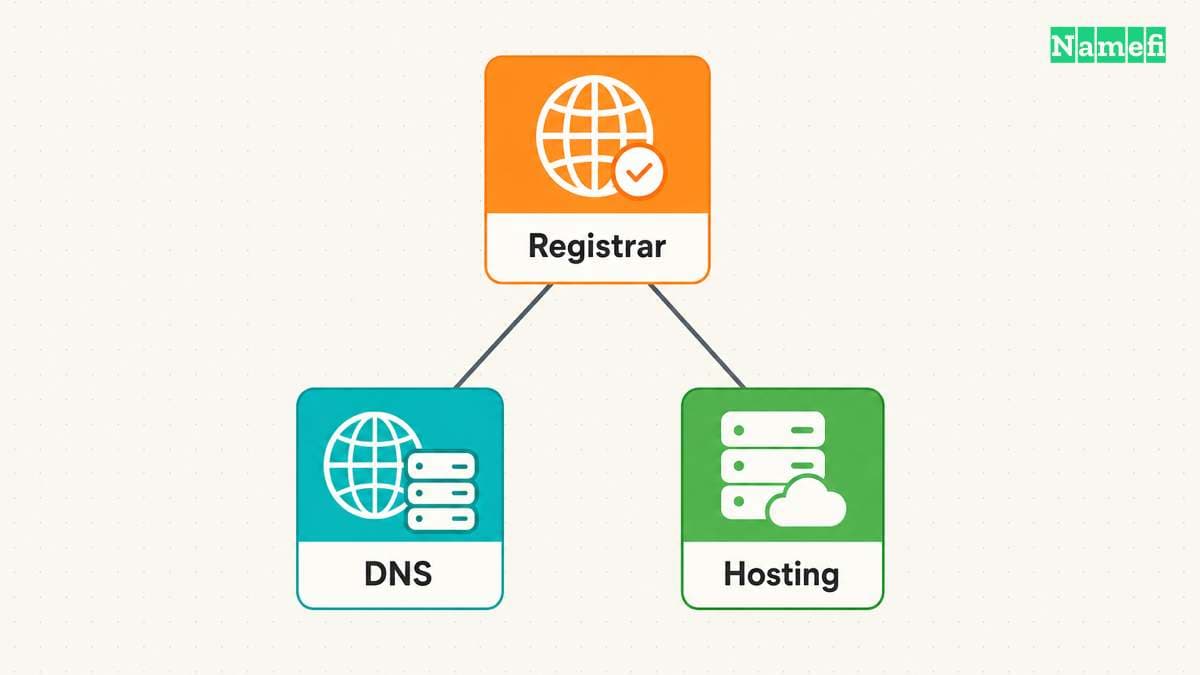
Registration and hosting do not need to perform the same job. Before accepting a bundle, check whether the project already has website hosting or email. ICANN explains that registration alone does not supply those services. The service distinction prevents unnecessary purchases.
For an existing domain, ask whether the current DNS service continues after a transfer. Plan a replacement before moving registration if the current provider ties DNS service to that registration. The domain and hosting guide explains the roles.
Account recovery matters more than a feature checklist
The following criteria are editorial recommendations for assessing operational fit. They do not represent performance tests of the shortlisted providers.
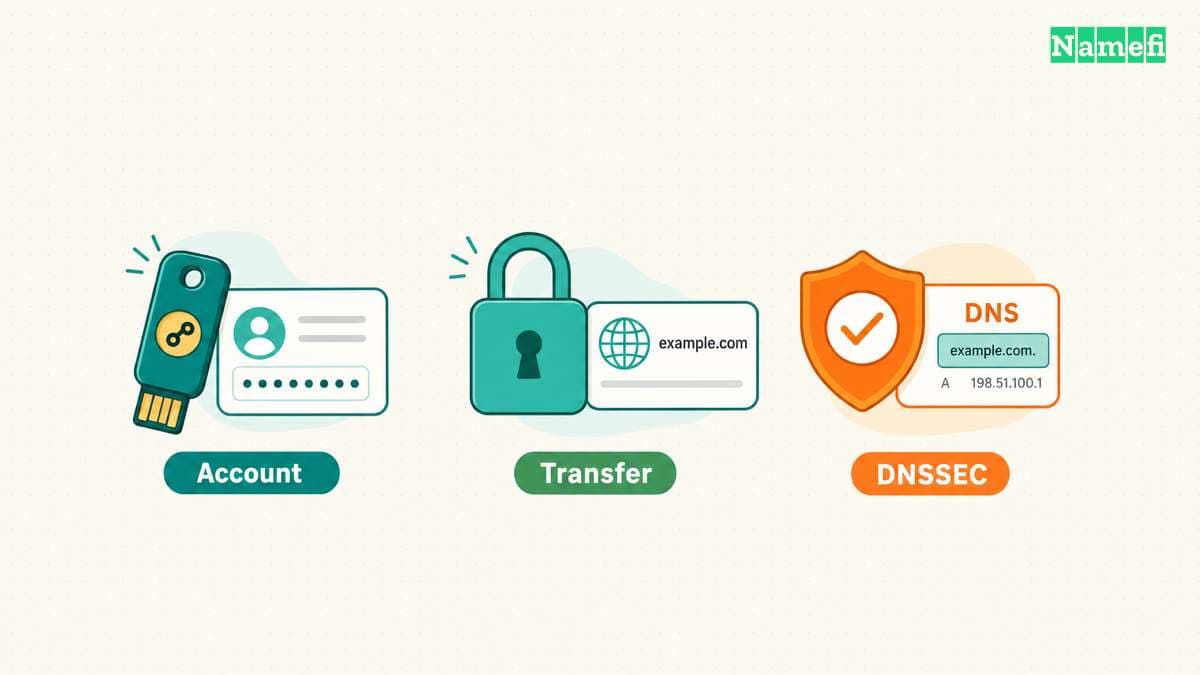
Check whether the account supports strong authentication and usable recovery. Identify who holds recovery information and who can change nameservers. A business should know how another authorized person can act if the primary administrator leaves.
Review delegated access instead of planning to share the owner password. Ask whether staff permissions match their responsibilities. For client work, decide whether the client should own the registration account from the start.
Read the support route before an emergency. Record the available contact methods and the hours that matter to your organization. A support channel that works for a hobby project may not meet a business's incident needs.
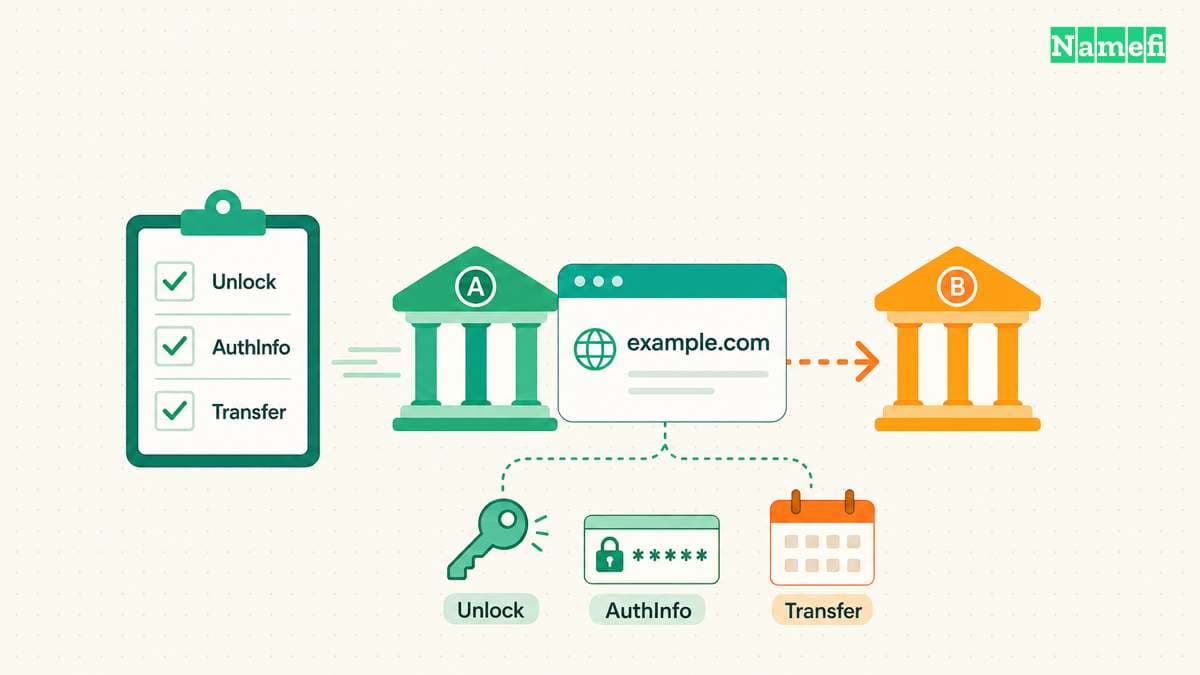
Test the documentation on a specific question: how do you unlock a domain, obtain an authorization code, and recover access? Clear instructions reduce uncertainty when the account needs urgent attention.
The exit process belongs in the buying decision
ICANN's registrar directory identifies accredited registrars for generic top-level domains. The directory confirms a role in the registration system. It does not rank service quality or establish a best choice for your budget. Use the directory for that limited check.
For covered transfers, ICANN documents authorization-code requirements and transfer restrictions. Country-code extensions can follow different registry rules. The registrant FAQ helps you ask the correct questions.
Before paying, check whether the registrar supports the exact extension, provides an export of your domains, and documents its transfer process. For a portfolio, verify bulk renewal and account administration against your actual workflow.
Choose the candidate that passes the required controls and has the acceptable recurring cost. Cloudflare's pricing model, Porkbun's price table, and Namecheap's price table make a useful shortlist. The final decision belongs to the exact quote and configuration, rather than a generic ranking. Save that comparison with the domain's renewal record.
Sources and further reading
Cloudflare describes its registrar pricing
Cloudflare describes its registrar pricing. Checked 2026-10-30.
Porkbun separates registration and renewal
Porkbun separates registration and renewal. Checked 2026-10-30.
Namecheap separates purchase and renewal quotes
Namecheap separates purchase and renewal quotes. Checked 2026-10-30.
Cloudflare requires its nameservers
Cloudflare requires its nameservers. Checked 2026-10-30.
ICANN distinguishes registration from hosting
ICANN distinguishes registration from hosting. Checked 2026-10-30.
ICANN lists accredited registrars
ICANN lists accredited registrars. Checked 2026-10-30.
ICANN explains transfer eligibility
ICANN explains transfer eligibility. Checked 2026-10-30.
About the author(s)
Fenwei Bian is a software developer in her thirties who spends her working hours in pull requests and her weekends with her hands in soil or sawdust. Years of open source on GitHub taught her that names are interfaces: a good one is clear, honest about what it does, and kind to whoever has to use it next.
She gardens because it rewards patience and punishes wishful thinking, and she does woodwork because a joint either fits or it doesn't. Both habits show up in how she writes about naming — measure twice, check the source, and don't sand over a rough spot and hope no one notices.
For Namefi she writes about how domain markets actually move, the practical trade-offs of tokenizing and flipping names, and picking a domain you'll still be glad you own in twenty years.