
区块链隐私技术详解:零知识证明、FHE、MPC、TEE 与环签名
一篇通俗易懂的指南,对零知识证明、FHE、MPC、TEE 和环签名这五大领先区块链隐私技术进行横向比较。
- guide
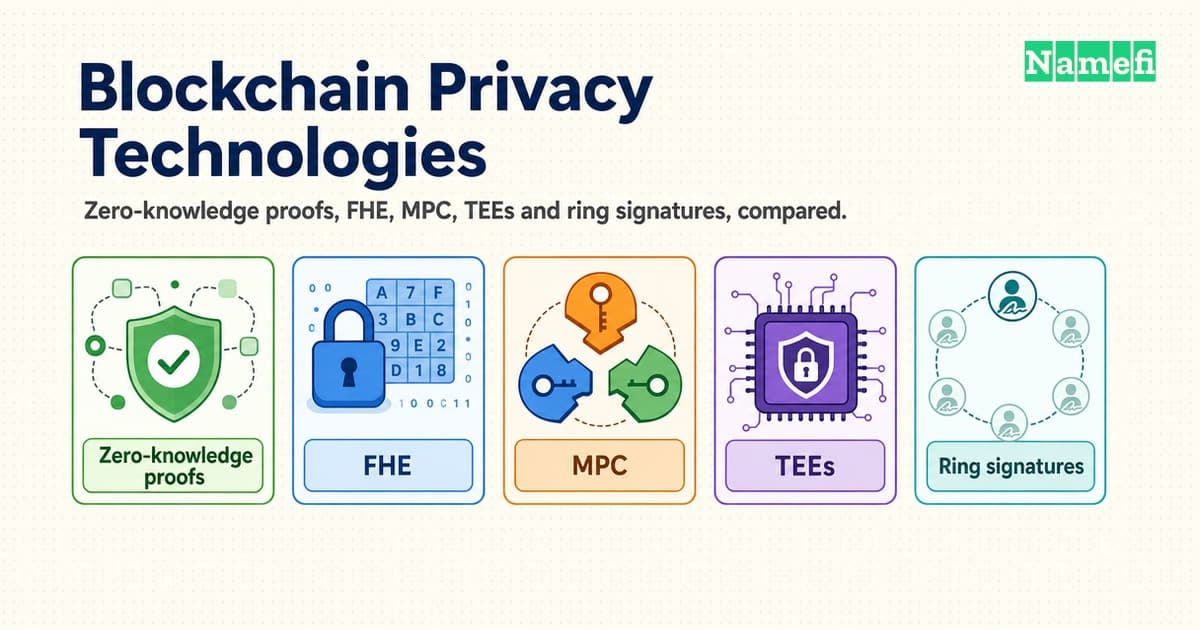
公有区块链上的每笔交易,默认对任何查看者都可见。余额、转账金额和交易对手方会永久留存在公开账本上。这种透明性是区块链信任保障的来源,但也是一种负担:没有银行会公开客户余额,也没有企业愿意让竞争对手读到其供应商付款或薪酬发放记录。
区块链隐私技术的存在,正是为了弥合这一缺口,同时不放弃区块链之所以有用的属性——可验证性、去中心化,以及陌生人无需可信中介即可交易的能力。当前格局由五种技术主导:零知识证明(ZKP)、全同态加密(FHE)、安全多方计算(MPC)、可信执行环境(TEE),以及环签名与隐身地址。它们各自隐藏拼图中的不同部分,依赖不同的信任假设,也消耗不同程度的算力。本文会逐一介绍这五种技术,进行横向比较,并说明为何这一选择对所有在Web3上构建应用或只是学习相关知识的人都很重要。
零知识证明
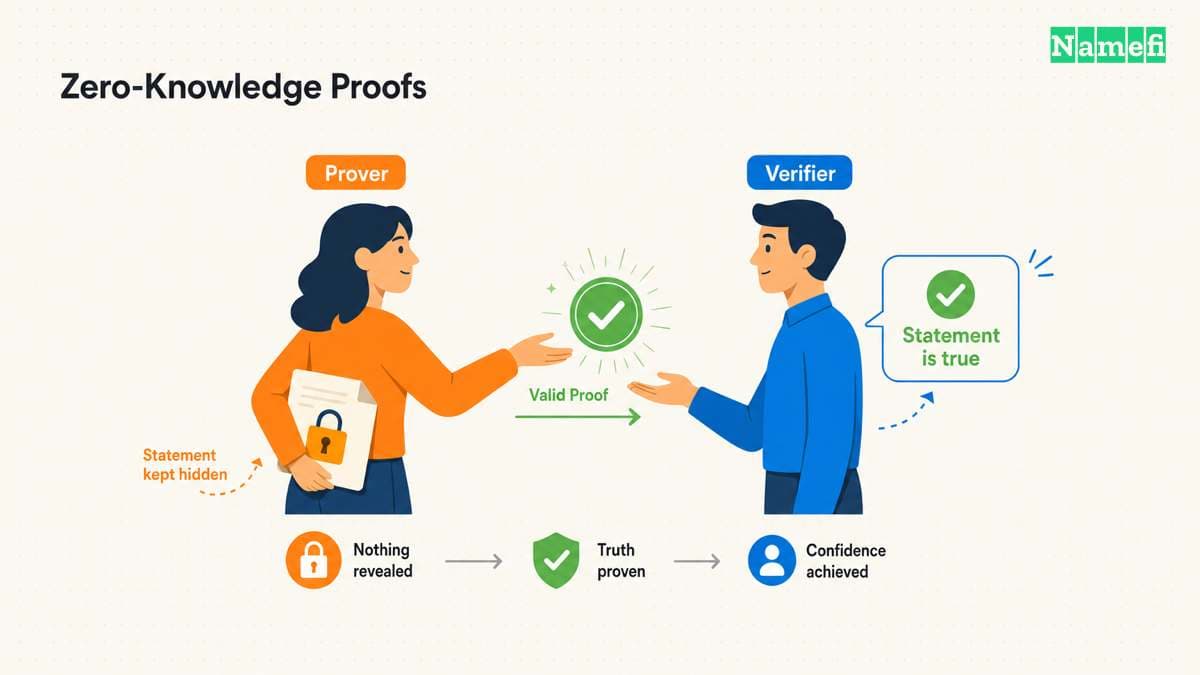
零知识证明(ZKP)让一方——证明者(prover)——能够说服另一方——验证者(verifier)——某个公开陈述为真,同时除了该陈述及其有效性已经蕴含的信息外,不泄露用于证明它的私有见证(witness)。以“我知道一个 x,满足 H(x) = y”为例,验证者通常会看到该陈述和公开值 y;零知识性保护的是 x。应用可以另行隐藏公开输入的某些部分,或通过密码学承诺将其绑定,但隐藏陈述本身并不属于 ZKP 的一般定义(Thaler,《Proofs, Arguments, and Zero-Knowledge》)。
要成为真正的零知识协议,证明系统必须满足三项性质:完备性(诚实验证者会接受真实陈述)、可靠性(除了证明系统设定的有界错误概率外,不诚实的证明者无法让诚实验证者接受虚假陈述),以及零知识性本身(除公开陈述已经蕴含的信息外,证明不会泄露有关私有见证的额外知识)。经典交互式协议通常使用承诺、验证者挑战和证明者响应。现代非交互式 SNARK 和 STARK 无需验证者实时发出挑战,就能封装必要的证明数据,同时保持相同的完备性、可靠性与零知识性目标。
**它隐藏什么:**私有见证,例如秘密数据或私有计算输入。公开陈述和公开输入仍然可见,除非应用另行通过承诺绑定或对其加密。
**如今如何使用:**ZK-rollup 是 ZKP 在区块链扩容中的最大规模生产应用。它们会“将交易捆绑(或‘汇总’)成批次,在链下执行”,再生成一份由 Ethereum 验证的有效性证明,之后才最终确认该批次的状态变更(ethereum.org)。由 Matter Labs 构建的 zkSync Era 是“与 EVM 兼容的 ZK Rollup……由其自身 zkEVM 驱动”(ethereum.org);而由 StarkWare 构建的 Starknet 是有效性 rollup,运行自己的 Cairo VM 而不是 EVM(Solidity 合约会另行桥接)。L2BEAT 将两者都列为由有效性证明保障的 rollup,而不是采用乐观 rollup 所使用的欺诈证明挑战窗口(l2beat.com)。在隐私领域,Zcash率先将 zk-SNARK(Zero-Knowledge Succinct Non-Interactive Arguments of Knowledge)用于屏蔽交易;在此类交易中,“用户的地址、交易金额”及其他细节保持加密,而网络仍可确认交易有效(z.cash)。
**取舍:**生成 ZK 证明的计算成本很高——证明电路必须遍历一批中的每笔交易并重新执行检查——因此证明时间和硬件成本都是实实在在的约束;尽管如此,链上验证既便宜又快速。安全性依赖证明系统的密码学假设、安全的参数生成,以及电路和协议的正确实现;对某些证明系统而言,还包括一次性的可信设置仪式。Ethereum 文档指出,设置过程中的熵一旦遭到泄露,攻击者就可能生成虚假证明,而实现错误也会破坏安全模型(ethereum.org)。
全同态加密(FHE)

全同态加密采用不同的方法:它不是证明隐藏数据的某个事实,而是让你能够直接在加密数据上计算,并获得一个加密结果;该结果解密后与在明文上计算得到的答案相同。领先的 FHE 研究和基础设施公司之一 Zama 如此描述:“FHE 支持在不解密的情况下处理数据——公司可在不接触用户数据的情况下提供服务,用户的使用体验则保持不变”(zama.org)。
**它隐藏什么:**计算的原始输入、中间状态和输出——除密钥持有人外,所有人只能看到密文,即使是执行计算的一方也是如此。
**基本工作原理:**FHE 方案会将明文值编码为基于格密码学的密文,然后定义加法和乘法的加密对应操作,使任意电路都能在密文上运行。应用于区块链时,这意味着智能合约可以转移代币或评估逻辑,却永远看不到涉及的金额——正如 Zama 自己的示例所说:“区块链验证了 Alice 拥有足够资金,却从未看到实际金额”(zama.org)。Zama 还指出,基于格的 FHE 方案“天然具备后量子韧性”,这对长期考量密码学风险的人尤其重要(zama.org)。
示例项目:Zama构建开源 FHE 库(TFHE-rs、Concrete)以及用于为 EVM 链添加机密智能合约执行能力的 fhEVM。Fhenix是一条专门构建的区块链,用于让“开发者能够使用全同态加密构建保护隐私的智能合约”,从而使“敏感数据在整个计算过程中始终保持加密”;它提供 JavaScript 库 Cofhejs 用于客户端加密,也提供 Solidity FHE 库用于链上加密操作(cofhe-docs.fhenix.zone)。
**取舍:**FHE 的独特保障在于,受支持的计算可以在不解密输入或中间值的情况下执行;但其具体安全性仍取决于方案和参数选择,因此 HomomorphicEncryption.org 发布了各方案的安全性表格和参数选择指南(HomomorphicEncryption.org)。与此同时,它也是本列表中相较明文执行计算开销最大的方案。因此,当今基于 FHE 的链只会将其用于保密性关键逻辑,而不是每一笔交易;FHE 硬件加速也仍是活跃的研究竞赛。
安全多方计算(MPC)

安全多方计算(MPC)解决的是一个相关但不同的问题:它不是让一方在加密数据上计算,而是让各自持有私有输入片段的多方共同计算一个函数,同时不向彼此披露各自的输入。按照正式定义,MPC 是“密码学的一个子领域,目标是创建让各方在保持输入私密的同时,能够共同计算其输入上的函数的方法”;因此,对于三名参与者而言,“Alice、Bob 和 Charlie 仍能得知 F(x, y, z),而无需披露谁贡献了什么”(Wikipedia)。
**它隐藏什么:**每一方的单独输入不向其他任何一方披露——只公开事先约定的输出,且没有单一参与者会看到完整秘密。
**信任假设:**MPC 不存在普适的腐化门限。在经典 BGW 的完全网络模型中,面对被动故障时,隐私性在 t < n/2 时成立;面对拜占庭故障时,鲁棒性在 t < n/3 时成立(ACM)。这些界限描述的是该协议模型,而不是所有 MPC:假设存在广播时,完美安全协议可以达到 t < n/2(TCC 2021);而基于计算安全性的 SPDZ 协议在其预处理模型中,即使多达 n - 1 方遭腐化,也能提供主动安全性(IACR)。这种不诚实多数保障属于“带中止的安全性”——腐化参与者仍可终止计算——而不是公平性或保证输出(PoPETs)。因此,具体部署必须说明所用协议、被动或主动腐化模型、同步性以及信道和设置假设(包括广播),并明确假设诚实多数还是不诚实多数。
**如今如何使用——门限签名托管:**MPC 最显眼的区块链应用,是将私钥拆分给独立多方,使没有任何单一设备或个人持有完整密钥。托管基础设施提供商 Fireblocks 的直接描述是:“多方计算(MPC)是一种密码学方法,它将私钥拆分为分配给多个独立方的不同份额”;关键在于,“完整密钥在任何时间点都不会在同一处被组装出来”(fireblocks.com)。当交易需要签名时,一组达到法定人数的端点会分别验证交易并贡献部分签名;“私钥在任何时候都不会被组装出来”,因此“即使一个端点被攻破……其他位置持有的密钥份额单独来看也毫无用处”(fireblocks.com)。这一门限签名模式如今支撑了大多数机构级加密资产托管和许多多签名钱包。
**取舍:**MPC 避免了单把私钥放在单台设备上造成的单点故障,但它增加了参与方之间的通信轮次(延迟),也要求审慎的协议设计。其保障只与所选协议的密码学、腐化和网络假设,以及各方的运营独立性一样强;MPC 可以消除单一密钥持有者,却无法消除系统设计中的信任。
可信执行环境(TEE)
可信执行环境采取了另一条路线:它不在整个计算过程中加密数据,而是将计算隔离在芯片中受硬件保护的区域——安全飞地(secure enclave)——内;即使是机器自身的操作系统也无法检查该区域。最广为人知的实现 Intel SGX(Software Guard Extensions),在 Wikipedia 上被描述为“内置于某些 Intel 中央处理器(CPU)中的一组实现可信执行环境的指令代码”(Wikipedia)。从机制上看,“SGX 涉及 CPU 对一部分内存(飞地)进行加密”,因此“源自飞地的数据和代码会在 CPU 内即时解密,防止它们被其他代码检查或读取”,其中包括“在操作系统和任何底层虚拟机监控程序等更高权限级别运行的代码”(Wikipedia)。
**它隐藏什么:**飞地内的数据和代码不被同一台机器上的任何其他进程看到,包括已被攻破的操作系统——当你需要信任某段特定代码的执行、却不想信任服务器运营者时,这很有用。
**信任假设:**这里的区别并不是 ZKP、FHE 和 MPC 依赖“纯数学”,而 TEE 只依赖供应商信任。已部署的密码系统同样依赖其声明的困难性假设、参数或设置、正确实现;对 MPC 而言,还依赖协议的参与者与通信模型。TEE 在这一系统信任模型上增加了硬件支持的隔离和远程证明。Intel 将 SGX 的可信计算基定义为实现 SGX 安全目标所需的硬件、CPU 固件和平台软件;远程证明让依赖方能够评估飞地身份和平台补丁级别(Intel)。这一信任边界已被反复检验:SGX“无法防御侧信道攻击”,研究人员也多次展示实际攻击,从“在五分钟内从同一系统中运行的 SGX 飞地提取 RSA 密钥”(2017 年),到结合推测执行与缓冲区溢出以绕过 SGX 的 Foreshadow 攻击(2018 年),以及之后的 Plundervolt、LVI、SGAxe 和 ÆPIC Leak 等漏洞(Wikipedia)。正因如此,TEE 通常被描述为务实、速度更快的折中方案,而不是密码学上无懈可击的保障。
示例项目:Oasis Protocol 的 Sapphire 网络在硬件飞地内运行智能合约,用户可以“在受硬件保护的飞地内运行代码”,其中“数据即使对服务器运营者也保持加密”;同时,“每次执行都会产生用户无需盲目信任即可验证的密码学证明”——由此提供了保持“EVM 兼容性和可组合性”的“机密智能合约”(oasis.net)。Secret Network 和若干与再质押相邻的隐私产品也建立在 TEE 之上,且常与其他技术结合,以实现纵深防御。
**取舍:**TEE 的运行速度接近原生速度——远快于 FHE 或高成本 ZK 证明——这使它们对延迟敏感的应用很有吸引力;但这种速度伴随着范围更广的软硬件可信计算基,而它存在真实且有记录的侧信道攻破历史。因此,比较的是不同的系统假设,而不是硬件信任与一种不依赖任何假设的“纯密码学”之间的高下。
环签名与隐身地址
最后一对技术保护的是一个范围更窄、但非常实用的目标:即使交易本身在链上可见,也要隐藏谁发送了交易,以及谁接收了交易。Monero是这两种技术最重要的生产应用实例。
环签名用于隐藏发送者。Monero 自己的文档解释说:“环签名是一种数字签名,可由一组各自拥有密钥的用户中的任何成员执行”;其中,“要在计算上确定该组成员中究竟是哪一把密钥用于生成签名,应当是不可行的”(getmonero.org)。在实践中,一笔 Monero 交易会将真实支付者的密钥与“使用伽马分布方法从区块链中抽取”的诱饵公钥混合;这样一来,在“可能签名者组成的‘环’中,所有环成员都同等且有效”,且“外部观察者无法判断签名组中哪一位可能的签名者属于你的账户”(getmonero.org)。
隐身地址用于隐藏接收者。发送者不会重复使用一个公钥地址,而是“代表接收者为每笔交易创建随机的一次性地址”;因此,收款“会发送到区块链上的唯一地址,无法再与接收者公开的地址或任何其他交易地址关联”(getmonero.org)。接收者使用私有查看密钥扫描链上的付款,并使用私有花费密钥转移资金,因此“只有发送者和接收者能确定一笔付款被发送到了哪里”(getmonero.org)。
**它隐藏什么:**发送者身份(环签名)和接收者身份(隐身地址);交易金额由另一种机制——机密交易(Confidential Transactions / RingCT)——隐藏,并非只靠这两种技术就能实现。
**取舍:**两种技术都能在普通硬件上高效运行,无须证明开销或飞地依赖,因此很适合实时支付网络。但其信任模型依赖于诱饵集合在统计上与真实签名者不可区分——历史上,薄弱的诱饵选择或区块链分析启发式方法曾缩小早期环签名部署的匿名集。因此,参数选择(环大小、诱饵分布)与底层原语本身同样重要。
五种方法的比较
| 技术 | 它隐藏什么 | 信任假设 | 性能成本 | 当前成熟度 | 示例项目 |
|---|---|---|---|---|---|
| 零知识证明 | 私有见证或数据;除非另行隐藏,否则公开陈述仍然可见 | 证明系统假设、参数或设置,以及正确实现 | 生成证明成本高;验证成本低 | 已大规模投入生产(rollup、屏蔽支付) | zkSync、Starknet、Zcash |
| 全同态加密 | 受支持计算过程中的数据,连计算提供方也看不到 | 密码学假设、方案与参数选择 | 极高的计算开销 | 早期生产阶段;硬件加速研究活跃 | Zama、Fhenix |
| 安全多方计算 | 每一方的单独输入 | 特定协议的腐化、网络和设置假设,以及多数假设 | 中等;增加通信轮次 | 成熟,且广泛用于托管 | Fireblocks 和其他门限签名托管方 |
| 可信执行环境 | 来自其他所有进程(包括操作系统)的数据/代码 | 经远程证明的飞地代码,以及涵盖软硬件、固件和补丁级别的可信计算基 | 接近原生速度 | 已投入生产,但有记录在案的侧信道攻击历史 | Intel SGX、Oasis Sapphire |
| 环签名与隐身地址 | 发送者身份和接收者身份 | 诱饵集合在统计上不可区分 | 低;可在普通硬件上高效运行 | 成熟,已在线运行逾十年 | Monero |
没有一种技术能在所有维度上胜出——这正是当前研究日益将它们结合使用的原因,例如用 ZK 证明验证 MPC 计算的正确性,或将 TEE 与 FHE 并用以实现纵深防御。
这与代币化域名有何关联
经代币化的域名与任何其他链上资产一样,继承了默认透明的特性:所有权转移、出价和元数据更新都可被公开读取。这在很大程度上是优势——来源和所有权历史正是让代币化域名成为可信、可交易资产的原因——但这也意味着,任何观察链上活动的人都能看到一个域名投资组合的持仓和出售价格。
本指南所述的隐私技术指明了域名 NFT 基础设施下一步可能的发展方向:基于 MPC 的门限托管已像保护其他数字资产一样,保护着持有域名 NFT 的机构钱包;ZK 证明最终或许能让出价者证明自己付得起报价,却无需披露全部余额;而机密计算技术则可能让注册商或市场在不暴露买方完整身份的情况下验证资格规则。这些能力今天尚未部署在域名代币化领域,但其底层原语正是当下保护数十亿美元 DeFi 和托管基础设施的同一类技术。
参考来源与延伸阅读
- 零知识证明 — ethereum.org
- 证明、论证与零知识 — Justin Thaler
- ZK-Rollups — ethereum.org
- L2BEAT 扩容摘要
- Zcash 技术概览
- 同态加密简介 — Zama
- 安全指南 — HomomorphicEncryption.org
- Fhenix cofhe 文档
- 安全多方计算 — Wikipedia
- 非密码学容错分布式计算的完备性定理 — ACM
- 高效的完美安全计算 — TCC 2021
- 基于部分同态加密的多方计算(SPDZ)— IACR
- 通过公平性扩展 SPDZ 的安全性 — PoPETs
- 什么是 MPC?— Fireblocks
- 软件防护扩展(SGX)— Wikipedia
- Intel SGX 远程证明技术详情
- Oasis Protocol 技术
- 环签名 — Monero Moneropedia
- 隐身地址 — Monero Moneropedia
贡献者

Aileen Wright 是一名二十多岁的学生,现居纽约。在这里,从博物馆的展墙走到图书馆阅览室 不过几步之遥,却足以度过一个漫长的下午。她通过艺术和历史走进了有关名字的写作领域: 一幅肖像、一枚硬币或手稿页边的一行字,都能让一个名字跨越数个世纪,并在流传中改变含义。
大多数时候,你会看到她拿着一本平装书待在中央公园,或是在安静的公共阅览室里追查一个名字 的真正出处,而不是照搬名字清单声称的含义。她还在自学编程,这让她对拼写、排序,以及决定 一个名字能否经得住时间考验的细微之处格外严谨。
她为 Namefi 撰写域名背后的历史与文化、品牌更名时所承载的故事,以及好故事与可靠来源之间 的区别等相关文章。

Victor Zhou 是一位专注于数字身份与信任的科技创业者和标准编辑。他创办了 Namefi,编辑 以太坊改进提案,此前还曾在 Google Labs 负责智能合约架构工作。
他的工作位于命名、所有权,以及人们用来建立网络身份的系统三者交汇之处。这一视角让他尤其 关注名字如何在个人意义、公众认知和数字基础设施之间流转。
在 Namefi,Victor 把域名视为持久的数字身份,并围绕这一主题编辑和撰写内容:名字如何成为 可拥有的链上资产,代币化如何改变托管与信任,以及命名可以从人们建立网络身份所使用的系统 中学到什么。

卞芬薇是一名三十多岁的软件开发者,工作时间泡在 pull request 里,周末双手不是沾着 泥土,就是沾着木屑。多年参与 GitHub 开源项目的经历让她明白,名字就是接口:好名字清晰, 如实说明自己的作用,也为下一位使用它的人着想。
她喜欢园艺,因为它奖赏耐心,也会惩罚一厢情愿;她也做木工,因为接合处要么严丝合缝, 要么就是不合。这两种习惯同样体现在她关于命名的写作中:量两遍,核实来源,别把粗糙处 磨平后就指望没人注意到。
她为 Namefi 撰写域名市场实际如何运转、域名代币化与转手交易的现实取舍,以及如何选择一个 二十年后仍会庆幸自己拥有的域名。
相关指南
- Top Fully Homomorphic Encryption Schemes: BFV, BGV, CKKS and TFHEA practical comparison of BFV, BGV, CKKS, and TFHE by data type, bootstrapping cost, workload fit, maturity, and available libraries.
- Top Rollup Types: Optimistic, ZK, Validium and Volition ComparedCompare optimistic rollups, ZK rollups, validiums, and volitions by data availability, security inheritance, withdrawal delay, cost, and networks.
- Top Zero-Knowledge Proof Systems: Groth16, PLONK, STARKs, Halo2 and NovaA practical comparison of Groth16, PLONK, STARKs, Halo2, and Nova across proof size, proving speed, setup, verification, and EVM fit.
- Domain vs Hosting: What You Need to Put a Website OnlineUnderstand the difference between a domain name and web hosting, what each provides, and how to connect them when using different providers.