Web3 & Crypto Foundations
Adjacent building blocks — stablecoins, tokenized assets, zero-knowledge, and the payment rails behind on-chain commerce.
- Stablecoins
- Tokenized assets
- Zero-knowledge
- Payment rails
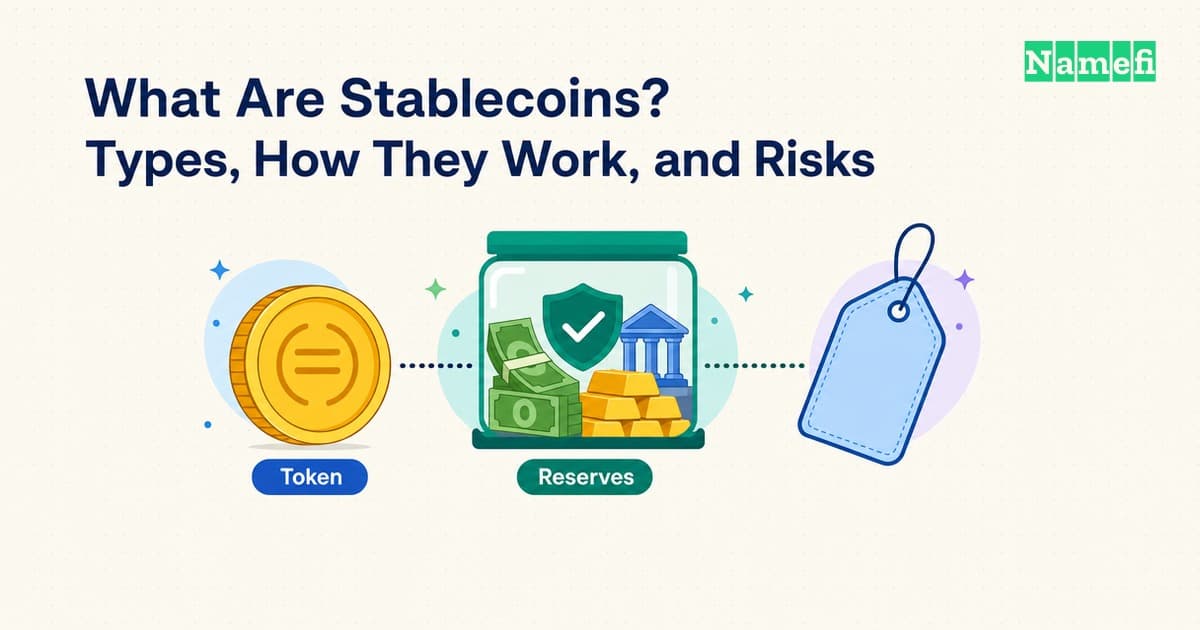
ステーブルコインとは?Web3経済における安定の基盤
ステーブルコインが従来の法定通貨と暗号資産の橋渡しをする仕組みを解説。Web3取引やドメイン投資に安定性をもたらす仕組みとは。
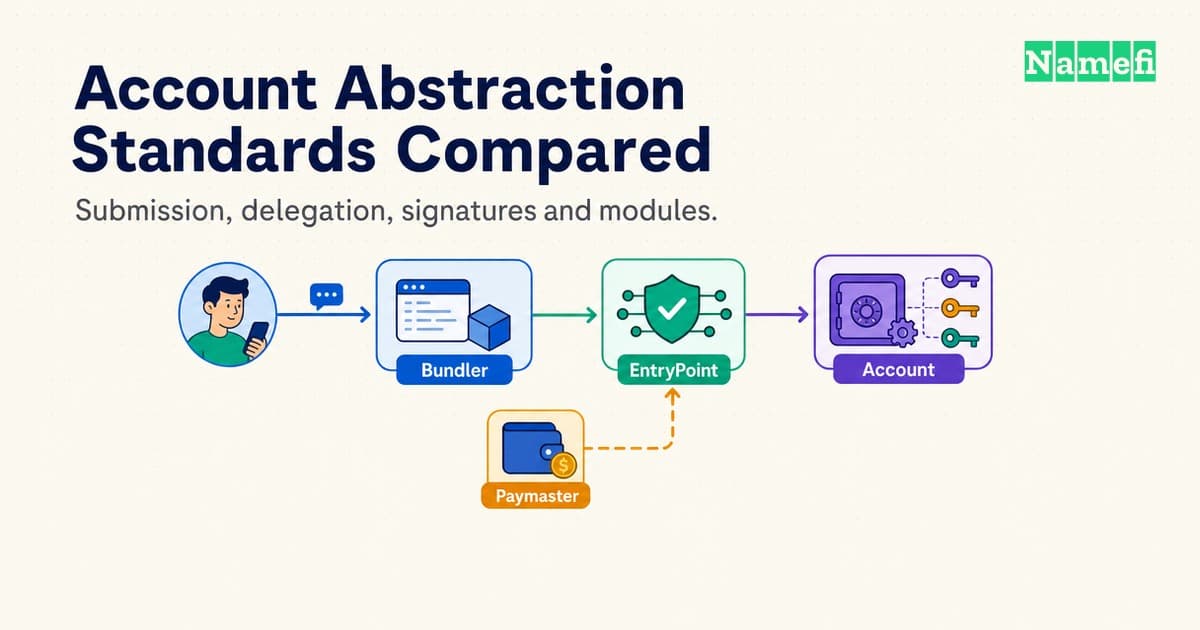
Top Account-Abstraction Standards: ERC-4337, EIP-7702, ERC-1271 and ERC-7579
Compare four account-abstraction standards by transaction flow, delegation, signature policy, module privileges, and integration risks.
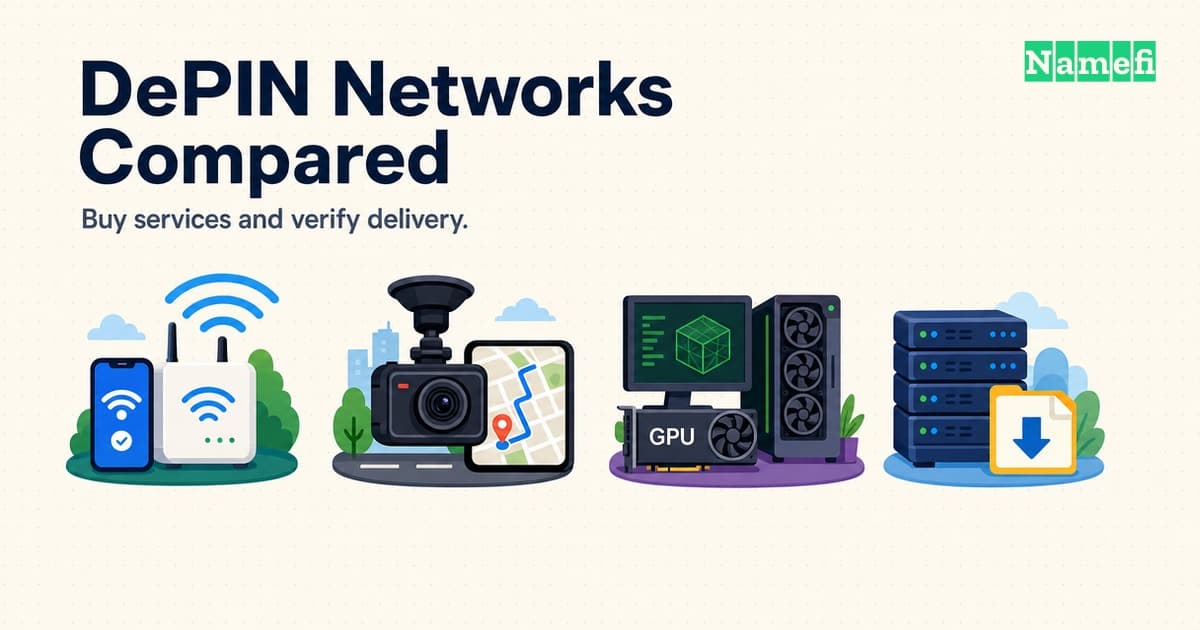
Top DePIN Networks Deliver Different Services: Helium, Hivemapper, Render and Filecoin
Compare Helium, Hivemapper, Render and Filecoin by service delivery, work verification, customer payments, provider rewards and buyer acceptance tests.
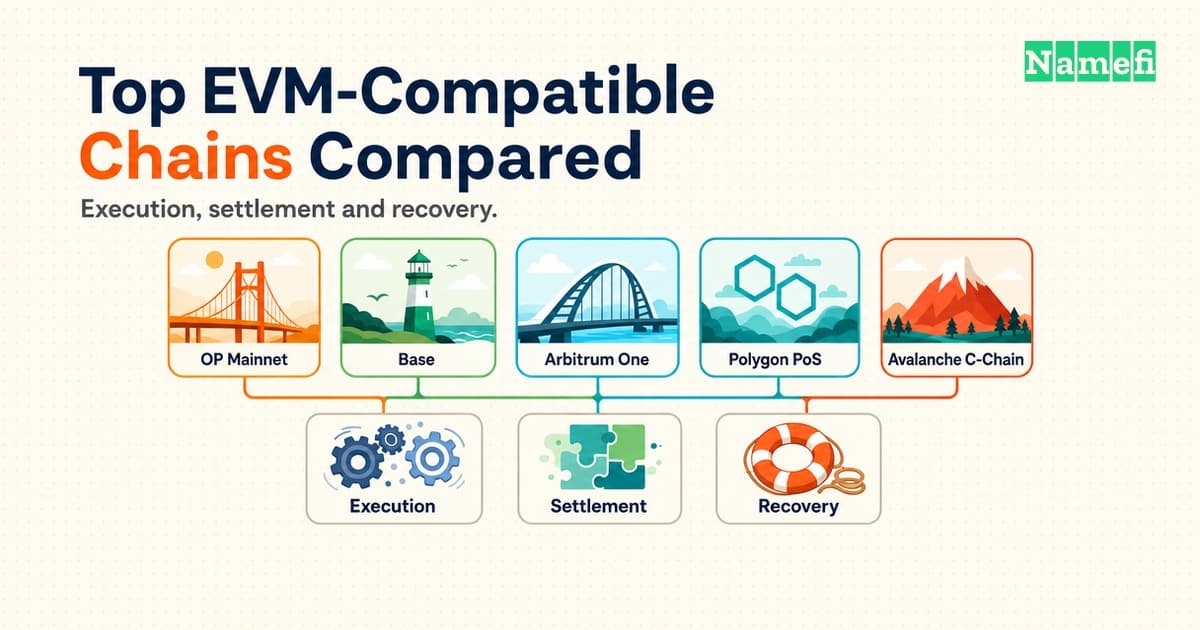
Top EVM-Compatible Chains: OP Mainnet, Base, Arbitrum One, Polygon PoS and Avalanche C-Chain
Compare OP Mainnet, Base, Arbitrum One, Polygon PoS, and Avalanche C-Chain by portability, proofs, validator trust, and recovery requirements.
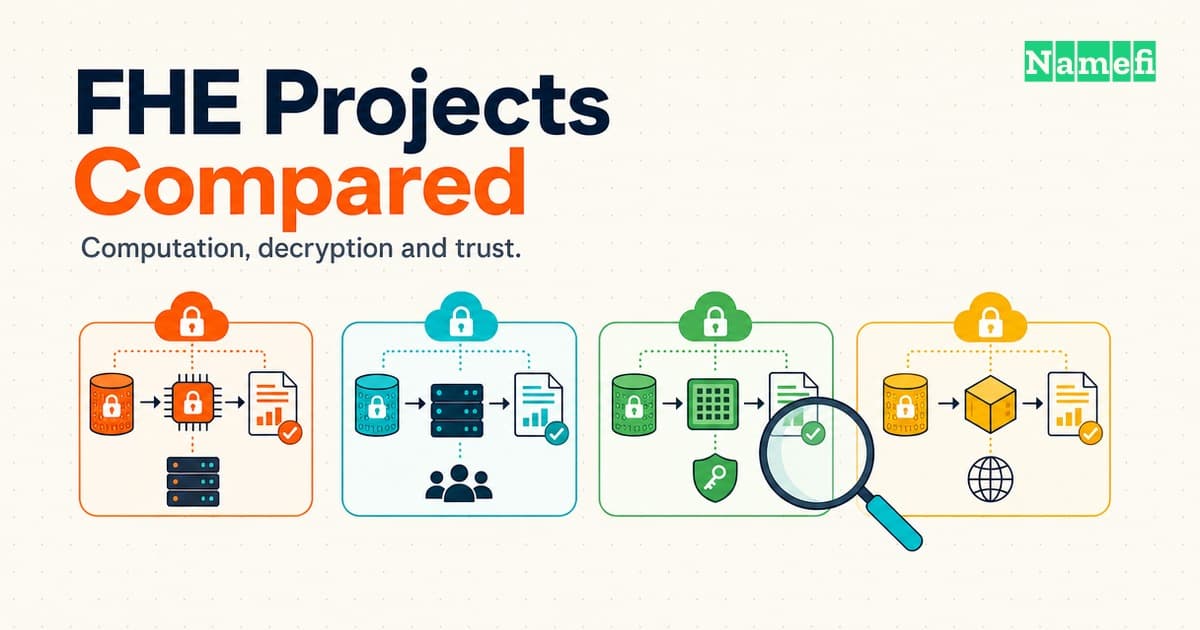
Top FHE Projects: Zama, Fhenix, Inco, and Sunscreen Compared
Compare Zama, Fhenix, Inco, and Sunscreen by encrypted execution, integration, decryption trust, and documented deployment status.
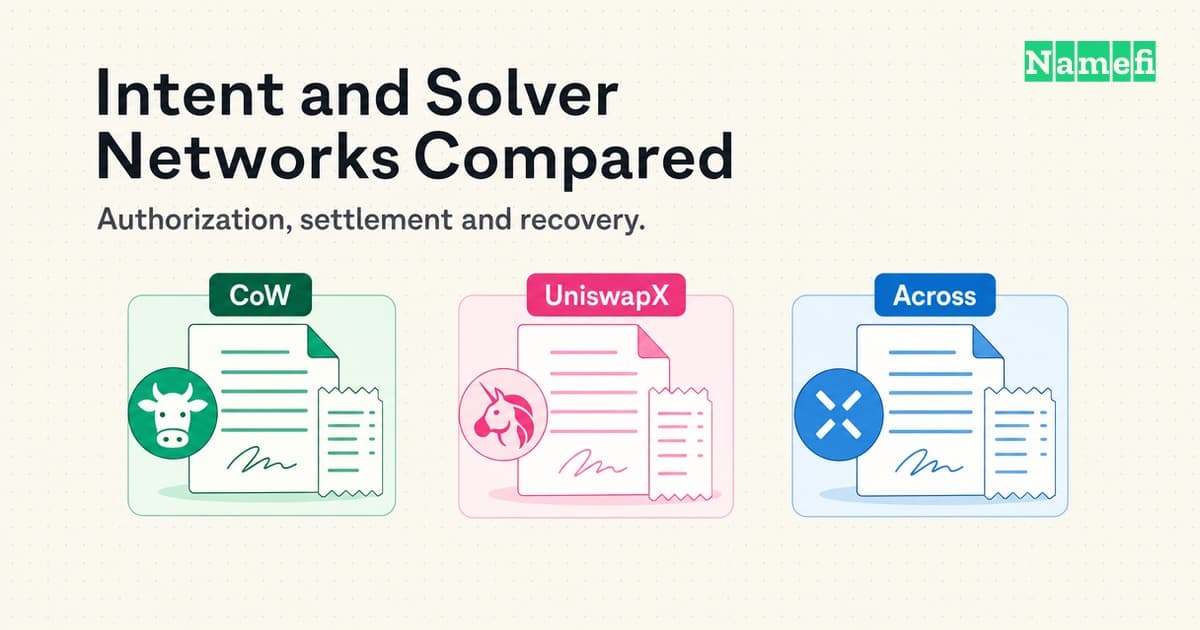
Top Intent and Solver Networks Use Different Settlement Rules
Compare CoW Protocol, UniswapX and Across through signed orders, solver competition, settlement checks and practical recovery steps.
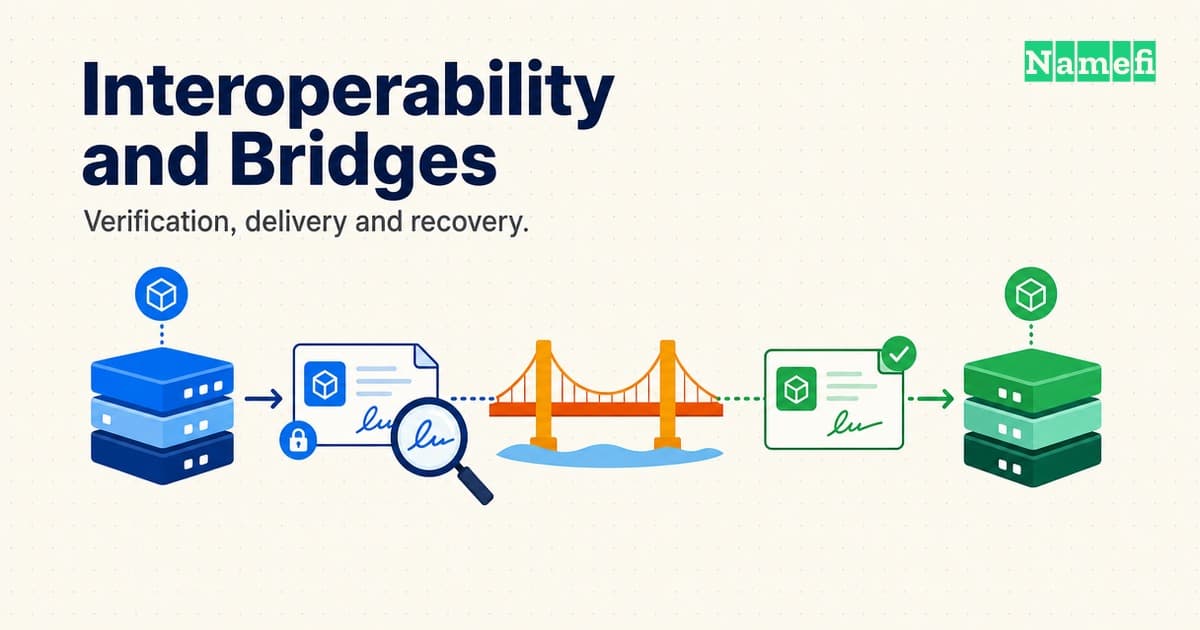
Top Interoperability Protocols Connect Chains Through Different Verification Models
Compare IBC, Chainlink CCIP, LayerZero and Wormhole by verification, token handling, configuration risk and recovery after failed delivery.
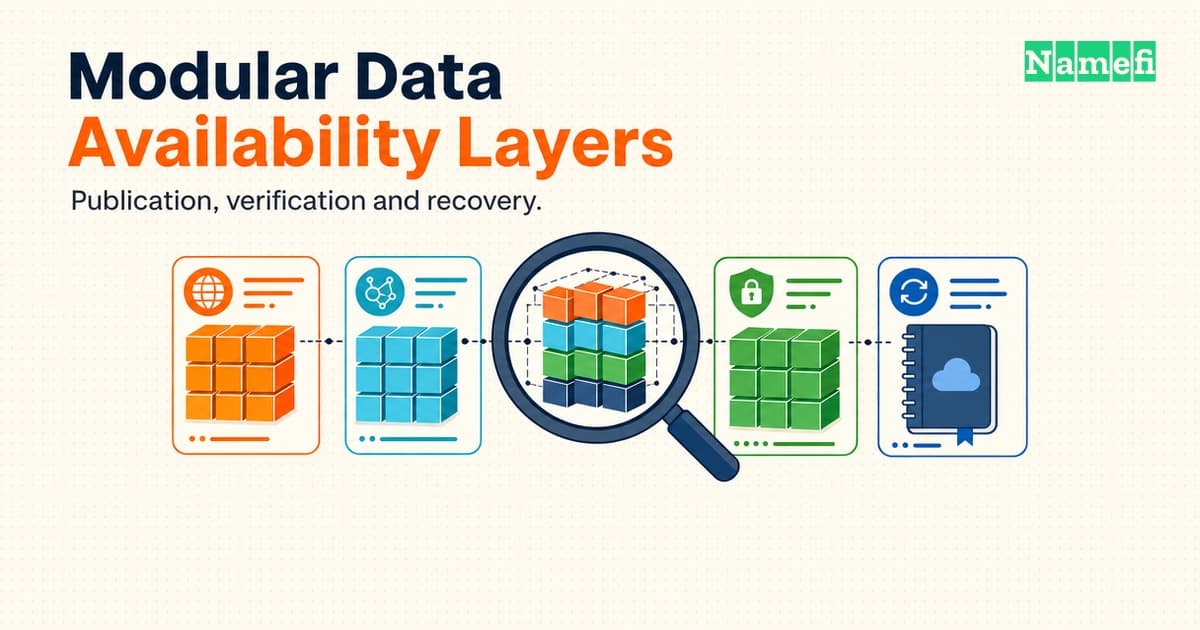
Top Modular Data Availability Layers: Celestia, EigenDA, Avail and NEAR DA
Compare Celestia, EigenDA, Avail and NEAR DA by verification path, operating assumptions, pricing structure and recovery requirements.
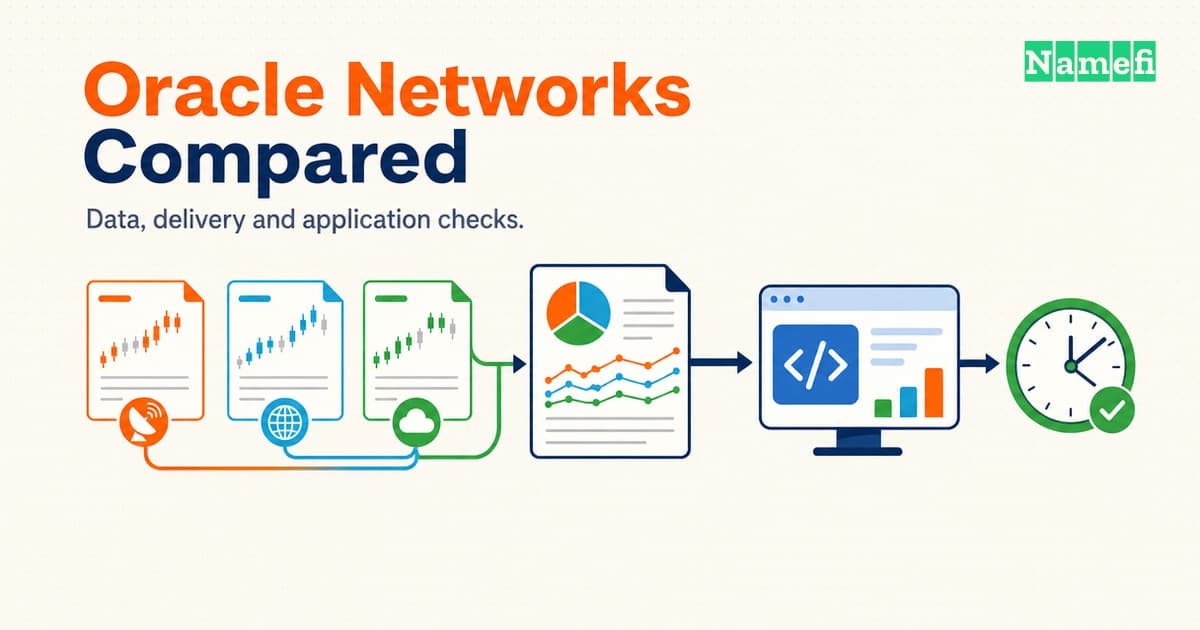
Top Oracle Networks Solve Different Data Problems: Chainlink, Pyth, RedStone and UMA
Compare Chainlink, Pyth, RedStone and UMA by data origin, delivery, freshness, confidence, disputes and application trust assumptions.

Top Restaking and Shared-Security Approaches Define Different Guarantees
Compare EigenLayer, Symbiotic, and legacy Karak designs through collateral, allocation, slashing authority, withdrawal timing, and recovery.
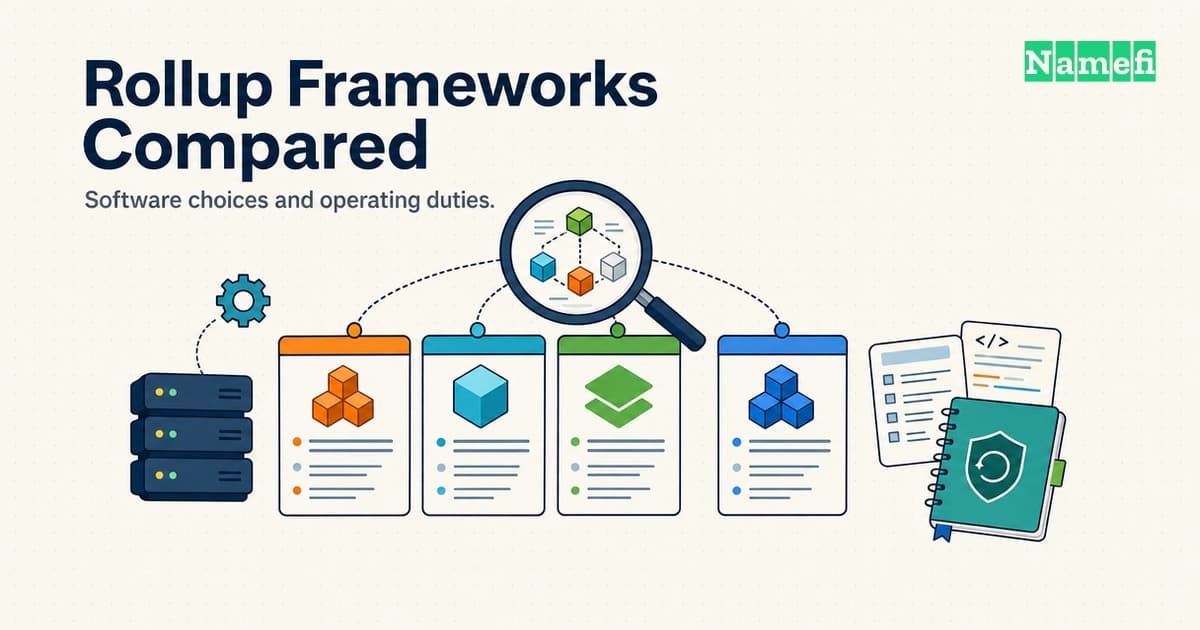
Top Rollup Frameworks: Compare OP Stack, Arbitrum Orbit, ZK Stack and Polygon CDK
Compare OP Stack, Arbitrum Orbit, ZK Stack, and Polygon CDK by deployment choices, data availability, proof systems, and operations.
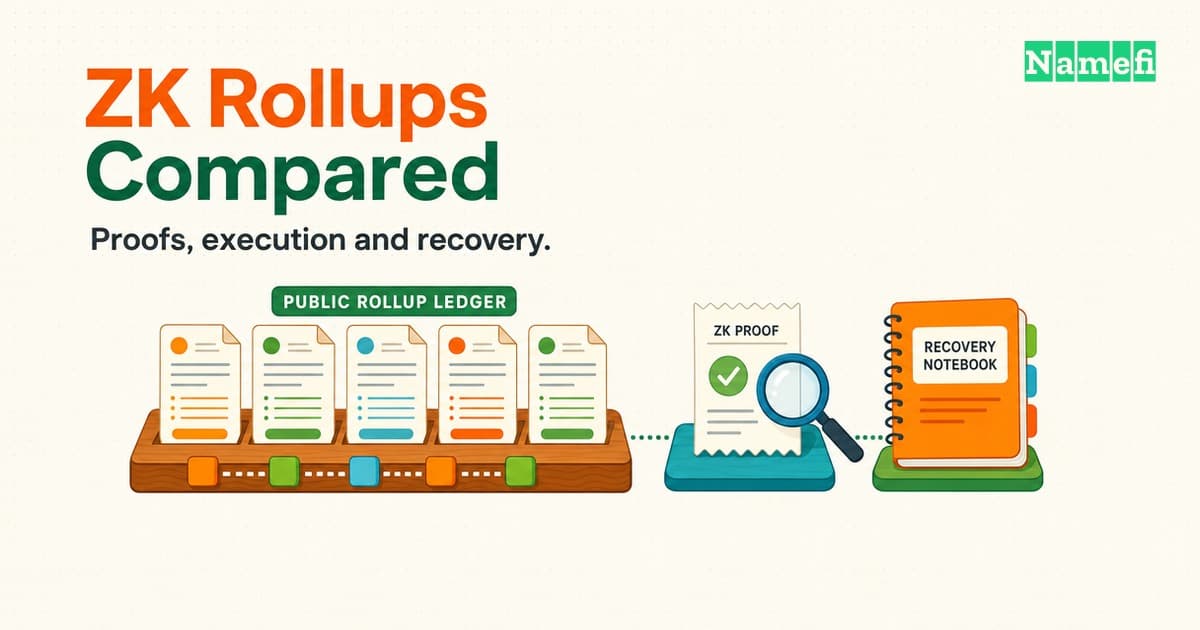
Top ZK Rollups Require Different Development and Recovery Choices
Compare ZKsync, Starknet, Scroll, and Linea by compatibility and recovery, and understand Polygon zkEVM's completed sunset.
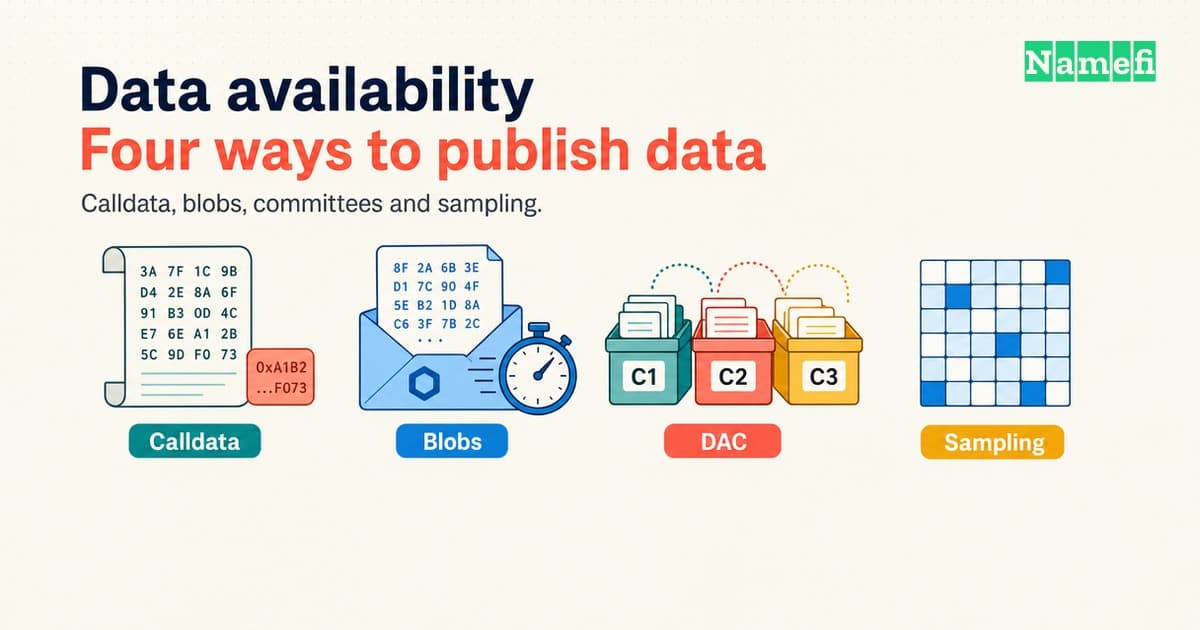
Top Blockchain Data-Availability Approaches: Calldata, Blobs, Committees and Sampling
Compare Ethereum calldata and blobs, data-availability committees, and sampling-based networks by recovery guarantee, cost, and trust assumptions.
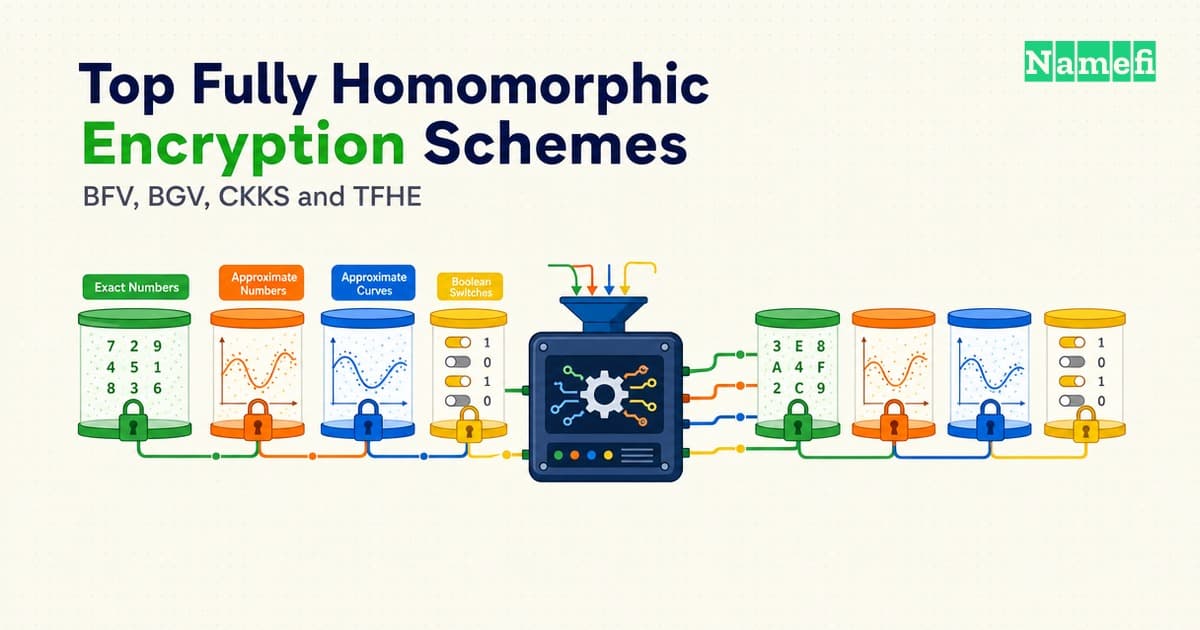
Top Fully Homomorphic Encryption Schemes: BFV, BGV, CKKS and TFHE
A practical comparison of BFV, BGV, CKKS, and TFHE by data type, bootstrapping cost, workload fit, maturity, and available libraries.
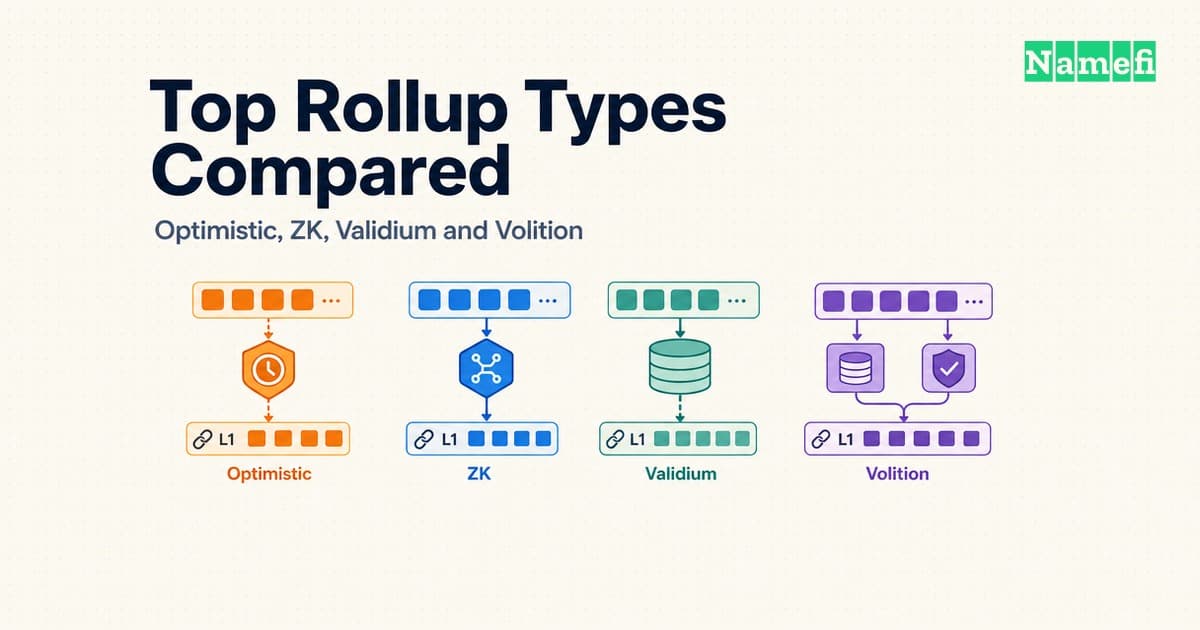
Top Rollup Types: Optimistic, ZK, Validium and Volition Compared
Compare optimistic rollups, ZK rollups, validiums, and volitions by data availability, security inheritance, withdrawal delay, cost, and networks.
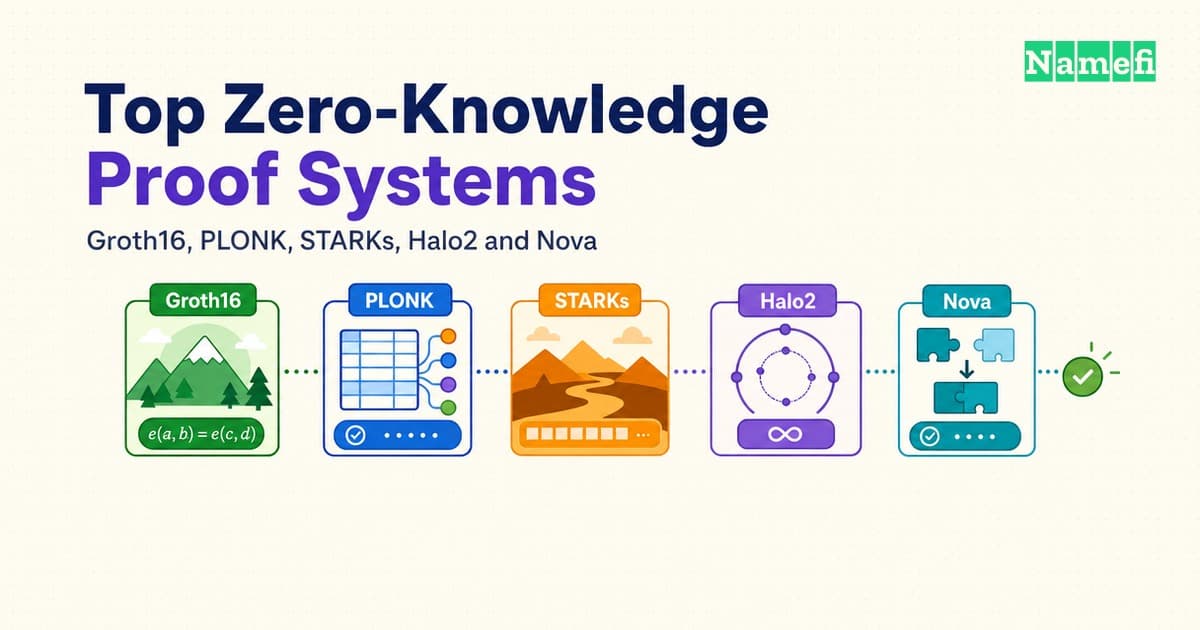
Top Zero-Knowledge Proof Systems: Groth16, PLONK, STARKs, Halo2 and Nova
A practical comparison of Groth16, PLONK, STARKs, Halo2, and Nova across proof size, proving speed, setup, verification, and EVM fit.
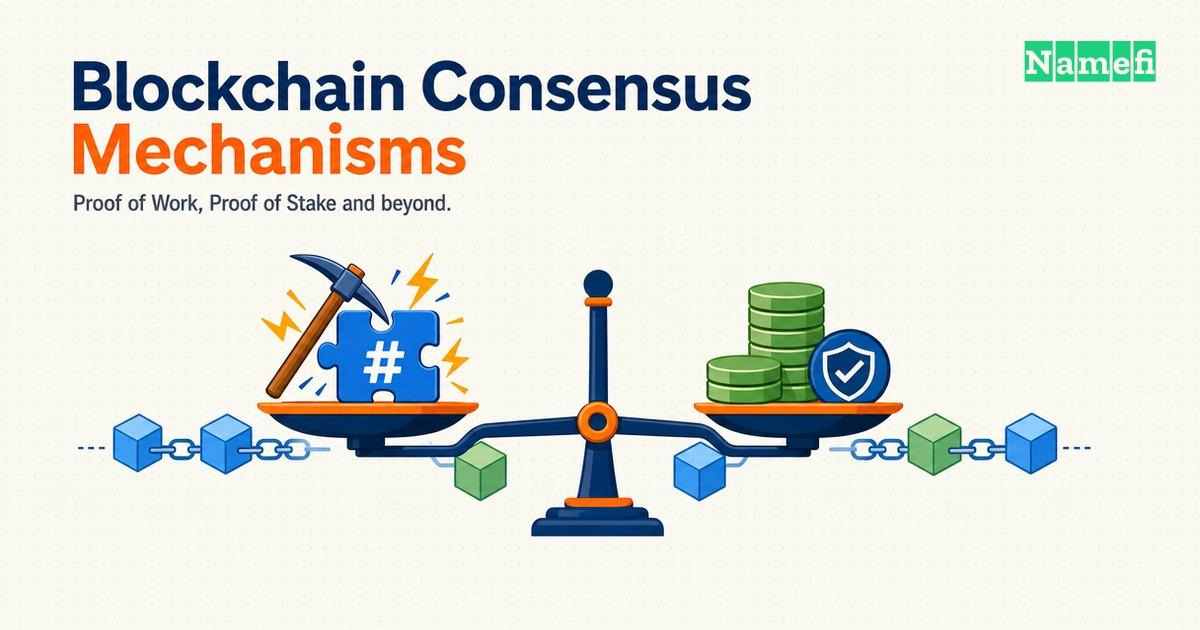
主要なブロックチェーンのコンセンサスメカニズム:PoW、PoS、その先へ
プルーフ・オブ・ワーク、プルーフ・オブ・ステーク、DPoS、BFTなど、主要なブロックチェーンのコンセンサスメカニズムと、それぞれがネットワークを守る仕組みを分かりやすく解説します。
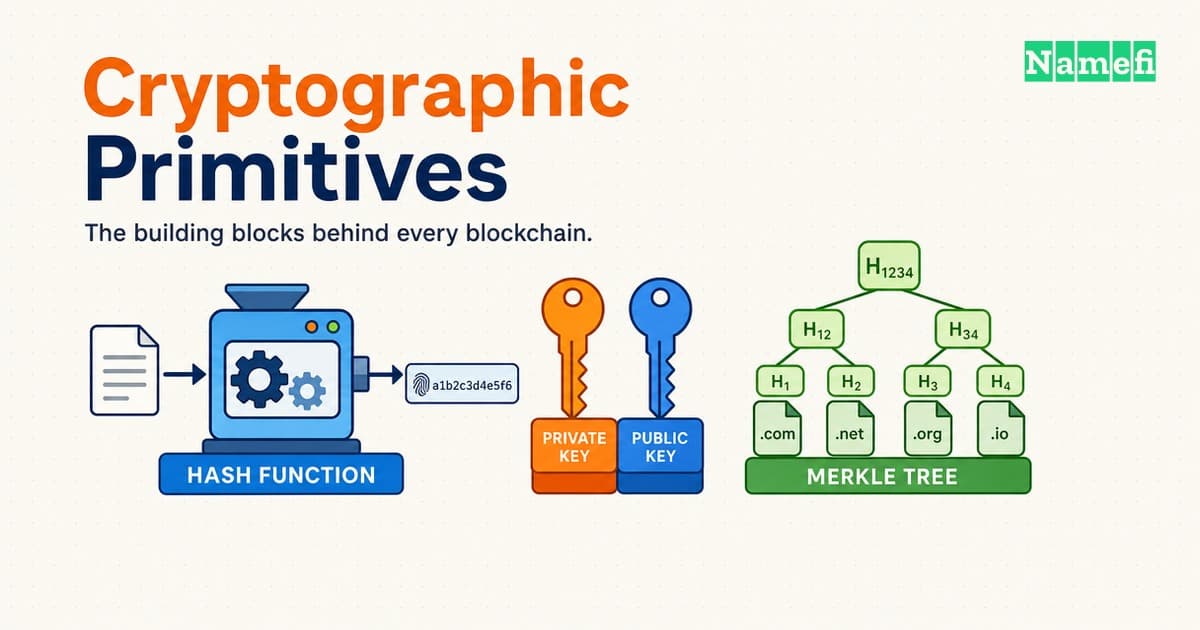
すべてのブロックチェーンを支える主要な暗号プリミティブ
ハッシュ関数、デジタル署名、マークルツリー、楕円曲線暗号、コミットメント方式など、ブロックチェーンを動かす中核的な暗号プリミティブを解説します。
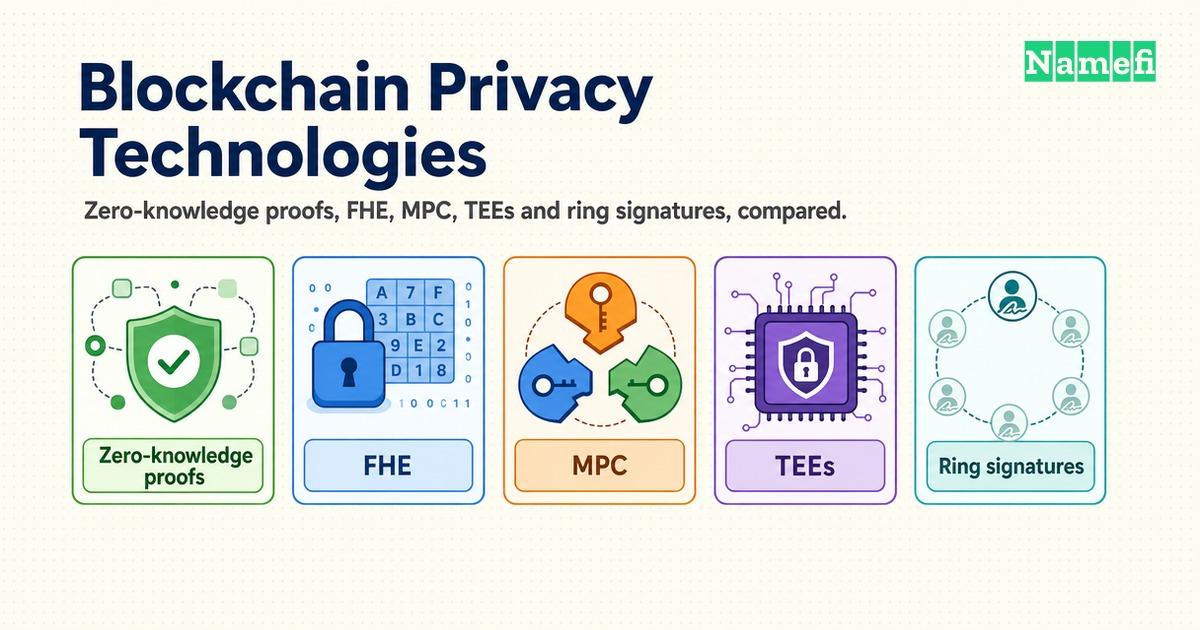
ブロックチェーンの主要プライバシー技術:ゼロ知識証明、FHE、MPC、TEE、リング署名
ゼロ知識証明、FHE、MPC、TEE、リング署名という、ブロックチェーンを代表する5つのプライバシー技術を横並びで比較する平易なガイドです。
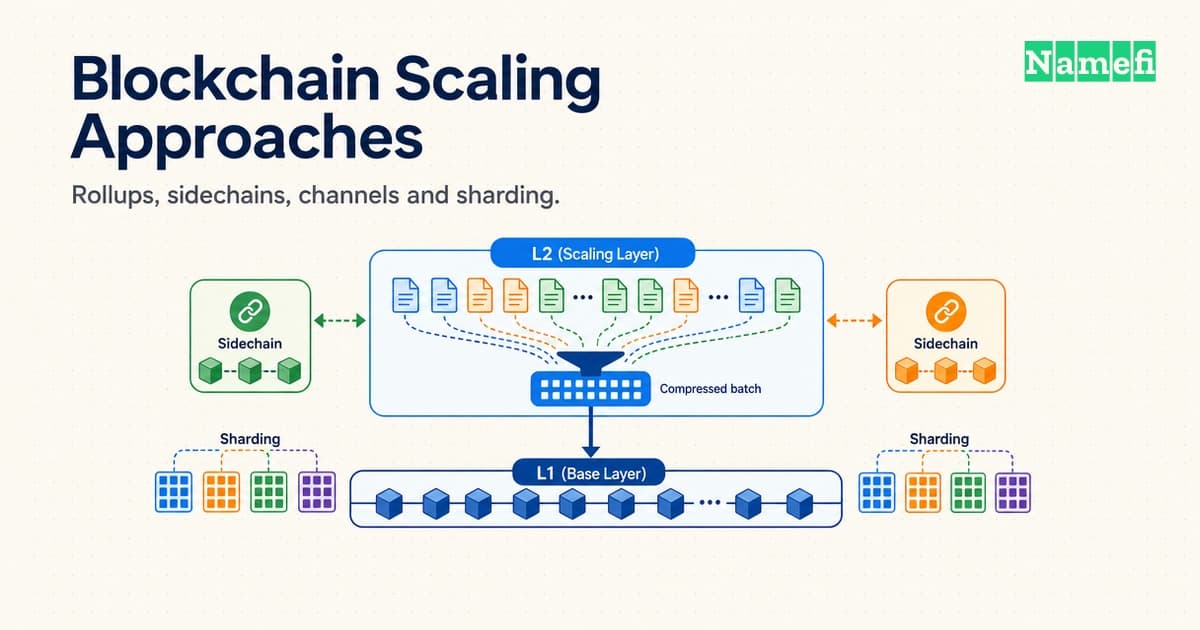
主要なブロックチェーンスケーリング手法:ロールアップ、サイドチェーン、チャネル、シャーディング
オプティミスティックロールアップ、ZKロールアップ、サイドチェーン、ペイメントチャネル、シャーディング、データ可用性レイヤーを比較する、ブロックチェーンスケーリングの入門ガイドです。
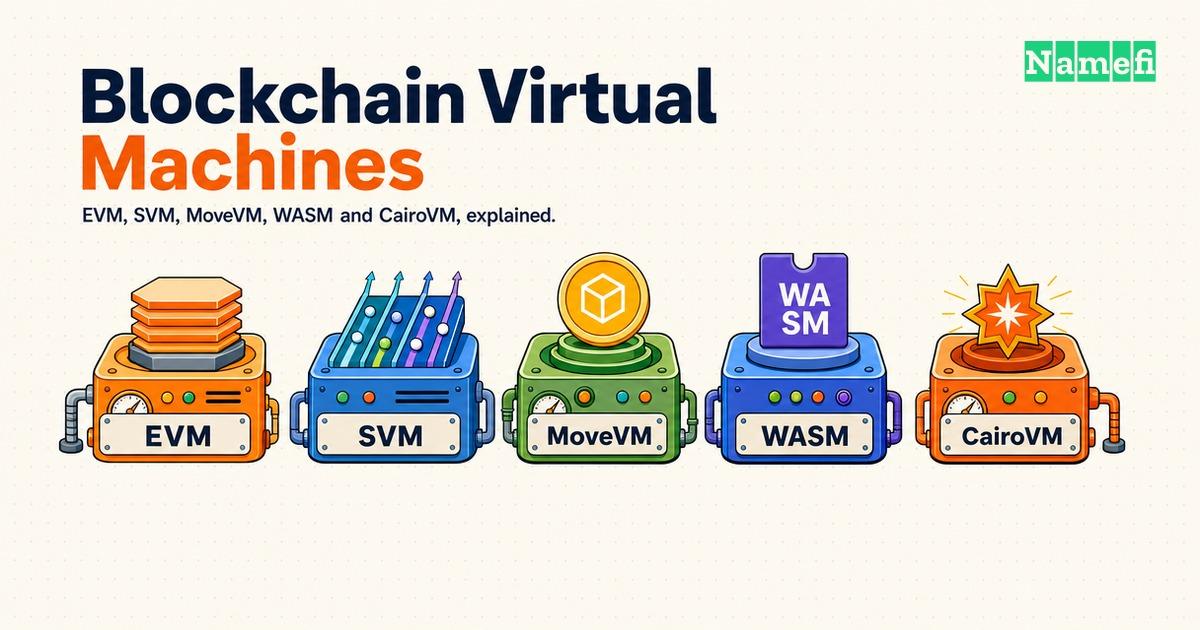
主要なブロックチェーン仮想マシン:EVM、SVM、MoveVM、WebAssembly/RISC-V、CairoVM
EVM、SVM、MoveVM、WebAssemblyおよびRISC-V VM、CairoVMという主要なブロックチェーン仮想マシンを、言語、実行モデル、エコシステムの観点から比較するガイドです。
完全ゼロ知識 vs 計算論的ゼロ知識:この区別が実際に意味すること
ゼロ知識証明には「完全」「統計的」「計算論的」の3種類があり、その違いはほとんどのエンジニアリング議論が認めるよりもはるかに重要です。本記事では各種類を平易な言葉で解説し、2026年時点でほぼすべての本番ZKシステムが計算論的である理由、そしてそれが何をもたらし何を犠牲にするかを説明します。
Route402 の紹介 — x402 ファシリテーター・ルーター
アプリに手を加えることなく、x402 を一度だけ統合して、ポリシーとリアルタイムシグナルに基づいてリクエストをルーティングできるマルチテナント型ルーター。
GoogleがAIショッピングエージェント次世代を支える「Universal Commerce Protocol」を発表
UCPはエージェントネイティブなコマースを実現するGoogleの戦略で、AIアシスタントがチャット画面を離れることなく商品の発見から決済まで一貫して処理できるオープンスタンダードです。
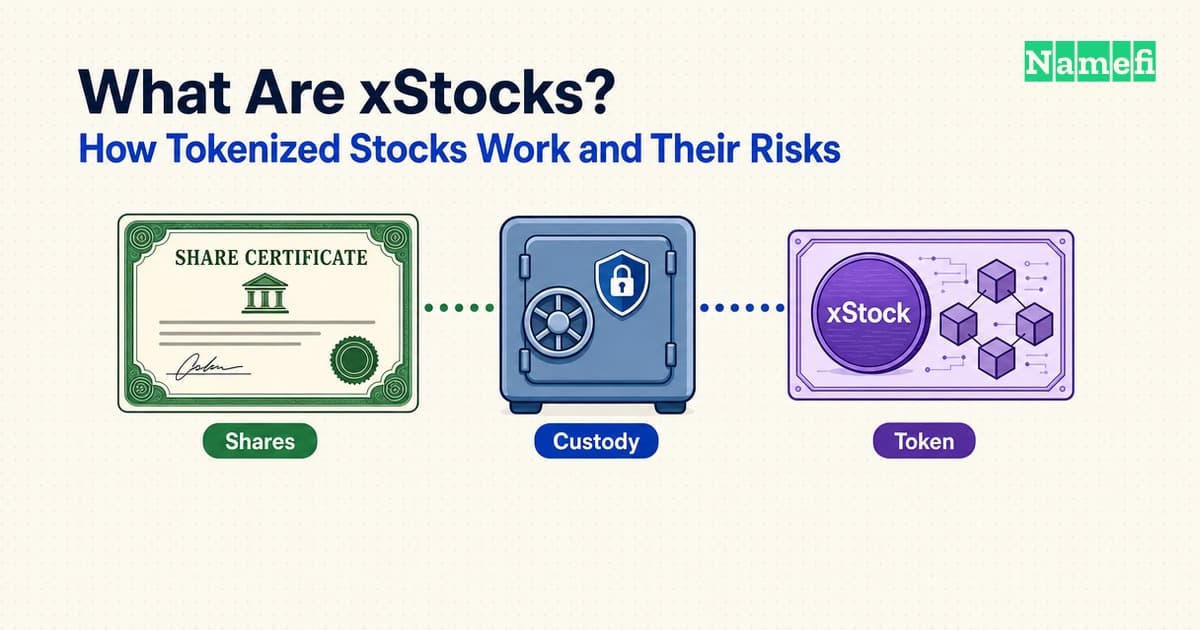
xStocksとは何か?ドメイン投資家が注目すべき理由
xStocks(Solana上でBacked Financeが発行するトークン化株式)をわかりやすく解説。xStocksとは何か、仕組み、従来の株式との違い、リスク、そしてトークン化ドメインも属するリアルワールドアセット(RWA)トークン化のトレンドとの関係を説明します。