Your Domain Registrar Should Match Your Costs and Control Needs
Choose a domain registrar by comparing renewal costs, account security, DNS freedom, recovery support, and transfer terms before checkout.

- domains
- guide
- comparison
The best domain registrar is the provider that meets your required controls at an acceptable recurring cost. Compare renewal prices, recovery procedures, DNS choices, and transfer terms before choosing a first-year discount.
A registrar handles domain registration. A registry maintains the database for a domain extension. A seller can also operate as a reseller. ICANN explains that resellers work under registrar agreements. Ask a reseller to identify the sponsoring registrar and the support route for registration problems.
For generic extensions, check the provider against ICANN's accredited registrar directory. Accreditation confirms a role in the registration system. Accreditation does not establish which provider suits your budget or administration needs. Country-code extensions have their own registry rules. Check the exact extension rather than assuming every policy below applies worldwide.
Use your main requirement to build a shortlist:
| Your requirement | Prioritize | Ask before paying |
|---|---|---|
| One personal domain | Predictable renewal and usable recovery | What does the second year cost? |
| A business website and email | Account access, renewal oversight, and support | Who handles a locked account outside office hours? |
| Separate DNS or hosting providers | Nameserver freedom and documented configuration | Can I use my chosen authoritative DNS provider? |
| Many domains or client accounts | Bulk operations, exports, and separate access | Can staff administer domains without sharing the owner login? |
Renewal costs determine your holding budget
Start with the exact extension and registration category. Compare a standard new registration with other standard registrations. Keep premium domains and already-owned domains in separate comparisons.
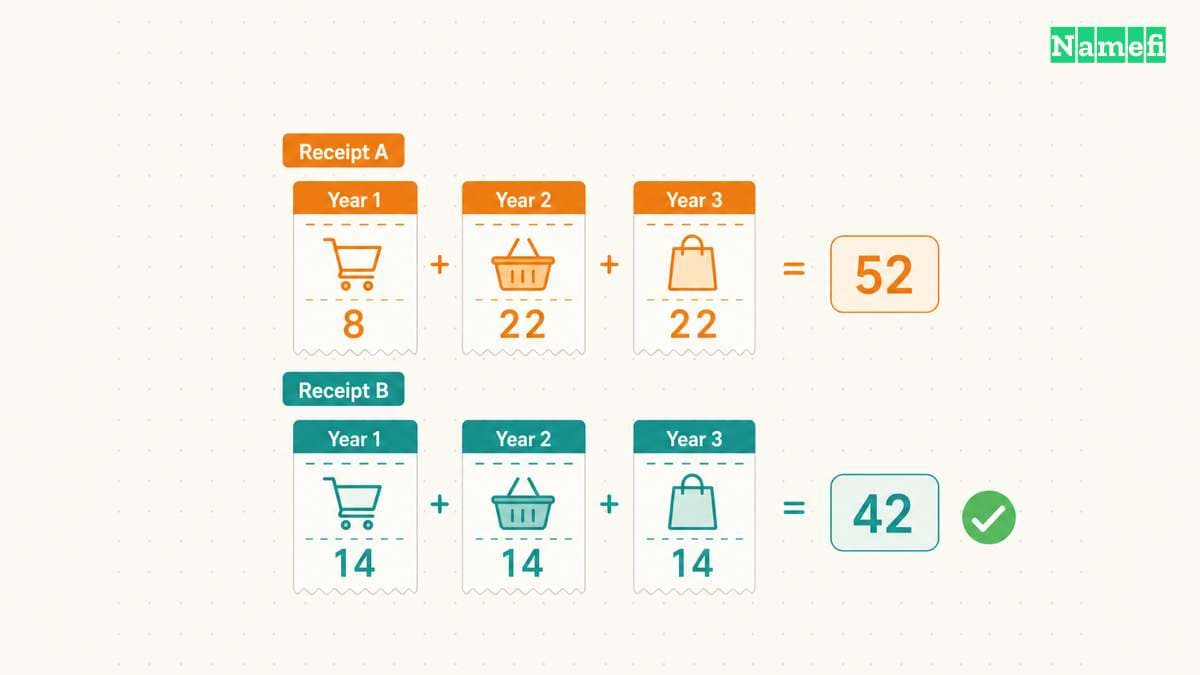
For a three-year plan, add the registration price, two annual renewals, and required extras. Include applicable taxes and currency conversion costs. Treat future prices as assumptions, since a current quote does not guarantee future renewal rates.
The following figures illustrate the calculation. The figures are not provider quotes.
| Illustrative offer | First year | Annual renewal assumption | Three-year total before extras |
|---|---|---|---|
| A | $8 | $22 | $52 |
| B | $14 | $14 | $42 |
Offer A saves $6 at checkout. Offer B saves $10 across the assumed three years. A large domain portfolio makes recurring differences more important. The domain holding-cost guide covers budgeting beyond the initial registration.
Check the provider's own price table. For example, Porkbun distinguishes registration, renewal, and transfer pricing. Verify the exact domain in checkout, including any premium classification. A headline price for an extension does not establish the price for every name.
Check renewal after expiration and restoration separately. ICANN's Expired Registration Recovery Policy requires disclosure of those fees for covered generic domains. Do not plan around a rescue period. Configure renewal monitoring while the registration remains active.
Read each extra as a separate product. Ask whether privacy protection, mailboxes, forwarding, DNS hosting, and website hosting cost extra. A free trial can change the recurring bill. Keep only services that your project needs.
Account recovery complements sign-in controls
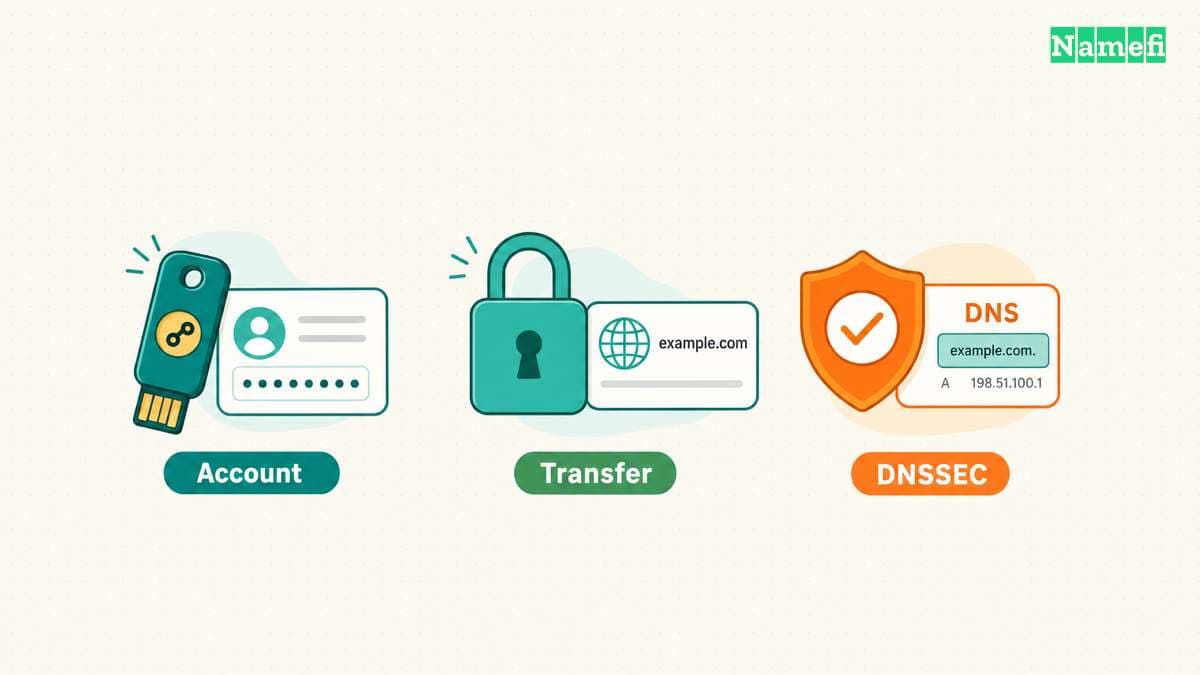
A security comparison needs more than a lock icon. Ask about sign-in protection, recovery, access delegation, and notifications for sensitive changes.
Provider documentation can reveal concrete differences. For example, Namecheap documents hardware U2F and authenticator TOTP options. Check which methods the chosen account supports. Then check the backup process when a device fails.
Use the following questions when comparing accounts:
- Can the owner register a backup authentication method?
- What evidence does support require for account recovery?
- Can staff use separate accounts with limited permissions?
- Which contact receives nameserver, ownership, and transfer alerts?
- Can the business retain access when an employee leaves?
Keep the protections distinct. Account authentication controls sign-in. A transfer lock concerns registrar transfers. DNSSEC authenticates DNS data. Ask what each advertised control actually covers. The registrar account guide explains the operational checks.
Privacy protection needs a separate check. Ask which contact fields the provider hides for the exact extension. Read the privacy service terms and disclosure process. A privacy label does not establish account security or remove the need for accurate registration details.
For a critical business domain, request the support escalation route before purchase. Confirm service hours, supported languages, identity checks, and any paid support requirement. A published support channel does not prove a response time. A routine question can test clarity, but one reply cannot establish long-term reliability.
DNS choices determine your provider flexibility
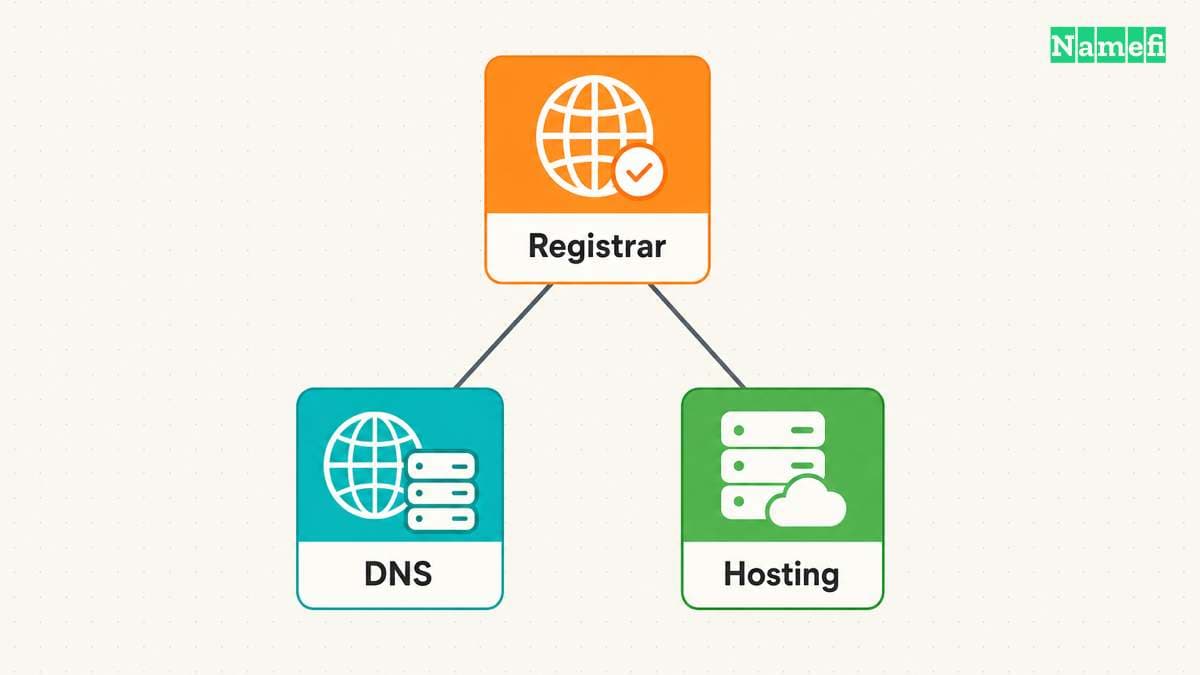
Registration, DNS, website hosting, and email perform different jobs. A provider can sell several services together. The domain-versus-hosting guide explains the boundaries.
Ask whether the registrar permits your chosen authoritative nameservers. For example, Cloudflare Registrar requires Cloudflare authoritative DNS. That requirement can suit a project already using Cloudflare DNS. The requirement does not suit a project that must retain another authoritative DNS provider.
Then check the actual administration tasks. Can the chosen DNS service manage the records your hosting and email services require? Can the registrar publish the required DNSSEC delegation information when you use external DNS? Can you export the current DNS records before changing providers?
For a small site, a simple bundled control panel can reduce administrative work. For a team, separate services can preserve choices during a hosting migration. Neither arrangement removes the need to document account access and renewal responsibility.
Treat automation as another purchase requirement. Ask which operations the API supports, which permissions an API credential grants, and whether bulk changes produce useful records. Do not infer registration automation from the presence of a DNS API.
Transfer terms define your exit procedure
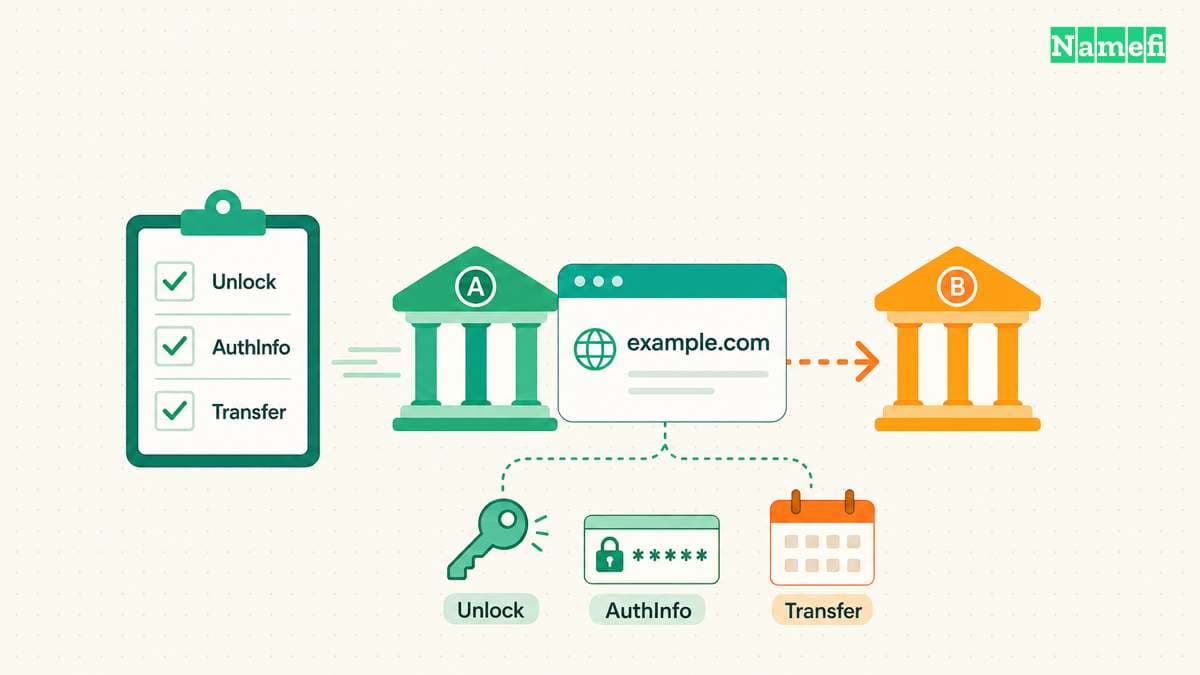
Read the transfer-out instructions while comparing providers. Find the unlock control, the authorization-code process, and any identity checks. Separate a registrar transfer from a hosting cancellation. Canceling an unnecessary hosting plan should not accidentally cancel a wanted domain registration.
For covered generic domains, ICANN's Transfer Policy specifies authorization-code and unlock access requirements. Where no self-service facility exists, the policy specifies a five-calendar-day response requirement for these requests. The policy also contains transfer restrictions around recent registrations, transfers, and registrant changes. Check eligibility before planning a move. Use the registrar-transfer guide for the migration procedure.
Ask these final questions:
- Does the provider support my exact extension and registration category?
- Can I accept the recurring bill without relying on another promotion?
- Can I secure and recover the account with documented business access?
- Can I use the DNS and hosting arrangement my project requires?
- Can I understand renewal, cancellation, and transfer procedures before paying?
Reject a provider that fails a required control. Compare the remaining providers on total cost and administrative effort. Save the quote, registration agreement, and support instructions with the domain records.
If two providers meet the requirements, choose the provider whose routine tasks your domain administrator can perform confidently. The useful result is a maintainable registration with a clear renewal owner and a workable exit procedure.
These sources support the comparison
The named providers illustrate documented features. The comparison does not rank every registrar or claim a universal winner.
- ICANN: The Domain Name Registration Process. Registrar, registry, and reseller roles. Fetched 2026-10-21.
- ICANN: List of Accredited Registrars. Accreditation scope. Fetched 2026-10-21.
- Porkbun: Domain Name Pricing. Separate price categories. Fetched 2026-10-21.
- ICANN: Expired Registration Recovery Policy. Fee disclosure, section 4.1. Fetched 2026-10-21.
- Namecheap: Two-Factor Authentication. U2F and TOTP options. Fetched 2026-10-21.
- Cloudflare: Transfer Your Domain to Cloudflare. Authoritative DNS requirement. Fetched 2026-10-21.
- ICANN: Transfer Policy. Sections I.A.3, I.A.5, and II.C. Fetched 2026-10-21.
- IETF: RFC 4033. DNS data authentication, section 3. Fetched 2026-10-21.
About the author(s)
Namefi is a collective of engineers, designers, and operators who obsess over building tools that make managing your onchain domain names effortless.