
什么是 xStocks?域名投资者为何要关注?
探索 xStocks 如何彻底改变金融,以及为什么通过 Namefi 进行代币化的域名投资者在引领这场数字变革中处于独特地位。
- faq
- domains
- tokenization
什么是 xStocks?
连接链上域名资产与代币化权益
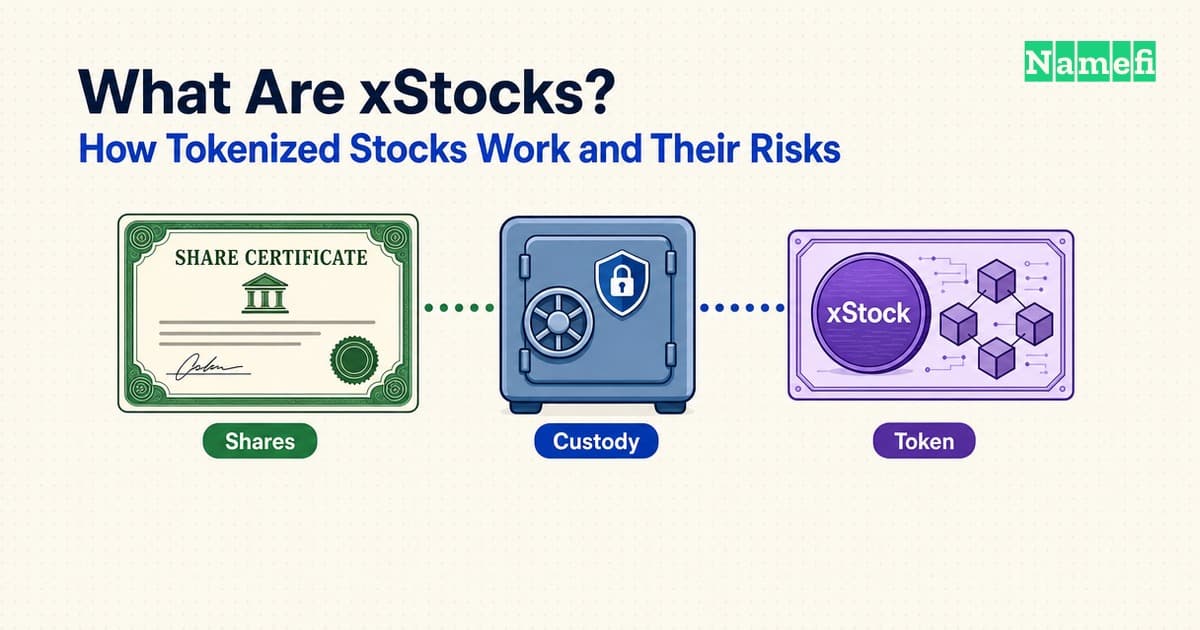
代币化权益或 xStocks 近来已成为主流,Robinhood、Coinbase、Kraken 和 Bybit 等平台正在推出或计划推出产品,为加密原生和海外投资者提供美国股票访问权限。以前仅限于经纪人和银行的服务,现在通过 Kraken、Bybit、Coinbase 和 Robinhood 等平台,可以在全球范围内 24/5 访问。但 xStocks 到底是什么?这些所谓的 xStocks 是链上代币,由实际股份 1:1 支持,并可存储在自我托管钱包中,使其随时可以作为抵押品或流动性滑入 DeFi。
现在想象一下,交易不是在几分钟内完成,而是在几毫秒内完成。多亏了例如 Solana 级别的速度,代币化资产几乎可以即时结算,通常在不到一秒的时间内。事实上,Solana 拥有约 0.4 秒的结算速度,而更广泛的区块链交易通常只需 3-5 秒即可完成。正如一位专家所说,“代币化的金融证券可以在几毫秒内进行交易和结算,就像把现金递给某人一样”。这种速度也改变了域名:想象一下一个优质的 .com 域名在眨眼间完成所有权转移或被用作抵押品,释放快速流动性和无缝效用。
对于交易、代币化并有时碎片化域名资产的域名投资者来说,这不仅仅是股票新闻。这是一个剧本!代币化权益已经为将非流动性“现实世界”资产转化为高可访问性、可组合的数字工具创建了一个模型。您也可以用优质域名做同样的事情。
想象一下: 一个由优质 .com 域名组成的投资组合,代币化、碎片化所有,并可全天候交易。域名支持的代币可用作抵押品,与其他代币组合成篮子,在全球市场交易,或在创新的 DeFi 策略中进行杠杆操作。机制和基础设施已经存在。透明度证明系统意味着代币持有者可以相信每个代币确实由真实资产支持,就像 xStocks 一样。
为什么现在这很重要
xStocks 不仅仅代表着吸引眼球的创新,它们标志着我们思考资产所有权方式的转变。随着 DeFi 就绪的代币化,传统资产所有者正在发现新的途径来货币化和调动价值。而且这种趋势正在加速。Coinbase 正在向美国证券交易委员会 (SEC) 申请代币化股票,Robinhood 正在欧洲推出 200 支代币化美国股票,甚至包括 SpaceX 和 Anthropic 的私人公司镜像代币。
Web2 领域的域名投资者有一个强大的机会来顺应这一趋势。既然可以创建链上域名+股权篮子,为什么还要止步于域名呢?或者让碎片化域名投资者质押以赚取收益?所有这些都与当前的 xStock 基础设施兼容。
代币化股票向我们展示了下一步:无国界的所有权,无摩擦的交易,以及像思想一样快速移动的资产。对于域名投资者来说,这不仅仅是一个股票故事,它预示着代币化域名如何驱动下一波互联网原生资产。有了 Namefi,这个未来并非理论——它是可部署的。
未来?全球化、可组合、透明,由您掌握。
想快速了解这到底有多火吗?请查看 Kraken 关于 xStocks 的视频。
👉 别忘了访问 Namefi.io 了解更多关于域名代币化、人工智能工具和流畅的域名管理信息,同时在 X 上关注我们 @namefi_io,以保持领先。
标签 / 话题标签(用于社交和博客)
- #xStocks
- #TokenizedAssets
- #TokenizedStocks
- #Web3Finance
- #DigitalAssets
- #Namefi
- #Domainers
- #Solana
- #FractionalOwnership
- #DeFi
- #CryptoFinance
- #OnChain
- #DomainInvesting
- #FutureOfFinance
- #TokenEconomy
贡献者

Aileen Wright 是一名二十多岁的学生,现居纽约。在这里,从博物馆的展墙走到图书馆阅览室 不过几步之遥,却足以度过一个漫长的下午。她通过艺术和历史走进了有关名字的写作领域: 一幅肖像、一枚硬币或手稿页边的一行字,都能让一个名字跨越数个世纪,并在流传中改变含义。
大多数时候,你会看到她拿着一本平装书待在中央公园,或是在安静的公共阅览室里追查一个名字 的真正出处,而不是照搬名字清单声称的含义。她还在自学编程,这让她对拼写、排序,以及决定 一个名字能否经得住时间考验的细微之处格外严谨。
她为 Namefi 撰写域名背后的历史与文化、品牌更名时所承载的故事,以及好故事与可靠来源之间 的区别等相关文章。

Victor Zhou 是一位专注于数字身份与信任的科技创业者和标准编辑。他创办了 Namefi,编辑 以太坊改进提案,此前还曾在 Google Labs 负责智能合约架构工作。
他的工作位于命名、所有权,以及人们用来建立网络身份的系统三者交汇之处。这一视角让他尤其 关注名字如何在个人意义、公众认知和数字基础设施之间流转。
在 Namefi,Victor 把域名视为持久的数字身份,并围绕这一主题编辑和撰写内容:名字如何成为 可拥有的链上资产,代币化如何改变托管与信任,以及命名可以从人们建立网络身份所使用的系统 中学到什么。

卞芬薇是一名三十多岁的软件开发者,工作时间泡在 pull request 里,周末双手不是沾着 泥土,就是沾着木屑。多年参与 GitHub 开源项目的经历让她明白,名字就是接口:好名字清晰, 如实说明自己的作用,也为下一位使用它的人着想。
她喜欢园艺,因为它奖赏耐心,也会惩罚一厢情愿;她也做木工,因为接合处要么严丝合缝, 要么就是不合。这两种习惯同样体现在她关于命名的写作中:量两遍,核实来源,别把粗糙处 磨平后就指望没人注意到。
她为 Namefi 撰写域名市场实际如何运转、域名代币化与转手交易的现实取舍,以及如何选择一个 二十年后仍会庆幸自己拥有的域名。
相关指南
- 域名投资者的税务与会计指南域名投资者如何处理税务:库存资产与资本资产的区别、成本基础的计算、收入确认时点,以及续期费用的扣除方式。本文仅供教育参考,不构成专业建议。
- 完整的域名术语指南 - 域名投资者的基本术语掌握域名投资,请参考我们关于基本域名术语的综合指南。从基本概念到高级交易策略,学习域名专业人士的语言。
- Domain vs Hosting: What You Need to Put a Website OnlineUnderstand the difference between a domain name and web hosting, what each provides, and how to connect them when using different providers.
- How to Set Up Email With Your Own DomainSet up email on your domain by choosing an email host, verifying ownership, adding the required DNS records, and testing sending and receiving.