Domain Name Generator: Find a Name You Can Actually Register
Generate domain ideas with official tools, refine the naming brief, and verify registration terms and name conflicts before buying.

- domains
- guide
Use a domain generator to build a shortlist, then verify the exact names through a registrar's registration process. Squarespace's domain generator accepts a business description and shows domain ideas and prices. Namelix offers filters for name length, keywords, and extensions. Neither step completes a registration. Read the Squarespace workflow and Namelix filters.
A useful result is a name that fits the project, has an acceptable acquisition route, and passes your review. An attractive suggestion alone does not establish registration availability or the right to use a brand.
This guide supplies a working naming process. The project naming guide explores the broader brand decision.
Give the generator a brief with useful constraints
Start with the audience and the task. Write what the product does, who uses the product, and which words the audience already understands. Add required languages and extensions.
For a hypothetical appointment service, a useful prompt might read:
Suggest domain ideas for an appointment tool for independent music teachers. Prefer easy spoken English. Avoid payment or banking terminology. Show several naming styles.
This is an illustrative prompt, not a real product or an availability claim. Replace the audience and constraints with your actual requirements.
Add a short exclusion list. Include confusing industry terms, unrelated product categories, difficult spellings, and names the team already rejected. Keep confidential customer information out of a public naming tool.
Do not ask only for “the best name.” Ask for candidates grouped by a meaningful choice, such as descriptive wording, a distinctive invented name, or a familiar word combination. Compare candidates against the same brief.
Namelix lets users prioritize a shorter name, a specific keyword, or an extension. Its page documents those filters. Use the controls to explore a constraint rather than accepting the first output.
Use the tool's actual workflow and keep the shortlist small
Squarespace documents a sequence: describe the idea, browse generated domain ideas and prices, adjust the search, select a candidate, and complete registration and payment. Follow that documented process.
Use the generator for discovery. Then copy selected full domain names into a separate review sheet. Record the exact spelling and extension, the reason for selection, and the observed purchase route.
Do not copy only the brand word. A candidate with a different extension is a different domain to evaluate. A typo in the review sheet can send the team to the wrong checkout.
| Review field | What to record |
|---|---|
| Domain | Full spelling and extension |
| Naming fit | How the wording matches the brief |
| Spoken test | Whether a listener can repeat and spell the name |
| Purchase route | New registration, registered-domain sale, or unresolved |
| Cost | Quoted initial and renewal terms with currency |
| Conflict review | Searches performed and unresolved questions |
As an editorial recommendation, ask a colleague to read the name aloud and type the name after hearing it. Record the actual mistakes. That exercise gives the team concrete feedback without pretending to predict conversion or search ranking.
For another idea-generation route, open Namefi's AI domain search with the same naming brief. Check any shortlisted name separately in Namefi's domain search before reviewing purchase terms. An AI suggestion does not establish availability or complete registration.
Verify registration rather than trusting an idea label
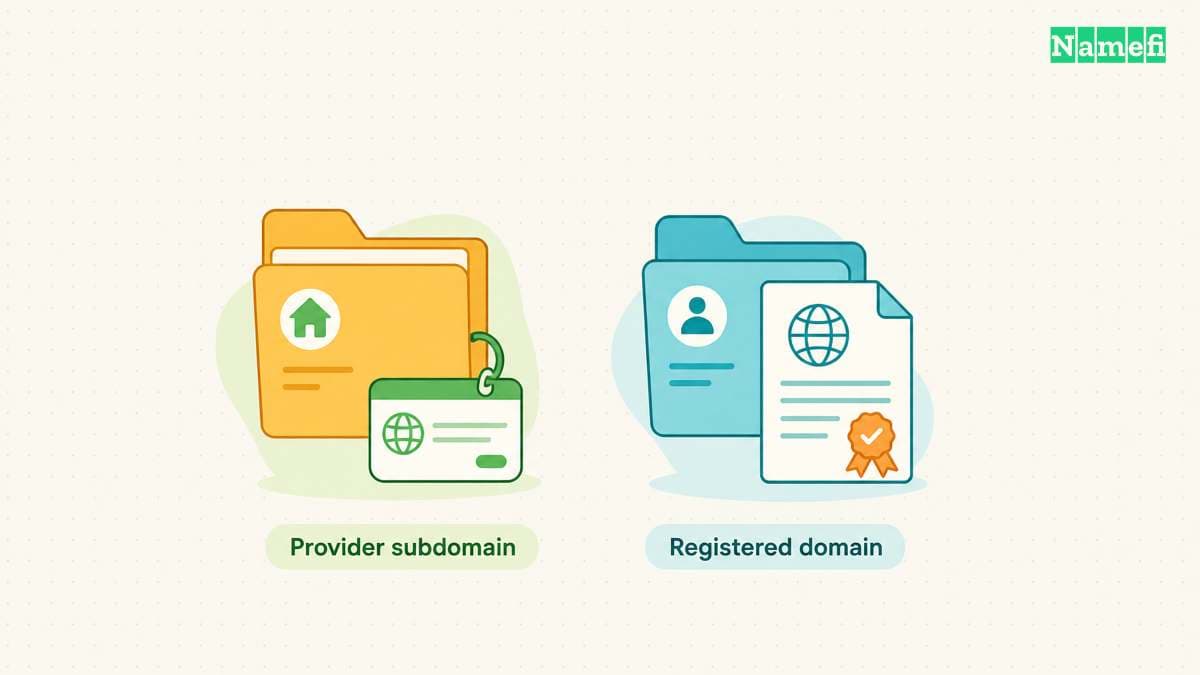
Open the selected registrar's search and enter the exact candidate. Read whether the service offers new registration, a premium listing, or an aftermarket purchase. Check the final cart before paying.
Squarespace's own workflow ends with registration and payment, after idea generation and selection. Its sequence establishes that distinction. Save the completed registration confirmation after checkout.
If the name is already registered, decide whether to pursue a purchase or return to the shortlist. The domains-for-sale guide covers seller and transfer checks.
Do not use an absence of website content as an availability test. Instead, use the provider's registration result and complete the intended registration process. Keep any unresolved result marked unresolved.
For documentation, writers often use names such as example.com. IANA maintains those names for documentation and does not make the names available for registration or transfer. Read the example-domain rule. A tutorial example is therefore unsuitable as your registration candidate.
Review name conflicts separately from domain availability
Squarespace tells users to verify rights to generated examples. Its generator page states that responsibility. Do not treat the generator's output as a clearance decision.
For a US-focused project, the USPTO recommends searching confusingly similar trademarks used with the same or related goods and services. Its guidance also covers common-law use and broader sources. Read the comprehensive clearance guidance.
Use USPTO Trademark Search as one starting tool. Search the candidate wording and relevant variations, then examine the goods and services associated with results. Record material questions for a qualified adviser when the intended launch requires a clearance assessment.
Keep the scope clear. A domain registration result answers a purchase question. A trademark search examines a different set of records and risks. One result should not substitute for the other.
Check relevant public uses, product directories, and intended social handles as part of your naming review. Treat this as practical discovery work rather than a guarantee of exclusivity.
Finish with cost and account control
Before payment, compare acquisition and renewal terms for the actual extension. Use the provider's current quote rather than assuming every generated name has the same cost. Record any required bundle and the terms for retaining the domain.
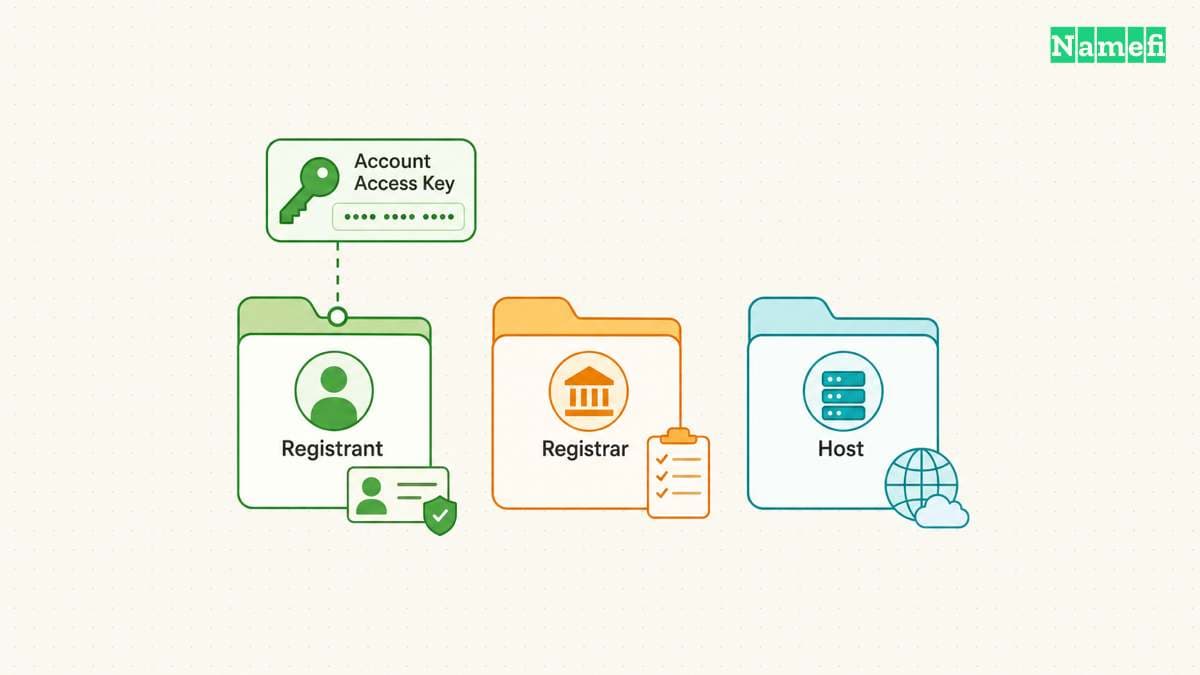
Place the registration in an account controlled by the person or organization responsible for the project. Identify the renewal owner and recovery contact. Keep the confirmation with the final naming decision.
If no candidate passes the review, change one constraint deliberately. Broaden an extension preference, add a descriptive word, or revise the wording style. Avoid producing more candidates without understanding why the current candidates failed.
Your next action is a short naming brief, a generated shortlist, and a documented check of the final candidates. Register only after the spelling, purchase terms, and review questions are settled. The generator supplies ideas. The completed registration and account record establish the operational result.
Sources and further reading
Squarespace generates domain ideas for a business description
squarespace official source — fetched 2026-10-30 UTC.
Namelix offers naming filters
namelix official source — fetched 2026-10-30 UTC.
USPTO explains comprehensive clearance searches
trademarks official source — fetched 2026-10-30 UTC.
IANA reserves example domains for documentation
examples official source — fetched 2026-10-30 UTC.
About the author(s)
Aileen Wright is a student in her twenties living in New York City, where the distance between a museum wall and a library reading room is a short walk and a long afternoon. She came to name writing through art and history — the way a single portrait, coin, or manuscript margin can carry a name across centuries and change its meaning on the way.
Most weeks you can find her in Central Park with a paperback, or in the quiet of a public reading room chasing down where a name actually comes from rather than what a name-list says it means. She is also teaching herself to code, which has made her oddly precise about spelling, sorting, and the small details that decide whether a name ages well.
For Namefi she writes about the history and culture behind domain names, the stories brands carry as they rename, and the difference between a good story and a verified source.