
Namefi
Aileen Wright

Aileen Wright

Art & History Writer • Namefi

Aileen Wright is a student in her twenties living in New York City, where the distance between a museum wall and a library reading room is a short walk and a long afternoon. She came to name writing through art and history — the way a single portrait, coin, or manuscript margin can carry a name across centuries and change its meaning on the way.

Most weeks you can find her in Central Park with a paperback, or in the quiet of a public reading room chasing down where a name actually comes from rather than what a name-list says it means. She is also teaching herself to code, which has made her oddly precise about spelling, sorting, and the small details that decide whether a name ages well.

For Namefi she writes about the history and culture behind domain names, the stories brands carry as they rename, and the difference between a good story and a verified source.

Writes about

Articles

The Cat-and-Mouse War of Email Sender Reputation
A source-backed history of the thirty-year arms race over email sender reputation—the open relays, botnets, image spam, snowshoe campaigns, warmup networks, and other tricks bulk senders used to look trustworthy, the named operators who ran them, and the year and mechanism by which each trick was detected and shut down.
emailsender-reputationdeliverabilitydmarcdomain-security
What Is an Agent-Native Domain Registrar?
Registrars have had APIs for decades, but an API alone isn't agent-native. The checklist: discovery, docs, errors, payment, and policy hooks.
ai-agentsdomainsexplainer
Can an AI Agent Own a Domain? WHOIS, Custody & Tokens
The registrant must be a legal person, but custody can be delegated. WHOIS, API keys, and tokenized domains — the custody spectrum explained.
ai-agentsdomainsweb3
How AI Agents Buy Domains Without a Human (2026)
In April 2026, domain registration moved into the agent layer. How AI agents search, price, and register domains — and the guardrails that still matter.
ai-agentsdomainsexplainer
AI-Agentic Domain Platforms: The 2026 Guide
Every platform where an AI agent can search, price, and register a domain in 2026 — Cloudflare, Name.com, Namefi — by interface, payment, autonomy.
ai-agentsdomainsguide
Cloudflare vs Name.com vs Namefi: Agent-Native Registrars
Feature-by-feature comparison of the three agent-native registrars: pricing, MCP support, crypto checkout, tokenized ownership, and when to pick each.
ai-agentscomparison
llms.txt for Domains: An API Any AI Agent Can Read
A walkthrough of namefi.io/llms.txt: how a plain-text file lets any AI agent discover and use a registrar's full API, and how it pairs with MCP.
ai-agentsdomainsexplainer
Namefi MCP Server: Domain Tools for AI Agents
The Namefi MCP server's current /v-next tool surface: search, registration, DNS, renewals, outbound workflows, OAuth and API-key authentication, plus separate x402 and MPP HTTP payment paths.
ai-agentsdomainsweb3
Vibe Coding Needs a Domain: Register Without Leaving Flow
Many vibe-coded apps deploy to a hosting-platform subdomain. How the same agent that built your app can name it and register a domain without breaking flow.
ai-agentsdomainsguide
Top Cryptographic Primitives Behind Every Blockchain
A guide to the core cryptographic primitives that make blockchains work—hash functions, digital signatures, Merkle trees, elliptic-curve crypto, and commitments.
guide
Top Blockchain Privacy Technologies: Zero-Knowledge Proofs, FHE, MPC, TEEs and Ring Signatures
A plain-language guide to the five leading blockchain privacy technologies—zero-knowledge proofs, FHE, MPC, TEEs, and ring signatures—compared side by side.
guide
Top Blockchain Virtual Machines: EVM, SVM, MoveVM, WebAssembly/RISC-V and CairoVM
A guide to top blockchain virtual machines—EVM, SVM, MoveVM, WebAssembly and RISC-V VMs, and CairoVM—comparing languages, execution models, and ecosystems.
guide
ENS vs DNS Domain Flipping: What's Different
How flipping ENS .eth names differs from flipping traditional DNS domains: ownership, liquidity, renewal, gas, and what each is good for.
domainsdomain-flippingweb3comparison
Onchain Domain Custody, Wallets, and Recovery
How custody really works for onchain domains: wallets, multisig, seed-phrase risk, and recovering a tokenized domain after wallet loss.
domainsdomain-flippingweb3explainer
Selling Domains as NFTs: Onchain Liquidity
How selling a domain as an NFT works: listing mechanics, Seaport and OpenSea, buyer-restricted private sales, royalties, and gas and scam traps.
domainsdomain-flippingweb3guide
Why a DAO Should Control the Main Domain
The main domain is a critical control point for an online movement. Here is how a DAO can govern it while preserving legal, registrar, DNS, security, and operational safeguards.
governancedaoweb3namefi space
How to Avoid Domain Sale Scams
The common domain-sale scams — fake escrow, fake buyers, overpayment chargebacks, transfer-before-payment — and the habits that keep your sales safe.
domainssecuritydomain-flippingguide
Domain Appraisal Tools Compared: Estibot vs GoDaddy vs Reality
How automated domain appraisers like Estibot and GoDaddy actually work, where they systematically miss, and how to use them as a first filter.
domainsdomain-investingdomain-flippingcomparison
For-Sale Landing Pages That Convert
How to build a domain for-sale landing page that converts: a clear price or offer path, real trust signals, and a frictionless way to buy or make an offer.
domainsdomain-investingdomain-flippingguide
Running a Domain Portfolio Like a Business
Run your domains like inventory: track cost basis, watch sell-through rate, control renewal drag, prune losers, and keep the books clean.
domainsdomain-investingdomain-flippingguide
Domain Pricing Psychology: Buy-Now vs Make-Offer
How listing mode and initial numbers can influence a domain sale: anchoring, when to name a price, planned concessions, and buy-now vs make-offer.
domainsdomain-investingdomain-flippingguide
How the TLD Affects a Domain's Value
How the extension after the dot moves a domain's price: the .com premium, the .io/.ai/.co context, and the policy and geopolitical risk behind ccTLDs.
domainstlddomain-flippinganalysis
How to Find Domains to Flip: Every Sourcing Channel
The four ways to source domains to flip — hand-registration, expired drops, auctions, and the aftermarket — and each channel's risk and price profile.
domainsdomain-investingdomain-flippingguide
How to Win Domain Auctions Without Overpaying
How aftermarket domain auctions actually work — proxy bids, sniping, hard maxes, reading demand, and dodging the overpay and shill traps.
domainsdomain-investingdomain-flippingguide
Inbound vs Outbound Domain Sales
Inbound vs outbound domain sales: when each works, the effort-and-return tradeoff, and how to run both without your outreach reading as spam.
domainsdomain-investingdomain-flippingexplainer
Marketplace Discoverability for Domain Listings: Afternic and Sedo
How domain listings are discovered on Afternic and Sedo, which seller-controlled fields each platform actually exposes, and how registrar distribution, pricing, landers, and promotion differ.
domainsdomain-investingdomain-flippingguide
Taxes and Accounting for Domain Investors
How domain investors handle taxes: inventory vs. capital assets, cost basis, when income is recognized, and expensing renewals. Educational, not advice.
domainsdomain-investingdomain-flippingfaq
Where to Sell Domains: Afternic vs Sedo vs Dan vs Namefi
Afternic vs Sedo vs Dan vs onchain marketplaces compared on reach, fees, and fast transfer — plus how to list one name across several at once.
domainsdomain-investingdomain-flippingcomparison
Domain Flipping: How to Buy and Sell Domains for Profit
What domain flipping really is — buying names low and selling high — and the stack of skills behind the trade, from sourcing and appraisal to selling.
domainsdomain-investingdomain-flippingguide
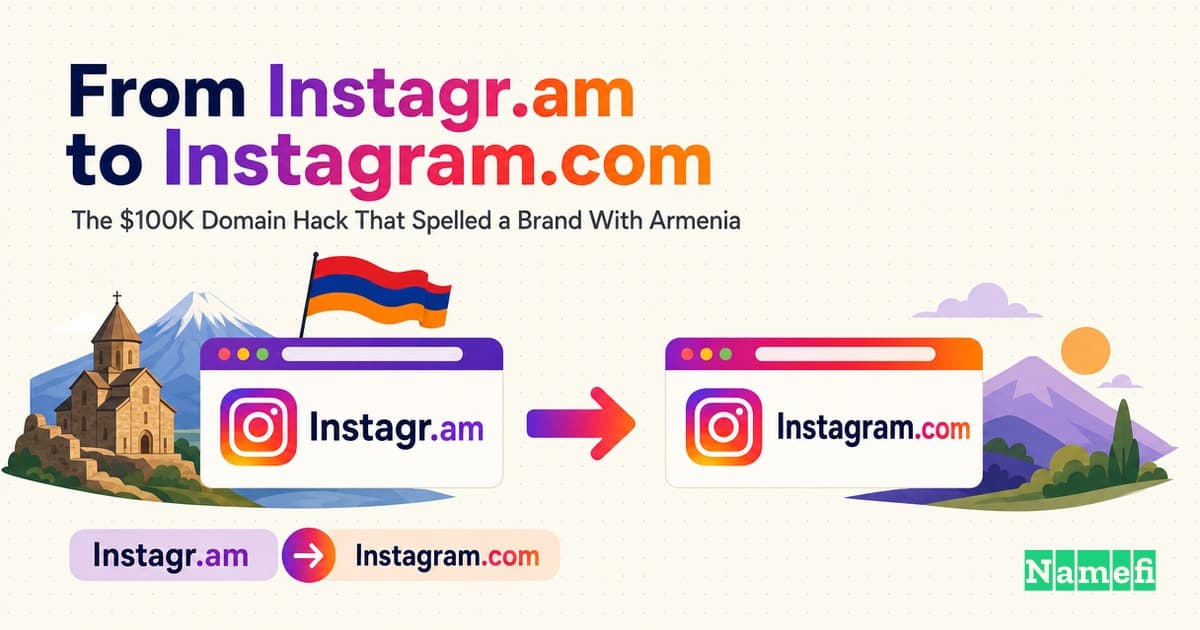
From Instagr.am to Instagram.com: The $100K Domain Hack That Spelled a Brand With Armenia
How Instagram launched in 2010 on the instagr.am domain hack — borrowing Armenia's .am ccTLD to spell its own name — then paid $100,000 to consolidate on Instagram.com, and what the tradeoffs of a clever ccTLD hack teach founders.
domainsbrandingstartupsdomain-upgrades
From JambaJuice.com to Jamba.com: How a Smoothie Chain Dropped a Word — and Already Owned the Domain
How Jamba Juice spent 29 years explaining itself with the word "Juice," why it dropped that word in 2019 to become simply "Jamba," and the quiet advantage almost no one noticed: Jamba.com was already an established company domain before the rebrand.
domainsbrandingstartupsdomain-upgrades
From Massdrop.com to Drop.com: How a Group-Buy Community Dropped Half Its Name to Own One Word
How Massdrop spent seven years building an enthusiast group-buying community, then rebranded to Drop in 2019 — quietly acquiring the premium Drop.com domain (asking price once $800,000) before the rename, and why dropping "Mass" mattered.
domainsbrandingstartupsdomain-upgrades
From Mona.co to Crypto.com: How Monaco Paid Millions for the Domain a Cryptographer Held for 25 Years
How the crypto-card startup Monaco rebranded to Crypto.com in 2018 by buying the ultra-premium Crypto.com domain — registered in 1993 by cryptographer Matt Blaze, who refused to sell for 25 years — in a deal experts valued at up to $10 million.
domainsbrandingstartupsdomain-upgrades
From Mr. Chewy to Chewy.com: A $3.35B Pet Brand’s One-Word Upgrade
How a 2011 pet startup founded as "Mr. Chewy" became Chewy on the exact-match Chewy.com, and why that one-word domain upgrade quietly became part of a company PetSmart bought for $3.35 billion.
domainsbrandingstartupsdomain-upgrades
From Twitter.com to X.com: The 24-Year Round Trip of a Single-Letter Domain
How Elon Musk co-founded the online bank X.com in 1999, saw the domain remain with the company that became PayPal, bought it back in 2017 for sentimental value, and finally moved a $44B social network onto it.
domainsbrandingstartupsdomain-upgrades
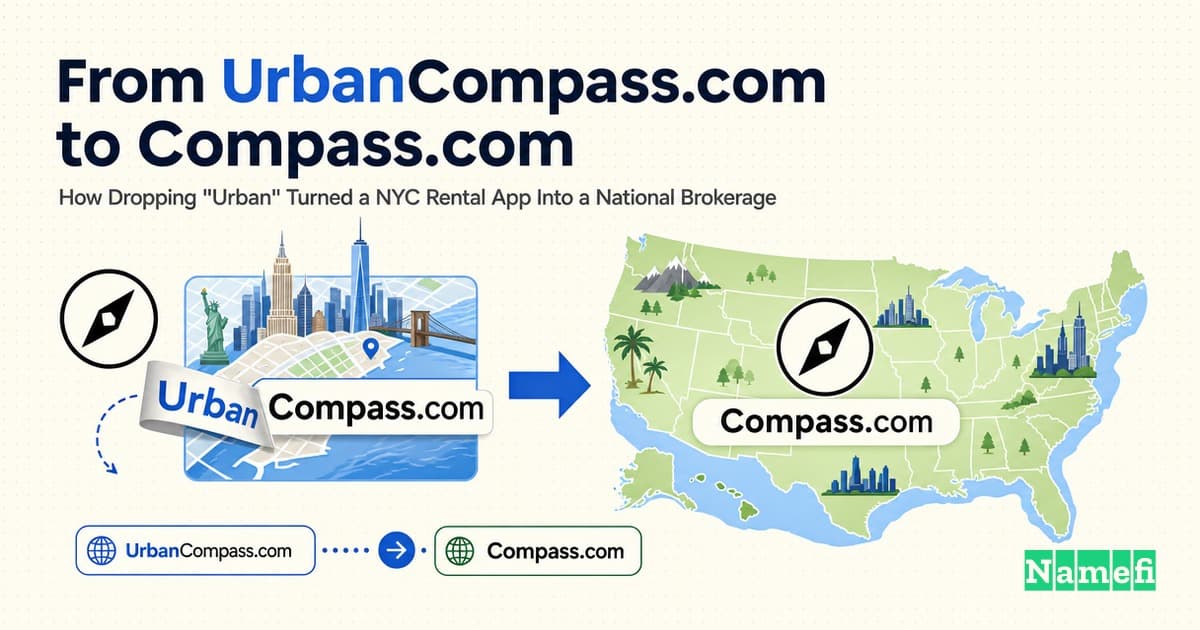
From UrbanCompass.com to Compass.com: How Dropping "Urban" Turned a NYC Rental App Into a National Brokerage
How Urban Compass launched in 2012 as a New York rental app on UrbanCompass.com, dropped "Urban" in its February 2015 rebrand, and upgraded to the exact-match Compass.com — a domain that had been listed at auction for $1 million — right as it set out to go national.
domainsbrandingstartupsdomain-upgrades
The $12 Minute: When Google Domains Accepted a Google.com Order
In September 2015, Google Domains accepted a $12 order for google.com from former employee Sanmay Ved, then canceled it about a minute later. What the incident proves, what remains uncertain, and why the $6,006.13 bounty still matters for domain security.
domainssecuritydnsdomain-security
Domain Mayday EP03: The 2020 Twitter Bitcoin Account Takeover
On July 15, 2020, attackers phoned their way into Twitter, hijacked the verified accounts of Obama, Biden, Musk, Gates, Apple and Uber, and ran a Bitcoin doubling scam — netting about $118,000. A deep-dive on how control of an online identity was stolen, and what it teaches about owning a name.
domainssecuritydnsdomain-security
Domain Mayday EP05: The 2024 Squarespace DeFi Domain Mass-Hijack
In July 2024, a registrar migration from Google Domains to Squarespace turned weak default authentication into a mass attack surface. Attackers hijacked the domains of crypto and DeFi projects — Compound Finance, Celer Network, Pendle, Unstoppable Domains — and pointed them at wallet-drainer phishing sites. Here is how a "seamless" migration created hundreds of unlocked front doors, and what it teaches about registrar security and MFA.
domainssecuritydnsdomain-security
The BadgerDAO Front-End Attack: $120M Drained Through One Injected Script
In December 2021, attackers compromised BadgerDAO's Cloudflare account and injected one malicious script into its website front-end. The audited smart contracts were never touched — yet ~$120M walked out the door through wallet approvals users signed without knowing. A deep-dive on why the website is part of your security surface.
domainssecuritydnsdomain-security
The Bitcoin.org Website Hijack: How Bitcoin's Home Page Became a "Double Your Coins" Scam
In September 2021, Bitcoin.org — the long-time informational home of Bitcoin run by the pseudonymous operator Cobra — displayed a fake "double your Bitcoin" giveaway before the site was pulled offline. Nameserver and WHOIS changes led observers to suspect DNS compromise, but the public root cause remained unconfirmed. Here is what the incident teaches about crypto-native sites depending on ordinary domain infrastructure.
domainssecuritydnsdomain-security
The Curve Finance DNS Hijack: When "Audited Contracts" Couldn't Save the Front Door
In August 2022, Curve Finance's smart contracts were untouched — but attackers hijacked the curve.fi domain at its registrar, cloned the site, and drained roughly $570K from users. A deep-dive into the DNS attack on a DeFi front-end, and what it teaches about domain security.
domainssecuritydnsdomain-security
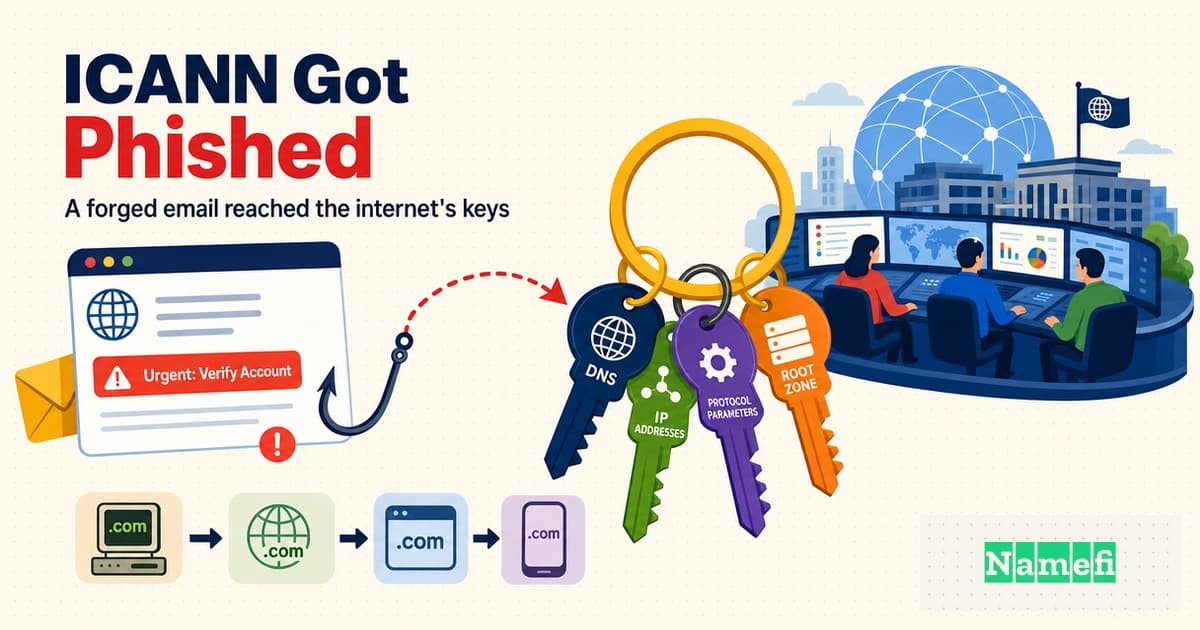
When ICANN Staff Got Phished: The 2014 CZDS Data Breach
In late 2014, spear-phishing emails spoofing ICANN's domain harvested staff credentials and enabled administrative access to files in the Centralized Zone Data System. A close look at the copied gTLD zone data and user information that were exposed — and the critical IANA systems that were not affected.
domainssecuritydnsdomain-security
The Lenovo.com DNS Hijack: When Lizard Squad Took a Hardware Giant's Front Door
On February 25, 2015, attackers changed Lenovo.com's nameserver and mail routing, sending visitors to a webcam slideshow and exposing some email traffic. Researchers attributed the incident to a Webnic compromise, but Webnic did not publicly confirm their reported exploit chain.
domainssecuritydnsdomain-security
The Malaysia Airlines DNS Hijack: "404 — Plane Not Found"
In January 2015, Lizard Squad hijacked the DNS of malaysiaairlines.com and replaced the airline site with a tuxedo-wearing lizard and the taunt "404 — Plane Not Found." No server was breached — the attackers simply changed where the domain pointed. A Domain Mayday deep-dive into how DNS became the airline's most exposed front door.
domainssecuritydnsdomain-security
The MyEtherWallet BGP + DNS Attack: How Hijacked Internet Routing Drained $150K in ETH
On April 24, 2018, attackers hijacked the internet routing for Amazon Route 53, poisoned DNS answers for myetherwallet.com, and served a phishing clone behind a self-signed certificate — draining roughly $150,000 in Ethereum. A Domain Mayday deep-dive into why DNS rides on a routing layer that trusts by default.
domainssecuritydnsdomain-security
Sea Turtle: The State-Sponsored Campaign That Hijacked DNS to Spy on Governments
How "Sea Turtle," a state-sponsored campaign disclosed by Cisco Talos in 2019, hijacked DNS through registrars, registries, and DNS providers — redirecting governments, ministries, and energy firms to attacker servers, obtaining CA-signed and other certificates for interception, and breaching a national TLD registry.
domainssecuritydnsdomain-security
The SushiSwap MISO Insider Attack: How One Malicious Commit Diverted ~$3M From a Token Auction
In September 2021 an anonymous contractor slipped their own wallet address into SushiSwap's MISO launchpad front-end via a malicious commit, diverting 864.8 ETH (~$3M) from the Jay Pegs Auto Mart auction. A Domain Mayday deep-dive on code supply chains, front-end trust, and what it teaches about verifiable ownership.
domainssecuritydnsdomain-security
From GetDropbox.com to Dropbox.com: The $300K Upgrade That Dropped "Get" and a Bottle of Champagne
How Dropbox launched on GetDropbox.com because Dropbox.com was taken, fought a trademark and squatting battle, and finally bought the exact-match Dropbox.com for a reported $300,000 in cash.
domainsbrandingstartupsdomain-upgrades
From SlackHQ.com to Slack.com: The $60K Upgrade That Dropped the "HQ"
How Slack launched on SlackHQ.com because someone else had Slack.com, paid a reported $60,000 to buy the exact-match domain, dropped the "HQ" — and why @SlackHQ still survives on social to this day.
domainsbrandingstartupsdomain-upgrades
From Snapchat.com to Snap.com: The $5M Domain That Turned an App Into a Camera Company
How Snapchat quietly bought Snap.com from Idealab for a reported $5M in 2014, then in September 2016 renamed itself Snap Inc., "a camera company," and let the short exact-match domain carry an identity bigger than any single app.
domainsbrandingstartupsdomain-upgrades
From UberCab.com to Uber.com: Trading Equity for the Domain Before Uber Became a Verb
How UberCab dropped "Cab" as it faced a 2010 cease-and-desist, how reports say Uber acquired Uber.com from Universal Music for 2% equity, and why the exact historical dollar values remain uncertain.
domainsbrandingstartupsdomain-upgrades
Top 10 TLDs to Evaluate for Your Accounting Firm
Ten TLDs an accounting firm can evaluate — from restricted .cpa to defensive .com, .net, and .org registrations, with eligibility and recurring-cost caveats.
tlddomains
Top 10 TLDs You Should Secure for Your Business
Discover the top TLDs to secure for your business, why defensive domain registration protects your brand, and how to register them the smart way.
tlddomains
Top 10 TLDs You Should Secure as a Realtor
The top 10 TLDs every realtor should secure for brand protection, including .realtor eligibility rules, defensive registration tips, and where to register.
tlddomains
Top 10 TLDs You Should Secure for Your SaaS
The top 10 TLDs to secure for your SaaS — from .com and .io to .app and .ai — with defensive registration tips and authoritative registry facts.
tlddomains
From TheFacebook.com to Facebook.com: The $200K Domain Upgrade That Made a Campus App Feel Inevitable
How Facebook dropped TheFacebook.com, bought Facebook.com for $200K, later paid $8.5M for FB.com, and turned domain upgrades into brand infrastructure.
domainsbrandingstartupsdomain-upgrades
What Is a TLD (Top-Level Domain)? A Complete Guide
A TLD is the part of a domain after the last dot, like .com or .io. Learn what a TLD is, the types (gTLD, ccTLD, sponsored, new gTLD, IDN), and how to choose one.
guide
What Is UDRP? Domain Name Dispute Resolution Explained
UDRP explained for domain owners and investors: the three elements a complainant must prove, the process and timeline, outcomes, UDRP vs URS vs court, and how to respond.
guide
Why Are .io Domains So Expensive?
Why are .io domains so expensive? A clear breakdown of registry wholesale pricing, startup and tech demand, short-name scarcity, renewals, and the new Chagos sovereignty question.
guide
How to Sell a Domain Name You Own: A Practical Checklist
A practical, seller-first checklist for pricing a domain, finding likely buyers, handling outreach, avoiding scams, and closing the transfer safely.
domainsguidedomain-investingoutbounddomain-flipping
Namefi vs Doma/D3 vs 3DNS vs GBM: Choosing a Domain Tokenization Platform
An honest, side-by-side look at the major domain tokenization platforms — what each one is actually good at, where they overlap, where they don't, and how to pick the one that fits how you intend to use your domains.
comparison
From Listing to Settlement: How Tokenized Marketplaces Can Replace Escrow
How tokenized-domain marketplaces can settle payment and an NFT atomically, while registrar claims, record updates, fees, and platform-specific risks may remain.
guide
Use Cases for Tokenized Domains in 2026: Lending, Leasing, Fractional, AI Agents
A platform-neutral tour of what tokenized domains are actually being used for in 2026 — DeFi lending, leasing, fractional ownership, AI agent identity, and the use cases that haven't quite landed yet.
thesis
Top Domain Trader Forums in English: Where Domainers Actually Talk in 2026
A practical guide to active English-language domain-investing forums and other public channels in 2026, with dead forum listings removed.
domainscommunitydomain-investingforums
What Are Tokenized Domains? Domain Tokenization Explained
Tokenized domains explained in plain language. Learn what a tokenized domain is, how to tokenize a domain, how domain tokenization works, and how tokenized domain ownership differs from traditional domains and Web3 names like ENS.
faq
DNS over HTTPS vs Enterprise Split-Horizon DNS: A Standoff That Will Not Resolve Itself
DNS over HTTPS (DoH) protects user privacy by encrypting DNS queries inside HTTPS. Enterprise split-horizon DNS relies on the network being able to see those queries. The collision between the two is reshaping how corporate networks, browsers, and operating systems handle name resolution.
dnsdohenterprisesecuritynetworking
ccTLD Market Share by Registration Volume: Who Actually Runs the National Namespace?
A look at which country-code top-level domains command the largest share of registrations worldwide, why the leaders differ from what most people expect, and what the volume numbers tell us about how the internet is actually used.
cctlddomainsmarket-analysisregistry
Behind the Scenes of the Oct 20, 2025 AWS Outage
A registrar/DNS‑operations perspective on the October 20, 2025 AWS incident, how DNS actually works, why this failure propagated so widely, and what resilient internet teams can do about it.
dnsawsresilienceincident-explainer
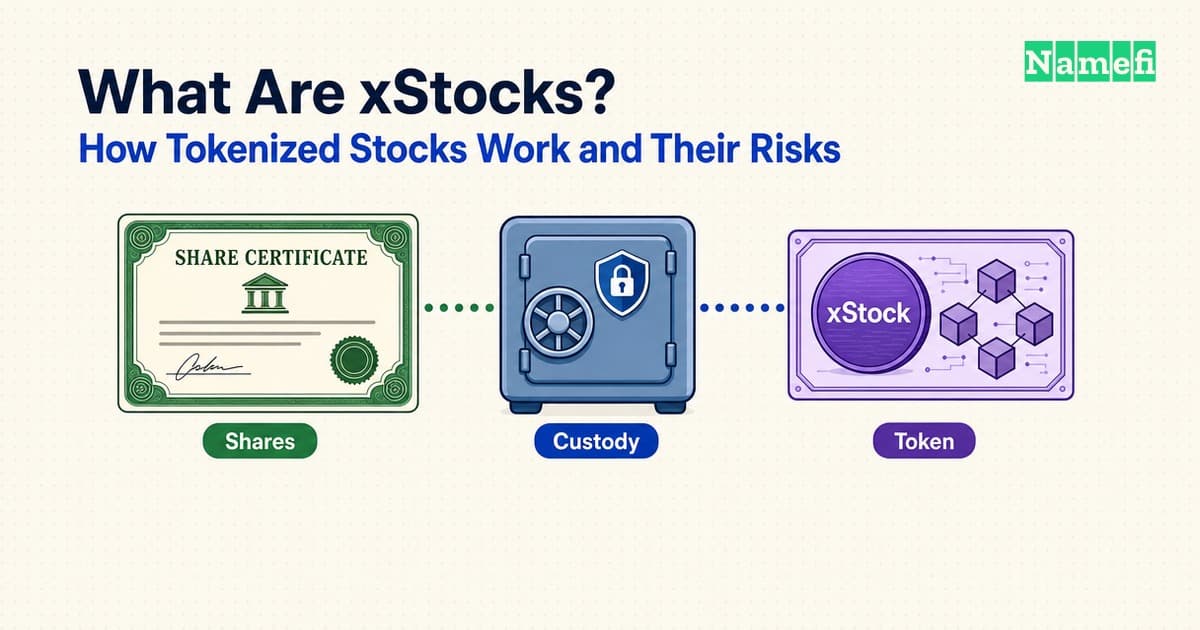
What are xStocks? Why should domainers care?
A clear explainer on xStocks—1:1-backed tokenized equities available on supported blockchains. Learn how xStocks work, how they differ from traditional shares, their risks, and how they fit the broader real-world-asset tokenization trend.
faqdomainstokenization
Why Tokenize Domains On-Chain? Isn't That Redundant?
This article explains why traditional domains can add an on-chain token-control layer, including its interoperability benefits and the registration and legal limits that remain.
faq