.AI Domains Explained: Should You Buy One for Your Project?
Understand the .ai extension, its Anguilla origin, Google search treatment, and the purchase checks that matter for an AI project.


- tld
A .ai domain uses Anguilla's country-code top-level domain. IANA identifies the Government of Anguilla as the delegation manager. The letters also give an artificial-intelligence project an obvious naming association.
Buy a .ai domain when that association suits the project, the exact name works for customers, and the full registration commitment fits the budget. Do not buy solely because the extension appears in another company's address.
This page explains the extension itself. For a provider-focused purchase checklist, read the .ai registrar guide. For an extension comparison, read .ai versus .io.
The extension's technical identity differs from its branding use
IANA classifies .ai as a country-code top-level domain. The delegation record names the Government of Anguilla and links to the registry website. The record establishes the technical classification and manager.
That classification does not certify that a site develops artificial intelligence. As a buyer, evaluate what the complete address communicates. The letters after the dot cannot establish the quality, security, or capabilities of the service before the dot.
A hypothetical AI scheduling project might consider an address ending in .ai because the ending matches the product category. A general local service business might prefer an address that does not imply an AI product. These are editorial naming judgments, not registry eligibility rules.
Write a sentence explaining the project's purpose before searching for a name. Then test whether the domain helps a new customer understand that sentence. Keep the complete domain in the test, rather than evaluating the extension in isolation.
Google treats ai as generic for geographic targeting
Google includes .ai in its list of country-code extensions that Google treats as generic. The Search Central guidance documents that treatment.
Google's classification answers a geographic-targeting question. The classification does not establish a special ranking advantage for an AI company. Do not turn the registry's country association or Google's generic treatment into a traffic guarantee.
As practical publishing advice, choose languages, content, and customer-facing information for the markets you intend to serve. An extension decision cannot replace that work.
If a domain seller promises a search benefit, ask for the exact claim and supporting evidence. Keep a branding preference separate from a demonstrated search result. This article supplies no forecast of visitors, rankings, or conversion rates.
Test the exact name with people who must use the address
Ask a colleague to read the complete domain aloud. Ask another person to type the domain after hearing the name. Check whether the spelling or extension needs repeated explanation.
Use those exercises as editorial tests. The tests reveal problems within your own sample, rather than proving universal customer behavior. Record the mistakes that actually occur instead of inventing a success percentage.
Consider how the address will appear in email, a mobile browser, and a spoken introduction. A short written name can still cause confusion when pronounced. A memorable phrase can still conflict with the project's actual purpose.
Also consider future scope. If the project later expands beyond AI features, decide whether the extension will still represent the organization comfortably. That question concerns your strategy, rather than a restriction imposed by the extension.
The startup domain checklist helps compare an extension choice with other naming requirements.
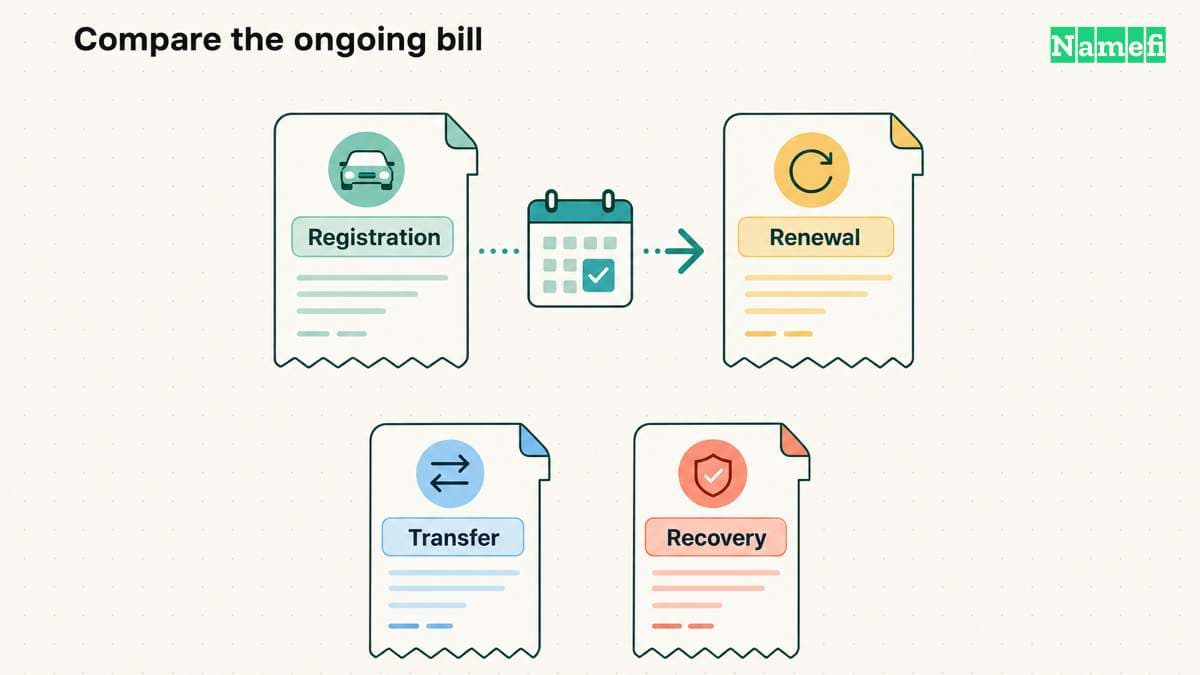
Compare the full registration term and renewal commitment
Search the exact .ai name through a registrar that supports the extension. For example, Cloudflare’s domain search provides a retail search route. Cloudflare lists .ai among supported extensions. Check the actual offer before relying on an old comparison table.
Keep new registration, transfer, and purchase from an existing holder separate. A domain that someone already controls requires a different transaction from an available registration.
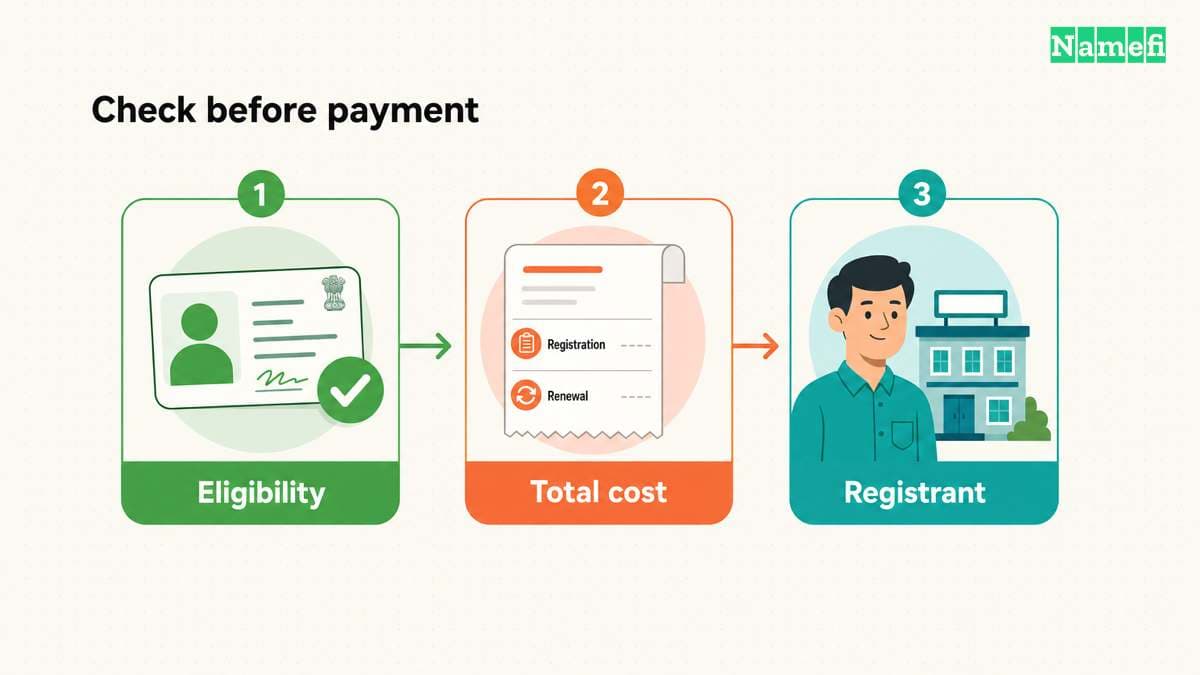
Before paying, record the following details:
| Purchase question | Evidence to save |
|---|---|
| Which name will the order register? | Exact spelling and extension in the cart |
| Which term will the order cover? | Registration period shown in the offer |
| What will the order cost? | Complete charge with currency and taxes |
| What happens at renewal? | Current renewal terms and account settings |
| Who controls the registration? | Registrant details and responsible account |
| How will the provider support a problem? | Current support and recovery procedure |
This table is purchasing advice. The table does not assert a universal .ai price, minimum term, or registrar feature. Verify the terms with the provider before ordering.
For a registrar-side candidate check, enter the complete .ai name in Namefi's domain search. Confirm whether the current result offers the name and review the stated registration terms. The search does not replace the registry rules or guarantee that a name remains available through checkout.
Read the registry's use rules before building a dependency
The .ai registry prohibits abusive use and describes several grounds for intervention. The registry also states that .ai follows the UDRP domain-dispute process. The official FAQ supplies the governing description.
Read the actual rules with the registrar agreement. A technically available name does not answer every naming or rights question. If a proposed name creates a specific legal concern, resolve that concern before investing in a public launch.
The registry permits privacy or proxy services for registration data. The FAQ explains that registrars often provide those services. Ask the chosen registrar which service the offer includes and which data the service covers.
Do not assume privacy features remove the need for accurate registration information or secure account access. Follow the provider's requirements and protect the account that controls the domain.
Registration needs a separate website and email plan
After purchase, confirm the domain in the registrar account and record the renewal configuration. Identify the administrator responsible for future changes. Complete any provider request through the official account.
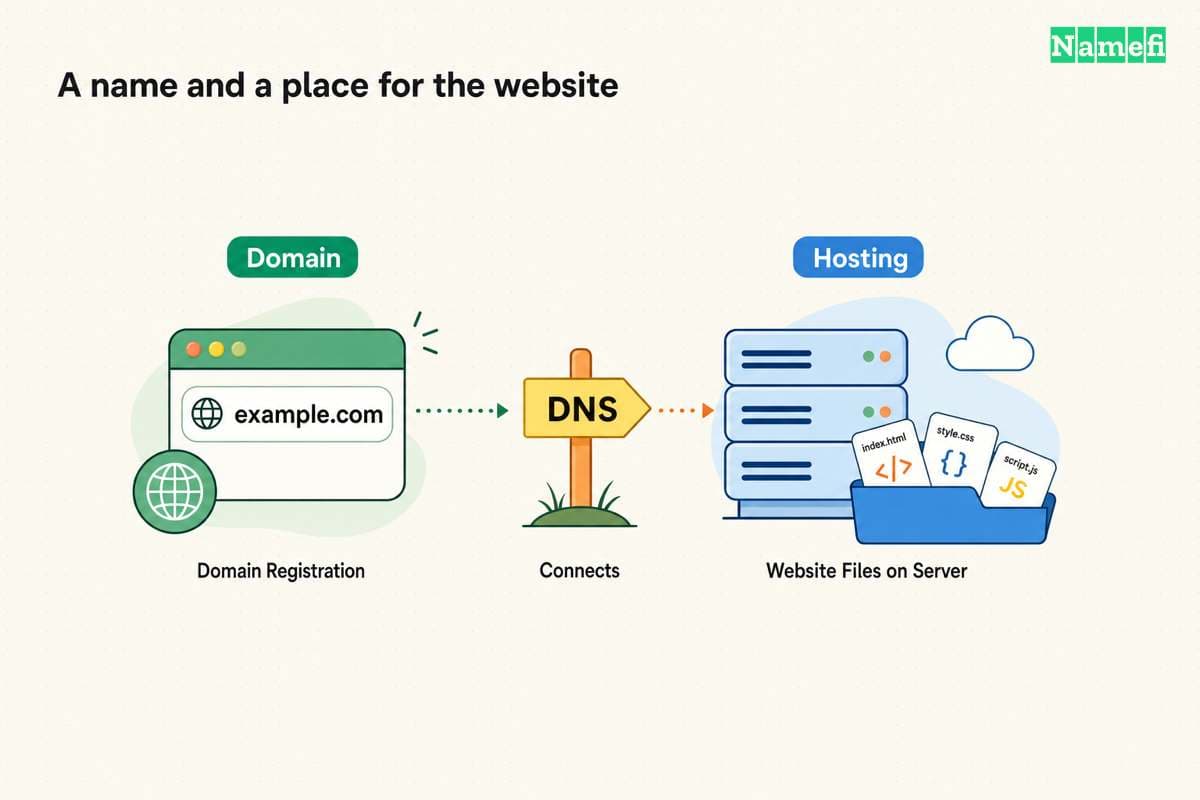
Then connect the domain to the intended services. The website needs a host and the correct DNS records. Custom-domain email needs its own receiving and sending configuration. Our domain versus hosting guide explains the separate service roles.
As operating advice, test the public website and email before announcing the new address. Keep account recovery independent of an untested mailbox under the new domain. Record the DNS provider and website host so future administrators can identify the correct settings.
Choose .ai for a clear project reason, then verify the actual purchase terms. A suitable name, an affordable renewal plan, and reliable account control matter more than copying a fashionable extension.
Sources and further reading
IANA identifies the ai delegation
IANA identifies the ai delegation. Checked 2026-10-30.
The ai registry states its operating rules
The ai registry states its operating rules. Checked 2026-10-30.
Google explains generic country code treatment
Google explains generic country code treatment. Checked 2026-10-30.
Cloudflare lists supported domain extensions
Cloudflare lists supported domain extensions. Checked 2026-10-30.
Related keywords
- ai domain name
- .ai domain meaning
- ai domain country
- Anguilla ccTLD
- buy ai domain
- what is .ai
- .ai domain
- .ai TLD