.com vs Creator TLDs (.me, .art, .studio): Which Fits You?
Choose between .com, .me, .art, and .studio with verified registry facts, eligibility rules, real examples, and practical registration trade-offs.

- guide
Choose .com when you want an address that leaves your future business open-ended. Choose .me when the person is the brand, .art when art defines the work, and .studio when the business presents itself as a studio. A clean creator domain can be a better purchase than an awkward .com with extra words, hyphens, or an acquisition price you cannot justify.
The choice is between a broad address and a more descriptive one. It is not a contest between professional and amateur websites. Start with the exact names you can actually register, then compare meaning, renewal terms, and how people will use the address.
The comparison starts with what your address needs to say
“Creator TLDs” is a useful naming group, not an official registry category. These three endings share a way to express identity after the dot, but they express different identities. .me points toward a person, .art toward a field, and .studio toward a practice or business. They do not share one operator or one policy.
| Choice | Best fit to test | Main trade-off | Registry and eligibility context |
|---|---|---|---|
.com | A creator business that may expand into unrelated products or services | The suffix contributes little information about the work | Verisign; open registration |
.me | A personal portfolio, independent consultant, or creator publishing under their own name | The personal emphasis may stop fitting a team brand | Montenegro's ccTLD; doMEn operates the registry; second-level registration is open worldwide |
.art | An artist, gallery, collection, or art-focused project | The explicit art identity may feel narrow after a change of direction | UK Creative Ideas Limited; registration is open worldwide |
.studio | A design, photography, recording, animation, or other studio business | The word needs to fit how you describe the business | Dog Beach, LLC, c/o Identity Digital; open registration |
The fit judgments are editorial guidance. The operator and eligibility details come from the sources below. For the longer naming histories, see our references for .com, .me, .art, and .studio.
The registry facts separate the creator group
.com gives you a broad address with a long history
IANA lists VeriSign Global Registry Services as .com's manager. Verisign dates the first .com registration, symbolics.com, to March 15, 1985. That is a first-registration milestone, not a modern retail launch date. You do not need to run a company: OVHcloud's eligibility terms say registration is open to natural or legal persons without geographical restriction.
Verisign's Domain Name Industry Brief reports 169.8 million .com registrations as of September 30, 2026. That is a domain-base count, not a count of active businesses or successful websites. It gives scale; it does not tell you whether your name is available or worth buying.
For a creator planning to move from a personal newsletter into publishing, courses, and unrelated products, .com is a sensible starting point. The suffix does not commit the business to one medium or organizational shape.
.me fits a personal identity without requiring Montenegro residency
IANA identifies .me as a country-code TLD managed by the Government of Montenegro. ICANN approved its delegation on September 11, 2007. The registry's dispute rules identify doMEn as the operator selected by the Montenegrin government. Those are separate roles, not competing operator claims.
For names directly under .me, the registry states that registration is open worldwide with no nexus requirements. Its homepage reports over 1.1 million domains registered, as observed November 6, 2026. The page does not assign that total a reporting period, so treat it as a registry website statement rather than a quarterly census.
About.me describes its product as a personal homepage. The name illustrates the personal reading, although registering your own .me domain is a different purchase from creating an account on About.me. If you want an address built around a phrase, our domain-hacks guide covers that separate naming technique.
.art makes the field explicit without testing your artistic credentials
IANA lists UK Creative Ideas Limited as the manager and June 23, 2016 as the delegation date. The registry's FAQ says .ART is open to anyone worldwide. You do not need gallery representation or an art qualification to register.
The registry's About page reports over 700,000 registered domains, observed November 6, 2026, without a dated reporting period. The same page identifies HUG.art as an online gallery for artistic talent. That is a concrete art-platform use, not evidence that every .art registrant is a working artist.
Choose .art when you want the address to introduce your artistic practice before the page loads. Prefer something broader when art is just one temporary category in a business that also offers unrelated services.
.studio names a practice that can grow beyond one person
IANA lists Dog Beach, LLC, c/o Identity Digital, as the manager and records delegation on July 8, 2015. OVHcloud states that registration is open to natural or legal persons without geographical restriction.
Name.com publishes a testimonial from Brewing Studio co-founder Raghav Bhasin about choosing Brewing.studio. That example shows the suffix doing useful work: “studio” becomes part of the full business address. It is a documented naming choice, not a promise about the site's current performance.
For a photographer hiring editors or a designer forming an agency, .studio can fit the planned team better than .me. A recording studio and a yoga studio can both make sense here; .studio is broader than fine art.
Your situation should decide the shortlist
You publish and take commissions under your own name. Start with your name in .me and .com. Choose .me if the personal emphasis is deliberate and the complete address is cleaner. Choose .com if you expect to turn the name into a broader company identity. For a portfolio devoted specifically to art, add .art to the shortlist.
You run an art practice, gallery, or collection. Give .art serious consideration even when a .com is available. The artistic identity is the point. Compare the full address on an exhibition label, invoice, and email signature. If the .com adds “official,” “online,” and a location merely to become available, the shorter .art may be the better choice.
You sell creative services as a team. Prefer .studio when “studio” already belongs in your introduction. Avoid repeating the word on both sides of the dot unless the repetition is intentional. If the business may become a general consultancy or software company, .com leaves more room.
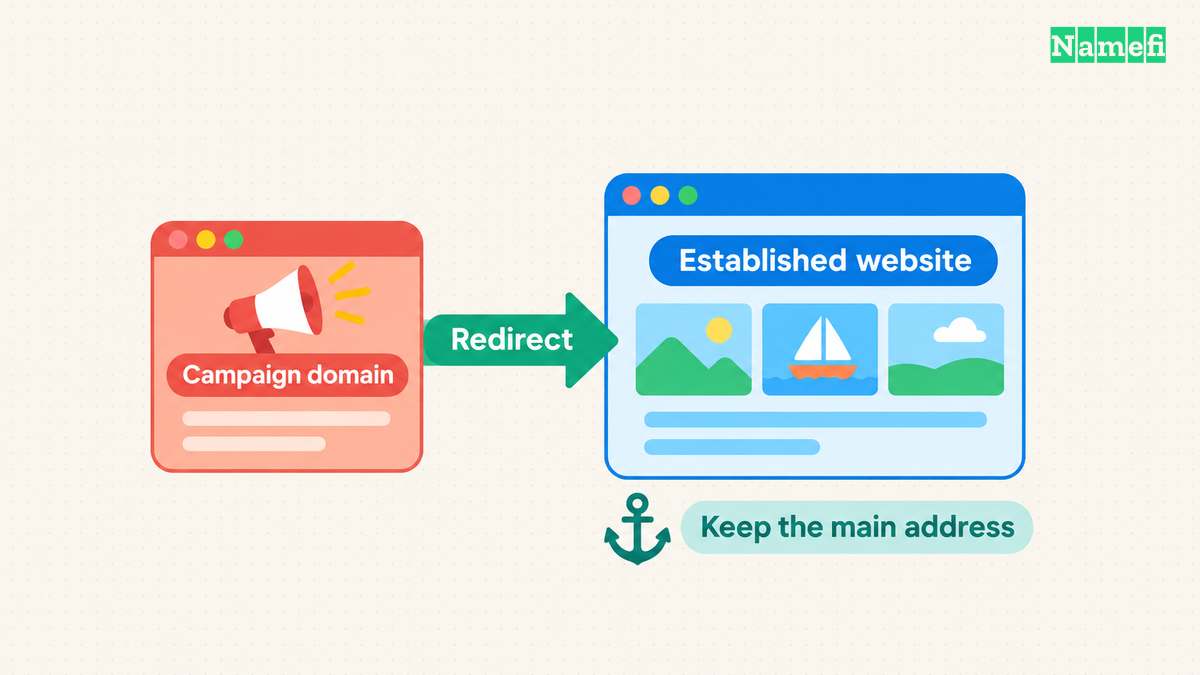
You already have an established website. Do not move solely because another suffix looks better on a mockup. Decide whether the clearer identity warrants changing customer-facing addresses. A second domain can serve a campaign or redirect without replacing the main address. Keep the registration only if the continuing renewal obligation serves a purpose.
If the bigger problem is the name before the dot, use our project-naming guide. Our brandable-versus-keyword comparison addresses a different decision: the kind of name you choose, rather than the extension.
The trade-offs need a checkout check and a spoken test
Compare the exact renewal quote. Do not assume the creator group shares one price. The .art FAQ distinguishes standard and premium names and explains that registrars set retail pricing. Record registration, renewal, transfer, taxes, and premium status for each candidate. Ask specifically whether a premium renewal applies. A price advertised for the extension is not necessarily the quote for your name.
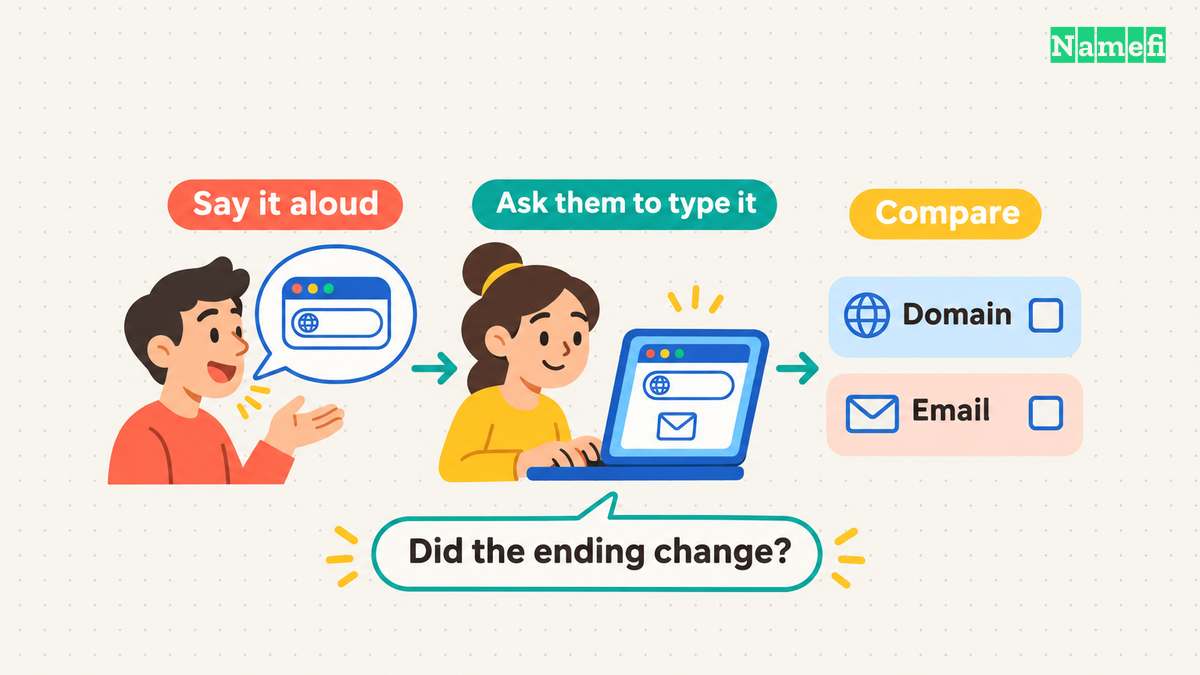
Test the complete address aloud. Say the domain to someone who has not seen it, then ask them to type it. Test the email address too. If the listener substitutes .com, treat that as a reason to reconsider the name or how you communicate it. Do not assume a universal error rate for any extension.
Choose for readers, not a promised ranking boost. Google says its systems treat new gTLDs like other gTLDs and that keywords in a TLD give no search advantage or disadvantage. Its geographic guidance explicitly treats .me as generic rather than country-targeted. That search classification does not turn .me into a generic registry delegation, or guarantee rankings for any site.
Register the name that fits the work you intend to keep doing
Choose .me for a deliberately personal identity, .art for an explicitly artistic one, or .studio for a business that calls itself a studio. Choose .com when the identity needs to stay broad. Reject an expensive or cumbersome .com when a clear creator address serves the work better.
When comparing options at Namefi, apply the same standard: confirm the exact name's availability and renewal terms before paying. The decision belongs to the full address and the ongoing commitment, not just the letters after the dot.
Comparing more options? Start with our guide to .com vs every other TLD.
Sources and further reading
- IANA —
.commanager; fetched 2026-11-06. - Verisign — First
.comregistration; fetched 2026-11-06. - Verisign DNIB — Q3 2026 domain-base totals; fetched 2026-11-06.
- OVHcloud —
.comeligibility; fetched 2026-11-06. - IANA —
.memanager and delegation approval; fetched 2026-11-06. - doMEn — Operator and dispute rules, worldwide registration policy, and reported registration total; fetched 2026-11-06.
- About.me — Personal homepage service; fetched 2026-11-06.
- IANA —
.artmanager and delegation; fetched 2026-11-06. - .ART Registry — Eligibility and pricing FAQ and registration total and HUG.art example; fetched 2026-11-06.
- IANA —
.studiomanager and delegation; fetched 2026-11-06. - OVHcloud —
.studioeligibility; fetched 2026-11-06. - Name.com — Brewing.studio testimonial; fetched 2026-11-06.
- Google Search Central — New gTLDs and search and generic treatment of selected ccTLDs; fetched 2026-11-06.
About the author(s)
Fenwei Bian is a software developer in her thirties who spends her working hours in pull requests and her weekends with her hands in soil or sawdust. Years of open source on GitHub taught her that names are interfaces: a good one is clear, honest about what it does, and kind to whoever has to use it next.
She gardens because it rewards patience and punishes wishful thinking, and she does woodwork because a joint either fits or it doesn't. Both habits show up in how she writes about naming — measure twice, check the source, and don't sand over a rough spot and hope no one notices.
For Namefi she writes about how domain markets actually move, the practical trade-offs of tokenizing and flipping names, and picking a domain you'll still be glad you own in twenty years.