
Brandable vs Keyword Domains: Which Sell Better?
Brandable invented names vs exact-match keyword domains: who buys each, which resells more reliably, and the trademark angle every flipper should know.
- domains
- domain-investing
- domain-flipping
- comparison

Two domains land in your inbox the same week. One is Stripe-style: a short, invented word that means nothing until a company pours meaning into it. The other is CarInsurance: a plain description of exactly what the buyer sells. Both can make money. They make it in completely different ways, sell to completely different buyers, and carry completely different risks. Buying one when you should have bought the other is one of the most common ways flippers waste a renewal budget.
This guide draws the line between brandable invented names and exact-match keyword names: what each actually is, who pays for it, which resells more reliably, and the trademark trap that hits each side differently. It sits under the domain flipping hub and the pillar on what makes a domain valuable, and if you only take one decision rule from it, take the last section on trademarks.
The two kinds of name
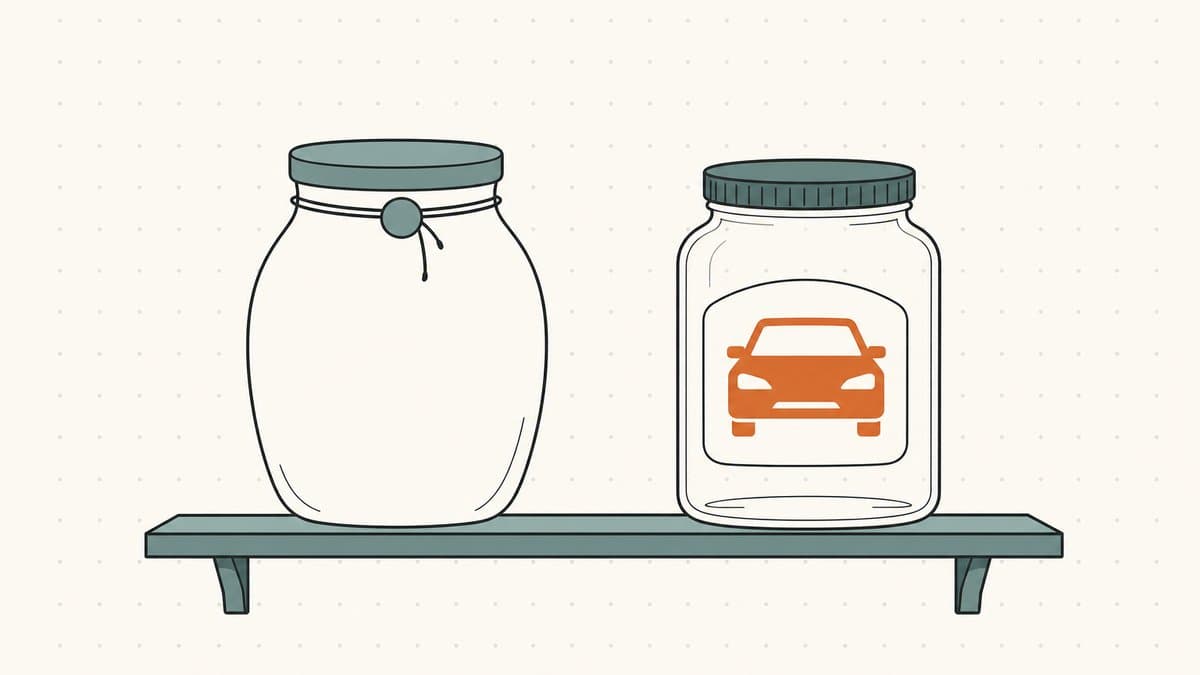
A keyword domain is built from words people already type. It describes a market in plain language: cars, insurance, hotels, loans. The whole pitch is that the name is the category, so anyone in that category understands it instantly and some fraction of them type it straight into the address bar. This is the oldest target in domaining. As Wikipedia's overview of domain name speculation puts it, the main targets of domain name speculation are generic words which can be valuable for type-in traffic and for the dominant position they would have in any field due to their descriptive nature. The article even names the classic shopping list: generic words and phrases such as poker, insurance, travel, creditcards, loan.
A brandable domain is the opposite bet. It's a short, invented or arbitrary word that carries no built-in meaning at all: Stripe, Zillow, Google, Hulu. Nobody types zillow into a browser hoping to find real estate the way they might type homes. The name is a blank vessel a company fills through marketing. Its value isn't in describing a market; it's in being short, sayable, spellable, and ownable as a unique identity. Many of the fundamentals that drive brandable value are the same ones we cover in what makes a domain valuable, and the cleverest corner of the brandable world is the domain hack, where the TLD itself spells the last syllable of the word.
Who buys each

The buyers are not the same people, and selling well means knowing which one you're holding inventory for.
Keyword domains sell to operators who want traffic and category authority. The buyer for CarInsurance.com is a company that sells car insurance and wants the direct-navigation traffic, the SEO signal, and the credibility of owning the category's plainest address. That value is concrete and measurable: type-in visitors, search relevance, the implied legitimacy of being the insurance site. The biggest exact-match sale most people can name is Hotels.com, which per Wikipedia's list of expensive sales went for $11,000,000 in 2001, after which Hotel Reservations Network acquired the domain and rebranded as Hotels.com in 2002. A whole company renamed itself to match the keyword. That's the keyword buyer's mindset in one move.
Brandable domains sell to founders building a new identity. The buyer for an invented name is usually a startup or a rebranding company that wants a name no competitor can copy and no customer confuses with anyone else. They're not buying traffic; they're buying a clean slate. The record-setting Voice.com sale to blockchain firm Block.one for 30 million US dollars sits at the brandable end of the spectrum: voice is a real word, but Block.one wasn't buying voice-related type-in traffic, it was buying a short, premium identity for a product. Stripe is the purest version of the founder buyer: Wikipedia records that John and Patrick Collison founded Stripe in Palo Alto, California, in 2010, and the name Stripe told customers nothing about payments on day one. It means "payments" now only because the company made it mean that. If you're sourcing brandables, you're really sourcing names a not-yet-existing company will want, which is exactly the muscle we train in how to name your project.
Which resells more reliably
Here's the part flippers actually care about, and the honest answer is a trade-off, not a winner.
Brandable names have a wider buyer pool but a fuzzier price. A good short brandable could fit a fintech, a SaaS tool, a coffee brand, or a consultancy. That breadth is the upside: many possible buyers means more shots at a sale, which is why a lot of volume domainers lean brandable. The downside is that "fits many" also means "is essential to none." Each buyer can almost always find another acceptable invented name, so your pricing power is soft unless the name is genuinely excellent. Brandable flipping is a volume-and-patience game: hold a lot, sell a few, let the occasional standout name carry the portfolio. The economics of that shape are laid out in the domain flipping hub.
Keyword names have a narrow buyer pool but harder pricing power. Only people in the car-insurance business want CarInsurance.com, so the pool is small. But for that small pool the name can be close to irreplaceable, and irreplaceable is where pricing power lives. The descriptive dominant position Wikipedia describes is hard to substitute: there's only one plainest name for a category. The catch is that the strongest keyword names in the liquid .com space were mostly registered or sold decades ago, so the realistic keyword opportunity today is narrower and more often lives in a [niche keyword + strong TLD] combination than in a one-word .com you'll never get near.
A few practical rules of thumb, framed as estimates rather than measured fact:
- The extension matters more for keyword names. A keyword's value leans heavily on the credibility and type-in habit of
.com; the same keyword on a weaker extension loses much of the "I'll just type it" advantage. Brandables travel better across extensions, which is why founders happily build on.io,.ai,.co,.xyz,.app, and.am. - Brandables reward pronounceability; keywords reward exactness. A made-up word that's hard to spell out loud is a weak brandable. A keyword that isn't the exact phrase buyers use is a weak keyword.
- Sell-through rates for both are low for hand-registered inventory, often low single digits per year. Neither category is a fast flip on average; both work as portfolios.
When the deal does close, the handoff mechanics are identical for both kinds of name, usually routed through neutral escrow or an auction marketplace so neither side moves first. We cover that flow in domain escrow explained and the step-by-step in how to sell a domain name you own.
The trademark angle
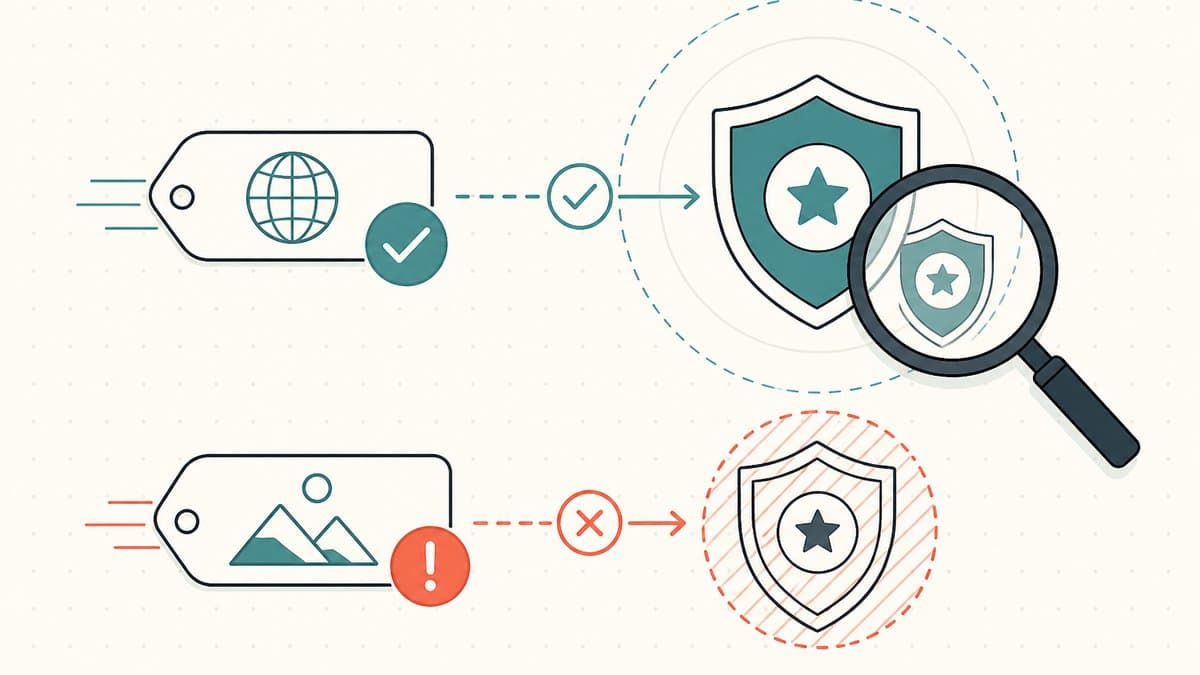
This is where the two categories split hardest, and it's the section that protects everything else.
Brandable names carry the higher trademark creation value and the higher collision risk. Trademark law rewards exactly the quality that makes a name brandable. On the spectrum of trademark distinctiveness, an invented word sits at the strong end: as Wikipedia puts it, a fanciful / inherently distinctive trademark is prima facie registrable, and comprises an entirely invented or "fanciful" sign. That's why founders love coined names: they're the easiest to protect and own outright. The flip side for you as a seller is collision risk. Because invented words are so protectable, a brandable you hand-register might already be someone else's registered mark in their industry, and a name that reads as clever can quietly be a trademark you don't own. The danger is not limited to an exact-string match: under the UDRP, a domain that contains an entire mark or leaves a dominant feature recognizable will normally satisfy the first element's "identical or confusingly similar" threshold, and adding a descriptive word usually does not avoid that comparison (WIPO Overview 3.1, §§1.7–1.8).
Keyword names carry the lower trademark value but the safer squatting profile, with one trap. A purely descriptive or generic keyword is hard for anyone to monopolize. A generic term is the common name for the products or services in connection with which it is used, such as "salt" when used in connection with sodium chloride, and generic terms can't be locked up as trademarks at all, while descriptive marks must acquire distinctiveness through secondary meaning before they get protection. So owning insurance or loans rarely steps on anyone's mark. The trap is the keyword name that includes a brand: BuyNikeShoes.com is a keyword construction wrapped around someone else's trademark, and that's squarely the kind of name a rights holder can challenge through the UDRP. A complainant must prove all three UDRP elements—not only confusing similarity, but also the registrant's lack of rights or legitimate interests and bad-faith registration and use (WIPO UDRP Guide).
The clean operating rule covers both categories: flip generic, descriptive, and independently invented names; do not buy a name that targets or leans on a specific company's mark, including a misspelling or a longer phrase in which that mark remains recognizable. Search both exact and confusingly similar marks before you buy, and get qualified legal advice when the risk matters. This diligence matters more for brandables precisely because their distinctiveness is what makes them protectable in the first place.
So which should you flip?
Neither category wins outright; they fit different temperaments and budgets.
Go brandable if you want a wider buyer pool, can hold inventory patiently, have a good ear for names that sound like real companies, and are willing to do trademark diligence on every pickup. Go keyword if you can find a genuinely strong exact-match phrase, accept a smaller buyer pool in exchange for harder pricing power, and understand that the truly liquid one-word .coms are mostly gone. Most working portfolios end up holding both: brandables for volume and optionality, a handful of sharp keyword names for the occasional high-conviction sale.
Whichever side of the line a name sits on, the part that decides whether you actually get paid is the transfer. The standoff is the same for an invented word and a category keyword: the seller won't hand over the name before the money lands, and the buyer won't wire before the name moves. That friction is exactly what Namefi is built to narrow, with tokenized ownership that makes control of a real ICANN domain easier to verify and transfer and DNS continuity so the name keeps resolving cleanly through the handover. The name type is your call; a clean, auditable settlement is what turns either one into a check.
Friendly Disclaimer (Read Me!)
We're not lawyers, accountants, financial advisors, or doctors, and nothing in this article is legal, financial, tax, accounting, medical, or any other flavor of professional advice. We write these posts to educate ourselves and as a convenience for our customers. Info here may be out of date, geography-specific, or just plain wrong. We make mistakes too.
For any important decision, please consult a real professional (seriously!). Or if that's not your vibe, ask a friend, ask Twitter, ask Reddit, ask an AI, or ask a psychic. In short: DOYR - Do Your Own Research. Let's learn and have fun.
Sources and further reading
- Wikipedia — Domain name speculation (generic words, type-in traffic, descriptive dominance)
- Wikipedia — Trademark distinctiveness (fanciful vs descriptive vs generic; the spectrum)
- Wikipedia — List of most expensive domain names (Hotels.com, $11M, 2001)
- Wikipedia — Stripe, Inc. (founded by the Collison brothers, Palo Alto, 2010)
- SIDN — Voice.com sold for USD 30 million (Block.one, brandable one-word .com)
- WIPO — Guide to the Uniform Domain Name Dispute Resolution Policy
- WIPO — Overview of WIPO Panel Views on Selected UDRP Questions, Third Edition
Contributors

Fenwei Bian is a software developer in her thirties who spends her working hours in pull requests and her weekends with her hands in soil or sawdust. Years of open source on GitHub taught her that names are interfaces: a good one is clear, honest about what it does, and kind to whoever has to use it next.
She gardens because it rewards patience and punishes wishful thinking, and she does woodwork because a joint either fits or it doesn't. Both habits show up in how she writes about naming — measure twice, check the source, and don't sand over a rough spot and hope no one notices.
For Namefi she writes about how domain markets actually move, the practical trade-offs of tokenizing and flipping names, and picking a domain you'll still be glad you own in twenty years.

Victor Zhou is a technology founder and standards editor focused on digital identity and trust. He founded Namefi, edits Ethereum Improvement Proposals, and previously led smart-contract architecture work at Google Labs.
His work sits at the intersection of naming, ownership, and the systems people use to establish identity online. That perspective makes him especially interested in the way names move between personal meaning, public recognition, and digital infrastructure.
For Namefi, Victor edits and writes about domains as durable digital identity: how names become ownable onchain assets, how tokenization changes custody and trust, and what naming can learn from the systems people use to establish identity online.
Related guides
- Domain Appraisal Tools Compared: Estibot vs GoDaddy vs RealityHow automated domain appraisers like Estibot and GoDaddy actually work, where they systematically miss, and how to use them as a first filter.
- Where to Sell Domains: Afternic vs Sedo vs Dan vs NamefiAfternic vs Sedo vs Dan vs onchain marketplaces compared on reach, fees, and fast transfer — plus how to list one name across several at once.
- How We Cut AI Buyer Discovery Cost by 85%: Start Lean, Escalate With EvidenceA practical method for cheaper buyer discovery using progressive model escalation, LLM-as-judge gates, and Laminar traces and evals.
- ENS vs DNS Domain Flipping: What's DifferentHow flipping ENS .eth names differs from flipping traditional DNS domains: ownership, liquidity, renewal, gas, and what each is good for.