
ENS vs Unstoppable vs Tokenized DNS Domains
ENS vs Unstoppable Domains vs tokenized ICANN DNS, compared on browser resolvability, renewals, and who actually controls the name.
- domains
- domain-flipping
- web3
- comparison

If you are flipping names on-chain, the first decision is which kind of "on-chain name" you are even trading. The three categories most people lump together are not the same asset, and the differences decide whether the name resolves in a browser, whether you owe a renewal next year, and who actually controls it. This guide compares the three head-to-head: ENS (.eth), Unstoppable Domains (.crypto, .x, .nft), and tokenized real ICANN DNS domains (the .com/.io/.xyz names you can tokenize on Namefi).
They overlap in one way: each puts name ownership in your wallet as a token. They diverge on everything that matters for resale. If you only remember one thing, remember this: ENS and Unstoppable names live outside the ICANN root, while a tokenized DNS domain is an ICANN domain with a token bolted on. That single fact cascades into resolvability, renewals, and control.
What each one actually is
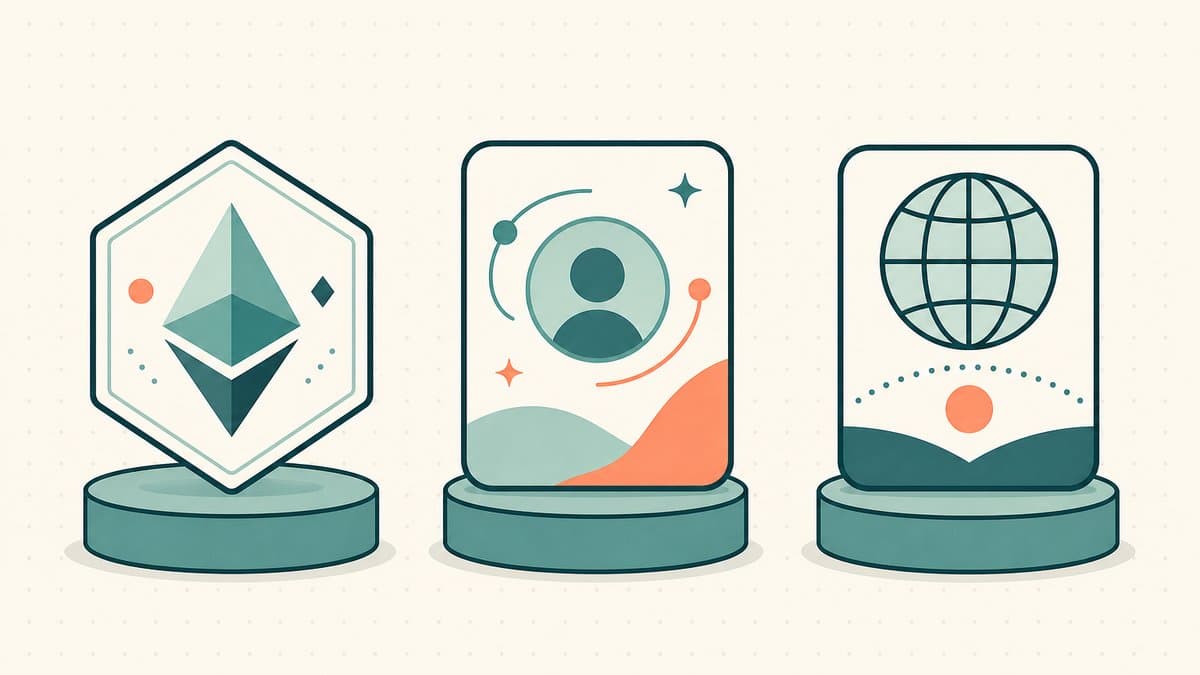
ENS is a naming system on Ethereum. The official docs describe it plainly: ENS maps human-readable names like 'alice.eth' to machine-readable identifiers such as Ethereum addresses, content hashes, and metadata. A .eth name is issued as a token on Ethereum, and you transfer their name just like with any other ERC721 token — so it is, mechanically, an ERC-721 NFT. Critically, .eth is not delegated by ICANN; it is a namespace ENS created on-chain.
Unstoppable Domains sells blockchain-native names like .crypto, .x, .nft, and .dao. Those four example TLDs are minted on Polygon by default, not Ethereum, according to Unstoppable's current chain-by-TLD reference. Its broader catalog spans Polygon, Base, Solana, and Sonic, while .eth is the Ethereum entry in the same reference. The company stores Web3 names in a wallet as digital assets — its support docs say Web3 domains are stored in your crypto wallet as digital assets (NFTs) and are fully owned by you. Like .eth, Unstoppable's blockchain-native TLDs are not part of the ICANN root.
Tokenized DNS domains are different in kind. The underlying asset is an ordinary ICANN domain — example.com, yourname.io — registered through an accredited registrar, with an on-chain token minted to mirror its ownership. We unpack the mechanics in what are tokenized domains, but the short version: it is one name with two synchronized layers, not a new namespace. For the broader category framing, see tokenized domain vs web3 domain.
Browser resolvability: does the name just work?
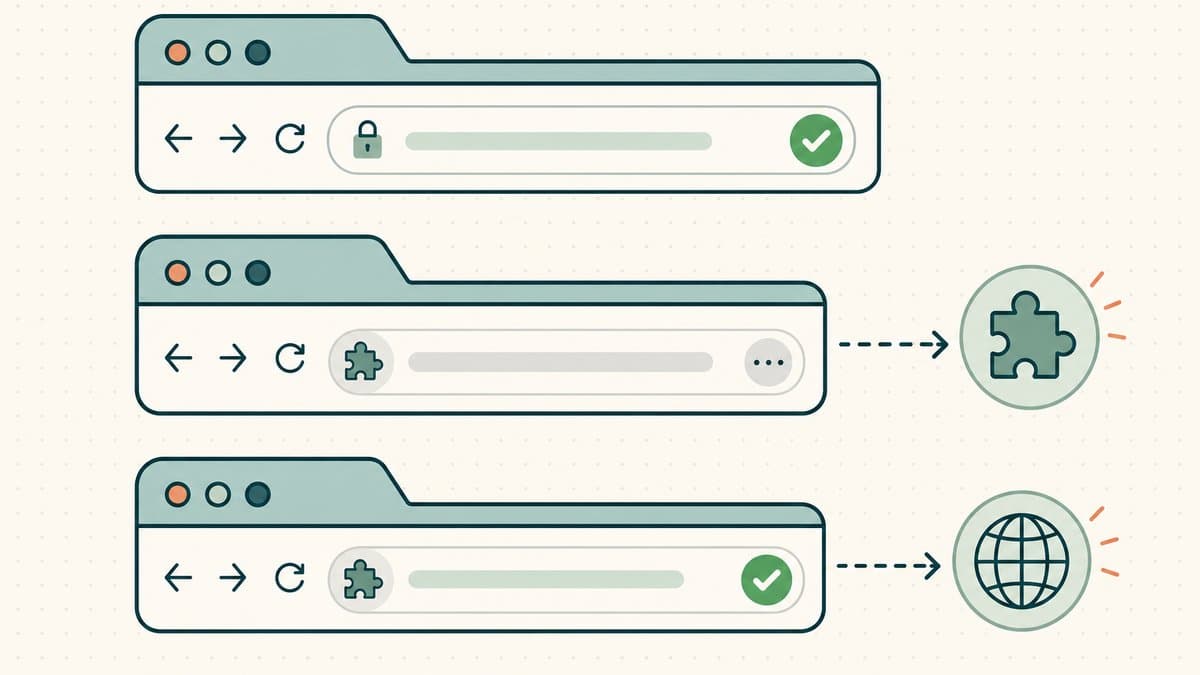
This is the cleanest dividing line, and for a flipper it is often the whole ballgame, because resolvability is what most end buyers are actually paying for.
A tokenized .com resolves everywhere a normal .com does — every browser, every email client, every CDN and certificate authority — because it is a normal .com. Nothing special is required of the visitor.
ENS and Unstoppable names do not clear that bar on their own. Unstoppable is candid that its names need help: you can download our extension for domain resolution on Chrome & Firefox, and they resolve natively only in a handful of crypto-friendly browsers like Brave and Opera. ENS .eth names are the same story in standard browsers without a resolver, gateway, or extension. That is not a knock on the engineering — it is a deliberate design choice that buys these systems freedom to iterate outside ICANN. But it changes who your buyer is: you are selling primarily into the web3 and wallet-native audience, not the general market that expects a name to load in plain Chrome.
One nuance worth knowing: ENS bridges toward DNS rather than away from it. Its docs note that ENS supports DNS names, allowing users to import DNS names into ENS via DNSSEC. So a .com owner can project their real name into ENS — but that is the DNS name doing the resolving in the regular internet, with ENS adding an on-chain identity layer. It does not make .eth itself resolve in a standard browser.
Renewals: do you owe money next year?
The renewal model is where the three diverge in a way that directly hits your carrying cost — and where a flipper can get a nasty surprise.
ENS .eth names carry an annual fee. The official registrar docs are explicit on pricing: a 5+ letter .eth will cost you 5 USD per year. A 4 letter 160 USD per year, and a 3 letter 640 USD per year, and this fee is paid in ETH. Miss it and there is a grace window, after which, per ENS, 90 days after a name expires (aka after the grace period), the name will go into a Temporary Premium Auction. For short, valuable .eth names the renewal is a real line item.
Unstoppable Domains markets the opposite model: a one-time purchase. Its docs say Web3 domains can't be taken away, don't require renewals, and are yours for life. No annual bill is attractive for a buy-and-hold flipper, though "for life" is a claim about the protocol's intent, not an ICANN guarantee — these names exist only as long as the resolution infrastructure that reads them does.
Tokenized DNS domains follow normal ICANN economics: you pay a registrar's annual renewal, and gTLD registrations max out at a 10-year term. That is a recurring cost, but it is the same well-understood cost every .com investor already budgets for. The tokenization does not add a second renewal — the token tracks the one DNS registration underneath.
Who actually controls the name
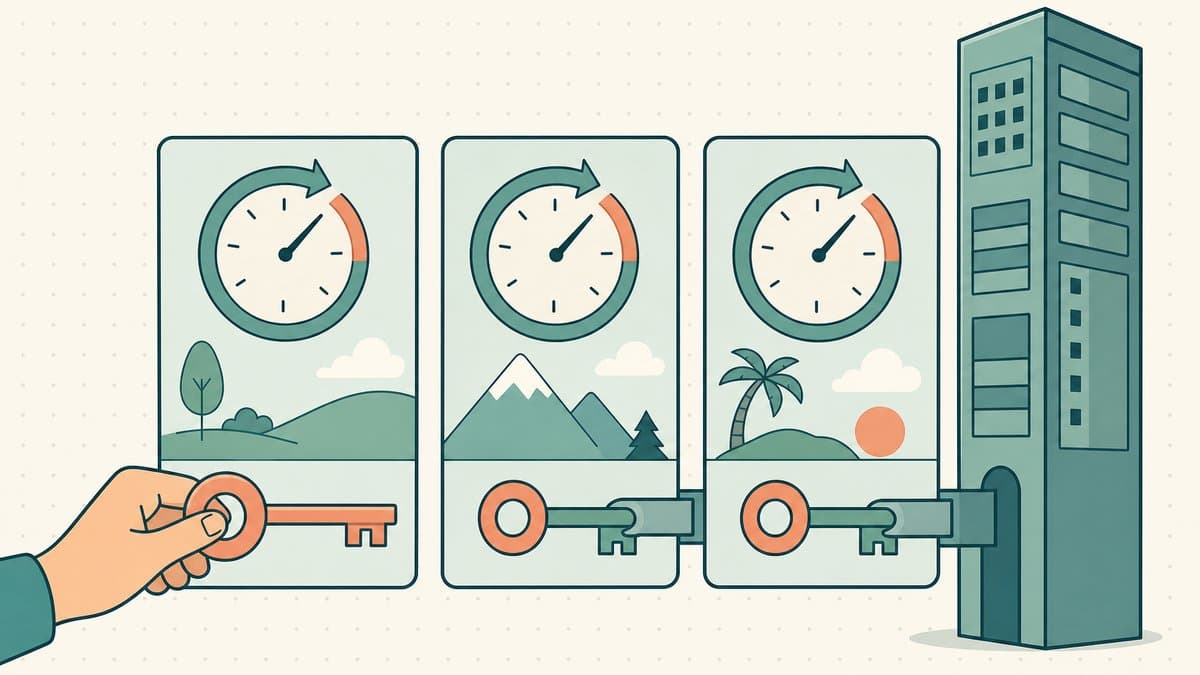
"Self-custody" gets used loosely across all three, so be precise about what control means at each layer.
For ENS and Unstoppable, on-chain control is genuinely yours: hold the private key, hold the name, with no registrar able to claw it back through a support ticket. That is the real appeal of custodial ownership being replaced by wallet custody. The catch is that "the name" only means something inside the resolution systems that honor it. If you control the token but the only places that resolve it are a browser extension and some dApps, your control is real but its reach is bounded by adoption.
For a tokenized DNS domain, control is layered. The token in your wallet governs on-chain ownership and transfer; the underlying name remains a real ICANN domain, which means it stays subject to renewal, ICANN policy, and UDRP disputes — the same rules every .com lives under. A reputable tokenization platform keeps the two layers in lockstep, so transferring the token moves the domain, with DNS continuity so the live site does not blink during a handover. You get wallet-native control and a name the entire internet already recognizes. The tradeoff is honest: you are not "outside the system," because the asset is a real domain that answers to real-world rules. We go deeper on the custody question in recovering a tokenized domain after wallet loss.
Liquidity and where they sell
All three categories can represent a name as an on-chain token, but do not assume one token standard, blockchain, or marketplace covers every asset. ENS .eth uses ERC-721 on Ethereum; the Unstoppable examples in this article default to Polygon, and Unstoppable says marketplace availability depends on the chain where a TLD is minted. Its own marketplace currently supports Polygon-minted names, while third-party support varies. Where a compatible NFT marketplace settles payment and token delivery in one transaction, the sale can use an atomic buyer-pays-and-receives swap without a third-party escrow agent holding the asset mid-deal. That shared pattern is what makes on-chain names appealing to flip, and it is covered in how tokenized marketplaces replace escrow.
The buyer pools differ, though. ENS has the deepest secondary market of the three — premium .eth names have traded for serious money. CoinGecko records that the most expensive crypto domain ever sold was "paradigm.eth", which sold for $1.51 million (420 ETH) on October 9, 2021, and The Block reported that the Ethereum Name Service (ENS) domain 000.eth was purchased for 300 ETH ($315,000). Those are real numbers, but treat them as outliers, the same way Voice.com is an outlier in the DNS world — they tell you a ceiling exists, not what a typical name fetches. Any "floor price" figure you see quoted is a moving estimate, not a fact.
Tokenized DNS domains tap a different and larger buyer universe: anyone who wants a real, universally resolvable domain plus wallet-native ownership. That is the audience that wants a name to load in any browser, run email, and carry an SSL certificate — without giving up the option to sell it as an NFT.
Which one to flip
There is no single winner; there is a fit for your buyer.
- Flip ENS
.ethif you are selling to a crypto-native audience that values short numeric or word names as on-chain identity, and you are comfortable carrying the annual renewal on anything worth holding. - Flip Unstoppable names if your buyer wants a no-renewal, wallet-first web3 identity and resolvability in standard browsers is not their priority. See premium web3 TLDs for how that namespace is valued.
- Flip tokenized DNS domains if you want the largest buyer pool and a name that works — a real ICANN
.com/.io/.xyzyou can hold, program, and sell on-chain, while it resolves for everyone. Start with how to tokenize your .com, and if you are weighing platforms, choosing a domain tokenization platform walks the criteria.
For the bigger picture on why any of this beats the old escrow-and-trust model, the domain flipping hub ties the whole skill stack together, and why tokenize domains covers the upside in depth. Whichever category you trade, know which asset is in your wallet before you quote a price — because resolvability, renewals, and control are not details, they are the product.
Friendly Disclaimer (Read Me!)
We're not lawyers, accountants, financial advisors, or doctors, and nothing in this article is legal, financial, tax, accounting, medical, or any other flavor of professional advice. We write these posts to educate ourselves and as a convenience for our customers. Info here may be out of date, geography-specific, or just plain wrong. We make mistakes too.
For any important decision, please consult a real professional (seriously!). Or if that's not your vibe, ask a friend, ask Twitter, ask Reddit, ask an AI, or ask a psychic. In short: DOYR - Do Your Own Research. Let's learn and have fun.
Sources and further reading
- ENS Docs — ENS protocol: maps human-readable names to addresses
- ENS Docs — ETH Registrar: .eth transfers like any other ERC721 token; annual pricing (5 / 160 / 640 USD per year); fee paid in ETH; 90-day grace
- ENS Docs — ENS supports importing DNS names via DNSSEC
- Unstoppable Domains Support — Web3 domains stored as NFTs in your wallet; no renewals; browser and wallet uses
- Unstoppable Domains Support — Current blockchain assignments by TLD and chain-dependent marketplace support
- CoinGecko Research — Most expensive crypto domains: paradigm.eth sold for $1.51 million (420 ETH), Oct 9 2021
- The Block — 000.eth purchased for 300 ETH ($315,000), second-largest ENS sale
Contributors

Fenwei Bian is a software developer in her thirties who spends her working hours in pull requests and her weekends with her hands in soil or sawdust. Years of open source on GitHub taught her that names are interfaces: a good one is clear, honest about what it does, and kind to whoever has to use it next.
She gardens because it rewards patience and punishes wishful thinking, and she does woodwork because a joint either fits or it doesn't. Both habits show up in how she writes about naming — measure twice, check the source, and don't sand over a rough spot and hope no one notices.
For Namefi she writes about how domain markets actually move, the practical trade-offs of tokenizing and flipping names, and picking a domain you'll still be glad you own in twenty years.

Victor Zhou is a technology founder and standards editor focused on digital identity and trust. He founded Namefi, edits Ethereum Improvement Proposals, and previously led smart-contract architecture work at Google Labs.
His work sits at the intersection of naming, ownership, and the systems people use to establish identity online. That perspective makes him especially interested in the way names move between personal meaning, public recognition, and digital infrastructure.
For Namefi, Victor edits and writes about domains as durable digital identity: how names become ownable onchain assets, how tokenization changes custody and trust, and what naming can learn from the systems people use to establish identity online.
Related guides
- ENS vs DNS Domain Flipping: What's DifferentHow flipping ENS .eth names differs from flipping traditional DNS domains: ownership, liquidity, renewal, gas, and what each is good for.
- Onchain Domain Marketplaces Compared: OpenSea, Seaport, and BeyondOpenSea, Seaport-based, and domain-native onchain marketplaces compared on fees, reach, and custody — which venue fits which tokenized-domain sale.
- Appraising ENS and Tokenized Domains: Reading Onchain CompsHow to appraise ENS and tokenized domains using onchain comps, floor-versus-premium reasoning, and ENS club factors — and why it differs from DNS.
- How Tokenization Changes Domain FlippingHow bringing a domain on-chain can reshape flipping through verifiable token control, compatible marketplaces, and programmable settlement without removing registrar dependencies.