
How Tokenization Changes Domain Flipping
How bringing a domain on-chain can reshape flipping through verifiable token control, compatible marketplaces, and programmable settlement without removing registrar dependencies.
- domains
- domain-flipping
- web3
- explainer

Most of the work in domain flipping has nothing to do with the name. You source it, appraise it, protect it, and find a buyer — and then you hit the part nobody enjoys: actually moving the asset and getting paid without one side getting burned. That settlement step is slow, manual, and built on trust between strangers. Tokenization is the change that rewrites it.
Bringing a domain on-chain doesn't make a bad name good or a good name cheap. What it changes is the mechanics of the trade — how you verify what you're buying, how you hold it, how it moves, and how the money clears. This post walks the four points in a flip's lifecycle where tokenization actually changes the work: acquisition, custody, transfer, and resale. If you're new to the underlying idea, start with what tokenized domains are; if you want the deeper trader's playbook, the cluster pillar is on-chain domain flipping.
First, what "on-chain" actually means here
Precision matters, because three different things get lumped together as "blockchain domains" and they are not the same asset.
ENS names like vitalik.eth and Unstoppable-style names like brand.crypto live entirely on-chain, outside the ICANN root. They don't resolve in a normal browser without a resolver or bridge. A tokenized domain, by contrast, starts with a real ICANN domain — a .com, .xyz, or .io that works through normal DNS — and adds a token, usually an NFT, in a wallet. The issuing platform must keep token control aligned with its registrar-side records; the ERC-721 token alone does not create ICANN registration rights. The difference between these categories is covered in tokenized domain vs web3 domain, and it's the distinction this whole post rests on: when we say flipping changes, we mean flipping real domains that carry a platform-backed on-chain control layer — not trading a parallel namespace.
The token standard behind many implementations is ERC-721, the Ethereum interface that, per the original spec, provides a standard API with basic functionality to track and transfer NFTs. That common interface can reduce integration work, but it does not guarantee universal support. A wallet, marketplace, or smart contract still has to support the relevant chain, recognize or accept the issuing contract, handle its metadata, and understand any platform-specific link between the token and the underlying domain.
Acquisition: buying a name you can actually verify
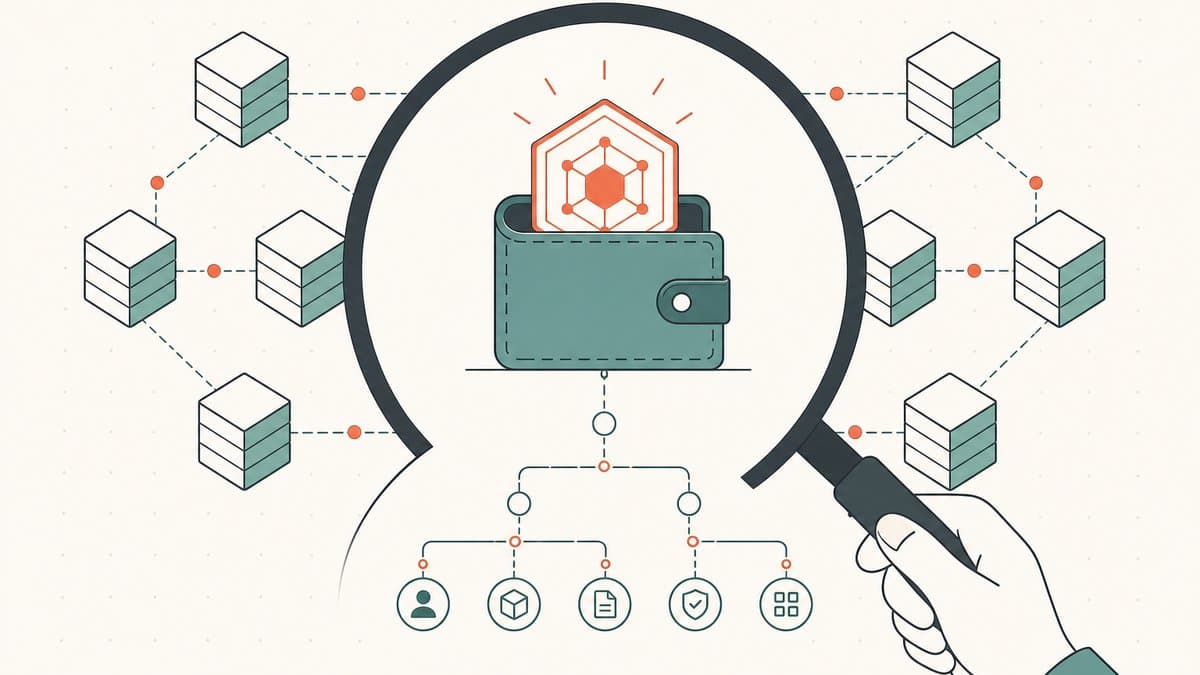
In the registrar aftermarket, verifying what you're buying is a chore. You're trusting a marketplace listing, a WHOIS record that may be behind privacy protection, and a seller's word that they actually control the name and will hand it over. You don't really know you own it until a cross-registrar transfer clears days later.
On-chain, token ownership is a public fact. The NFT lives at an address anyone can read; the smart contract that issued it is auditable; the transfer history is visible on a block explorer. Before you spend a dollar, you can confirm which wallet holds the recognized token, which contract issued it, and whether the token has moved or been wrapped. That adds a useful due-diligence trail, provided you also confirm that the contract is canonical for the platform and that its off-chain domain record is still aligned.
The honest caveat: verifying the token is easy, but you still have to verify the name underneath. A tokenized .com is only as good as the DNS domain it represents, so renewal status, ICANN policy exposure, and trademark risk don't disappear just because the token is on-chain. Tokenization makes token control legible; it doesn't make a name legal to flip or prove that every off-chain obligation is satisfied.
Custody: holding the asset yourself
Here's the structural shift that everything else follows from. In the traditional model, the registered name holder exercises registration rights through a registrar account and remains subject to registrar, registry, and ICANN processes. Losing account access or encountering a policy lock can prevent the holder from managing or transferring the name even when the registration remains in that holder's name.
A tokenized domain adds a wallet-controlled protocol layer. The private key controls the token, but the underlying ICANN registration still depends on a registrar and registry for renewal, policy locks, disputes, and the registration lifecycle. Self-custody can reduce dependence on a marketplace or seller account for token transfers; it does not remove the registrar from the domain system. It also adds wallet risk: losing the key can prevent you from exercising the on-chain control that the platform recognizes.
For anyone holding a portfolio of meaningful value, that's an argument for treating wallet security as a core flipping skill, not an afterthought. A multi-sig wallet, where moving an asset requires more than one key, is the standard tool here, though, as we cover in do multi-sig wallets actually improve security, it's a tradeoff, not a magic shield. And because self-custody means recovery is on you, knowing the options before disaster strikes is non-negotiable: see recovering a tokenized domain after wallet loss for what's actually possible when a key goes missing.
Transfer: wallet settlement can be faster
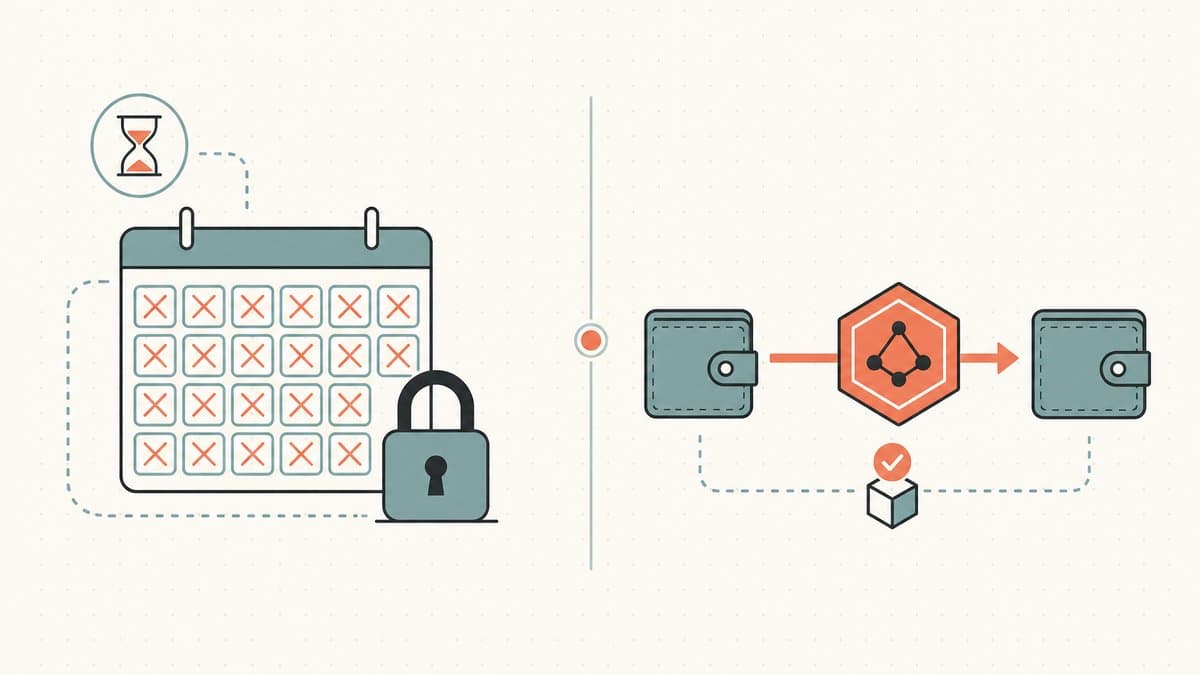
This is where the contrast with the registrar world is starkest, and where most of a flip's friction actually lives.
Moving a domain between registrars is governed by transfer policy. ICANN says a registrar may deny an inter-registrar transfer within 60 days of initial registration or a previous inter-registrar transfer. A 60-day lock can also follow a Change of Registrant, although some registrars may let the prior registrant opt out before the change. Normal transfers can also require auth codes and confirmations. These controls help resist hijacking, but they add time and operational steps.
On a platform that recognizes an ERC-721 transfer as a valid change of domain control, the token can move between wallets in one confirmed transaction. The platform must then keep its registrar-side records and DNS controls aligned with that token event. This can shorten the buyer-seller settlement step, but it remains platform-specific and does not override registry policy, legal disputes, renewal obligations, or unrelated inter-registrar locks.
Resale: atomic settlement replaces escrow
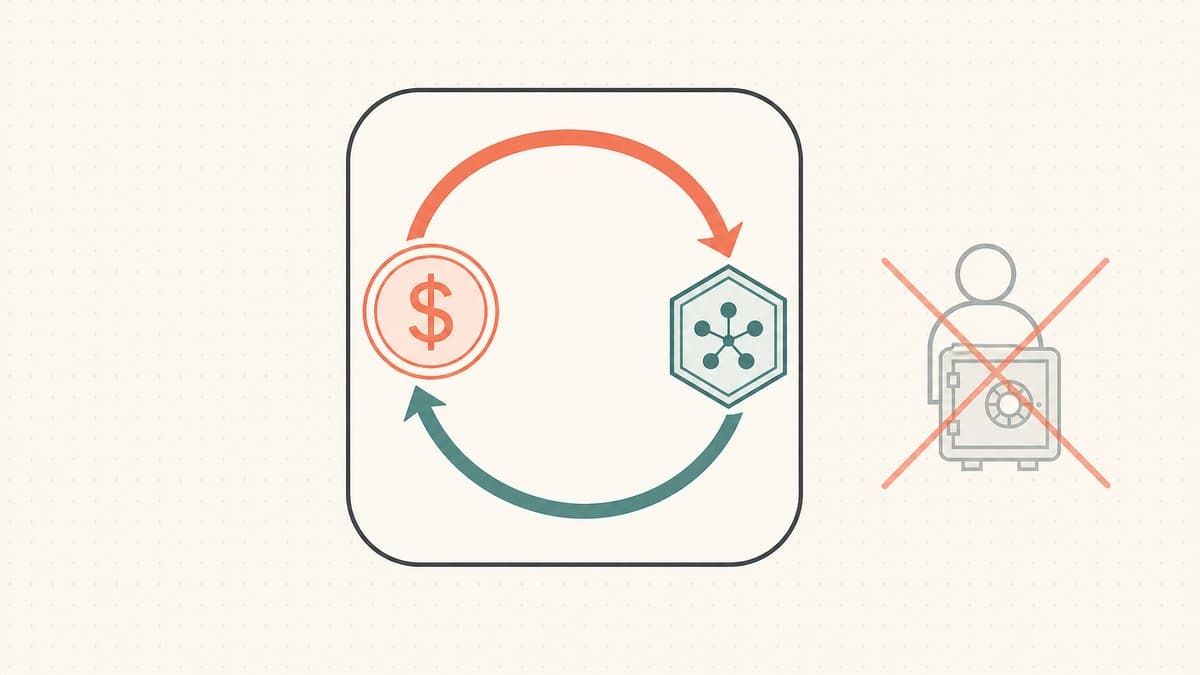
The single biggest thing tokenization changes about flipping is how the money clears.
The classic standoff in any domain sale is trust ordering: the seller won't transfer before getting paid, and the buyer won't pay before receiving the name. One established solution is escrow — a neutral third party holds the funds and releases them after the agreed transfer conditions are met. Fees and timing depend on the provider and transaction.
On-chain, a compatible marketplace or contract can close that ordering gap mechanically. In an atomic transfer, the buyer's funds and the domain NFT move together or the transaction reverts. That can reduce the need for a traditional escrow agent for the token leg of a supported sale. It does not make settlement free or riskless: network gas, marketplace fees, contract bugs, platform recognition, and the continued alignment of the token with the ICANN registration still matter. We walk through the model in how tokenized marketplaces replace escrow.
An ERC-721 interface can also make a tokenized domain easier to integrate with NFT infrastructure, but listing is not automatic. A marketplace must support the chain and contract, and a buyer must understand what registrar-backed rights the token represents. You can sell a supported domain as an NFT on compatible general or domain-native venues. The trade-offs are worth studying before you list; on-chain domain marketplaces compared is the place to do it. The potential benefit is another distribution and settlement surface, not guaranteed liquidity.
Programmable ownership: automation and composability
Tokenization can express transaction rules in smart contracts, but many commercial outcomes also exist in the traditional market.
Because the token is a smart-contract asset, a compatible protocol can automate auctions, payment schedules, collateral rules, or fractionalized interests. Those integrations are not inherent in every token and can add contract, oracle, liquidation, and legal-enforceability risk. Nor are leasing and staged ownership unique to tokenization: GoDaddy/Afternic offers Lease to Own domains, and Escrow.com supports domain holding transactions, including leases. The on-chain distinction is that agreed rules can sometimes execute and be audited through shared programmable infrastructure.
This is also the part that's earliest in its adoption curve, so treat these integrations as emerging rather than universal. The practical benefits available today depend on the chosen platform: transparent token provenance, wallet-controlled token custody, and potentially faster or more automated settlement when the marketplace, contract, registrar layer, and buyer all support the same model.
What doesn't change
It's worth being blunt about the limits, because tokenization is sometimes oversold. The hard parts of flipping are still hard. You still have to source names worth buying, appraise them honestly, avoid trademark traps, and — above all — find a buyer. A tokenized name nobody wants is exactly as unsellable as a registrar-held name nobody wants; the headline Voice.com sale that fetched 30 million US dollars was about demand for the name, not the rails it settled on. Tokenization doesn't manufacture demand. It removes friction from the trades that demand already supports.
If you already own a .com and want to test the model, start with a name you control — see how to tokenize your .com for the current import steps, and choosing a domain tokenization platform when deciding where to do it. Platforms like Namefi are designed to keep the token aligned with an ICANN domain and its DNS controls, but you should still verify nameservers, DNS records, renewal state, wallet custody, and marketplace support before and after a transfer.
Friendly Disclaimer (Read Me!)
We're not lawyers, accountants, financial advisors, or doctors, and nothing in this article is legal, financial, tax, accounting, medical, or any other flavor of professional advice. We write these posts to educate ourselves and as a convenience for our customers. Info here may be out of date, geography-specific, or just plain wrong. We make mistakes too.
For any important decision, please consult a real professional (seriously!). Or if that's not your vibe, ask a friend, ask Twitter, ask Reddit, ask an AI, or ask a psychic. In short: DOYR - Do Your Own Research. Let's learn and have fun.
Sources and further reading
- Ethereum Improvement Proposals — EIP-721: Non-Fungible Token Standard (standard API for NFTs)
- ICANN — FAQs for registrants transferring a domain
- GoDaddy — What is a Lease to Own domain?
- Escrow.com — What is a domain name holding transaction?
- SIDN — Voice.com sold for USD 30 million (Block.one, 2019)
Contributors

Fenwei Bian is a software developer in her thirties who spends her working hours in pull requests and her weekends with her hands in soil or sawdust. Years of open source on GitHub taught her that names are interfaces: a good one is clear, honest about what it does, and kind to whoever has to use it next.
She gardens because it rewards patience and punishes wishful thinking, and she does woodwork because a joint either fits or it doesn't. Both habits show up in how she writes about naming — measure twice, check the source, and don't sand over a rough spot and hope no one notices.
For Namefi she writes about how domain markets actually move, the practical trade-offs of tokenizing and flipping names, and picking a domain you'll still be glad you own in twenty years.

Victor Zhou is a technology founder and standards editor focused on digital identity and trust. He founded Namefi, edits Ethereum Improvement Proposals, and previously led smart-contract architecture work at Google Labs.
His work sits at the intersection of naming, ownership, and the systems people use to establish identity online. That perspective makes him especially interested in the way names move between personal meaning, public recognition, and digital infrastructure.
For Namefi, Victor edits and writes about domains as durable digital identity: how names become ownable onchain assets, how tokenization changes custody and trust, and what naming can learn from the systems people use to establish identity online.
Related guides
- Onchain Domain Custody, Wallets, and RecoveryHow custody really works for onchain domains: wallets, multisig, seed-phrase risk, and recovering a tokenized domain after wallet loss.
- Appraising ENS and Tokenized Domains: Reading Onchain CompsHow to appraise ENS and tokenized domains using onchain comps, floor-versus-premium reasoning, and ENS club factors — and why it differs from DNS.
- ENS vs DNS Domain Flipping: What's DifferentHow flipping ENS .eth names differs from flipping traditional DNS domains: ownership, liquidity, renewal, gas, and what each is good for.
- ENS vs Unstoppable vs Tokenized DNS DomainsENS vs Unstoppable Domains vs tokenized ICANN DNS, compared on browser resolvability, renewals, and who actually controls the name.