
Short, LLLL, and Numeric Domains: The Chinese-Market Premium
Why Chinese buyers price short, four-letter, and numeric .com domains as a distinct asset class — pinyin, no-vowel premiums, and lucky 8 vs unlucky 4.
- domains
- tld
- domain-flipping
- analysis

To a Western flipper, xqjz.com looks like keyboard noise and 5808.com looks like a phone number. To a Chinese buyer, the first might be a clean pinyin-friendly four-letter brand and the second a string carrying "prosper" twice over. The disconnect is the whole point. A category of domains that reads as worthless to one market is priced as an asset class by another, and the flippers who learned to read that second market caught one of the biggest repricing events the aftermarket has ever seen.
This is a piece about why short, four-letter (LLLL), and numeric domains trade the way they do, and why the rules are written mostly in Mandarin. It sits under what makes a domain valuable in the domain flipping skills series, and it's the companion to domain hacks explained: both are about value that lives in the shape of a name rather than its dictionary meaning.
Why short and numeric is its own asset class
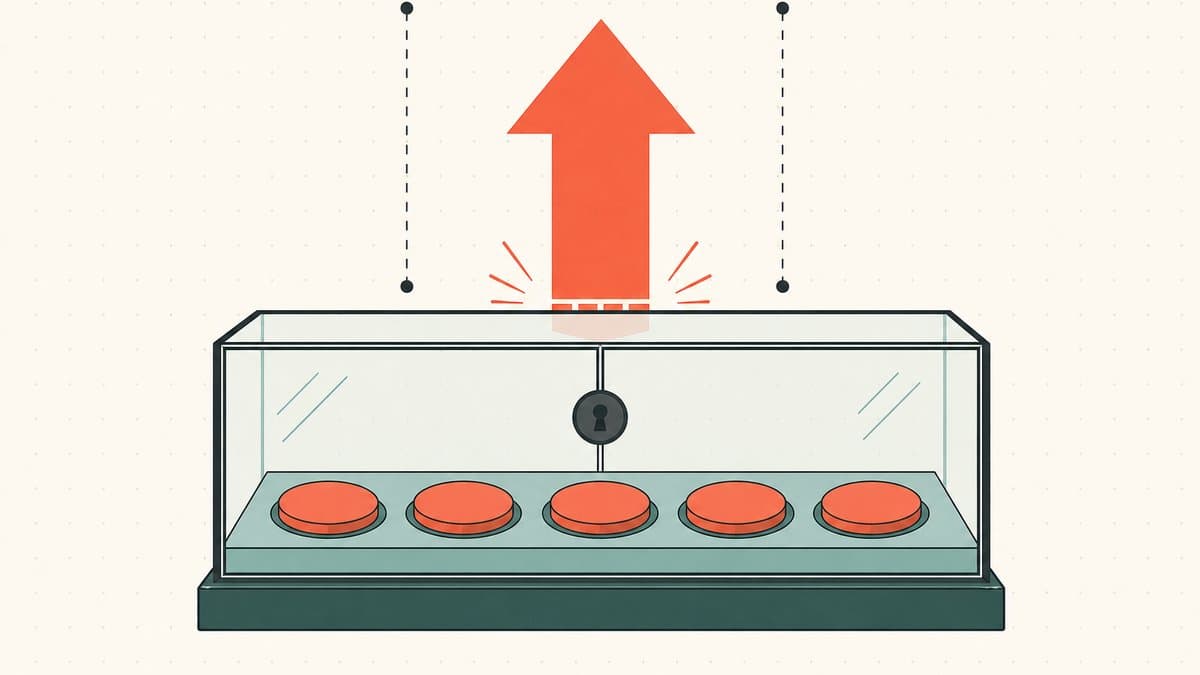
Most domain value tracks a word. flowers.com is worth a fortune because "flowers" is a high-demand English noun. Short and numeric domains break that model. There is no English word in 5808.com or qkjz.com, yet both can be liquid, priceable assets. Their value comes from three things the dictionary doesn't measure: scarcity, universality, and cultural resonance.
Scarcity is pure arithmetic. There are only 100 possible two-character NN.com numeric domains, only 1,000 NNN.com, and 10,000 NNNN.com. Four-letter LLLL.com combinations top out at 456,976. These are fixed, fully-registered sets — nobody is minting new two-letter .coms — so the supply curve is vertical. When demand rises, price is the only thing that can move.
Universality is the other half. A numeric string carries no language barrier. A buyer in Shenzhen, São Paulo, or Stuttgart reads 163.com the same way, which is exactly why the format travels. This is the literacy that the broader what makes a domain valuable explainer frames as length and memorability — short and numeric just push both dials to the extreme. The third factor, cultural resonance, is where China rewrites the price sheet entirely.
China set the price
The modern market for short and numeric .coms was effectively repriced by Chinese demand. As TechCrunch put it at the peak of the run, China has become the largest buyer of domain names, calling it likely the biggest story in domain investing since the internet began. The footprint shows up in the registries: by late 2015, 136 of the 676 2-letter .com domain names are now owned by Chinese registrants, and the floor under low-quality three-letter .coms moved hard — names that had sold in the $10,000–$15,000 range were suddenly, per the same report, catching upwards of $50,000, and more.
The "why" is structural. Chinese businesses have long branded with numbers and pinyin rather than English words, because a number or a short Latin string is easier to type, say, and remember for a Mandarin speaker than an English phrase. The most cited example is the country's email and news giant, NetEase. Its address is 163.com, and per Wikipedia, Chinese internet users had to dial "163" to access the Internet, before the availability of broadband — the dial-up access number became the brand. Numbers were native to the market long before flippers noticed.
The pinyin logic behind LLLL "Chips"
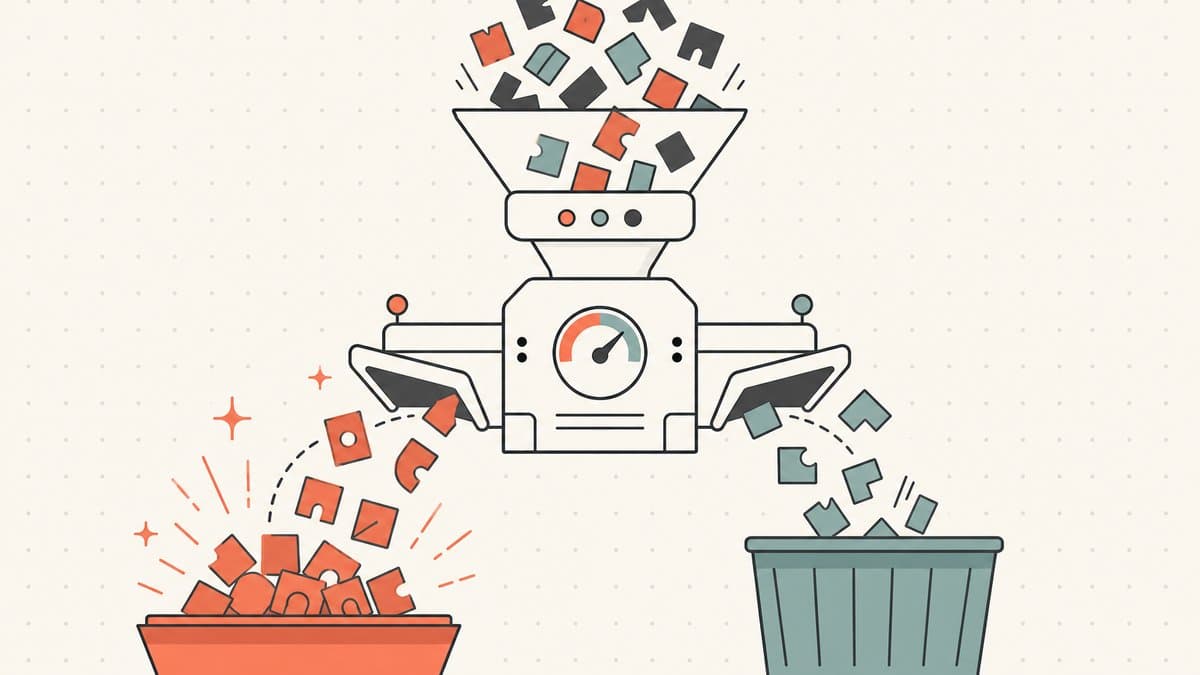
Four-letter .coms have their own grammar, and it is built on pinyin. In the West, a LLLL.com is graded on how pronounceable it is in English. In China, the prized pattern is the opposite of what an English speaker expects.
The industry term is CHIP — Chinese Premium — coined by domainer Tim Schoon. As the GGRG brokerage explains it, in China ALL letters are considered premium with the exception of A,E,I,O,U,V. The vowels are excluded for a precise linguistic reason, not superstition: a CHIP is valuable because each letter can stand in for the first letter of a pinyin syllable (and therefore a possible company acronym), and every syllable in Mandarin contains at least one vowel. A string full of vowels is far less likely to map onto real initials. The letter V gets cut for an even simpler reason: it simply does not exist in pinyin.
So xqjz.com (all consonants, all valid pinyin initials, no vowels, no V) is a clean Chip, while aeio.com — a Western buyer's "easy" name — is not. This is the single most counterintuitive thing for a new flipper to internalize: in this market, vowels are a discount, not a premium. The cleverness here rhymes with domain hacks, where value also lives in a structural pattern rather than a word, and the same caution applies — a Chip being a Chip doesn't guarantee it spells anything real, so check the pattern, don't assume meaning. The fundamentals of brandable vs keyword domains still apply on top: a Chip that also happens to read as a real pinyin word or a known acronym is worth more than a random one.
Lucky 8, unlucky 4: numerology as price input
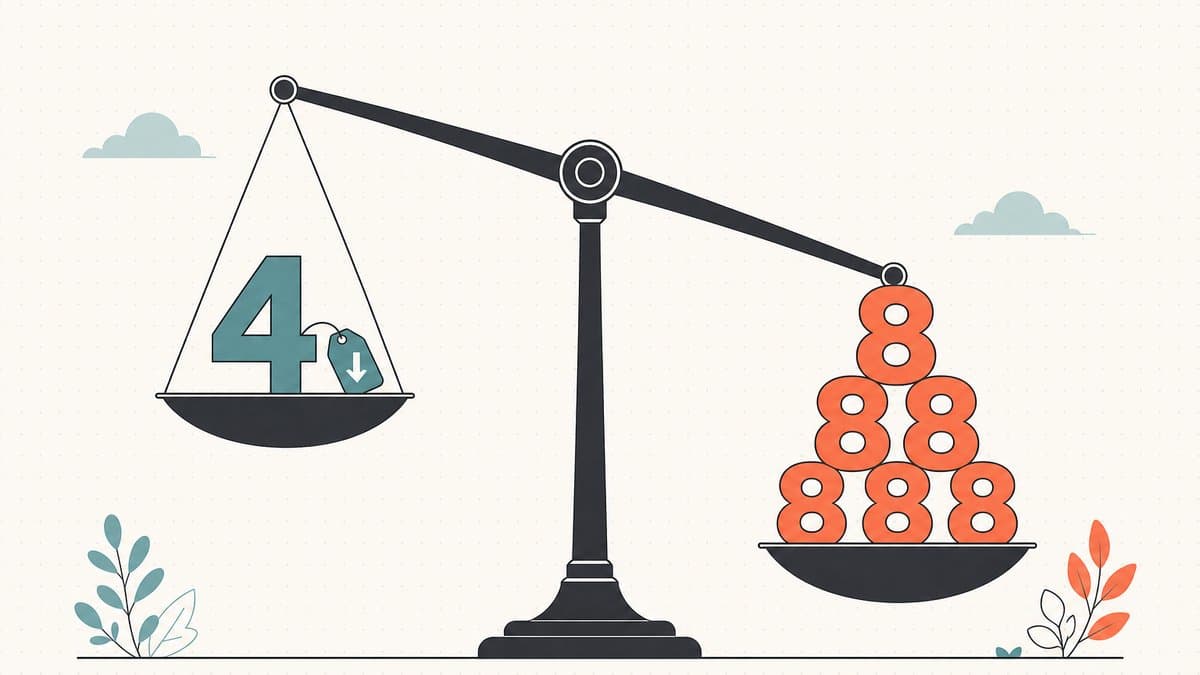
Numeric domains add a layer no Western valuation model has: the digits themselves carry meaning, because in Mandarin and Cantonese they sound like other words. This is not folklore a flipper can ignore. It moves prices.
The headline digit is 8. Per Wikipedia, the number 8 (八, bā) sounds like "發" (pinyin: fā ... lit. 'to prosper'), so a domain heavy with 8s reads as "prosper, prosper." As one explainer summarizes, anything ending in 8 or containing lots of 8s is considered lucky. The number 6 is also prized; in Mandarin 6 (六, liù) sounds like "slick" or "smooth", the basis for the wish that everything goes smoothly. And 9 (九, jiǔ) is a homophone for "long-lasting," which is why it shows up in names meant to signal permanence.
The flip side is 4, and it is severe. The number 4 (四, sì) is, per Wikipedia, nearly homophonous to the word "death". The avoidance is strong enough to have a clinical name: tetraphobia ... is the practice of avoiding instances of the digit number 4. The same homophone-driven preferences that make some buildings skip the fourth floor make 8888.com aspirational and a 4-laden string a hard sell. As a practical rule of thumb (not a measured statistic): among otherwise-identical numeric domains, more 8s and 6s reads as a premium, and a 4 reads as a defect. The same logic spills past domains into phone numbers, license plates, and apartment addresses across the region.
Numerology also explains why some "ugly" numbers are actually brands. The video-sharing site 56.com works because, as one explainer notes, the number 6 is pronounced liu and sounds like the word for "stream," thus the website 56.com is a video sharing website. The same source explains 51 (sounds like "I want") behind the recruiting site 51job. A number is never just a number in this market.
How to actually price one as a flipper
Reading this market is a learnable skill, and a handful of checks separate an asset from a curiosity:
- Count the letters or digits, and check the set. Shorter is liquid; longer is illiquid. For
LLLL.com, confirm the no-vowel, no-V Chip pattern before you call it premium. For numerics, the digit length sets the tier (NN.comis a different universe fromNNNN.com). - Run the numerology. Tally the 8s, 6s, and 9s as positives and every 4 as a discount. A repeating-8 string with no 4 is the top of the numeric stack; a 4 anywhere is an immediate markdown.
- Test it as pinyin, not English. Ask whether the letters or digits map to real pinyin initials or a plausible Mandarin homophone.
56meaning "video" is worth more than a random pair. A Chip that spells a real acronym beats one that spells nothing. - Stick to the proven extension. This market is overwhelmingly a
.commarket. The cultural premium is thinnest on alternative extensions, so a numeric or Chip name on.comis far more liquid than the same string on.xyz,.co, or.io— even though those carry their own separate premiums for different buyers. Choosing the extension is its own decision, and why .io domains are expensive shows how different the logic gets once you leave.com. - Price the volatility in. The 2015–2016 run was a genuine bubble that partly deflated, and Chinese-premium prices have been choppier than one-word English
.coms ever since. Liquidity is real but cyclical. Don't underwrite a purchase at the top of a hype cycle as if it were the floor.
The mechanics of moving the name once you've priced it are the same as any high-value trade: research the buyer, set a format, and settle safely. The selling craft is covered in how to sell a domain name you own, and because these are liquid, fungible-feeling assets that often change hands cross-border, the escrow step matters — see domain escrow explained. When you're moving a four-figure-and-up numeric to a buyer you've never met, the neutral-middle step is not optional.
The Namefi angle
Short and numeric domains are about as close to a fungible commodity as the domain world gets — small, interchangeable-feeling, frequently traded across borders. That liquidity is also what makes the handoff nerve-wracking: high turnover plus cross-border buyers plus names that often are live infrastructure means the classic standoff (who transfers first) shows up on almost every deal. It's the same friction behind any domain trade, just at higher frequency.
This is the gap Namefi is built to narrow: tokenized ownership makes control of a real ICANN domain easier to verify and transfer, with DNS continuity so the name keeps resolving through the handover. For a market that moves this fast, less settlement friction means more of your trades actually close.
Friendly Disclaimer (Read Me!)
We're not lawyers, accountants, financial advisors, or doctors, and nothing in this article is legal, financial, tax, accounting, medical, or any other flavor of professional advice. We write these posts to educate ourselves and as a convenience for our customers. Info here may be out of date, geography-specific, or just plain wrong. We make mistakes too.
For any important decision, please consult a real professional (seriously!). Or if that's not your vibe, ask a friend, ask Twitter, ask Reddit, ask an AI, or ask a psychic. In short: DOYR - Do Your Own Research. Let's learn and have fun.
Sources and further reading
- TechCrunch — China Is Making Domain Name History (China as largest buyer; 2-letter .com ownership; 3-letter pricing)
- GGRG — Investing in LLLL.com (Chinese Premium "Chip" definition; no vowels, no V; pinyin logic)
- Wikipedia — Chinese numerology (8 = prosper, 4 = death, 6 = smooth)
- Wikipedia — Tetraphobia (avoidance of the digit 4)
- Wikipedia — NetEase (163.com from the dial-up access number)
- The China Project — Kuora: Lucky numbers in China and Chinese URLs (8s lucky; 51 and 56 examples)
Contributors

Fenwei Bian is a software developer in her thirties who spends her working hours in pull requests and her weekends with her hands in soil or sawdust. Years of open source on GitHub taught her that names are interfaces: a good one is clear, honest about what it does, and kind to whoever has to use it next.
She gardens because it rewards patience and punishes wishful thinking, and she does woodwork because a joint either fits or it doesn't. Both habits show up in how she writes about naming — measure twice, check the source, and don't sand over a rough spot and hope no one notices.
For Namefi she writes about how domain markets actually move, the practical trade-offs of tokenizing and flipping names, and picking a domain you'll still be glad you own in twenty years.

Victor Zhou is a technology founder and standards editor focused on digital identity and trust. He founded Namefi, edits Ethereum Improvement Proposals, and previously led smart-contract architecture work at Google Labs.
His work sits at the intersection of naming, ownership, and the systems people use to establish identity online. That perspective makes him especially interested in the way names move between personal meaning, public recognition, and digital infrastructure.
For Namefi, Victor edits and writes about domains as durable digital identity: how names become ownable onchain assets, how tokenization changes custody and trust, and what naming can learn from the systems people use to establish identity online.
Related guides
- How the TLD Affects a Domain's ValueHow the extension after the dot moves a domain's price: the .com premium, the .io/.ai/.co context, and the policy and geopolitical risk behind ccTLDs.
- How We Cut AI Buyer Discovery Cost by 85%: Start Lean, Escalate With EvidenceA practical method for cheaper buyer discovery using progressive model escalation, LLM-as-judge gates, and Laminar traces and evals.
- Appraising ENS and Tokenized Domains: Reading Onchain CompsHow to appraise ENS and tokenized domains using onchain comps, floor-versus-premium reasoning, and ENS club factors — and why it differs from DNS.
- Renewal Costs and Sell-Through Rate: The Real Math of DomainingThe honest economics of domaining: renewal drag, sell-through rate as a rule of thumb, and why one good sale has to fund many years of renewals.