
Where to Sell Domains: Afternic vs Sedo vs Dan vs Namefi
Afternic vs Sedo vs Dan vs onchain marketplaces compared on reach, fees, and fast transfer — plus how to list one name across several at once.
- domains
- domain-investing
- domain-flipping
- comparison

A listing is not a sale, but a listing in the wrong place is a guaranteed non-sale. Once you've decided to sell — covered in our how to sell domains for profit pillar, part of the broader domain flipping guide — the next question is purely practical: which venue do you list on? The answer is rarely "one of them." Most working domainers list the same name in several places at once, because each marketplace reaches a different slice of buyers. This piece compares the major venues on the four things that actually decide a sale: reach, fees, fast transfer, and how the name changes hands once someone clicks buy.
First, the size of the room you're walking into. The domain aftermarket is, per Wikipedia, the secondary resale market for Internet domain names in which a party interested in acquiring a domain that is already registered bids or negotiates a price to transfer it. It's a real, liquid market: according to NameBio, as Wikipedia records, 144,700 domain name sales totaling US$185 million were recorded in 2024 — and that's only the disclosed slice.
The four things that separate marketplaces
Before the names, the criteria. When you compare venues, you're really comparing four variables:
- Reach. How many buyers see your listing, and through how many partner channels. A marketplace that syndicates your name to other registrars puts it in front of people searching at checkout on a site you'll never visit.
- Fees. The commission the venue takes when a name sells, plus any listing, brokerage, transfer, payment, or network fees. Current schedules vary by platform, sales method, account product, nameserver configuration, and minimum charge; they can exceed 20%, so verify the live schedule for the exact listing rather than relying on an industry-wide range.
- Fast transfer. Whether the handoff is automated. The friction in any sale is the transfer — getting the auth code to the buyer and moving the name between registrars. The big networks now automate this so payment and transfer happen near-instantly.
- Settlement. How money and name actually swap without either side getting burned. Traditionally that's escrow; onchain, it's a smart contract. Either way, this is where trust lives or dies.
Hold those four in mind and the marketplaces sort themselves out quickly.
Afternic: reach and the fast-transfer network
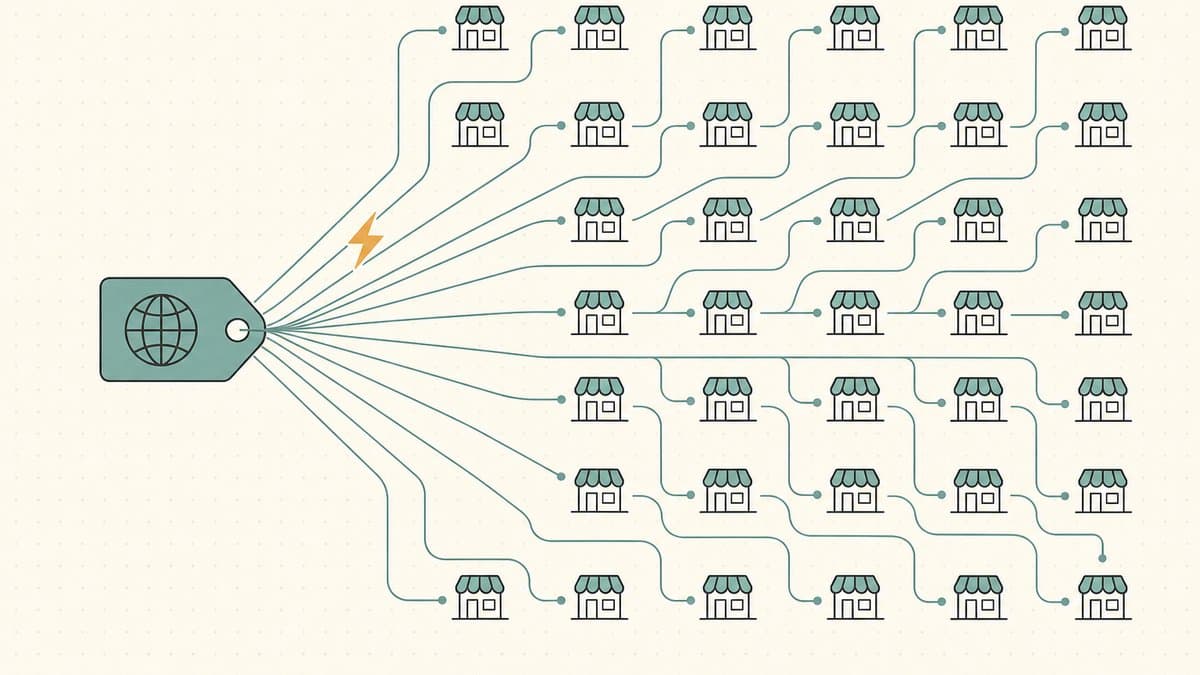
Afternic is the distribution play. Its whole pitch is syndication: list once, and the name propagates across a large network of registrar storefronts so buyers find it wherever they happen to be shopping. Afternic advertises worldwide distribution through 100+ resellers and 125 million qualified searches each month across that network. That breadth is the reason it's most flippers' first listing.
Afternic is owned by GoDaddy — the Afternic word mark is a registered trademark of GoDaddy Operating Company — which matters because GoDaddy is the largest registrar on earth, with, per Wikipedia, over 62 million registered domains and 20 million customers. Listing on Afternic plugs your name into that funnel.
The other Afternic feature worth understanding is Fast Transfer. In Afternic's own words, it's a service offered by Afternic that allows domain owners to sell their domains quickly and easily by enabling immediate domain transfers to the buyer; qualifying names can transfer automatically after a sale. Eligibility, payout timing, registrar support, and operational exceptions still apply.
Do not use an old channel-based commission rule. Afternic's current selling page lists default commissions of 30% with Boost and 25% with Basic, discounted to 20% and 15%, respectively, when the domain uses GoDaddy Aftermarket nameservers, with a stated $15 minimum commission. Its Fast Transfer FAQ says Standard and Premium Network sales use the same standard commission structure. Products, percentages, nameserver conditions, and minimums can change, so recheck the official page before pricing a listing.
Sedo: the long-running European marketplace
Sedo is the other heavyweight, and the one with the deepest roots. Wikipedia describes it as an American domain aftermarket company headquartered in Cambridge, Massachusetts, though its center of gravity has always been European — it was founded in 2000 by three German college students. For two and a half decades it has been one of the two platforms Wikipedia names when it says aftermarket transactions are facilitated by aftermarket platforms such as Afternic and Sedo.
Sedo runs auction, marketplace, brokerage, and transfer services, with international reach. Its marketplace lets buyers and sellers interact, often anonymously, to negotiate and close a transaction. The current Sedo price list states 10% for Buy Now sales using Sedo's marketplace and parking, 15% for other direct marketplace or auction sales, and 20% for SedoMLS sales, subject to the listed minimums and conditions; transfer service is included in those sale commissions. Verify that live page because the applicable route and rate can change.
Dan: the marketplace that became Afternic
Here's where a guide written even two years ago would mislead you. Dan.com was, for a stretch, the favorite venue of a lot of domainers — clean checkout, transparent fees, a buyer experience the others felt clunky next to. But Dan no longer exists as a standalone marketplace. In Dan.com's own farewell, in 2022, we joined GoDaddy, and since then GoDaddy worked to integrate the features and philosophy that defined Dan.com into Afternic. The platform was retired: per the same notice, the Dan.com platform will officially retire on June 27, 2025.
So "selling on Dan" in 2026 means selling on Afternic. We keep Dan in this comparison because you'll still see it recommended in older guides and forum threads — that advice is stale. The broader lesson every flipper should internalize: a marketplace is a counterparty, and counterparties get acquired, merged, and sunset. Don't build your whole sales process around a single venue's quirks.
The onchain option: tokenized marketplaces
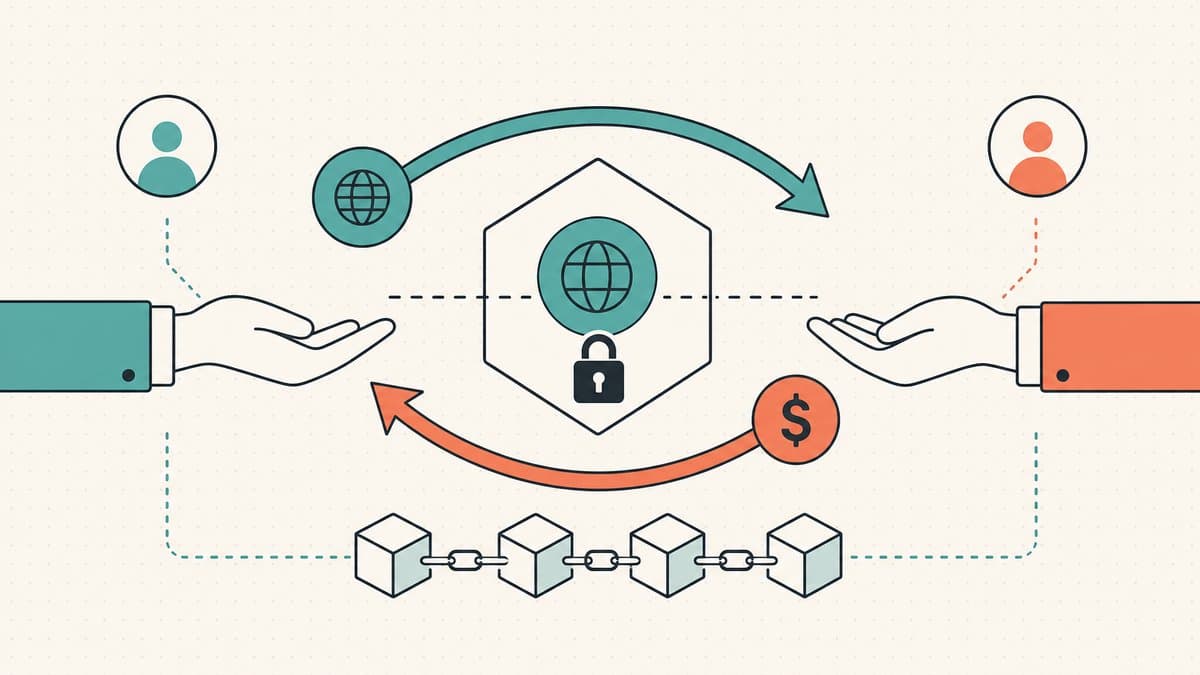
There's a newer category that changes part of the settlement question rather than the reach question. On a tokenized marketplace, a domain-related token and the on-chain payment can settle through a smart contract. Traditional venues may use escrow — a third party that, as Wikipedia puts it, receives and disburses money or property for the primary transacting parties, with the disbursement dependent on conditions agreed to. A compatible smart contract can make the token and payment legs atomic. That does not prove legal title or make registrar, registry, contact, policy, or compliance steps occur in the same transaction.
The reach is smaller and the category is young, so this isn't a replacement for an Afternic listing yet. But for high-value names where settlement risk is the scary part, it's a real alternative, and it's where part of the industry is heading. We trace that arc in how tokenized marketplaces replace escrow, with the tax wrinkles in tax and accounting questions for tokenized domains.
Namefi is one option in this category. For supported ICANN domains, its token provides an auditable token-control and transfer layer, not unconditional legal title. The underlying registration remains subject to registrar and registry state, agreements, policies, legal controls, and Namefi's Terms of Service. A token move does not itself guarantee uninterrupted website, email, certificate, DNS-provider, or platform service; plan those operational dependencies separately.
How to list across several at once
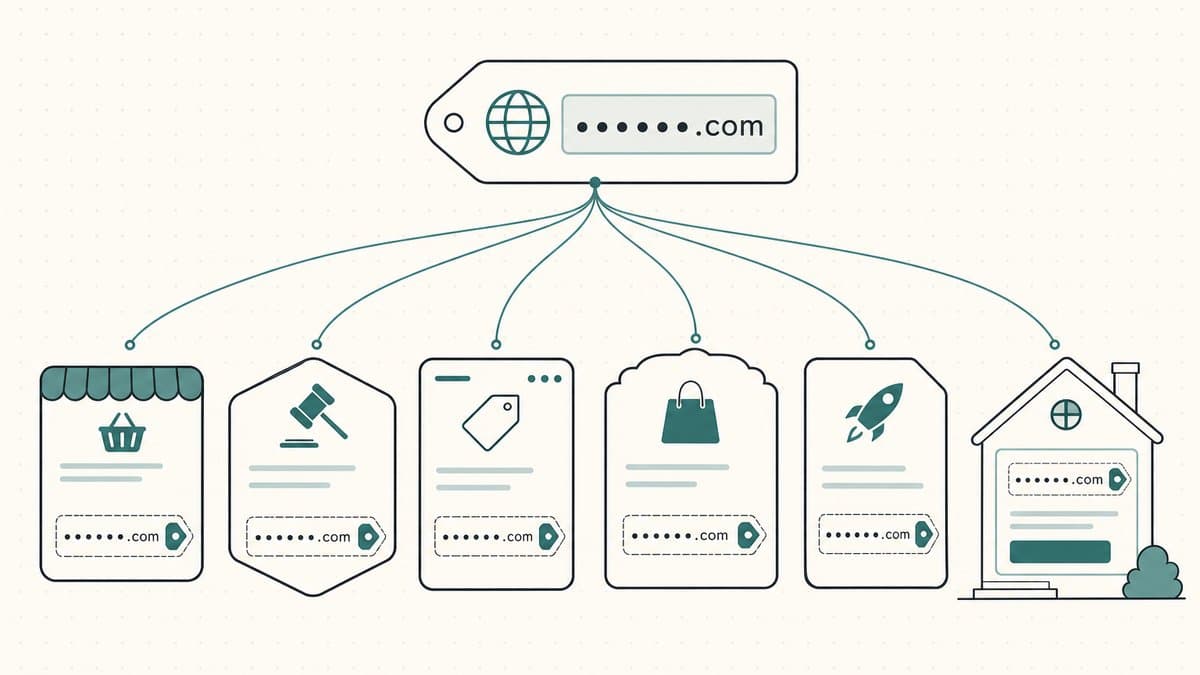
The right strategy for most names is breadth, not loyalty. Here's the practical version:
- List on Afternic and Sedo. Between them you cover the two largest reach networks plus the European and auction buyers. This is the baseline for any name you actually want to move.
- Enable fast transfer where you can. Opting a qualifying name into Afternic's Fast Transfer (or the equivalent at other venues) removes the slowest, most deal-killing step: the manual handoff. Just know that fast-transfer eligibility often requires the name to be at a participating registrar, so check.
- Mind the price collisions. If you list the same name on multiple platforms, keep the buy-now price consistent. A buyer who sees $4,000 on one site and $3,000 on another doesn't think "deal," they think "amateur," and they wait you out.
- Add your own for-sale page. A landing page on the name itself catches the single most valuable buyer: the person who typed the domain in directly. That's pure inbound demand at the highest margin, with no marketplace cut.
- Reserve the onchain route for the names that warrant it. For five-figure-plus deals where settlement is the risk, a tokenized marketplace or a broker-run escrow flow earns its place.
One caution on syndication: when a name is listed in many places, you have to keep them in sync. The day a name sells, pull it from every other venue immediately, and never list a name you can't currently transfer — recently moved names sit under a registrar lock, a trap we cover in how to sell a domain name you own and in how domain hijacking actually happens.
A quick word on which extension sells where
Venue choice interacts with extension. The mass-market reach networks are tuned for .com and the popular alternatives — .io, .ai, .co, .xyz, .app — and that's where their syndication actually finds buyers. A niche or new ccTLD may move better through a specialist forum or a direct sale than through a generic marketplace, simply because the buyers congregate elsewhere. For how extension shapes both value and liquidity, see why .io domains are expensive and the registration-volume picture in ccTLD market share by registration volume.
And keep the realism from the pillar in view. The headline trophies — Voice.com at $30,000,000 in 2019 and Sex.com at $13,000,000 in 2010 — sit on a list explicitly limited to pure domain name and cash-only sales of $3 million or more. Those are not what your marketplace listing is competing for. The venue doesn't make the name; it just decides how many of the right buyers ever see it.
Friendly Disclaimer (Read Me!)
We're not lawyers, accountants, financial advisors, or doctors, and nothing in this article is legal, financial, tax, accounting, medical, or any other flavor of professional advice. We write these posts to educate ourselves and as a convenience for our customers. Info here may be out of date, geography-specific, or just plain wrong. We make mistakes too.
For any important decision, please consult a real professional (seriously!). Or if that's not your vibe, ask a friend, ask Twitter, ask Reddit, ask an AI, or ask a psychic. In short: DOYR - Do Your Own Research. Let's learn and have fun.
Sources and further reading
- Wikipedia — Domain aftermarket (definition; NameBio 2024 volume; Afternic and Sedo as facilitators; anonymous negotiation)
- Afternic — Domain Reseller Network (100+ resellers; 125 million monthly searches; GoDaddy ownership), Sell Domains (current Basic, Boost, nameserver-discount, and minimum commissions), and Fast Transfer (eligibility, operation, and commission FAQ)
- Sedo — Price List (current direct, auction, parked Buy Now, SedoMLS, minimum, and transfer-service terms)
- Wikipedia — Sedo (American aftermarket company, Cambridge MA; founded 2000)
- Wikipedia — GoDaddy (over 62 million registered domains)
- Dan.com — Farewell from Dan.com (joined GoDaddy 2022; integrated into Afternic; retired June 27, 2025)
- Wikipedia — Escrow (definition)
- Namefi — Terms of Service (domain-management NFTs, platform authority, and legal-right limitations)
- Wikipedia — List of most expensive domain names (Voice.com $30M/2019, Sex.com $13M/2010; pure-domain, cash-only, $3M+ scope)
Contributors

Aileen Wright is a student in her twenties living in New York City, where the distance between a museum wall and a library reading room is a short walk and a long afternoon. She came to name writing through art and history — the way a single portrait, coin, or manuscript margin can carry a name across centuries and change its meaning on the way.
Most weeks you can find her in Central Park with a paperback, or in the quiet of a public reading room chasing down where a name actually comes from rather than what a name-list says it means. She is also teaching herself to code, which has made her oddly precise about spelling, sorting, and the small details that decide whether a name ages well.
For Namefi she writes about the history and culture behind domain names, the stories brands carry as they rename, and the difference between a good story and a verified source.

Victor Zhou is a technology founder and standards editor focused on digital identity and trust. He founded Namefi, edits Ethereum Improvement Proposals, and previously led smart-contract architecture work at Google Labs.
His work sits at the intersection of naming, ownership, and the systems people use to establish identity online. That perspective makes him especially interested in the way names move between personal meaning, public recognition, and digital infrastructure.
For Namefi, Victor edits and writes about domains as durable digital identity: how names become ownable onchain assets, how tokenization changes custody and trust, and what naming can learn from the systems people use to establish identity online.
Related guides
- Brandable vs Keyword Domains: Which Sell Better?Brandable invented names vs exact-match keyword domains: who buys each, which resells more reliably, and the trademark angle every flipper should know.
- Domain Appraisal Tools Compared: Estibot vs GoDaddy vs RealityHow automated domain appraisers like Estibot and GoDaddy actually work, where they systematically miss, and how to use them as a first filter.
- How We Cut AI Buyer Discovery Cost by 85%: Start Lean, Escalate With EvidenceA practical method for cheaper buyer discovery using progressive model escalation, LLM-as-judge gates, and Laminar traces and evals.
- ENS vs DNS Domain Flipping: What's DifferentHow flipping ENS .eth names differs from flipping traditional DNS domains: ownership, liquidity, renewal, gas, and what each is good for.