
End-User Price vs Reseller Price: Why One Domain Has Two Numbers
Why a domain has a low wholesale/reseller price and a much higher end-user price, how big the spread is, and which number applies to your sale.
- domains
- domain-investing
- domain-flipping
- explainer

Ask two experienced domainers what a name is worth and you can get two answers that are off by a factor of ten, and both can be right. That isn't sloppiness. It's the single most important pricing fact in this business: the same domain has two legitimate prices at the same moment, and which one applies depends entirely on who is buying. Miss that, and you'll either give a name away for a fraction of its value or sit on it forever waiting for a number nobody in your lane will pay.
This is the deep dive promised by our appraisal pillar, how to value a domain name. Here we take the split apart on its own: where the two prices come from, how wide the gap between them tends to be, and how to tell which number you should be quoting for any given name.
The two prices, defined
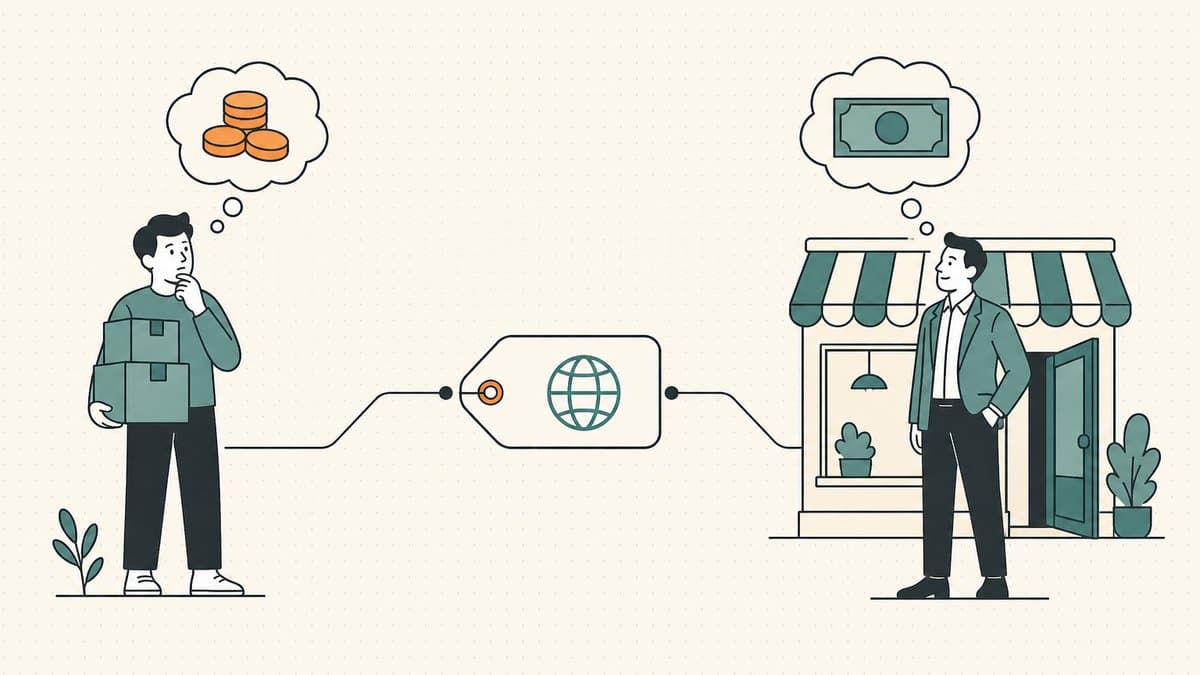
Every domain in the aftermarket sits inside two markets at once.
The reseller (wholesale) price is what another investor will pay you. They are not buying a name to put their company on it. They are buying inventory to resell later, so they price it the way any reseller prices stock: they pay a fraction of what they expect to eventually get, and that discount is their margin, their holding cost, and their risk that the name never moves. A wholesale buyer is doing your future job for you, and they price accordingly. This is the low number.
The end-user (retail) price is what the business that will actually use the name pays. They are not buying an asset to flip; they are buying the front door to their company, and they value it against what that name is worth to their operation: their brand, their marketing, the deal they're trying to close this quarter. They're comparing the price not to other domains but to the cost of launching with a worse name. This is the high number.
Same string of letters, same WHOIS record, two prices, because two completely different buyers are doing two completely different kinds of math.
Why the gap exists at all
The split isn't a quirk of domains. It's the same wholesale-vs-retail structure that runs through almost every resale market, and it exists for the same reasons.
A reseller has to leave room for a profit. If a name will eventually sell to an end user for $10,000, an investor buying it from you cannot pay $10,000 — they'd make nothing and carry all the risk. They pay enough below that to cover their margin and the very real chance the name sits unsold for years. Domaining is, by definition, the practice of identifying and registering or acquiring generic Internet domain names as an investment with the intent of selling them later for a profit, and "for a profit" is the whole reason the wholesale number is depressed.
Liquidity is worth real money. A reseller buying from you is offering speed and certainty: cash now, no waiting, no outreach campaign, no negotiation with a skittish first-time buyer. That convenience is a service, and you pay for it with a lower price, the same way you'd accept less for selling a car to a dealer than to a private buyer who happened to want that exact model.
An end user is buying utility, not inventory. When a funded startup needs your one-word name for a launch, they're not comparing it to other domains for resale. They're comparing it to the cost and pain of not having it: a clumsier name, weaker branding, a confused audience. That framing supports a far higher number, because the name is solving a specific, expensive problem for one specific buyer.
This is also why automated appraisers have a limit. A tool like GoDaddy's uses proprietary machine learning and real market sales data, including comparable sales to estimate value. That can show patterns in prior transactions, but it cannot observe the buyer-specific utility described above. Treat an automated estimate as a market-based starting point, not proof of what one particular end user will pay.
How wide is the spread?
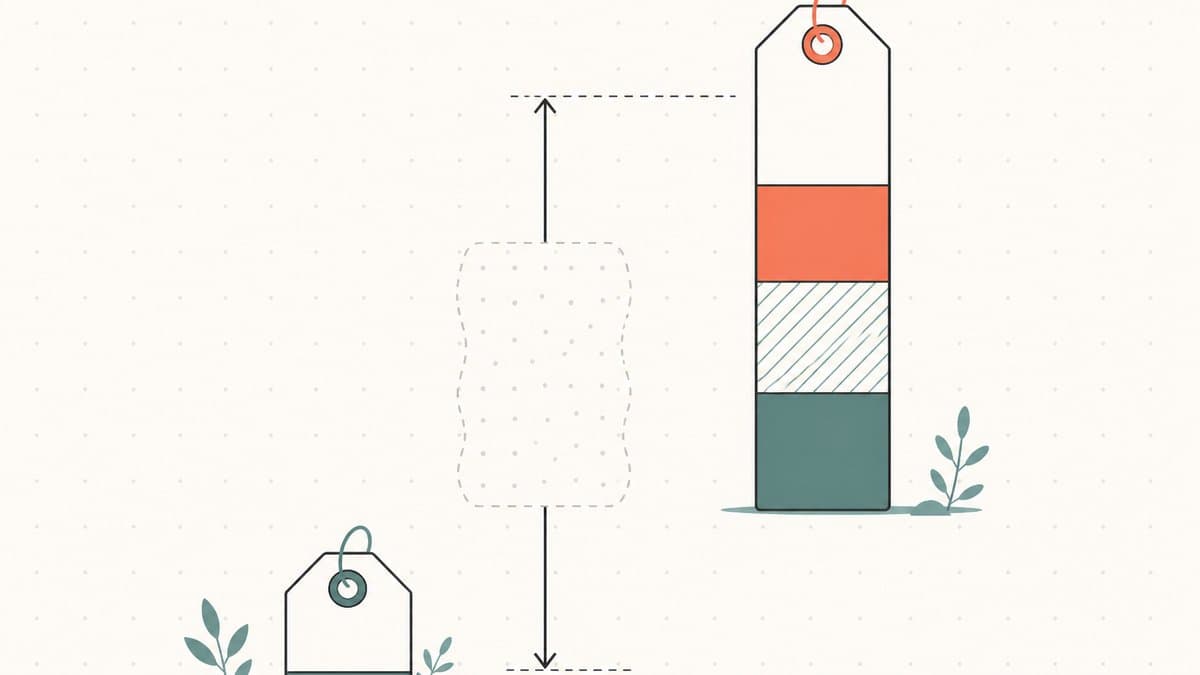
Here's the honest caveat first: there is no published, audited multiple for the end-user-vs-reseller gap, and anyone who quotes you a precise one is guessing. The aftermarket is famously private. Most large deals are negotiated one-to-one and never disclosed, and even the public record only catalogs the extremes. Wikipedia's list of the most expensive domain names, for instance, only includes sales with values of $3 million USD or more. Everything beneath that, and every NDA deal, is invisible.
So treat the following as a working rule of thumb, not a measured statistic: across the trade, an end-user asking price may be several multiples of the wholesale price for the same name. A name an investor would buy from you for a few hundred dollars might sell to the right business for a few thousand, and a four-figure wholesale name can become a five-figure end-user sale. The multiple is not fixed. It's wider for names with an obvious, motivated end buyer and narrower for generic inventory that only other resellers want. The retail target is usually higher in this model because the seller is pricing buyer utility rather than a reseller's required margin, but actual transactions can overlap and no buyer type guarantees a particular price.
The same spread is why the public comparable-sales record is so confusing to read. Tools like NameBio aggregate enormous volumes of reported transactions (according to NameBio, 144,700 domain name sales totaling US$185 million were recorded in 2024, per Wikipedia's aftermarket overview), but that pile mixes wholesale flips between investors with retail sales to end users, often without flagging which is which. A reseller comp and an end-user comp for a near-identical name can look like they're describing two different assets, and in a sense they are: they're pricing two different buyers. Learning to separate them is the core skill in how to read comparable domain sales.
Which number applies to your sale?
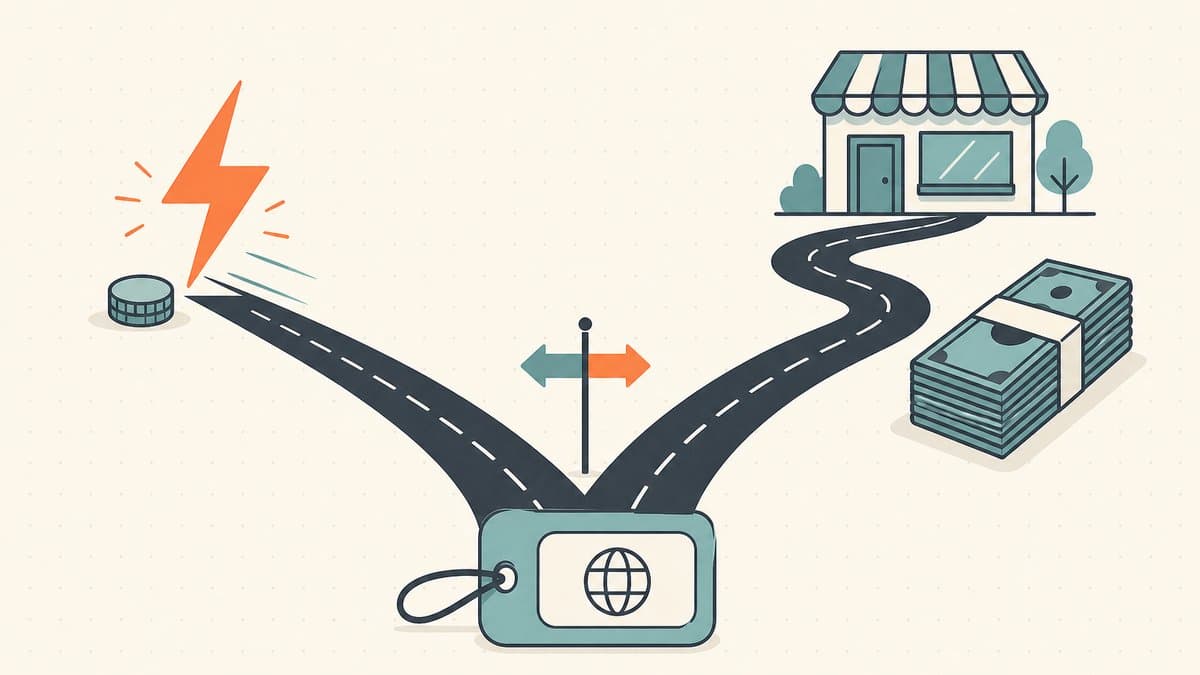
The practical question isn't "what's the spread" in the abstract — it's "which of my two prices am I actually selling at right now?" That depends on the channel you sell through and the buyer who shows up.
You're getting the wholesale number when you sell into investor-facing channels: a forum auction, a bulk-portfolio sale, a "make offer" that gets answered by another domainer, or a quick liquidation because you need cash. The buyers there are pricing for resale, full stop. The aftermarket is, by definition, the secondary resale market for Internet domain names in which a party interested in acquiring a domain that is already registered bids or negotiates a price — and when the party doing the bidding is another reseller, you are at the wholesale floor. There's nothing wrong with selling here; it's fast and certain. Just know you're trading price for speed.
You're reaching for the end-user number when you do the work to find and reach the business that actually needs the name: targeted outbound to a buyer with an obvious use case, a professional sales landing page, a listing where real end users browse, or a broker who specializes in retail deals. Marketplaces like Afternic and Sedo exist precisely to bridge this — Wikipedia notes that transactions are facilitated by aftermarket platforms such as Afternic and Sedo, which provide communication methods for buyers and sellers to interact, often anonymously, to negotiate and close a transaction. Sedo itself is an American domain aftermarket company built around connecting those two sides. Reaching the end user is slower and more work, but it's where the higher number lives.
The trap is mixing them up. Quoting a wholesale buyer your end-user price gets you silence; quoting an end user your wholesale price leaves a multiple on the table and, worse, can make a serious buyer assume the name is junk. Before you name a price, decide which buyer you're talking to. A walkthrough of running an actual sale, channel by channel, is in how to sell a domain name you own.
Where the spread comes from on the buy side
The two-price structure is also the entire engine of flipping, and it runs in reverse when you're buying. Your whole margin is the difference between acquiring at or near wholesale and selling at retail, so sourcing channels matter. Wholesale-facing routes include registrar expiry auctions, drop-catching services that try to register a name after the registry releases it, and investor-to-investor sales. Expiry is not the same as immediate public availability: for a domain that enters the standard registry deletion path, ICANN says redemptionPeriod lasts 30 days and the domain is purged five calendar days after that period ends, although registrar and TLD procedures before deletion can vary. Once purged, the name becomes available for re-registration under the registry's policies. Buy where resellers buy, sell where end users buy. Pay the retail price on the way in and there's no spread left to capture.
A carrying-cost wrinkle makes the buy side harsher than the headline spread suggests. A domain isn't bought outright; it is a time-limited registration, with a maximum registered term of ten years for a gTLD name and recurring renewal costs along the way. A commonly cited 2023 retail range of about $9.70 to $35 per year applies to a simple new .com registration, not a universal renewal price; renewal pricing varies by registrar and TLD, so use the provider's current renewal quote in your holding-cost model. The longer a name waits for its end-user buyer, the more those renewals eat into the spread; a wide gap on paper can shrink to nothing if the name sits for five years first. The extension shapes both ends of this. A .com accounted for 74.4% of the year's total dollar volume of recorded sales in 2024, while a newer or niche extension may have a thinner retail market and a longer wait. We unpack that in how the TLD affects domain value.
What this means for pricing in practice
Three habits keep the two-price reality working for you instead of against you.
Always ask which number you're estimating. When you appraise a name, decide upfront whether you want its wholesale value (what you'd accept from another investor today) or its end-user value (what the right business would pay after a real sales effort). They are different numbers for the same name, and conflating them is the most common appraisal mistake new flippers make. A price that's right for a quick wholesale flip is wrong for an end-user sale, and the reverse.
Match the price to the channel before you list. If you're dumping a name into an investor auction, price it to move at wholesale. If you're running outbound to a specific company, anchor to the end-user number and hold it. Listing a name at its wholesale price on an end-user channel doesn't just leave money behind — it can actively signal "low-value" to the exact buyer who would have paid more.
Don't treat one disclosed sale as your comp. A single headline retail sale tells you what one motivated end user paid; it is not what a reseller will give you tomorrow. Build your number from a spread of comparables, sorted by which market they came from, and discount aggressively when the buyer in front of you is another flipper. Appraisal tools, which average across both markets, are a starting bracket, never the final price — the appraisal pillar covers how to use them without being misled by them.
Closing the deal once you know your number
Knowing your number is half the job. The other half is collecting it without getting hurt — and the higher the end-user price, the sharper the risk at the moment of transfer. The classic standoff: the buyer doesn't want to wire money before they control the name, and you don't want to release the name before you've confirmed the money. That trust gap is where high-value domain trading gets nervous, and it's the same whether you're collecting a wholesale price from a peer or an end-user price from a first-time buyer who has never bought a domain before. The traditional fix is a neutral escrow workflow so neither side has to move first, which we cover in domain escrow explained.
This is the gap Namefi is built to narrow. Tokenizing a real ICANN domain can make the on-chain ownership record and token transfer easier to audit, while an atomic marketplace sale can reduce the settlement gap. It does not automatically put registrar recovery, nameserver delegation, or an external DNS provider behind the same authorization boundary. A token transfer also does not by itself change DNS configuration; continued resolution still depends on those separate systems remaining correctly configured and available. Price the name to the right buyer, then secure every control plane involved in the trade. We cover that boundary in domain DNS for tokenized domains.
Friendly Disclaimer (Read Me!)
We're not lawyers, accountants, financial advisors, or doctors, and nothing in this article is legal, financial, tax, accounting, medical, or any other flavor of professional advice. We write these posts to educate ourselves and as a convenience for our customers. Info here may be out of date, geography-specific, or just plain wrong. We make mistakes too.
For any important decision, please consult a real professional (seriously!). Or if that's not your vibe, ask a friend, ask Twitter, ask Reddit, ask an AI, or ask a psychic. In short: DOYR - Do Your Own Research. Let's learn and have fun.
Sources and further reading
- Wikipedia — Domain name speculation (definition of domaining / "with the intent of selling them later for a profit")
- Wikipedia — Domain aftermarket (definition of the secondary resale market; NameBio 2024 volume; .com 74.4% of dollar volume; Afternic and Sedo facilitation)
- Wikipedia — Sedo (American domain aftermarket company)
- ICANN — EPP status codes (redemption, pending deletion, purge, and re-registration)
- Wikipedia — List of most expensive domain names ($3M+ public, cash-only scope)
- Wikipedia — Domain name registrar (10-year max gTLD term; 2023 retail .com registration pricing)
- GoDaddy — Domain Name Value & Appraisal tool (machine learning + real market sales data)
Contributors

Fenwei Bian is a software developer in her thirties who spends her working hours in pull requests and her weekends with her hands in soil or sawdust. Years of open source on GitHub taught her that names are interfaces: a good one is clear, honest about what it does, and kind to whoever has to use it next.
She gardens because it rewards patience and punishes wishful thinking, and she does woodwork because a joint either fits or it doesn't. Both habits show up in how she writes about naming — measure twice, check the source, and don't sand over a rough spot and hope no one notices.
For Namefi she writes about how domain markets actually move, the practical trade-offs of tokenizing and flipping names, and picking a domain you'll still be glad you own in twenty years.

Victor Zhou is a technology founder and standards editor focused on digital identity and trust. He founded Namefi, edits Ethereum Improvement Proposals, and previously led smart-contract architecture work at Google Labs.
His work sits at the intersection of naming, ownership, and the systems people use to establish identity online. That perspective makes him especially interested in the way names move between personal meaning, public recognition, and digital infrastructure.
For Namefi, Victor edits and writes about domains as durable digital identity: how names become ownable onchain assets, how tokenization changes custody and trust, and what naming can learn from the systems people use to establish identity online.
Related guides
- Domain Backorders and Drop-Catching, ExplainedWhat domain backorders and drop-catching are, how services race to grab a name the instant it releases, and when a backorder is worth paying for.
- What Is Domain Parking? Parked Domains and MonetizationLearn what a parked domain is, why people park domains, and how parking, sale landing pages, and monetization differ.
- Expired Domains and the Drop Cycle, ExplainedHow a domain expires and drops: grace period, the 30-day redemption window, 5-day pending delete, release — and where dropped names surface for flippers.
- Inbound vs Outbound Domain SalesInbound vs outbound domain sales: when each works, the effort-and-return tradeoff, and how to run both without your outreach reading as spam.