
How to Find Domains to Flip: Every Sourcing Channel
The four ways to source domains to flip — hand-registration, expired drops, auctions, and the aftermarket — and each channel's risk and price profile.
- domains
- domain-investing
- domain-flipping
- guide

Everything in flipping starts with what you buy. You can be a brilliant negotiator and a sharp appraiser, but if you sourced a name nobody wants, those skills have nothing to work with. Sourcing is the first real skill in the trade, and it's the one most beginners get backwards — they fall in love with a name first and look for a buyer second.
There are four ways to get a domain into your portfolio, and each comes with a different price tag and risk profile. Hand-registering a brand-new name costs a registration fee but competes against a near-infinite supply. Catching an expiring name can hand you existing age or traffic, but the good ones are contested. Auctions can surface quality but invite bidding wars. And buying from another holder in the aftermarket gets you an existing, inspectable asset at a negotiated price. This guide walks all four, then closes with the discipline that ties them together: saying no. It's the sourcing pillar of our wider guide to domain flipping.
The supply channels at a glance
The market for domains has two halves. As Wikipedia describes it, the primary market for domain name speculation covers newly registered domain names that have not been registered before — that's hand-registration. The other half is the domain aftermarket, which Wikipedia defines as the secondary resale market for Internet domain names in which a party interested in acquiring a domain that is already registered bids or negotiates a price. Within that secondary market, this guide treats expired drops, auctions, and direct acquisitions as distinct sourcing routes.
Roughly ranked by typical entry price, your four sourcing routes are: hand-registration, expired/dropped names, auctions, and direct aftermarket acquisition. Price is not a safety score: every route requires diligence, and a higher price can reflect competition or a seller's expectations rather than a cleaner asset.
Hand-registration: cheapest in, hardest to sell
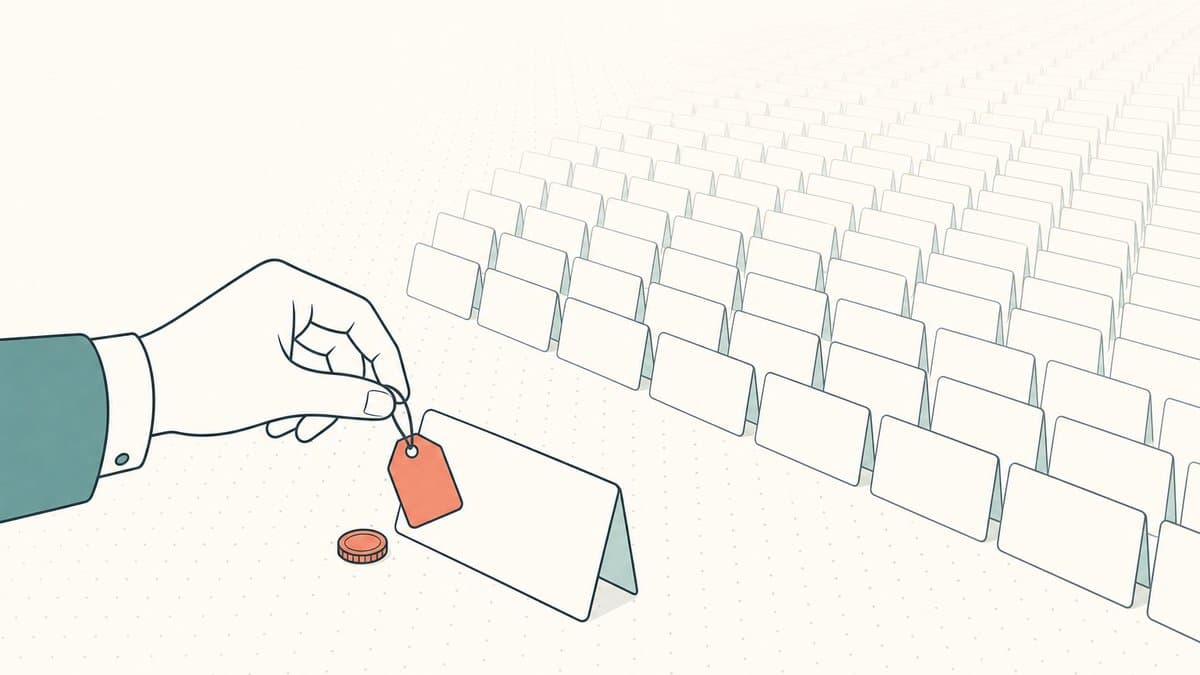
Hand-registration means coining a brand-new name and registering it fresh at a registrar for the standard fee. This is the entry point everyone starts at, because the cost of admission is tiny — Wikipedia notes that as of 2023 the retail cost generally ranges from a low of about $9.70 per year to about $35 per year for a simple .com.
That low price is exactly the trap. When anyone can register a name for the cost of a sandwich, the supply of available strings is effectively infinite, and the names still sitting unregistered are unregistered for a reason: the obvious, valuable ones were claimed years ago. Hand-registration is a game of finding the small overlap between "still available" and "someone will actually pay for it" — usually a fresh two-word brandable, a name riding a brand-new trend, or a strong combination in a newer extension like .app or .io where the inventory hasn't been picked clean.
The carrying math is the discipline here. Each hand-reg costs you that fee every single year you hold it, and most of what you register will never sell. The channel works only if your occasional sales comfortably cover the renewals on everything that doesn't. Our deep dive on hand-registering domains to flip covers the patterns that beat the infinite-supply problem, and how to name your project is a useful lens on what actually reads as brandable.
Expired and dropped names: buying age, inheriting risk
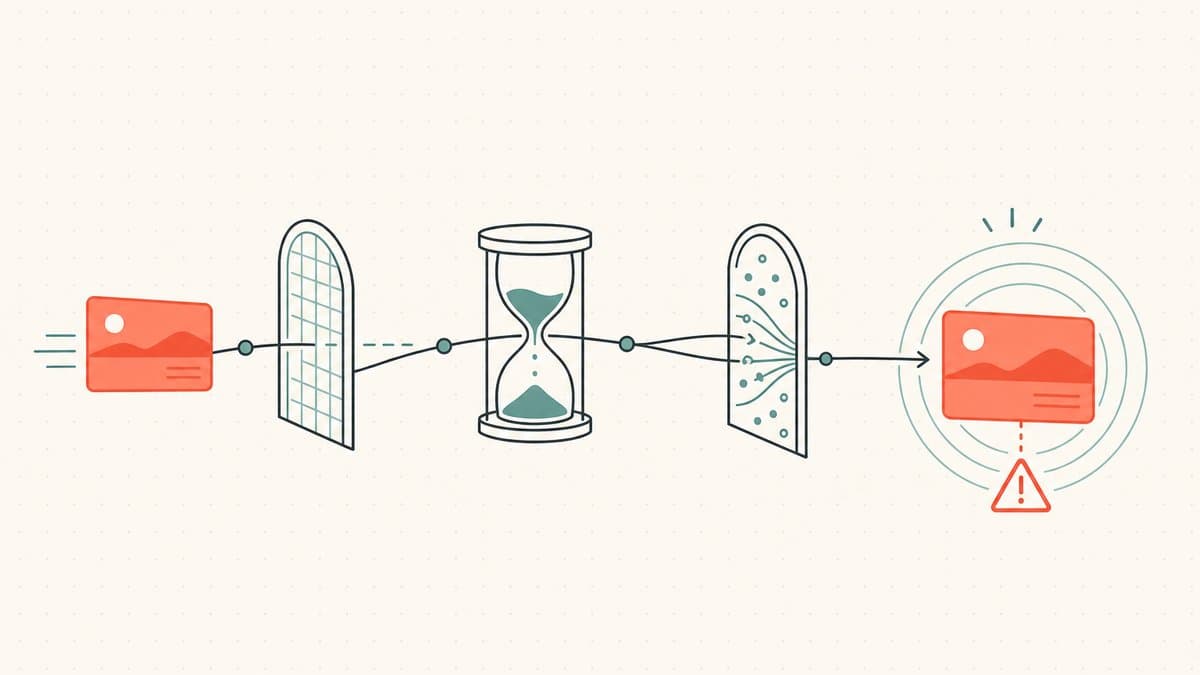
When a registrant stops paying, a name doesn't snap back to available instantly. It generally moves through a staged lifecycle first, but the timing and rules vary by TLD and provider. For covered gTLDs, if the registrar deletes the registration after expiry, it may enter a redemption window — per Wikipedia, the Redemption Grace Period ... allows a registrant to reclaim their domain name for a number of days after it has expired, a length that varies by TLD, and is usually around 30 to 90 days. For covered names that subsequently enter pending delete, the end of the five-day pending-delete phase leads to the drop and possible re-registration.
The appeal of a dropped name over a hand-reg is that it may arrive with history: prior age, inbound links, residual type-in traffic, or existing search authority. The risk is that you inherit the previous owner's baggage too — a name burned by spam, tangled in a trademark, or carrying links you'd rather not be associated with. Diligence is not optional. Check the history (the WHOIS record and archived snapshots), check the trademark exposure, and never assume "old" means "good." A name that dropped because it was toxic is a name you can keep forever. We map the full lifecycle and the diligence checklist in expired domains and the drop cycle.
Auctions: where the market sets the price for you

Some of the best names never go through a quiet drop — they get auctioned, either by a registrar selling its own expiring inventory or on an aftermarket platform. An auction is the channel where the cleverest filtering is done for you: the platform has already surfaced names with demonstrable demand, and the bidding reveals what the market thinks they're worth in real time.
That transparency is also the cost. The reason names go to auction in the first place is competition — as Wikipedia notes of high-demand drops, for particularly popular domain names, there are often multiple parties anticipating the expiration. When several buyers want the same name, the price climbs until only the most motivated remains, and the discipline that wins auctions is setting a hard maximum before you bid and walking when it's passed. The fastest way to lose money in this channel is to let "winning the auction" replace "making a margin" as the goal. Our playbook on how to win domain auctions covers bid strategy, and domain backorders and drop catching explains how to compete for a name before it ever reaches an open auction.
Aftermarket acquisition: paying retail for an inspectable asset
The fourth channel is buying a name that's already registered, directly from its current holder. This route often costs more, but it lets you inspect a known asset and negotiate without waiting for an expiry lifecycle. Existing does not mean clean: check trademark exposure, archived content, spam links, search reputation, DNS history, and evidence that the seller controls the name before sending money. Much of this trade runs through marketplaces; as Wikipedia notes, transactions are facilitated by aftermarket platforms such as Afternic and Sedo, which connect buyers and sellers and broker the deal.
The aftermarket is enormous and liquid. By one widely cited tally, according to NameBio, 144,700 domain name sales totaling US$185 million were recorded in 2024 — and that's only the disclosed deals. Flipping a name you bought on the aftermarket is harder precisely because the seller already captured much of the upside; your margin has to come from finding a name another investor underpriced, or from reaching an end user the seller never could. When a deal does close here, it usually settles through a neutral escrow workflow so neither side has to move first — we explain that mechanism in domain escrow explained, and the seller's side of the same transaction in how to sell a domain name you own.
The discipline that beats every channel: saying no
Here's the thing no sourcing channel can do for you. Every channel will happily sell you a name. None of them will tell you whether anyone else will ever want it. The single most valuable habit in sourcing is the one that produces no domains at all: walking away from names that fail your filters, no matter how clever or cheap they look.
A few filters do most of the work. Is there a real, nameable buyer for this name, or are you imagining one? Does it read as a clean word or brand when said out loud, or does it need a spelling lesson? Is the extension liquid enough that buyers actually shop there? And does the likely resale price clear your acquisition cost plus years of renewals with room to spare? A name that fails any of these is a renewal bill wearing a costume. Knowing roughly what a name is worth before you buy is the appraisal half of this skill — covered in how to value a domain name — and the two together are what separate sourcing from collecting.
One more boundary sits above all the filters: the legal line. Hand-registering or catching a name that leans on someone else's trademark isn't a flip, it's a liability, and it can be taken from you under the UDRP. Source generic, descriptive, and invented names; leave brand-adjacent names alone no matter how cheaply they drop.
The Namefi angle
Sourcing decides what you buy. The other half of every flip is moving the name cleanly when it sells — proving you hold it, handing it over without the site going dark, and trusting that the money and the asset change hands together. That settlement friction is sharpest on exactly the high-value names good sourcing produces. It's the gap Namefi is built to narrow: tokenized ownership makes control of a real ICANN domain easier to verify and transfer, with DNS continuity so the name keeps resolving through the handover. Source well, then trade on names whose ownership is auditable rather than taken on trust.
Friendly Disclaimer (Read Me!)
We're not lawyers, accountants, financial advisors, or doctors, and nothing in this article is legal, financial, tax, accounting, medical, or any other flavor of professional advice. We write these posts to educate ourselves and as a convenience for our customers. Info here may be out of date, geography-specific, or just plain wrong. We make mistakes too.
For any important decision, please consult a real professional (seriously!). Or if that's not your vibe, ask a friend, ask Twitter, ask Reddit, ask an AI, or ask a psychic. In short: DOYR - Do Your Own Research. Let's learn and have fun.
Sources and further reading
- Wikipedia — Domain name speculation (primary market = newly registered names)
- Wikipedia — Domain aftermarket (definition; Afternic and Sedo; NameBio 2024 sales volume)
- Wikipedia — Domain drop catching (Redemption Grace Period 30–90 days; 5-day pending delete; competition for popular drops)
- Wikipedia — Domain name registrar (retail
.compricing from about $9.70/year)
Contributors

Aileen Wright is a student in her twenties living in New York City, where the distance between a museum wall and a library reading room is a short walk and a long afternoon. She came to name writing through art and history — the way a single portrait, coin, or manuscript margin can carry a name across centuries and change its meaning on the way.
Most weeks you can find her in Central Park with a paperback, or in the quiet of a public reading room chasing down where a name actually comes from rather than what a name-list says it means. She is also teaching herself to code, which has made her oddly precise about spelling, sorting, and the small details that decide whether a name ages well.
For Namefi she writes about the history and culture behind domain names, the stories brands carry as they rename, and the difference between a good story and a verified source.

Victor Zhou is a technology founder and standards editor focused on digital identity and trust. He founded Namefi, edits Ethereum Improvement Proposals, and previously led smart-contract architecture work at Google Labs.
His work sits at the intersection of naming, ownership, and the systems people use to establish identity online. That perspective makes him especially interested in the way names move between personal meaning, public recognition, and digital infrastructure.
For Namefi, Victor edits and writes about domains as durable digital identity: how names become ownable onchain assets, how tokenization changes custody and trust, and what naming can learn from the systems people use to establish identity online.
Related guides
- For-Sale Landing Pages That ConvertHow to build a domain for-sale landing page that converts: a clear price or offer path, real trust signals, and a frictionless way to buy or make an offer.
- Running a Domain Portfolio Like a BusinessRun your domains like inventory: track cost basis, watch sell-through rate, control renewal drag, prune losers, and keep the books clean.
- Domain Pricing Psychology: Buy-Now vs Make-OfferHow listing mode and initial numbers can influence a domain sale: anchoring, when to name a price, planned concessions, and buy-now vs make-offer.
- Hand-Registering Domains to Flip: Finding Available GemsHow to find still-available domains worth a registration fee: wordlists, TLD permutations, brandable patterns, and the filters that beat impulse buys.