How to Win Domain Auctions Without Overpaying
How aftermarket domain auctions actually work — proxy bids, sniping, hard maxes, reading demand, and dodging the overpay and shill traps.
- domains
- domain-investing
- domain-flipping
- guide

Many desirable domains are already registered, and auctions are one way they return to the market. Inventory can come from owner listings, registrar expiry programs, or competing backorders after a drop-catching service secures a name. If you flip domains, you may spend real money in these rooms, and the difference between a profitable acquisition and a dead name in your account is mostly discipline at the moment of bidding.
This guide covers how aftermarket auctions actually work, the two bidding mechanics you must understand (proxy bidding and sniping), how to set and hold a hard maximum, how to read whether demand is real, and how to avoid the two ways auctions separate you from your money: overpaying yourself, and getting played by someone else. It sits inside our broader domain flipping series, and pairs directly with how to find domains to flip, since auctions are one of the main places you'll find them.
Where domain auctions come from
A domain name auction is the formal version of the buy-low-sell-high trade: it facilitates the buying and selling of currently registered domain names, enabling individuals to purchase a previously registered domain that suits their needs from an owner wishing to sell. Expired names are one source, but there is no universal rule that every unrenewed name is auctioned. ICANN's registrant guidance says a registrar may offer an expired name for auction during the Auto-Renew Grace Period, depending on its terms and conditions; a name can instead proceed through the expiry and deletion lifecycle. Some registrars or their partners do auction names before deletion, while other inventory comes directly from owners.
In practice you'll meet three flavors of platform:
- GoDaddy Auctions, which includes expired-domain and other auction inventory on public timers.
- NameJet (and the closely related Snapnames), which run as backorder-plus-auction services. You place a backorder on a pending-delete name; if more than one person wants it, it goes to a private auction among the backorderers.
- Sedo, more about owner-listed inventory than expiry. Sedo is an American domain aftermarket company that introduced domain name auctions in 2006, and remains a primary venue for seller-initiated and brokered sales.
The supply and bidding rules differ by platform. Proxy bidding, closing-time extensions, reserve prices, bidder eligibility, and settlement requirements can all change, so read the rules for the exact venue before you bid.
Proxy bidding: the engine under the hood
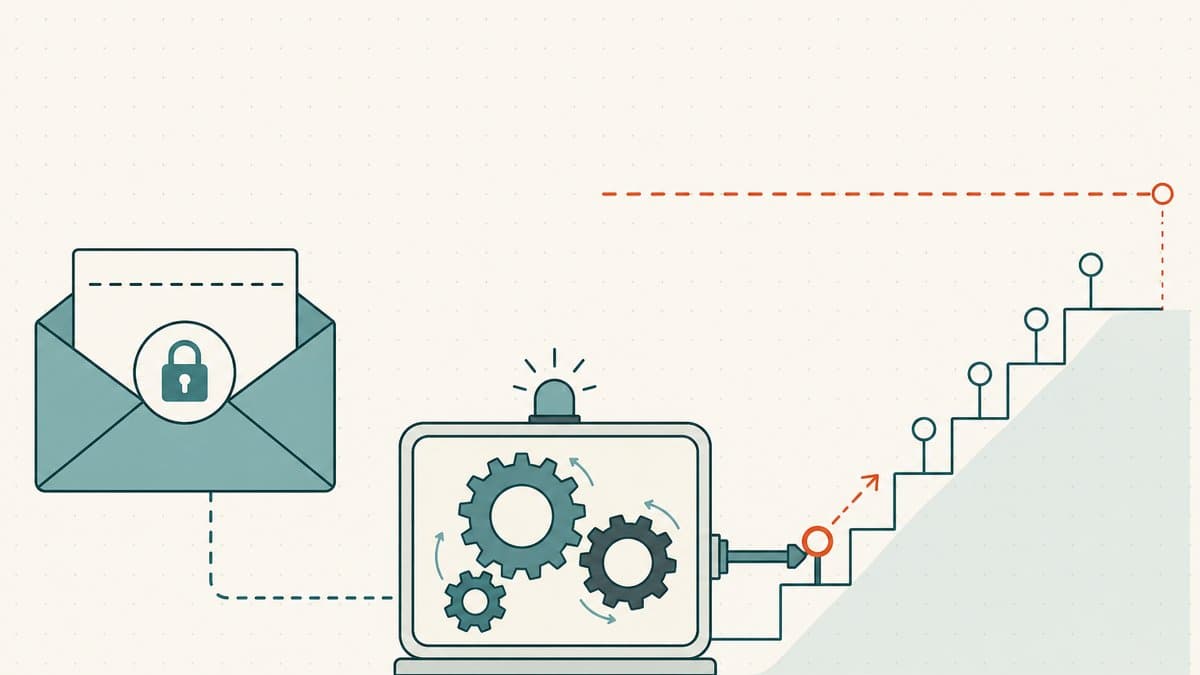
Some major domain-auction platforms use proxy bidding. Under GoDaddy Auctions' published rules, you enter the maximum you are willing to pay and the service raises your current bid by the minimum increment when another bid arrives, up to that ceiling. The system does not display your hidden maximum to other bidders.
On a proxy platform, the practical consequence is counterintuitive: entering a maximum does not mean you immediately pay that amount. If your ceiling is $1,200 and the next-highest legitimate bid tops out at $700, you would normally win at roughly $700 plus the applicable increment, not $1,200. Entering your real number does not display it, but competing bids — legitimate or not — can still raise the clearing price up to your ceiling.
This is why nudging your bid up $25 at a time is a losing habit. Incremental bidding doesn't get a better price under a proxy system; it just teaches you, in real time, how badly you want the name, which is exactly the information that makes you overpay. Decide your number off the clock, enter it once, let the machine do the rest.
Sniping: timing, and why it's mostly noise here
The other mechanic everyone asks about is sniping — bidding at the last possible second. Auction sniping is the practice, in a timed online auction, of placing a bid likely to exceed the current highest bid ... as late as possible. The logic is sound in a vacuum: bidding late gives competitors no time to react, and it avoids bidding wars and bid chasing, where the mere sight of a competing bid drags other people into the fight.
Platform rules determine whether sniping can work. Some auctions close at a fixed time; others extend the closing window after a late bid, giving other bidders time to respond. On a platform that combines proxy bidding with closing-time extensions, a last-second bid offers much less surprise and does not by itself create a lower clearing price.
So the honest version: a late bid can keep your interest hidden for longer, but its effect depends on the venue's timer and proxy rules. The discipline that travels across platforms is not a particular second on the clock. It is the maximum you are willing to pay.
Set a hard max, then hold it

Before you place a single bid, write down the most you will pay for the name, and treat that number as a wall, not a suggestion. Your max is not "what the name might be worth to the perfect buyer." It's a backsolve from your exit: estimate a realistic resale price, subtract the marketplace commission you'll pay on the sell side, subtract the years of renewal carry you expect to eat before it sells, subtract the margin that makes the trade worth doing — and what's left is your acquisition ceiling. (If you're shaky on the resale half of that math, our guide to how to sell a domain name you own walks the exit.)
Then hold it. The emotional architecture of a live auction is built to move your wall, and the most expensive word in domaining is "just." Just one more increment. Just another fifty dollars. Each nudge feels trivial alone, and that's the trap: a name you valued at $800 becomes a $1,400 purchase one painless step at a time, and your margin is gone before you notice it left. The proxy system protects you here if you let it. Enter your true ceiling once, walk away, and accept the outcome. If you lose, you lose to someone who valued the name more than your numbers say it's worth to you, which is a win disguised as a loss.
The losing pattern has a name in auction theory. The winner's curse is the phenomenon where, among bidders with different private estimates, the winner is the bidder with the most optimistic evaluation of the asset and therefore will tend to overestimate and overpay. In a room full of domainers, the person who wins is, by definition, the one who valued the name highest — and that's often the one who got the valuation wrong on the high side. A hard max is your structural defense against being that person.
Read whether the demand is real

Half of not overpaying is valuing the name correctly going in, and an auction gives you signals you should learn to read instead of react to.
Count the unique bidders, not the bid count. Two determined people can run a name up through dozens of bids; that's a duel, not a market. Many distinct bidders signals broad demand and a probable floor. A price set by one rival chasing you shows their appetite, not the market's.
Sanity-check against comparable sales. A live auction price is one noisy data point. Before you decide a number is "fair because someone else bid it," anchor on what genuinely similar names (same kind of word, same extension, same buyer use case) have actually sold for. The fundamentals in how to find domains to flip apply directly to appraising what's on the block.
Separate the name from the metrics. Expiry auctions love to show age, backlinks, and traffic, and these can be real value or recycled spam, manipulated link profiles, and traffic that evaporates the moment the old content goes down. Treat impressive metrics as a reason to dig, not a reason to bid. Resale value to a real end user usually rests on the string itself, not on a SEO history you can't fully verify.
Know why it's on the block. Sometimes a dropped domain is more valuable because of a high-profile site that used to live there, and sometimes that history is exactly the liability (an abandoned project, a trademark problem) that made the owner walk away. Run the name's backstory before you run up the price.
Don't get played: shills and pricing traps
The other way to overpay is to be manipulated, and auctions have a classic manipulation built into their structure. A shill is a fake bidder: people who drive prices in favor of the seller or auctioneer with fake bids in an auction are called shills, manufacturing the appearance of demand so a real bidder pushes higher than they otherwise would. Shill bidding is prohibited on every reputable platform, but no policy makes it vanish entirely.
You usually cannot identify a shill with certainty while an auction is running. A hard maximum limits how much you can lose, but it does not make shilling irrelevant. Under proxy bidding, a fake bid placed just below your hidden ceiling can lose the auction and still force you to pay roughly that fake bid plus the increment, rather than the price set by the legitimate runner-up. This is why eBay's shill-bidding policy says the practice can artificially increase the price and make another bidder pay more than they should.
The practical defense is to set your ceiling from independent value evidence, avoid chasing suspicious bidding activity, preserve the auction record, and report suspected manipulation through the platform's process. A ceiling contains the damage; it does not prove that the clearing price was fair.
A few related pricing traps worth naming:
- Reserve and floor prices. Many listings carry a hidden reserve. If the reserve sits above your max, walk — chasing an undisclosed floor is how you talk yourself past your own number.
- "Buy It Now" anchoring. A high BIN price is there to make the auction feel like a bargain by comparison. It's a marketing anchor, not a valuation. Ignore it and price the name on its own merits.
- Fees on top. Some platforms add buyer premiums or charge the sell-side commission that quietly raises everyone's effective floor. Bake the all-in cost into your max so the number you enter is the number you can actually afford to win at.
After you win: get the name safely
Winning is the start of the transaction, not the end, and on a high-value win the handoff is where deals go wrong. This is exactly why domain auction sites often provide links to escrow agents: neutral escrow so the seller doesn't transfer before payment clears and you don't pay before the name is yours. For expiry auctions the registrar usually pushes the name into your account automatically; for owner-to-owner wins, insist on a proper escrowed transfer and confirm you receive the auth code. We cover the safe handoff in domain escrow explained.
Settlement is also where tokenized ownership changes the math. The classic standoff (neither side wants to move first) is what makes high-value domain trading tense, and it's the gap Namefi is built to narrow: control of a real ICANN name becomes easier to verify and transfer, with DNS continuity so a live name keeps resolving through the handover. For an auction buyer, less settlement friction means more of the names you win actually close.
The short version
Auctions reward preparation and punish improvisation. Do your valuation before the timer starts. Set a hard max backsolved from a realistic exit, not from how much you want the name. On proxy platforms, a hidden ceiling automates bidding but competing bids can still raise your price. Timer extensions determine whether sniping has any tactical value, and a hard maximum limits — but does not eliminate — the damage from the winner's curse, shills, and pricing anchors. Win the names that fit your math, let the others go, and settle through escrow so the win actually lands in your account.
Friendly Disclaimer (Read Me!)
We're not lawyers, accountants, financial advisors, or doctors, and nothing in this article is legal, financial, tax, accounting, medical, or any other flavor of professional advice. We write these posts to educate ourselves and as a convenience for our customers. Info here may be out of date, geography-specific, or just plain wrong. We make mistakes too.
For any important decision, please consult a real professional (seriously!). Or if that's not your vibe, ask a friend, ask Twitter, ask Reddit, ask an AI, or ask a psychic. In short: DOYR - Do Your Own Research. Let's learn and have fun.
Sources and further reading
- Wikipedia — Domain name auction (definition; escrow links)
- ICANN — What a registrant should know about expired-domain recovery
- GoDaddy — Bidding on GoDaddy Auctions domains
- eBay — Shill bidding policy
- Wikipedia — Proxy bid (eBay second-price model; price set by competitors' bids)
- Wikipedia — Auction sniping (last-second bidding; avoiding bidding wars)
- Wikipedia — Winner's curse (the most optimistic bidder overpays)
- Wikipedia — Shill (fake bids to drive prices for the seller)
- Wikipedia — Domain drop catching (GoDaddy/eNom retain names for auction)
- Wikipedia — Domain name speculation (Snapnames/Namejet intermediary auctions; dropped names)
- Wikipedia — Sedo (introduced domain name auctions in 2006)
Contributors

Aileen Wright is a student in her twenties living in New York City, where the distance between a museum wall and a library reading room is a short walk and a long afternoon. She came to name writing through art and history — the way a single portrait, coin, or manuscript margin can carry a name across centuries and change its meaning on the way.
Most weeks you can find her in Central Park with a paperback, or in the quiet of a public reading room chasing down where a name actually comes from rather than what a name-list says it means. She is also teaching herself to code, which has made her oddly precise about spelling, sorting, and the small details that decide whether a name ages well.
For Namefi she writes about the history and culture behind domain names, the stories brands carry as they rename, and the difference between a good story and a verified source.

Victor Zhou is a technology founder and standards editor focused on digital identity and trust. He founded Namefi, edits Ethereum Improvement Proposals, and previously led smart-contract architecture work at Google Labs.
His work sits at the intersection of naming, ownership, and the systems people use to establish identity online. That perspective makes him especially interested in the way names move between personal meaning, public recognition, and digital infrastructure.
For Namefi, Victor edits and writes about domains as durable digital identity: how names become ownable onchain assets, how tokenization changes custody and trust, and what naming can learn from the systems people use to establish identity online.
Related guides
- For-Sale Landing Pages That ConvertHow to build a domain for-sale landing page that converts: a clear price or offer path, real trust signals, and a frictionless way to buy or make an offer.
- Running a Domain Portfolio Like a BusinessRun your domains like inventory: track cost basis, watch sell-through rate, control renewal drag, prune losers, and keep the books clean.
- Domain Pricing Psychology: Buy-Now vs Make-OfferHow listing mode and initial numbers can influence a domain sale: anchoring, when to name a price, planned concessions, and buy-now vs make-offer.
- Hand-Registering Domains to Flip: Finding Available GemsHow to find still-available domains worth a registration fee: wordlists, TLD permutations, brandable patterns, and the filters that beat impulse buys.