
Domain Pricing Psychology: Buy-Now vs Make-Offer
How listing mode and initial numbers can influence a domain sale: anchoring, when to name a price, planned concessions, and buy-now vs make-offer.
- domains
- domain-investing
- domain-flipping
- guide

The number on your listing is doing more work than you think. Comparable domains can produce very different outcomes because buyer need, timing, alternatives, distribution, and negotiation all vary; the way a price is presented can be one influence among those factors. Pricing a domain combines valuation evidence, market conditions, and psychology.
This guide is the psychological layer underneath the mechanical choices in how to sell domains for profit, the selling pillar of our domain flipping series. We'll cover how anchoring can affect a negotiation, why naming the first number involves tradeoffs, how to plan concessions, and how buy-now versus make-offer changes the sales process before a single message is sent.
Anchoring: why the first number can matter

Start with a cognitive bias that can influence price negotiation. The anchoring effect occurs when judgments are pulled toward an initial reference point. Once a number is on the table, later figures may be evaluated relative to it. As a purely illustrative example—not evidence about any specific domain buyer—a $25,000 opening and a $3,000 opening could frame the same later counteroffer very differently.
Experimental negotiation research found an advantage to making the first offer in the studied settings, but also found that the effect disappeared when the other negotiator focused on inconsistent information such as the opponent's alternatives, reservation price, or their own target. (Galinsky and Mussweiler, 2001) Other experiments found that overly extreme openings can increase impasse risk. (Schweinsberg et al., 2012) A price is therefore more than information, but a credible first number is neither guaranteed to win nor a substitute for valuation evidence.
The first-number trap: naming your price
So who should name the first number? The honest answer is that it cuts both ways, and that tension is the entire game.
Name a price that's too low and you may anchor against yourself. You can't un-ring the bell: the buyer now knows you were willing to open below their possible budget. For example, $1,500 versus $15,000 is a hypothetical illustration of the risk, not a documented domain sale. The underlying problem is pricing for a fellow investor buying inventory in the domain trading market when the actual prospect is an end user buying a business tool. That reseller-versus-end-user gap is important to estimate, and we break it down in how to value a domain name and inbound vs outbound domain sales.
Name a price that's too high for this buyer and you may scare off someone who would have made a real offer. The wrong anchor can end a conversation before it starts.
There's a third option: ask the buyer to name a range first. A simple "what range did you have in mind?" can reveal information, but it also gives the buyer the first anchor and may produce a low opening. A broker can add negotiating distance and process discipline, although that does not guarantee a higher outcome. We cover when that may be worth a commission in working with domain brokers.
There is no universal rule that inbound buyers should always go first or outbound sellers should always quote. Before choosing, estimate your target and reservation price from comparable evidence, consider how much reliable information each side has, and decide whether learning the buyer's range is worth accepting their opening anchor. Cold outreach often benefits from a credible price or range because it reduces uncertainty, while some motivated inbound conversations justify asking for the buyer's budget first.
Why sellers overprice: the endowment effect
Before tactics, a warning about your own head. Domainers systematically overvalue the names they hold, and there's a term for it. The endowment effect is the finding that people are more likely to retain an object they own than acquire that same object when they do not own it: ownership itself inflates perceived value. You bought the name because you saw something in it, and that same conviction is now a tax on your judgment.
This is why make-offer listings full of "great brandable name!!!" sit unsold for years: the asking price is anchored to the seller's attachment, not to any buyer's willingness to pay. The defense is to price against comparable sales and the directness of the buyer's use case, not against how clever you felt the day you registered it. A name is worth what a buyer will pay, and the buyer has never met your feelings.
Buy-now vs make-offer: the mode is a strategy

The listing format is not a checkbox. It's a decision about which buyer you're hunting and which bias you're leaning on.
Buy It Now (a fixed price) removes friction. A motivated buyer transacts instantly, with no back-and-forth, and it filters out tire-kickers who only engage when they smell negotiation. The cost is the ceiling: price a name at $2,000 when an end user would have paid $20,000, and the fixed number is the most you'll ever see. Buy-now is a velocity play, good for mid-tier names where a clean, instant sale beats a long hunt for the perfect buyer.
Make Offer (negotiation) invites the buyer to reveal intent and lets you capture an end-user price you'd never have guessed. It's the right mode for a genuinely premium name with one or two obvious buyers, where the upside justifies the friction. The cost is real: make-offer attracts lowballers, stalls deals across days of messages, and demands that you actually negotiate.
The mode itself also sets expectations before you've exchanged messages. A buy-now price supplies an explicit reference point and a path to immediate purchase. A bare "make offer" listing supplies no seller number, so opening offers can vary widely; it does not mechanically anchor every buyer low. A stated minimum offer may filter unserious inquiries, but it can also deter buyers, so treat it as a marketplace setting to test rather than a universal fix. For the venues where each format lives, see where to sell domains: marketplaces compared, and for the step-by-step of a single sale, how to sell a domain name you own.
Planned concessions: avoid improvising under pressure
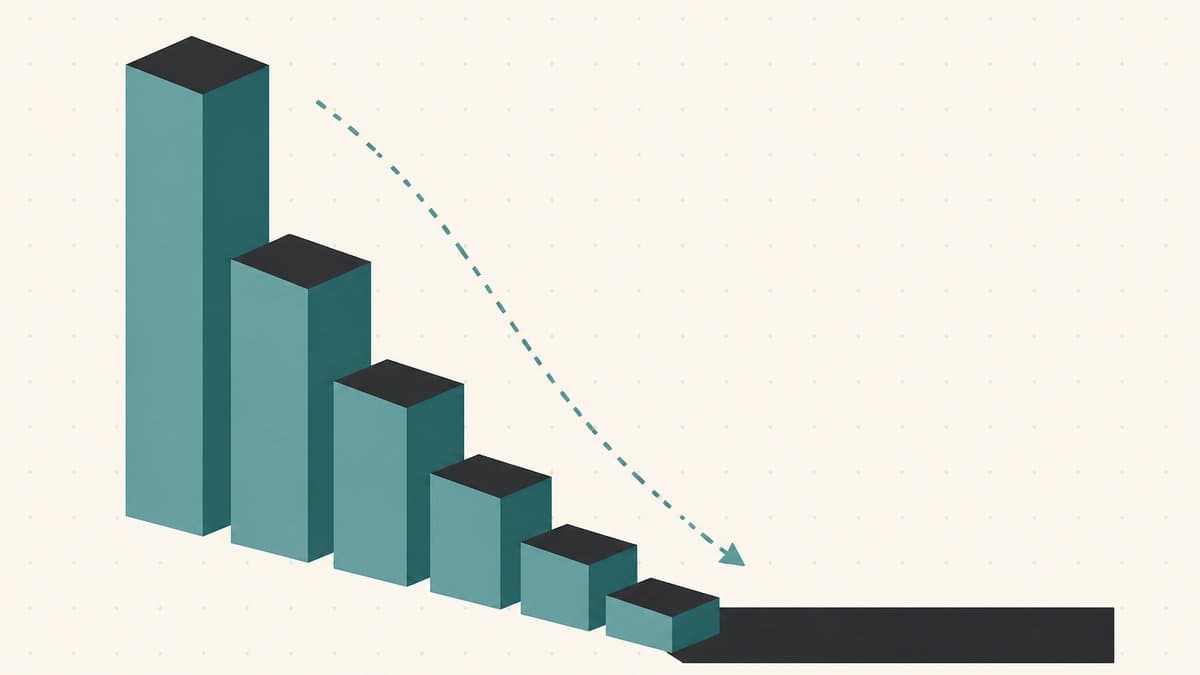
When a make-offer negotiation opens, the rookie mistake is to swing straight to your real minimum the moment the buyer pushes back. That hands them the whole spread and teaches them that pressure works. Experienced sellers ladder instead, moving down in shrinking steps that signal the floor is near.
A hypothetical ladder might look like this: the buyer offers $2,000 on a name listed at $12,000; the seller counters at $9,500 and later $8,000 while protecting a pre-decided floor. Those figures are illustrative, not a recommended schedule or evidence that the deal will settle at $7,000. The useful practice is deciding your rationale, target, floor, and concession pattern before the exchange so a counteroffer does not force an improvised collapse.
Concessions can help a buyer feel that negotiation produced value, but cadence does not carry one reliable meaning. A delayed reply may be read as leverage, disinterest, or poor responsiveness; a quick reply may signal preparedness rather than desperation. Respond on a professional timeline and never imply competing interest that does not exist.
Round numbers, charm pricing, and what a figure signals
The shape of the number sends a message of its own. This is the domain of psychological pricing, which Wikipedia describes as a strategy based on the theory that certain prices have a psychological impact. The classic finding is that buyers perceive just-below prices (also referred to as "odd prices") as being lower than they are — the reason retail runs on $9.99, driven by what researchers named the left-digit effect.
For domains, the lesson is more nuanced than "always end in 9." The number's shape signals who you think the buyer is:
- A crisp round figure ($25,000, $50,000) reads as a confident, premium asking price aimed at a serious end user. It says "this is a real asset, priced like one."
- An oddly precise figure ($24,750) can read as a calculated valuation or, on a cheaper name, a discount cue. Used well, precision implies you've done the math; used carelessly, it looks like a sale rack.
- A very low, charm-priced number ($299, $499) signals a budget name and invites budget buyers. Fine for velocity, wrong for a name you believe an enterprise will want.
The extension feeds in too: the same word on a .com can carry a different valuation range than on .io or .co, so match the price to the name, evidence, and buyer. Research on left-digit effects comes largely from retail contexts and does not establish that round domain prices reliably attract end users or charm prices reliably attract resellers. Treat number shape as a hypothesis to test, not a buyer-class detector.
Putting it together
Pricing a domain is one decision made repeatedly: first when you pick the listing mode, then whenever you name or revise a number. Choose buy-now when speed and a clear ceiling fit the evidence; choose make-offer when uncertainty and possible upside justify the friction. Decide who should open based on information and leverage rather than a blanket inbound/outbound rule. Plan concessions around a defensible target and floor, test how listing settings affect real inquiries, and watch for ownership bias in your own valuation.
The price is a message. Make sure it says what you mean. Once a deal closes, getting paid safely — escrow, the auth-code handoff, DNS continuity — is its own discipline; tokenized rails like Namefi aim to make settlement less nerve-racking so more agreed deals finish. But the money only gets that far if the number on the listing did its job first.
Friendly Disclaimer (Read Me!)
We're not lawyers, accountants, financial advisors, or doctors, and nothing in this article is legal, financial, tax, accounting, medical, or any other flavor of professional advice. We write these posts to educate ourselves and as a convenience for our customers. Info here may be out of date, geography-specific, or just plain wrong. We make mistakes too.
For any important decision, please consult a real professional (seriously!). Or if that's not your vibe, ask a friend, ask Twitter, ask Reddit, ask an AI, or ask a psychic. In short: DOYR - Do Your Own Research. Let's learn and have fun.
Sources and further reading
- Galinsky and Mussweiler — First offers as anchors: The role of perspective-taking and negotiator focus
- Schweinsberg et al. — Starting high and ending with nothing: The role of anchors and power in negotiations
- Wikipedia — Endowment effect (ownership inflates perceived value)
- Wikipedia — Psychological pricing (charm pricing, just-below prices, the left-digit effect)
- Thomas and Morwitz — Penny Wise and Pound Foolish: The Left-Digit Effect in Price Cognition
Contributors

Aileen Wright is a student in her twenties living in New York City, where the distance between a museum wall and a library reading room is a short walk and a long afternoon. She came to name writing through art and history — the way a single portrait, coin, or manuscript margin can carry a name across centuries and change its meaning on the way.
Most weeks you can find her in Central Park with a paperback, or in the quiet of a public reading room chasing down where a name actually comes from rather than what a name-list says it means. She is also teaching herself to code, which has made her oddly precise about spelling, sorting, and the small details that decide whether a name ages well.
For Namefi she writes about the history and culture behind domain names, the stories brands carry as they rename, and the difference between a good story and a verified source.

Victor Zhou is a technology founder and standards editor focused on digital identity and trust. He founded Namefi, edits Ethereum Improvement Proposals, and previously led smart-contract architecture work at Google Labs.
His work sits at the intersection of naming, ownership, and the systems people use to establish identity online. That perspective makes him especially interested in the way names move between personal meaning, public recognition, and digital infrastructure.
For Namefi, Victor edits and writes about domains as durable digital identity: how names become ownable onchain assets, how tokenization changes custody and trust, and what naming can learn from the systems people use to establish identity online.
Related guides
- For-Sale Landing Pages That ConvertHow to build a domain for-sale landing page that converts: a clear price or offer path, real trust signals, and a frictionless way to buy or make an offer.
- Running a Domain Portfolio Like a BusinessRun your domains like inventory: track cost basis, watch sell-through rate, control renewal drag, prune losers, and keep the books clean.
- Hand-Registering Domains to Flip: Finding Available GemsHow to find still-available domains worth a registration fee: wordlists, TLD permutations, brandable patterns, and the filters that beat impulse buys.
- How to Find Domains to Flip: Every Sourcing ChannelThe four ways to source domains to flip — hand-registration, expired drops, auctions, and the aftermarket — and each channel's risk and price profile.