
Hand-Registering Domains to Flip: Finding Available Gems
How to find still-available domains worth a registration fee: wordlists, TLD permutations, brandable patterns, and the filters that beat impulse buys.
- domains
- domain-investing
- domain-flipping
- guide

Hand-registering is the cheapest way into domain flipping and the easiest way to waste money in it. You type a name into a registrar, it comes back available, you pay the registration fee, and now you own a newly registered domain. Availability is the trap: it is not evidence of buyer demand. There are 359.8 million domain names already registered as of the end of 2023, and the universe of unregistered strings is effectively infinite. A name being available tells you almost nothing about whether it's worth owning.
This guide covers where still-available names worth a registration fee come from, the patterns that produce them, and the filters that separate a real opportunity from a name you'll renew for years and never sell. It's one skill in the larger domain flipping craft, zooming the broader sourcing playbook in how to find domains to flip all the way into the hand-reg channel.
What hand-registering is, and why it's the riskiest channel
Hand-registering ("hand-reg" in the trade) means registering a brand-new name straight from a registrar at the standard registration fee, rather than buying an existing name on the aftermarket or catching one at a drop. It's the entry point because it's cheap: a plain .com runs, per Wikipedia, a low of about $9.70 per year to about $35 per year, and the field is the namespace's open frontier — domain speculation is literally defined as registering or acquiring generic Internet domain names as an investment with the intent of selling them later for a profit.
But cheap and easy is exactly why it's the channel where most beginners lose. A name caught at a drop auction carries some signal — someone registered it once, maybe it has age or backlinks (see expired domains and the drop cycle). Availability alone carries little market signal. You are betting primarily on your own read of future demand, and a wrong read just adds another renewal line to a portfolio that already costs you money every year.
So the honest framing: hand-reg is not "free domains you might sell." It's a tiny bet against an infinite supply, where you provide all the judgment. The whole skill is the judgment.
Where available gems actually come from
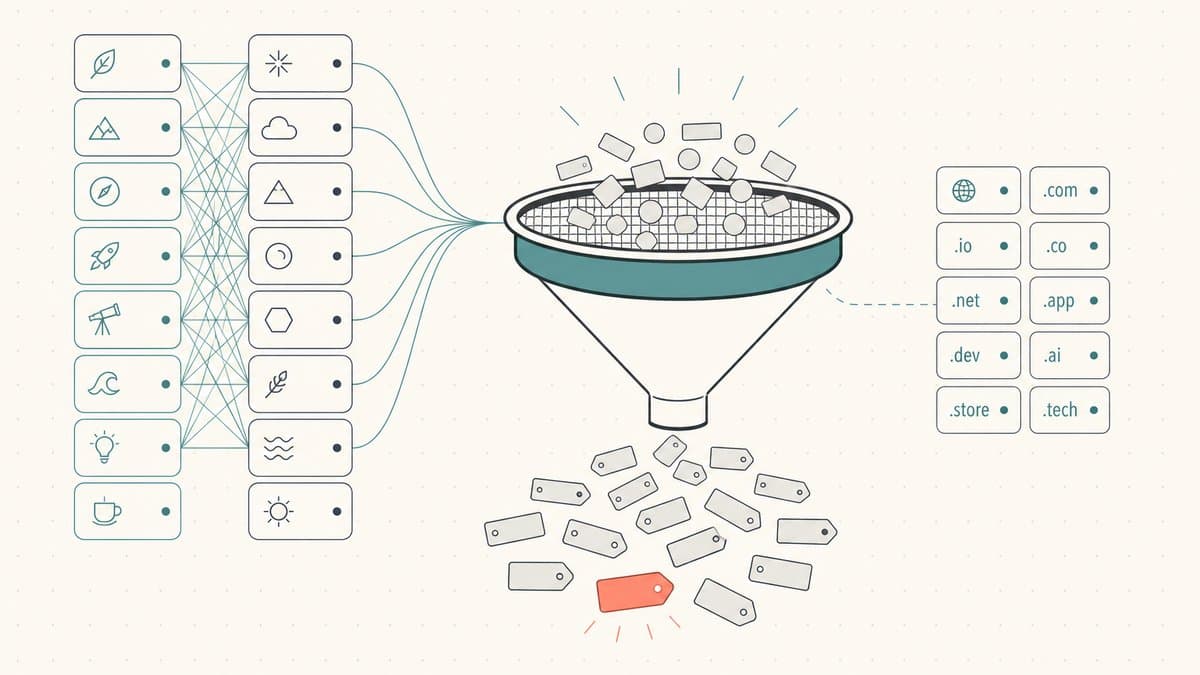
You rarely find good hand-regs by typing obvious single dictionary words and hoping; most attractive one-word .com names were registered long ago. Available names tend to live in combinations and newer extensions, and there are a few productive areas to explore.
Wordlists, run as a system. Serious hand-reggers don't brainstorm; they generate. Start with a seed list of high-value head terms in a category you understand — for fintech, pay, bank, fund, ledger, vault, capital — and a second list of modifiers — get, try, go, hq, app, labs, flow, stack. Combine them programmatically (getledger, vaultflow, payhq) and bulk-check availability. The point of a system is volume with discipline: scanning hundreds of combinations for the rare one that reads like a real product name and is somehow still open.
TLD permutations. The same string is a different asset on a different extension. A word that's long gone on .com is often wide open on .io, .ai, .co, .app, or .xyz, and for the right buyer those carry weight — .ai for AI products, .io for developer tools, .xyz for web3. This is the closest thing to a genuine edge in hand-reg, because newer extensions still have available inventory at the short, brandable end that .com exhausted years ago. The catch is liquidity: most resale demand still lives on .com, and the profile differs sharply by extension (see why .io domains are expensive and cctld market share by registration volume). A premium extension is a tailwind only when a buyer specifically wants it.
Brandable patterns. A large share of hand-reg value is in invented, pronounceable words rather than dictionary terms — the Stripe / Vimeo / Zillow shape: short, made-up, easy to say and spell, no existing owner because they aren't words. Productive patterns include consonant-vowel rhythms, real-word suffixes (-ly, -ify, -ster), short prefixes welded to a root, and two short real words fused into one (Facebook, Salesforce). These are findable precisely because they don't compete with the dictionary — you're generating new language, and new language is still unregistered. Our piece on how to name your project covers what makes an invented name stick.
Trend-driven terms — fast and risky. When a new technology breaks, a window opens for descriptive names before the obvious ones get taken. The risk is that thousands of other people have the identical idea at the identical moment, and trend names age badly when the hype moves on. Treat these as short-hold lottery tickets, not core inventory.
The mechanics: availability, grace periods, and not over-buying
Two practical things to know before you start clicking "register."
First, available and valuable are unrelated. Registrar search will happily suggest a hundred available names; suggestion is not endorsement. The tool is selling registrations, not appraising assets.
Second, do not assume there is a universal consumer cooling-off period. Some gTLD registry agreements include a five-day Add Grace Period, during which a registry operator may credit a registrar for a deleted registration, subject to ICANN's Add Grace Period Limits Policy. That registry-to-registrar mechanism is not a guaranteed refund right for the registrant. Registrar cancellation and refund terms vary, so check the actual policy before registering and never treat the grace period as a portfolio strategy. The mechanism was historically exploited for "domain tasting," which is why ICANN imposed limits.
Keep the carrying cost in view the whole time. Each name you keep is a renewal bill every year until you sell it or drop it — and a gTLD can be held for at most a 10-year term before renewing again. Twenty impulse hand-regs at $12 each is $240 a year, forever, against names that may never sell. Restraint is a feature.
Why most hand-regs never sell
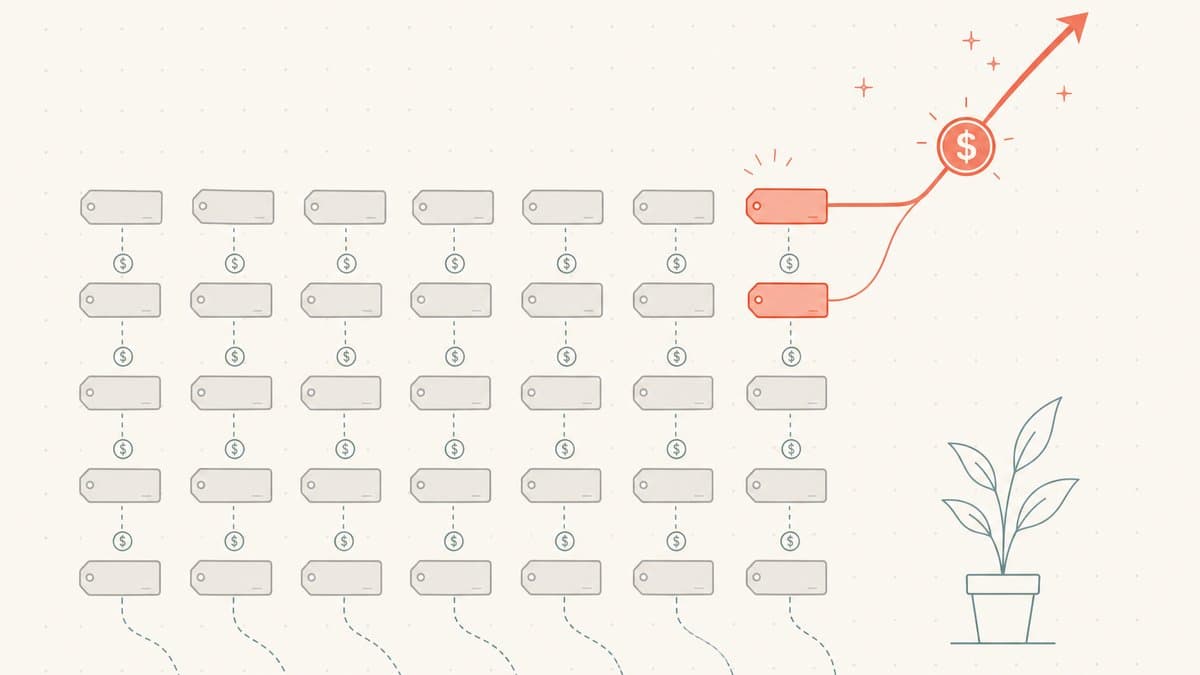
This is the part the "make money flipping domains" videos skip. The default outcome of a hand-registered name is that it never sells. Sell-through on speculative hand-reg portfolios is low — as a domainer rule of thumb, often in the low single-digit percentages per year, though treat that as an industry estimate rather than a measured figure. The trade only works as a portfolio: a few good sales have to cover the renewals on the large majority that go nowhere.
The names that die do so for predictable reasons:
- Nobody needs that exact string. Cleverness you enjoyed at the keyboard rarely maps to a buyer's real need. A name has to solve a problem, not amuse its registrant.
- It only works written down. If you can't say the name and have someone type it correctly, its market shrinks to almost nothing. Hyphens, doubled letters, and misspellings are where value hides.
- The extension has no resale demand. A perfect string on an extension nobody buys is a name you'll hold forever. Liquidity is part of the asset.
- It's a worse version of a name that exists. If the buyer's obvious choice is the
.comand you hold the.netor a modifier variant, you're the fallback, not the deal.
The filters that beat an impulse buy
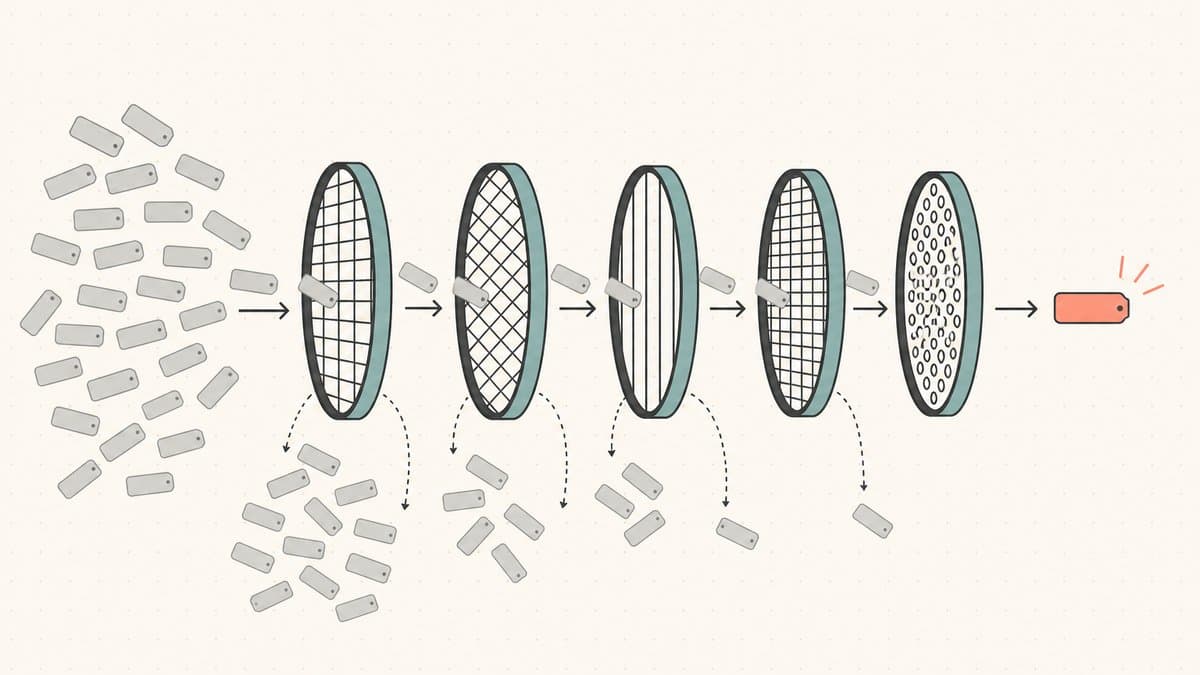
Before any hand-reg, run the name through a short gate. If it fails one, walk away — the registration fee is the cheap part; the renewals are what bleed you.
- Say it out loud, twice. Read it to someone and have them spell it back. If they can't, or they add a hyphen, or they ask "is that one word or two," the name fails the most important test there is. Speakability is non-negotiable.
- Name the buyer. Finish the sentence out loud: "The person who pays four figures for this is a ______ who needs it because ______." If you can't name a plausible buyer and a concrete reason, you have a hunch, not an asset.
- Check the obvious conflicts. Is the exact-match
.comalready a live business? Is the term someone's trademark? Registering a generic word is investing; registering something that leans on a brand is cybersquatting, and a UDRP complaint can take the name from you (start with what is UDRP). A WHOIS lookup and a trademark search cost minutes and save disasters. - Match the extension to the demand. Is this string actually wanted on this extension, or are you reaching for a premium TLD to dress up a weak name?
.aidoesn't rescue a name no AI company would use. - Price the renewal against the realistic sale. If the likely sale is a $200 marketplace flip and the name costs $40/year, the math is thin the moment it sits two years. Cheap to register is not cheap to own.
A name that clears all five is rare, and that's the point. The discipline of hand-reg isn't generating names; it's rejecting almost all of them. The flippers who profit on this channel say no a hundred times for every yes.
After the registration: holding and selling
A hand-reg you can't sell is just a subscription. Once a name clears the gate and you own it, the next skills are listing it where buyers look, pricing it sanely, and being patient — covered in selling-side guides like how to sell a domain name you own. Hand-reg is also a fine on-ramp to adjacent channels once you've built the eye for value: domain backorders and drop-catching, winning domain auctions, and watching the drop cycle for aged names hand-reg can never produce.
When a hand-reg does grow into a real sale, the handoff is where the trade closes cleanly or falls apart: the seller won't transfer before payment, the buyer won't pay before transfer. That standoff is what escrow exists to resolve (domain escrow explained). Namefi narrows it further: tokenized ownership makes control of a real ICANN domain easier to verify and transfer, with DNS continuity so the name keeps resolving through the handover. For a hand-reg flipper, less settlement friction means the rare winner is easier to turn into an actual check.
Friendly Disclaimer (Read Me!)
We're not lawyers, accountants, financial advisors, or doctors, and nothing in this article is legal, financial, tax, accounting, medical, or any other flavor of professional advice. We write these posts to educate ourselves and as a convenience for our customers. Info here may be out of date, geography-specific, or just plain wrong. We make mistakes too.
For any important decision, please consult a real professional (seriously!). Or if that's not your vibe, ask a friend, ask Twitter, ask Reddit, ask an AI, or ask a psychic. In short: DOYR - Do Your Own Research. Let's learn and have fun.
Sources and further reading
Contributors

Fenwei Bian is a software developer in her thirties who spends her working hours in pull requests and her weekends with her hands in soil or sawdust. Years of open source on GitHub taught her that names are interfaces: a good one is clear, honest about what it does, and kind to whoever has to use it next.
She gardens because it rewards patience and punishes wishful thinking, and she does woodwork because a joint either fits or it doesn't. Both habits show up in how she writes about naming — measure twice, check the source, and don't sand over a rough spot and hope no one notices.
For Namefi she writes about how domain markets actually move, the practical trade-offs of tokenizing and flipping names, and picking a domain you'll still be glad you own in twenty years.

Victor Zhou is a technology founder and standards editor focused on digital identity and trust. He founded Namefi, edits Ethereum Improvement Proposals, and previously led smart-contract architecture work at Google Labs.
His work sits at the intersection of naming, ownership, and the systems people use to establish identity online. That perspective makes him especially interested in the way names move between personal meaning, public recognition, and digital infrastructure.
For Namefi, Victor edits and writes about domains as durable digital identity: how names become ownable onchain assets, how tokenization changes custody and trust, and what naming can learn from the systems people use to establish identity online.
Related guides
- For-Sale Landing Pages That ConvertHow to build a domain for-sale landing page that converts: a clear price or offer path, real trust signals, and a frictionless way to buy or make an offer.
- Running a Domain Portfolio Like a BusinessRun your domains like inventory: track cost basis, watch sell-through rate, control renewal drag, prune losers, and keep the books clean.
- Domain Pricing Psychology: Buy-Now vs Make-OfferHow listing mode and initial numbers can influence a domain sale: anchoring, when to name a price, planned concessions, and buy-now vs make-offer.
- How to Find Domains to Flip: Every Sourcing ChannelThe four ways to source domains to flip — hand-registration, expired drops, auctions, and the aftermarket — and each channel's risk and price profile.