
Taxes and Accounting for Domain Investors
How domain investors handle taxes: inventory vs. capital assets, cost basis, when income is recognized, and expensing renewals. Educational, not advice.
- domains
- domain-investing
- domain-flipping
- faq

Read this first. This post is not tax, accounting, legal, or financial advice. We are not your CPA, and we have no idea what jurisdiction you're in or how your activity is structured. Treat everything below as a list of questions and concepts to bring to a real professional, not a position you can rely on. The full disclaimer is at the bottom, and it applies with extra force here.
Domain investing is a business with an unusual tax shape. You hold an asset that costs almost nothing to carry per name but adds up across a portfolio, you sell unpredictably, and the thing you're selling is intangible property that the tax code already had a slot for long before "domaining" was a word. The result is a handful of questions that come up for almost everyone who buys and sells domains for profit: Are my names inventory or investments? What's my cost basis? When does a sale count as income? Can I deduct renewals? This FAQ walks the concepts in plain language so you can have a sharper conversation with your accountant.
For the closely related questions that come up once a name lives on-chain — minting events, crypto-denominated sales, gifting tokens, DeFi collateral — see the companion piece on tax and accounting questions for tokenized domains. This post is about plain registered names. Both sit under domain flipping as a skill and under domain portfolio management as a discipline.
Are my domains inventory or capital assets?
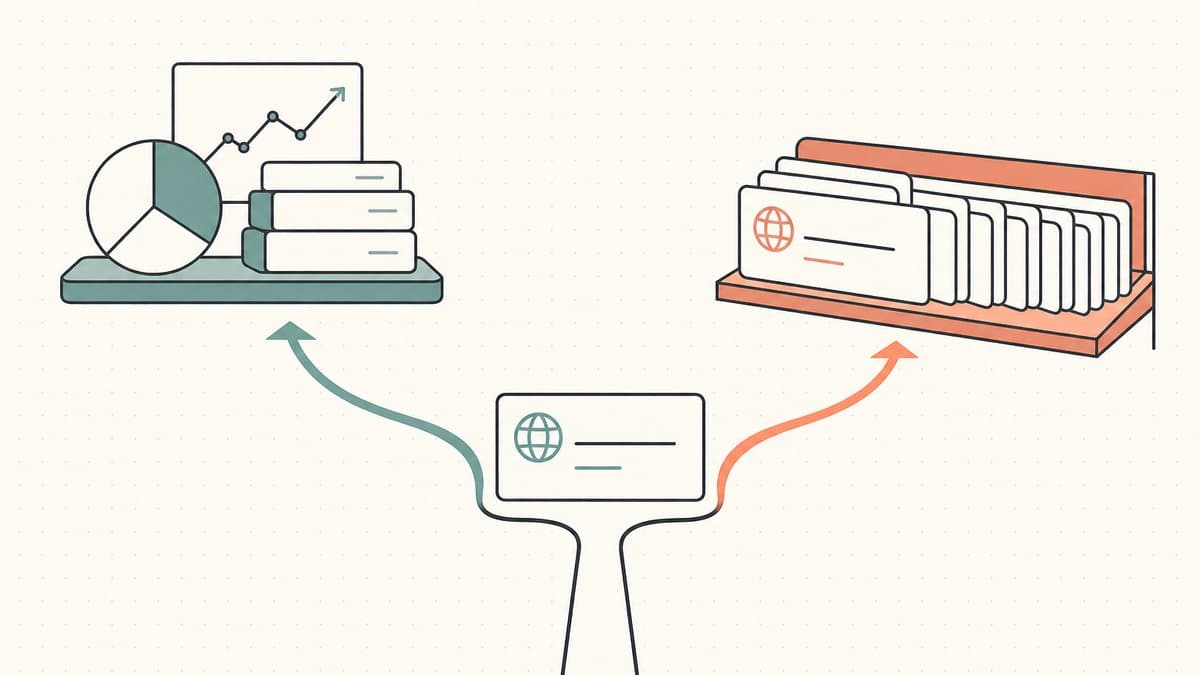
This is the question that changes the most downstream, and the honest answer is "it depends on what you're actually doing." The tax code draws a line between assets you hold as investments and property you hold mainly to sell to customers in the ordinary course of a trade or business.
The default for most people who own a few names is the capital-asset bucket. As the IRS puts it for the US, almost everything you own and use for personal or investment purposes is a capital asset. A domain you bought to hold and resell at a profit looks a lot like an investment.
The exception is the one domain investors should care about most. Property you hold to sell to customers is treated differently. The IRS lists, among noncapital assets, property held mainly for sale to customers. If your activity rises to the level of a trade or business and your names are effectively your stock in trade, they can be treated like inventory rather than capital assets. That distinction is the difference between capital-gains treatment and ordinary-income treatment, and which side of the line you land on depends on facts like volume, frequency, how you market the names, and how you hold them out for sale. This is the dealer-versus-investor question, and it is genuinely fact-specific. Don't self-diagnose it from a blog post — including this one.
Why does inventory vs. capital asset matter so much?
Two reasons. First, the tax rate. Capital assets held long enough can qualify for long-term capital-gains rates; inventory sold in the ordinary course of business generally produces ordinary income, which is often taxed at a higher rate. Second, the timing and character of losses, and whether self-employment considerations come into play. A high-volume domain trading operation that hand-registers and flips constantly looks more like a dealer; a patient holder of a small set of brandables looks more like an investor. The same name can be inventory in one person's hands and a capital asset in another's.
This is also why domain portfolio management and tax treatment are tangled together. How you run the book — whether you treat it as a casual hold or an active sales operation — is part of what determines the answer.
What counts as my cost basis in a domain?
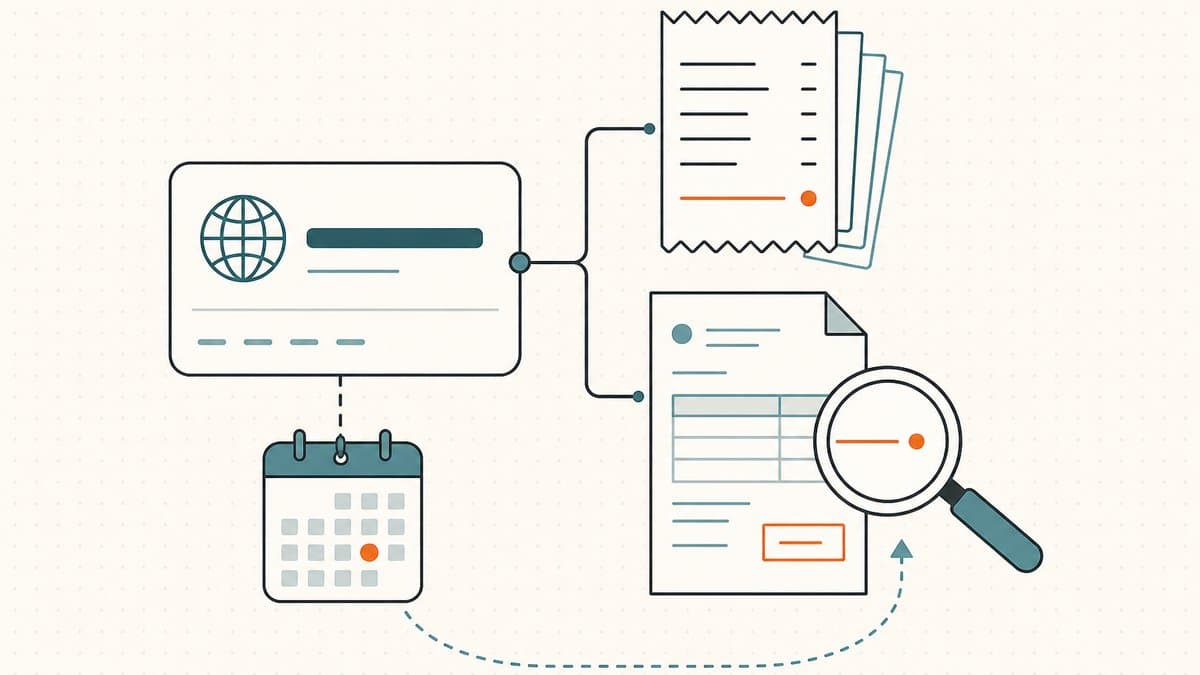
Cost basis is what you use to figure gain or loss when you sell, so getting it right is the whole game on the accounting side. In general, basis starts with what you paid to acquire the name plus the costs of acquiring it.
For a hand-registered name, that's straightforward: the registrar registration fee. For a name you bought on the aftermarket, it's the purchase price, and you'll want to think about associated acquisition costs like escrow fees, broker commissions, or auction premiums. Whether each of those gets added to basis or expensed is exactly the kind of thing to confirm with a professional, because the answer can depend on whether you're an investor or a dealer.
The practical takeaway, regardless of category: document basis at the moment of acquisition, per name, in a form that would survive scrutiny years later. Save the registrar receipt, the marketplace invoice, the auth-code transfer record, and the date. A domain bought in 2021 and sold in 2027 is a long time to reconstruct a number from memory. Good basis records are the single most useful habit a domain investor can build, and they're cheap to keep if you start on day one.
When is income recognized — at sale, or before?
For most investors, the taxable event is the sale, not the holding. Simply registering a name, watching its market value rise, or getting an unsolicited offer you decline does not, by itself, create income. Income generally shows up when you actually dispose of the name in a sale and realize the gain.
Two wrinkles are worth flagging. First, the holding period drives whether a gain is short-term or long-term if the name is a capital asset. The general US rule: if you hold the asset for more than one year before you dispose of it, your capital gain or loss is long-term. For a flipper optimizing after-tax return, that one-year line can matter as much as the sale price. Second, if your names are inventory rather than capital assets, the holding-period distinction may not help you at all — the proceeds are ordinary income whether you held the name two weeks or two years.
Structured deals add their own questions. An installment sale, a lease with an option to buy, or a rent-to-own arrangement can spread or recharacterize income across years. None of those are exotic in the domain world, and each one is a reason to ask before you sign, not after.
Can I expense domain renewals?
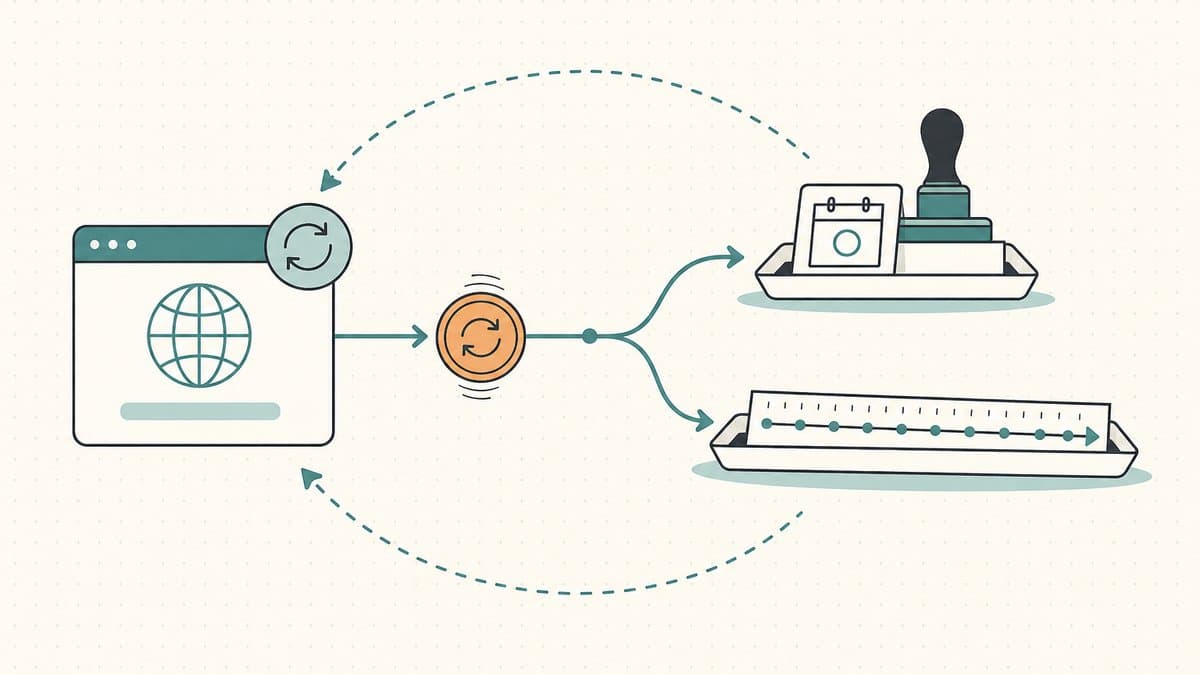
This is the question every portfolio holder asks, because renewals are the steady drag on the whole operation, and the answer is the classic "it depends." Two separate threads run through it.
The first thread is whether the activity is a business at all. Ongoing deductions for renewals, marketplace listing fees, and other carrying costs generally require that you're carrying on an activity with a real profit motive, not pursuing a hobby. A genuine domain-investing business has a much easier time treating recurring costs as deductible than someone holding a handful of names on a whim. How you treat renewal costs is downstream of that classification.
The second thread is capitalize vs. expense. Some costs get added to the basis of the asset (recovered when you sell), while some recurring operating costs can be deducted in the year you pay them. A domain name is intangible property, and the tax code has long had a framework for the capitalized cost of certain intangibles. Under the US rules, you must generally amortize over 15 years the capitalized costs of "section 197 intangibles" you acquired after August 10, 1993. An IRS Chief Counsel Advice memorandum, CCA 201543014, analyzes some domain-name costs under section 197, but it is nonprecedential, depends on the stated facts, and expressly excludes domains acquired for resale or investment. It therefore does not answer the classification or renewal-expense question for a domain investor. Whether and how section 197 applies to a given domain, and whether an annual renewal is a deductible recurring cost rather than something to capitalize, is a question to put to your accountant rather than guess at. The amount per name may be small; the treatment across a portfolio may not be.
This is also where renewal economics and your sell-through rate meet tax planning. The carrying-cost math that tells you when to drop a domain is the same math your accountant needs to see the shape of the business.
How should I keep books for a domain portfolio?
You don't need enterprise accounting software to track a domain book, but you do need discipline. A workable minimum is a single ledger with one row per name capturing: acquisition date, acquisition cost and source, every renewal paid with dates, any improvement costs, the sale date and price, and the buyer or marketplace. That ledger is what lets you compute basis, holding period, and gain on any name in seconds rather than archaeology.
Keep the supporting documents alongside it: registrar invoices, marketplace receipts, escrow statements, and transfer confirmations. If you sell across multiple venues, reconcile their reports against your own ledger rather than trusting any single platform's number. The same record-keeping that makes tax time painless also makes you a more disciplined investor, because you can finally see your true sell-through and carrying cost instead of guessing.
Does the registrar or marketplace handle any of this for me?
Mostly no. A registrar charges you and may send a receipt, but it isn't tracking your basis or your gains. A marketplace that brokers a sale may issue a tax form in some jurisdictions, and that form may or may not capture the full picture — it won't know your basis, for instance. Treat any platform-issued number as an input to reconcile, not an answer to accept. The responsibility to track basis, classify the activity, and report correctly sits with you.
Where does Namefi fit?
Clean records require reconciling multiple systems. Namefi provides an on-chain token-control and transfer history for supported ICANN domains. That history can be one supplemental, timestamped record showing which wallet controlled the token and when a token transaction occurred.
It does not, by itself, establish the taxpayer's identity, the legal or beneficial owner of the domain, the registrant of record, consideration paid, cost basis, acquisition purpose, an uninterrupted chain of legal title, or the tax treatment of an event. Namefi's Terms of Service describe NFTs as part of domain management and reserve platform authority in specified circumstances, including token actions; tokenization also does not validate a user's legal right to a name. Reconcile on-chain history with registrar and registry records, marketplace or escrow statements, payment records, invoices, agreements, and any platform interventions. A professional can then evaluate the complete evidence rather than treating the NFT ledger as a substitute for accounting or legal records. Tokenizing a name also introduces separate tax questions, covered in the tokenized-domain tax post.
Friendly Disclaimer (Read Me!)
We're not lawyers, accountants, financial advisors, or doctors, and nothing in this article is legal, financial, tax, accounting, medical, or any other flavor of professional advice. We write these posts to educate ourselves and as a convenience for our customers. Info here may be out of date, geography-specific, or just plain wrong. We make mistakes too.
For any important decision, please consult a real professional (seriously!). Or if that's not your vibe, ask a friend, ask Twitter, ask Reddit, ask an AI, or ask a psychic. In short: DOYR — Do Your Own Research. Let's learn and have fun.
Sources and further reading
- IRS — Topic no. 409, Capital gains and losses (capital asset definition; long-term holding period)
- IRS — Publication 544, Sales and Other Dispositions of Assets (property held mainly for sale to customers is a noncapital asset)
- IRS — Intangibles (15-year amortization of section 197 intangibles)
- IRS Office of Chief Counsel — CCA 201543014 (nonprecedential, fact-specific domain-name analysis that excludes domains acquired for resale or investment)
- Namefi — Terms of Service (token-management and platform-authority terms)
- Namefi resources — Tax and accounting questions for tokenized domains
Contributors

Aileen Wright is a student in her twenties living in New York City, where the distance between a museum wall and a library reading room is a short walk and a long afternoon. She came to name writing through art and history — the way a single portrait, coin, or manuscript margin can carry a name across centuries and change its meaning on the way.
Most weeks you can find her in Central Park with a paperback, or in the quiet of a public reading room chasing down where a name actually comes from rather than what a name-list says it means. She is also teaching herself to code, which has made her oddly precise about spelling, sorting, and the small details that decide whether a name ages well.
For Namefi she writes about the history and culture behind domain names, the stories brands carry as they rename, and the difference between a good story and a verified source.

Victor Zhou is a technology founder and standards editor focused on digital identity and trust. He founded Namefi, edits Ethereum Improvement Proposals, and previously led smart-contract architecture work at Google Labs.
His work sits at the intersection of naming, ownership, and the systems people use to establish identity online. That perspective makes him especially interested in the way names move between personal meaning, public recognition, and digital infrastructure.
For Namefi, Victor edits and writes about domains as durable digital identity: how names become ownable onchain assets, how tokenization changes custody and trust, and what naming can learn from the systems people use to establish identity online.
Related guides
- How We Cut AI Buyer Discovery Cost by 85%: Start Lean, Escalate With EvidenceA practical method for cheaper buyer discovery using progressive model escalation, LLM-as-judge gates, and Laminar traces and evals.
- Brandable vs Keyword Domains: Which Sell Better?Brandable invented names vs exact-match keyword domains: who buys each, which resells more reliably, and the trademark angle every flipper should know.
- Domain Appraisal Tools Compared: Estibot vs GoDaddy vs RealityHow automated domain appraisers like Estibot and GoDaddy actually work, where they systematically miss, and how to use them as a first filter.
- Domain Backorders and Drop-Catching, ExplainedWhat domain backorders and drop-catching are, how services race to grab a name the instant it releases, and when a backorder is worth paying for.