
Name Change, Game Change
Case studies where a brand-defining rename rode a premium-domain upgrade — and changed the company that followed.

From TheFacebook to Facebook: Why the Name and Domain Changed
Explore why TheFacebook became Facebook, how the domain acquisition fit the rebrand, and what the move changed for the growing company.
#1

From TeslaMotors.com to Tesla.com: The $11M Domain Upgrade That Took a Decade
How Tesla spent over a decade and a reported $11M to move from TeslaMotors.com to the exact-match Tesla.com, and why the domain upgrade arrived right before the company dropped "Motors" from its name.
#2

From AirBedAndBreakfast.com to Airbnb.com: The Domain Upgrade That Let a Company Outgrow Its Air Mattresses
How Airbnb launched in 2008 as AirBed & Breakfast on AirBedAndBreakfast.com, then shortened to Airbnb.com in 2009 to escape the literal air-mattress name and become a scalable global brand.
#3

From GetDropbox.com to Dropbox.com: The $300K Upgrade That Dropped "Get" and a Bottle of Champagne
How Dropbox launched on GetDropbox.com because Dropbox.com was taken, fought a trademark and squatting battle, and finally bought the exact-match Dropbox.com for a reported $300,000 in cash.
#4

From SlackHQ.com to Slack.com: The $60K Upgrade That Dropped the "HQ"
How Slack launched on SlackHQ.com because someone else had Slack.com, paid a reported $60,000 to buy the exact-match domain, dropped the "HQ" — and why @SlackHQ still survives on social to this day.
#5

From Snapchat.com to Snap.com: The $5M Domain That Turned an App Into a Camera Company
How Snapchat quietly bought Snap.com from Idealab for a reported $5M in 2014, then in September 2016 renamed itself Snap Inc., "a camera company," and let the short exact-match domain carry an identity bigger than any single app.
#6

Uber’s Original Name: Why UberCab Became Uber
Discover Uber’s original name, why UberCab became Uber, and how its domain change supported a broader brand.
#7

From Box.net to Box.com: The ~$1M Upgrade That Dropped the ".net" and Bought the Exact Match
How Box launched in 2005 on Box.net because Box.com was taken, pivoted from consumer storage to the enterprise, and in 2011 paid Digimedia close to $1 million for the exact-match Box.com — a .net-to-.com upgrade that landed right as the company became simply "Box."
#8

From BufferApp.com to Buffer.com: The 624-Day, Bank-Statement-Open Domain Deal
How Buffer launched in 2010 on BufferApp.com because Buffer.com was taken, then spent 624 days acquiring the exact-match domain — even showing the seller its bank balance — and why a company famous for radical transparency stayed quiet on the one number everyone wanted: the price.
#9

Who Owns Trip.com? Ctrip, Trip.com Group, and the Rebrand
Understand how Trip.com relates to Ctrip and Trip.com Group, and trace the acquisition and company-name changes behind the travel brand.
#10

From del.icio.us to Delicious.com: The Cleverest Domain Hack on the Web — and Why Yahoo Untangled It
How the pioneering social-bookmarking site launched in 2003 as the famous domain hack "del.icio.us," why those dots became a permanent tax on every mention, and how Yahoo moved it to the cleaner Delicious.com in 2008.
#11

From DiscordApp.com to Discord.com: How Dropping "App" Closed a Door Phishers Loved
How Discord launched in 2015 on DiscordApp.com because Discord.com was taken, quietly bought the bare word, and in 2020 made discord.com its primary home — partly for brand cleanliness, partly because the "discordapp.com" vs "discord.com" split was a gift to phishers and malware crews.
#12

From Facebook.com to Meta.com: How a $60M Name Deal and a Borrowed Science Domain Powered the Metaverse Pivot
How Facebook, Inc. became Meta in October 2021, why Meta.com was already a Zuckerberg-related asset forwarding from a science search engine, and how a separate $60M deal bought the "Meta" name from a Sioux Falls bank — while the Facebook app kept Facebook.com.
#13
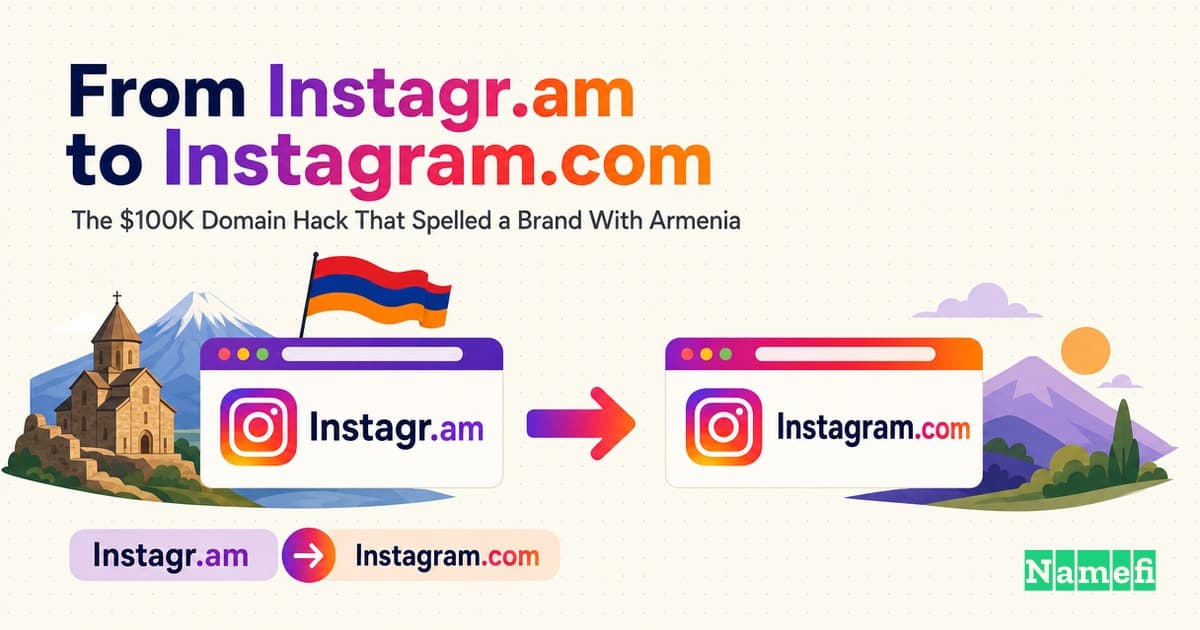
From Instagr.am to Instagram.com: The $100K Domain Hack That Spelled a Brand With Armenia
How Instagram launched in 2010 on the instagr.am domain hack — borrowing Armenia's .am ccTLD to spell its own name — then paid $100,000 to consolidate on Instagram.com, and what the tradeoffs of a clever ccTLD hack teach founders.
#14

From JambaJuice.com to Jamba.com: How a Smoothie Chain Dropped a Word — and Already Owned the Domain
How Jamba Juice spent 29 years explaining itself with the word "Juice," why it dropped that word in 2019 to become simply "Jamba," and the quiet advantage almost no one noticed: Jamba.com was already an established company domain before the rebrand.
#15

From Massdrop.com to Drop.com: How a Group-Buy Community Dropped Half Its Name to Own One Word
How Massdrop spent seven years building an enthusiast group-buying community, then rebranded to Drop in 2019 — quietly acquiring the premium Drop.com domain (asking price once $800,000) before the rename, and why dropping "Mass" mattered.
#16

From Mona.co to Crypto.com: How Monaco Paid Millions for the Domain a Cryptographer Held for 25 Years
How the crypto-card startup Monaco rebranded to Crypto.com in 2018 by buying the ultra-premium Crypto.com domain — registered in 1993 by cryptographer Matt Blaze, who refused to sell for 25 years — in a deal experts valued at up to $10 million.
#17

From Mr. Chewy to Chewy: The Name and Domain Change
Learn how Mr. Chewy became Chewy and how the shorter name and domain fit the company’s brand evolution.
#18

Why Did Twitter Become X? The Rebrand and X.com Story
Trace Twitter’s change to X, the history of X.com, and how the name, domain, and redirect changes fit into the rebrand.
#19
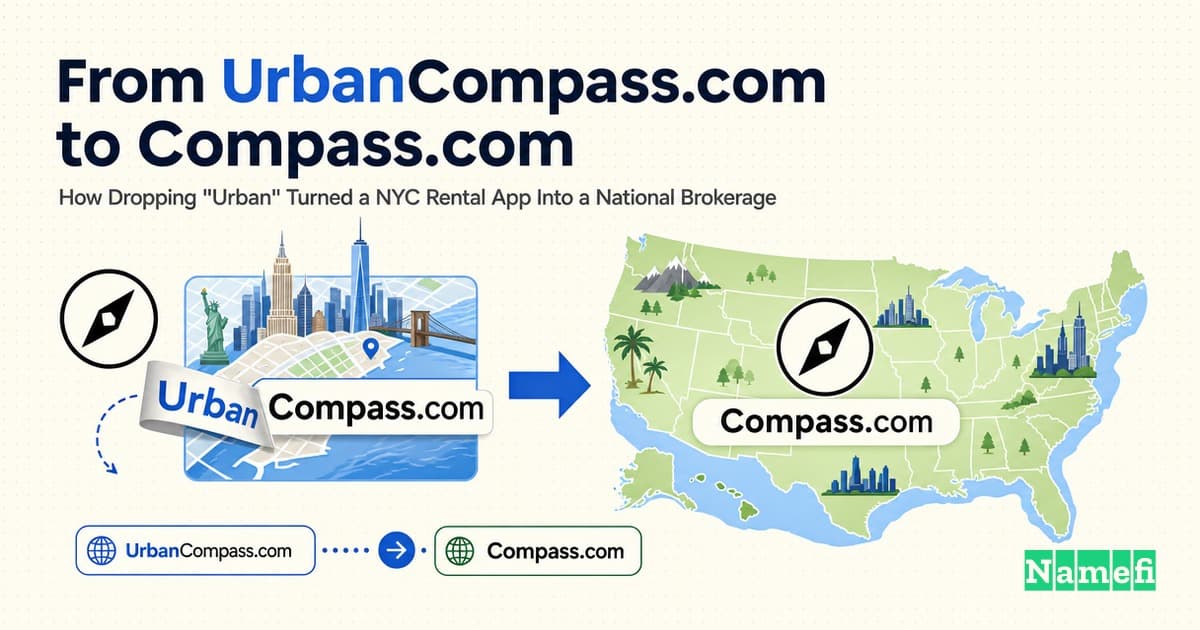
From UrbanCompass.com to Compass.com: How Dropping "Urban" Turned a NYC Rental App Into a National Brokerage
How Urban Compass launched in 2012 as a New York rental app on UrbanCompass.com, dropped "Urban" in its February 2015 rebrand, and upgraded to the exact-match Compass.com — a domain that had been listed at auction for $1 million — right as it set out to go national.
#20