
Domain Flipping Skills
The craft of buying low and selling high — sourcing, appraising, naming, protecting, and selling domains for profit.

Domain Flipping: How It Works, Costs, Risks, and Selling Basics
Learn how domain flipping works, from finding and valuing names to selling them, with realistic costs, risks, and holding-period tradeoffs.

How to Find Domains to Flip: Every Sourcing Channel
The four ways to source domains to flip — hand-registration, expired drops, auctions, and the aftermarket — and each channel's risk and price profile.
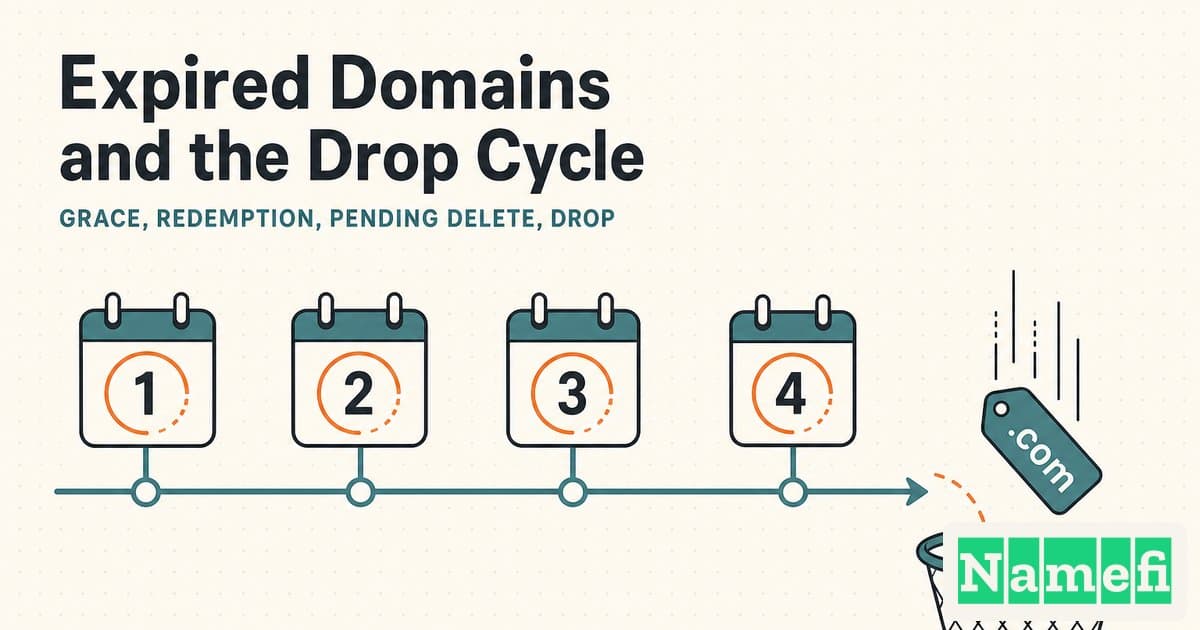
Expired Domains and the Drop Cycle, Explained
How a domain expires and drops: grace period, the 30-day redemption window, 5-day pending delete, release — and where dropped names surface for flippers.

Domain Backorders and Drop-Catching, Explained
What domain backorders and drop-catching are, how services race to grab a name the instant it releases, and when a backorder is worth paying for.

Hand-Registering Domains to Flip: Finding Available Gems
How to find still-available domains worth a registration fee: wordlists, TLD permutations, brandable patterns, and the filters that beat impulse buys.

How to Win Domain Auctions Without Overpaying
How aftermarket domain auctions actually work — proxy bids, sniping, hard maxes, reading demand, and dodging the overpay and shill traps.

Domain Valuation: How to Estimate What a Domain Is Worth
Estimate a domain’s value using comparable sales, naming quality, buyer demand, and holding costs, and understand the limits of automated appraisals.

Domain Appraisal Tools Compared: Estibot vs GoDaddy vs Reality
How automated domain appraisers like Estibot and GoDaddy actually work, where they systematically miss, and how to use them as a first filter.

How to Read Comparable Domain Sales (Comps)
How to use NameBio-style sales history to price a domain: finding true comparables, adjusting for TLD, length and keyword, and avoiding cherry-picking.

End-User Price vs Reseller Price: Why One Domain Has Two Numbers
Why a domain has a low wholesale/reseller price and a much higher end-user price, how big the spread is, and which number applies to your sale.

How the TLD Affects a Domain's Value
How the extension after the dot moves a domain's price: the .com premium, the .io/.ai/.co context, and the policy and geopolitical risk behind ccTLDs.
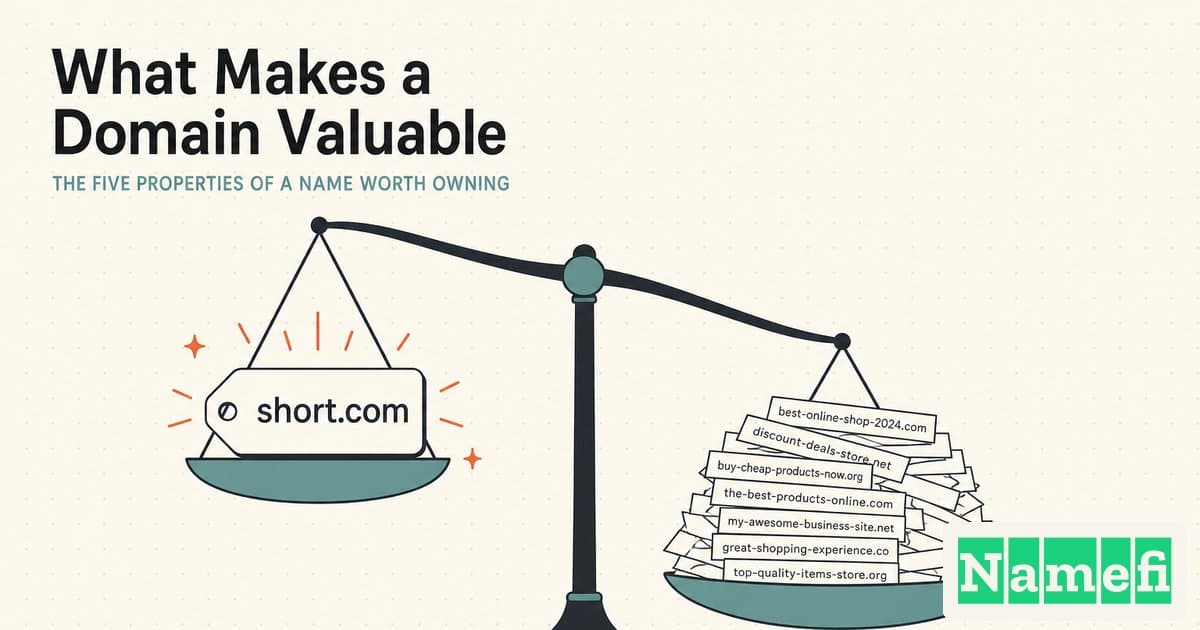
What Makes a Domain Name Valuable
Why one string of letters is worth thousands and a near-identical one is worth nothing: length, real words, the .com premium, intent, and brandability.

What Is a Domain Hack? Examples and Extension Tradeoffs
See how domain hacks form words across the dot, explore examples, and learn what country-code rules can mean for choosing one.

Brandable vs Keyword Domains: Which Sell Better?
Brandable invented names vs exact-match keyword domains: who buys each, which resells more reliably, and the trademark angle every flipper should know.

Short, LLLL, and Numeric Domains: The Chinese-Market Premium
Why Chinese buyers price short, four-letter, and numeric .com domains as a distinct asset class — pinyin, no-vowel premiums, and lucky 8 vs unlucky 4.

Domain Flipping and the Law: Trademarks, UDRP, and Scams
The legal landscape every domain flipper needs: trademark basics, UDRP and ACPA, escrow at closing, hijacking defense, and how to dodge sale scams.

Cybersquatting vs Legitimate Domaining: UDRP and ACPA Explained
Where legitimate domaining ends and cybersquatting begins: the UDRP three-part test, the ACPA, reverse domain hijacking, and how to stay safe.

How to Avoid Domain Sale Scams
The common domain-sale scams — fake escrow, fake buyers, overpayment chargebacks, transfer-before-payment — and the habits that keep your sales safe.

How to Sell Domains for Profit
The end-to-end playbook for selling domains: inbound vs outbound, pricing format, where to list, when to use a broker, and closing the deal safely.

Inbound vs Outbound Domain Sales
Inbound vs outbound domain sales: when each works, the effort-and-return tradeoff, and how to run both without your outreach reading as spam.

Domain Pricing Psychology: Buy-Now vs Make-Offer
How listing mode and initial numbers can influence a domain sale: anchoring, when to name a price, planned concessions, and buy-now vs make-offer.

Where to Sell Domains: Afternic vs Sedo vs Dan vs Namefi
Afternic vs Sedo vs Dan vs onchain marketplaces compared on reach, fees, and fast transfer — plus how to list one name across several at once.
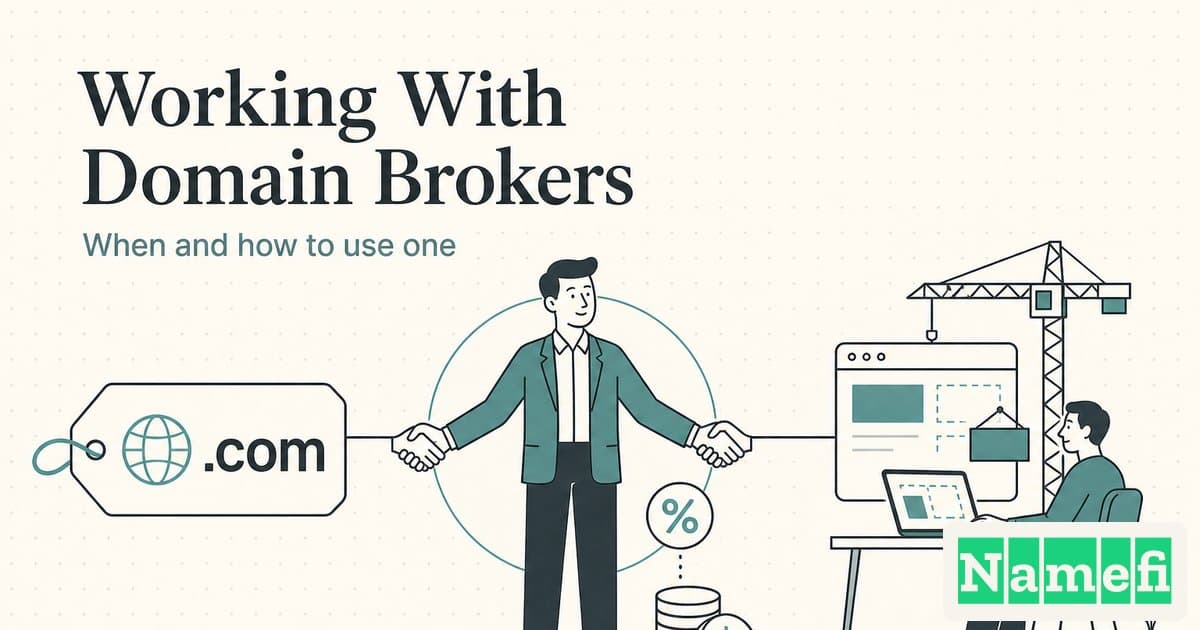
What Does a Domain Broker Do? Fees, Services, and How to Choose
Learn when a domain broker helps, how buyer and seller representation differ, and which fees, incentives, and terms to check before hiring one.
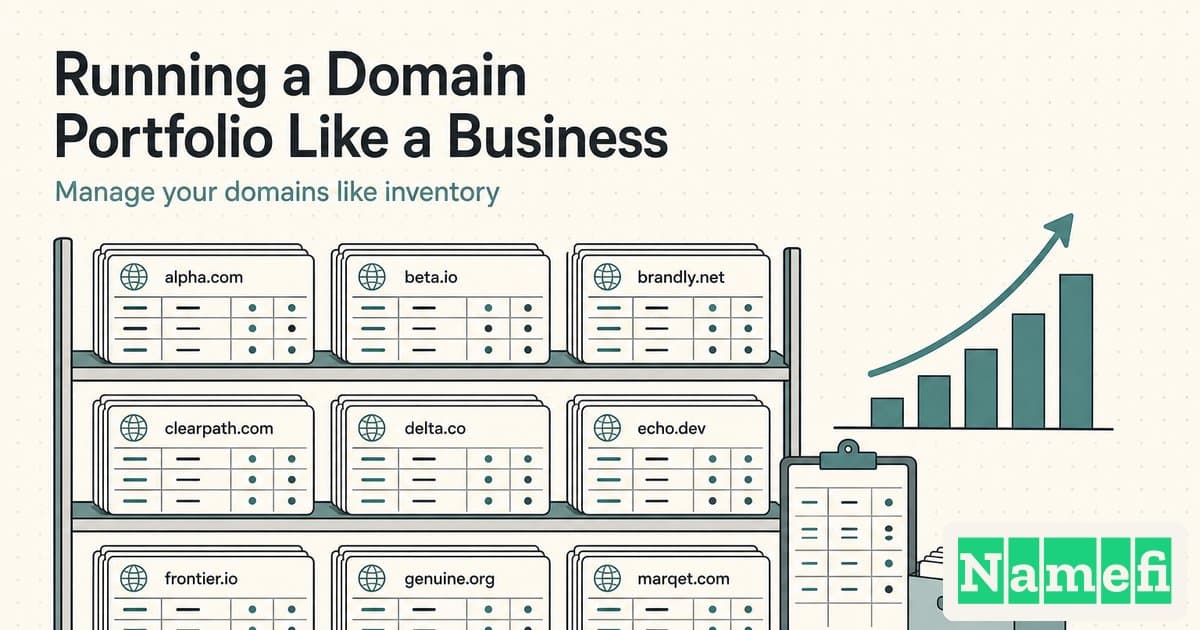
Running a Domain Portfolio Like a Business
Run your domains like inventory: track cost basis, watch sell-through rate, control renewal drag, prune losers, and keep the books clean.
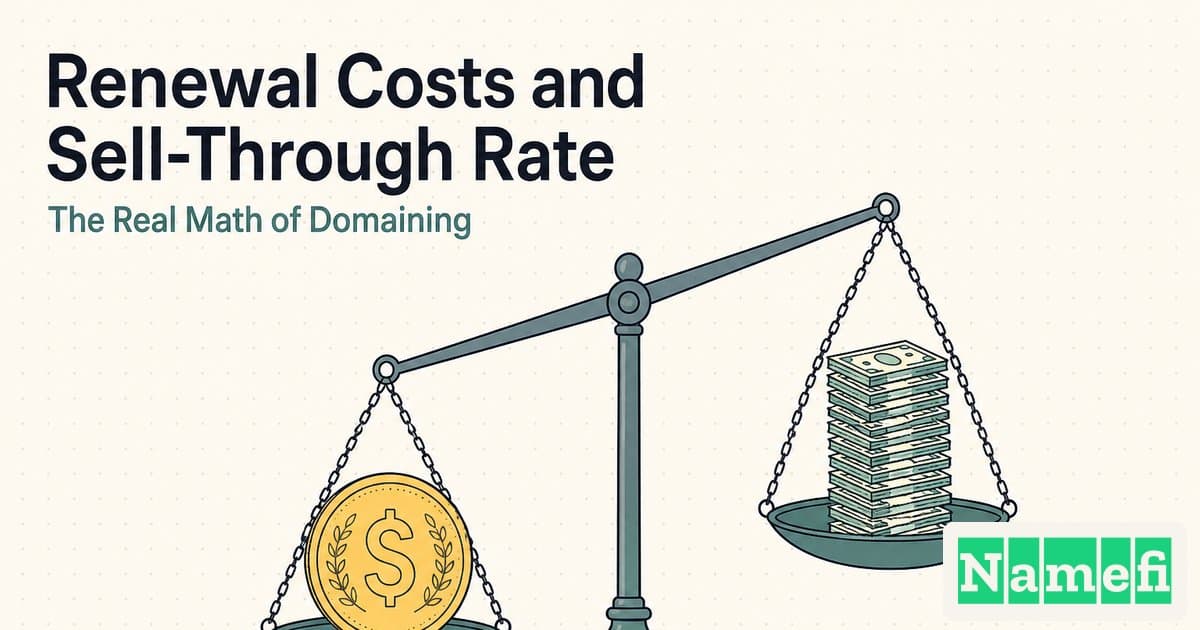
Renewal Costs and Sell-Through Rate: The Real Math of Domaining
The honest economics of domaining: renewal drag, sell-through rate as a rule of thumb, and why one good sale has to fund many years of renewals.
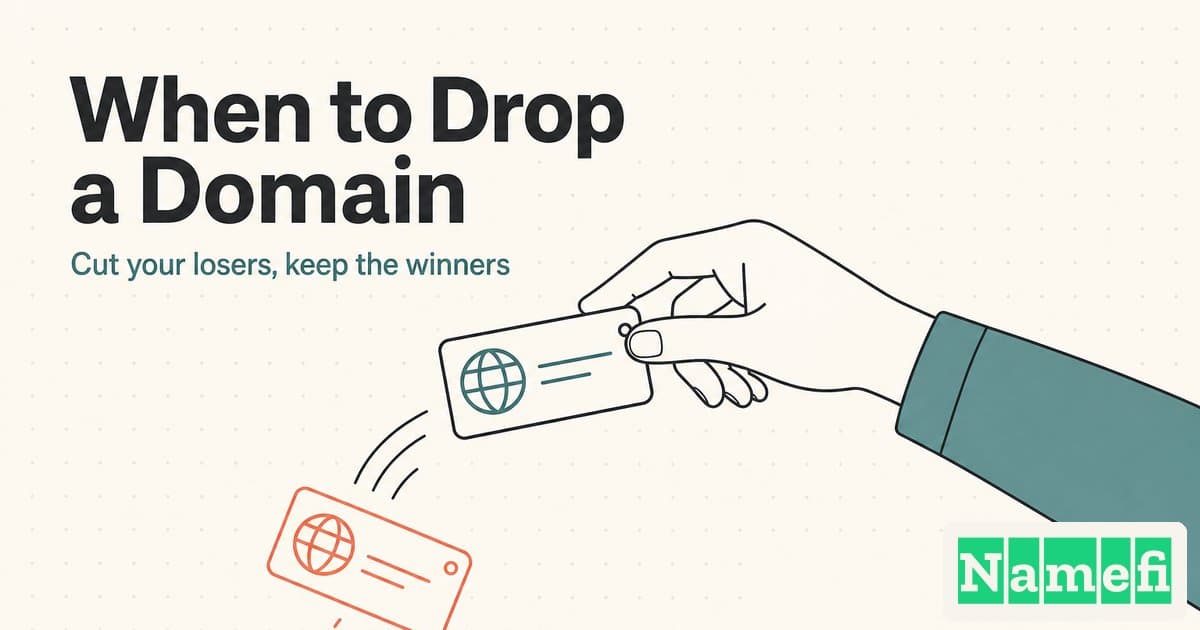
When to Drop a Domain (and Cut Your Losers)
How to decide when to let a domain expire: renewal cost vs realistic resale odds, the sunk-cost trap, and the signals a name will never sell.

Taxes and Accounting for Domain Investors
How domain investors handle taxes: inventory vs. capital assets, cost basis, when income is recognized, and expensing renewals. Educational, not advice.

Marketing Your Domains for Sale
How to market domains for sale: parking pages, for-sale landers, and listing SEO that put the right name in front of the right buyer.
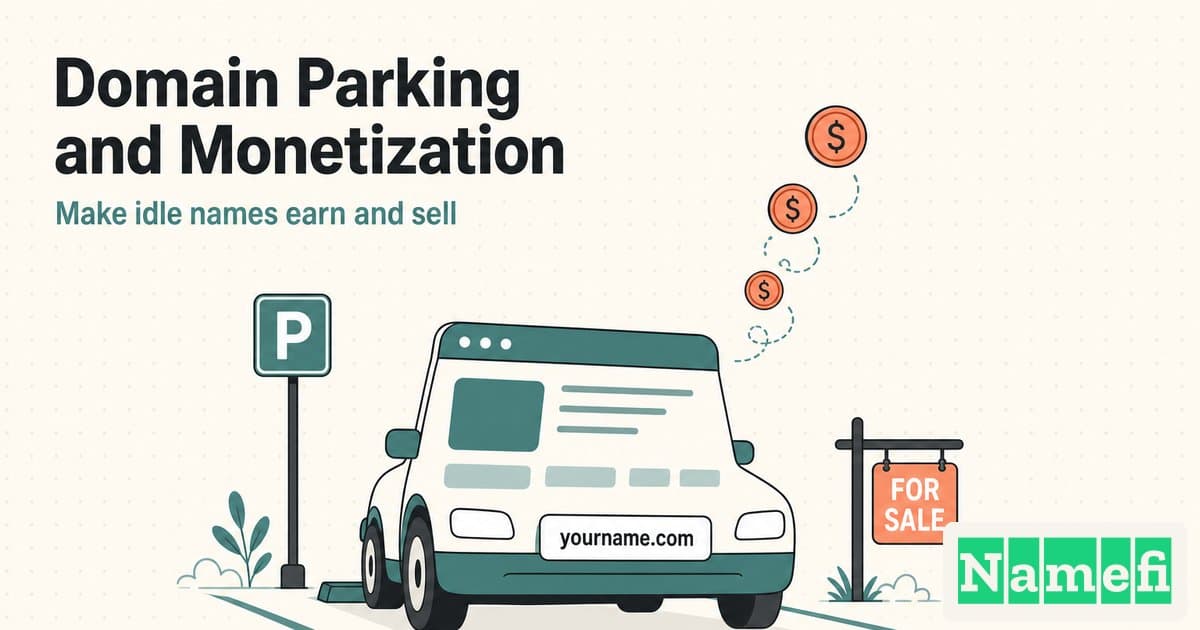
What Is Domain Parking? Parked Domains and Monetization
Learn what a parked domain is, why people park domains, and how parking, sale landing pages, and monetization differ.

For-Sale Landing Pages That Convert
How to build a domain for-sale landing page that converts: a clear price or offer path, real trust signals, and a frictionless way to buy or make an offer.

Marketplace Discoverability for Domain Listings: Afternic and Sedo
How domain listings are discovered on Afternic and Sedo, which seller-controlled fields each platform actually exposes, and how registrar distribution, pricing, landers, and promotion differ.

Onchain Domain Flipping: Trading ENS and Tokenized Domains
How onchain domain flipping works — trading ENS and tokenized domains through wallets and compatible NFT marketplaces, and how it differs from registrar flipping.

ENS vs DNS Domain Flipping: What's Different
How flipping ENS .eth names differs from flipping traditional DNS domains: ownership, liquidity, renewal, gas, and what each is good for.

How Tokenization Changes Domain Flipping
How bringing a domain on-chain can reshape flipping through verifiable token control, compatible marketplaces, and programmable settlement without removing registrar dependencies.

Selling Domains as NFTs: Onchain Liquidity
How selling a domain as an NFT works: listing mechanics, Seaport and OpenSea, buyer-restricted private sales, royalties, and gas and scam traps.

Onchain Domain Marketplaces Compared: OpenSea, Seaport, and Beyond
OpenSea, Seaport-based, and domain-native onchain marketplaces compared on fees, reach, and custody — which venue fits which tokenized-domain sale.

ENS vs Unstoppable vs Tokenized DNS Domains
ENS vs Unstoppable Domains vs tokenized ICANN DNS, compared on browser resolvability, renewals, and who actually controls the name.

Onchain Domain Custody, Wallets, and Recovery
How custody really works for onchain domains: wallets, multisig, seed-phrase risk, and recovering a tokenized domain after wallet loss.

Tokenize Your .com to Flip It: A Namefi Walkthrough
A Namefi walkthrough: add an on-chain token-control layer to a .com, preserve standard DNS, and use atomic payment-and-token settlement without conflating the token with legal title.

Appraising ENS and Tokenized Domains: Reading Onchain Comps
How to appraise ENS and tokenized domains using onchain comps, floor-versus-premium reasoning, and ENS club factors — and why it differs from DNS.

How Much Does a Domain Name Cost? Registration and Renewal
Compare domain registration, renewal, transfer, and recovery costs, and learn how to spot introductory prices that hide a higher ongoing bill.