
Fenwei Bian
Software Developer & Writer • Namefi
Fenwei Bian is a software developer in her thirties who spends her working hours in pull requests and her weekends with her hands in soil or sawdust. Years of open source on GitHub taught her that names are interfaces: a good one is clear, honest about what it does, and kind to whoever has to use it next.
She gardens because it rewards patience and punishes wishful thinking, and she does woodwork because a joint either fits or it doesn't. Both habits show up in how she writes about naming — measure twice, check the source, and don't sand over a rough spot and hope no one notices.
For Namefi she writes about how domain markets actually move, the practical trade-offs of tokenizing and flipping names, and picking a domain you'll still be glad you own in twenty years.
Writes about
Articles
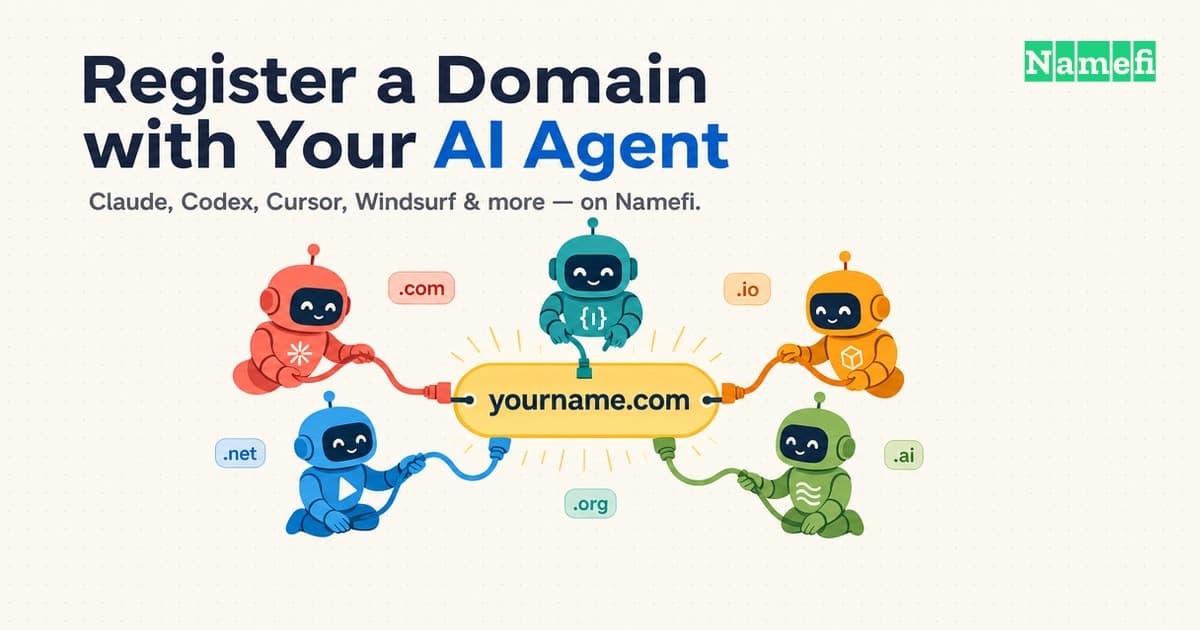
How to Register a Domain with Your AI Agent on Namefi
The canonical guide to registering a domain on Namefi with any AI agent — Claude, Codex, Cursor, and more — via MCP, REST, or wallet checkout.
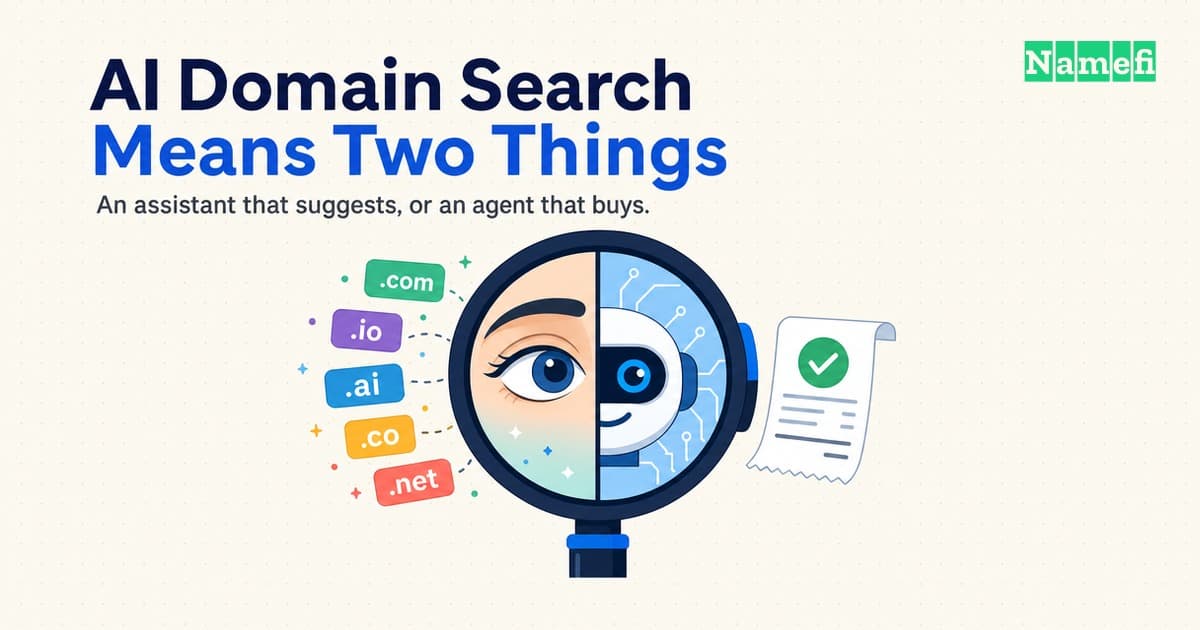
"AI Domain Search" Means Two Different Things in 2026
"AI domain search" can mean an assistant that suggests or an agent that buys. A two-column test to know which you need and where to get each.
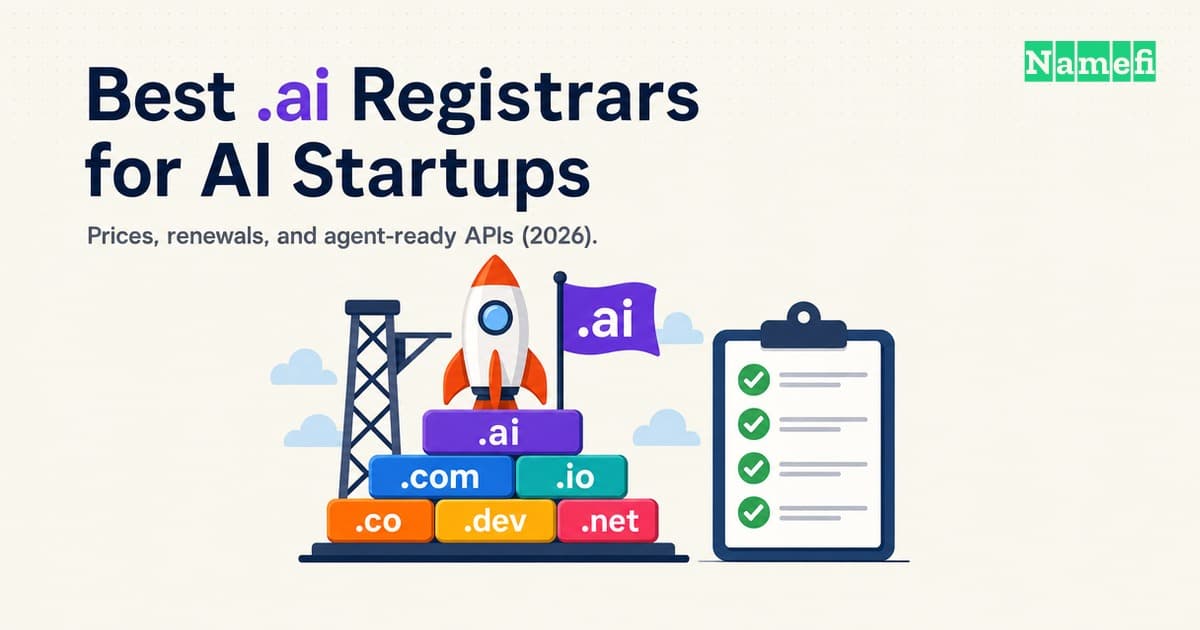
Best .ai Domain Registrars for AI Startups (2026)
Where AI startups should register .ai in 2026: verified price bands and renewal terms across five registrars, plus which ones an AI agent can actually use.
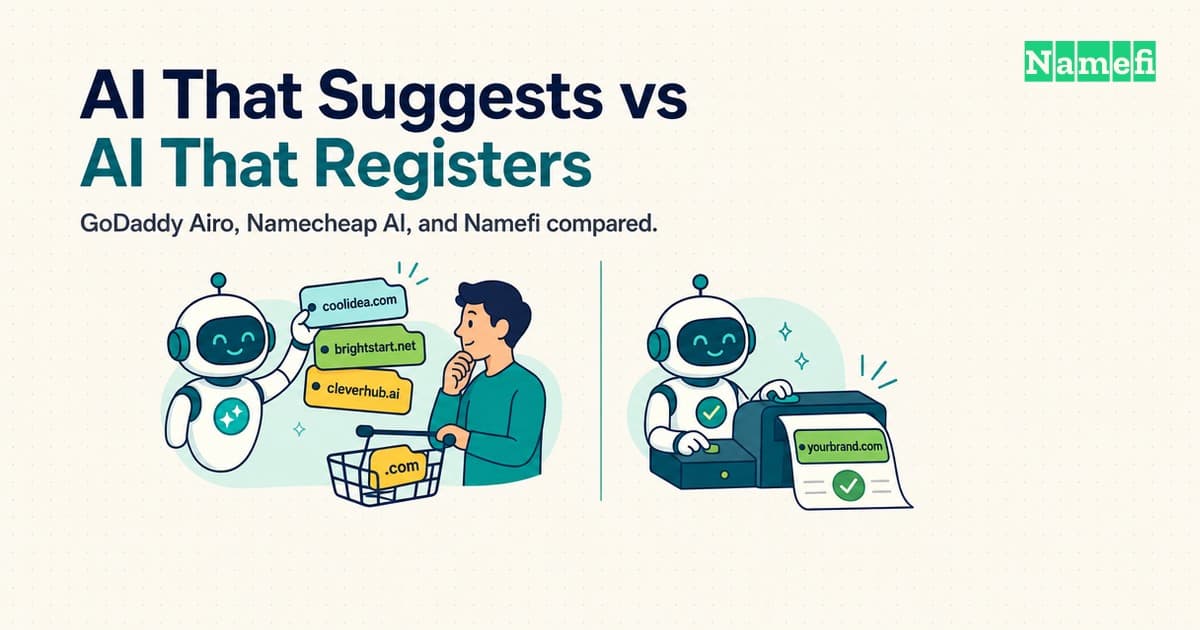
GoDaddy Airo vs Namecheap AI vs Namefi: Key Differences
GoDaddy Airo and Namecheap AI suggest names; Namefi's agent registers them. What each product's AI actually does, compared in one table.
Best AI Domain Tools 2026: Generators vs Agent Platforms
Ranked 2026 guide to AI domain tools across three tiers: name generators, registrar assistants, and fully agentic platforms that register for you.
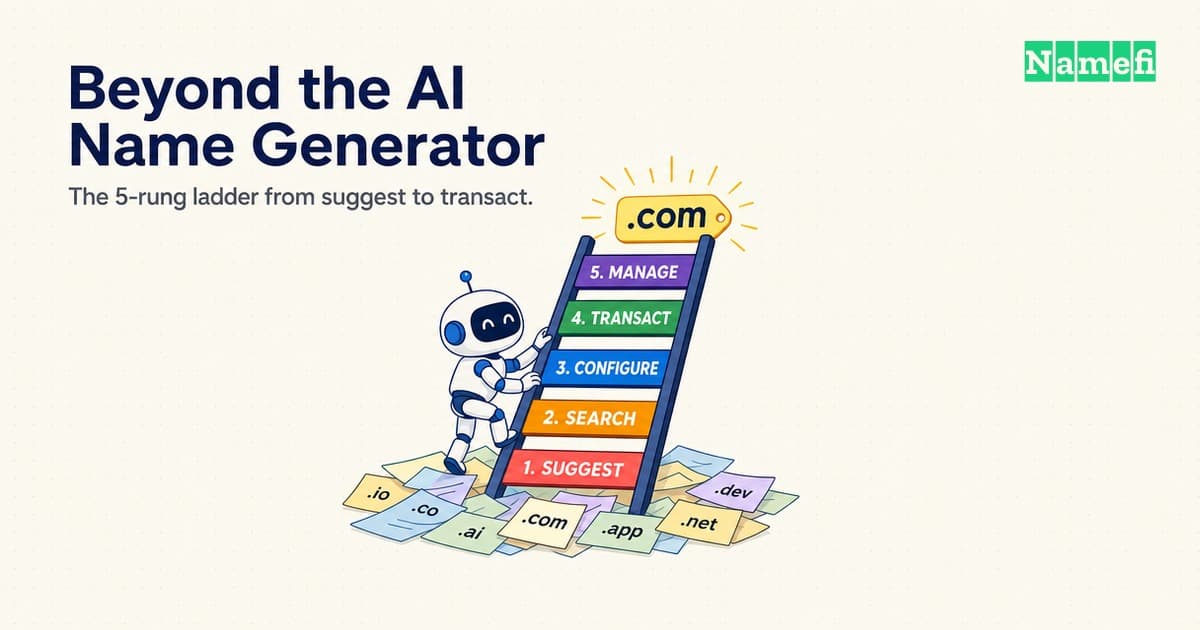
Beyond the AI Domain Name Generator: The Agent Era
AI name generators stop at suggestions. The capability ladder from suggest to search, configure, transact, and manage — and who ships each rung.
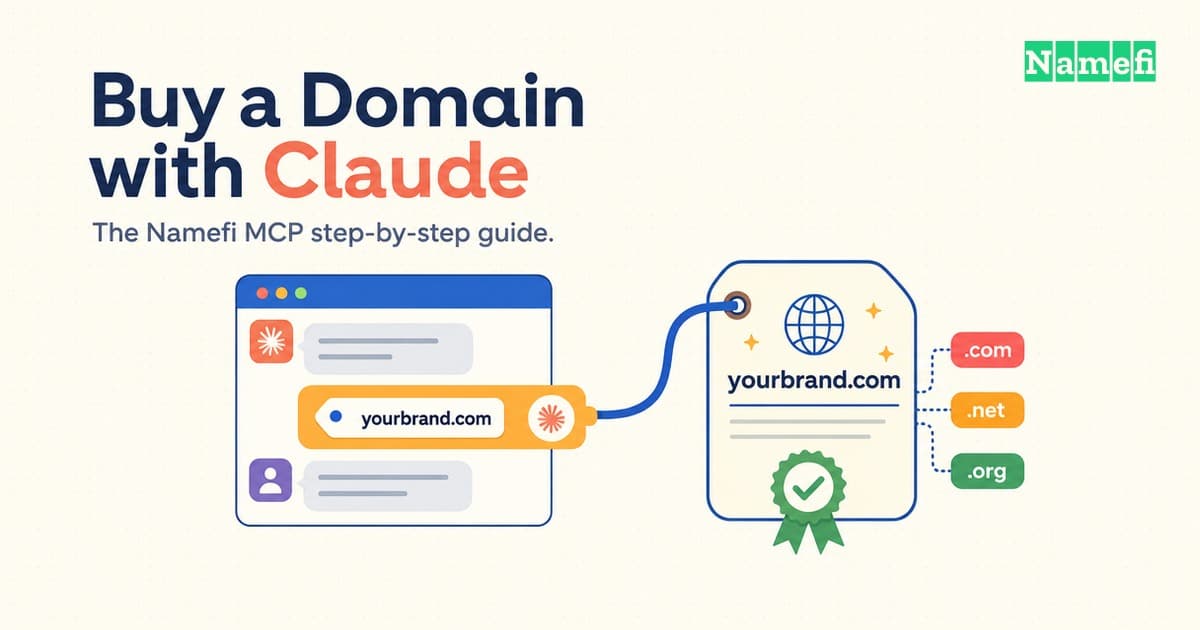
Buy a Domain with Claude: Namefi MCP Step-by-Step Guide
Connect Claude to the Namefi MCP server and register a real domain from one conversation. Exact config, an annotated transcript, and troubleshooting.
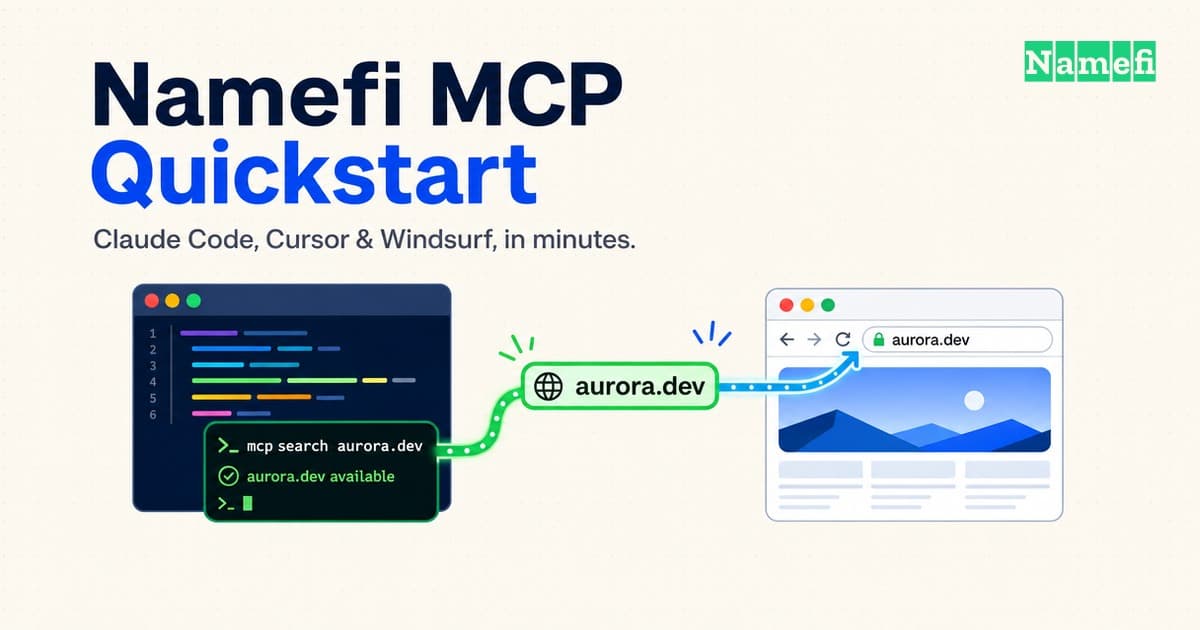
Namefi MCP Quickstart: Claude Code, Cursor & Windsurf
Per-editor OAuth and API-key MCP setup for Claude Code, Cursor, and Windsurf, then a five-step quickstart from a new app to a live custom domain.
How to Buy a Domain with Natural Language (2026)
A step-by-step walkthrough from a natural-language prompt to a registered domain with DNS configured — no browser checkout, with guardrails you control.
The State of Agentic Domain Management, 2026
Domain registration's shift to the agent layer: a sourced timeline, a shipped-vs-announced audit including Namefi, and falsifiable 2027 predictions.
Pay for Domains with a Crypto Wallet: No Account Needed
How Namefi's wallet-signed checkout lets an AI agent buy a domain with crypto, no account required — flow, security model, and spend policies.
Top Blockchain Consensus Mechanisms: Proof of Work, Proof of Stake and Beyond
A clear guide to blockchain consensus mechanisms—Proof of Work, Proof of Stake, Delegated Proof of Stake, BFT consensus, and how each secures a network.
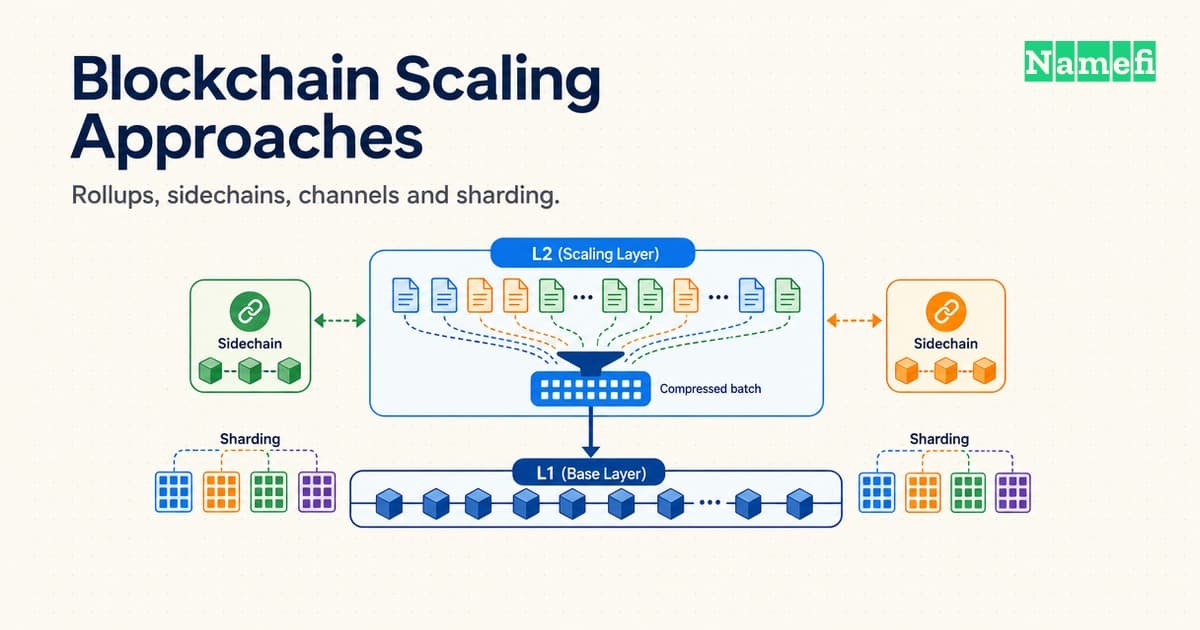
Top Blockchain Scaling Approaches: Rollups, Sidechains, Channels and Sharding
A learner's guide to blockchain scaling — optimistic rollups, ZK rollups, sidechains, payment channels, sharding, and data availability layers compared.
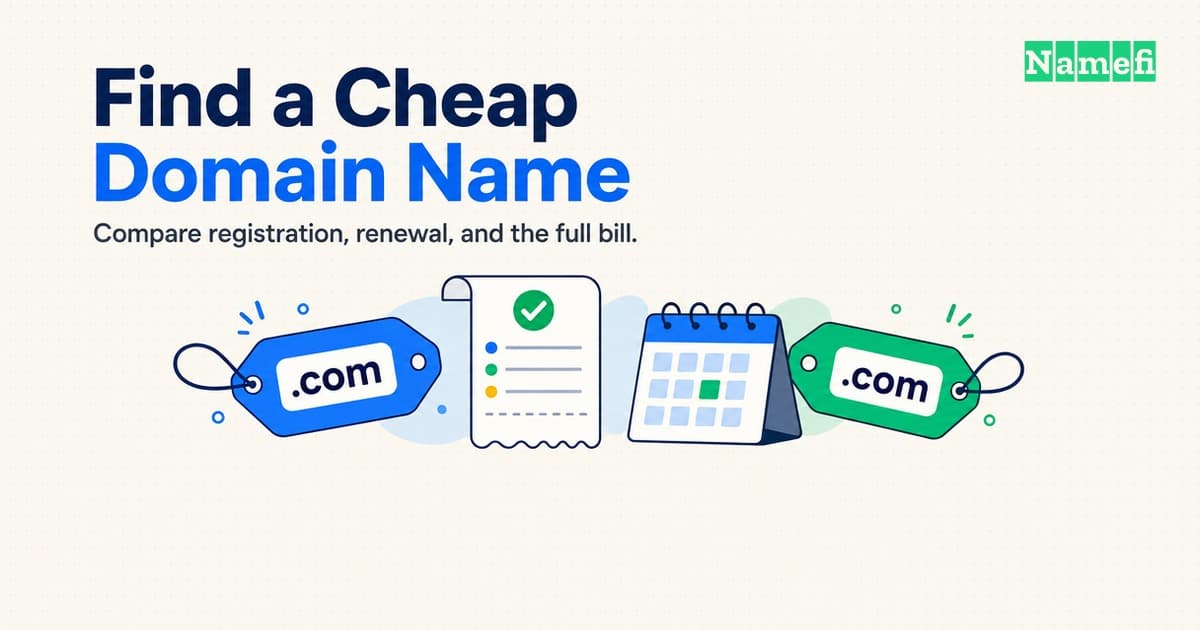
How Much Does a Domain Name Cost? Registration and Renewal
Compare domain registration, renewal, transfer, and recovery costs, and learn how to spot introductory prices that hide a higher ongoing bill.
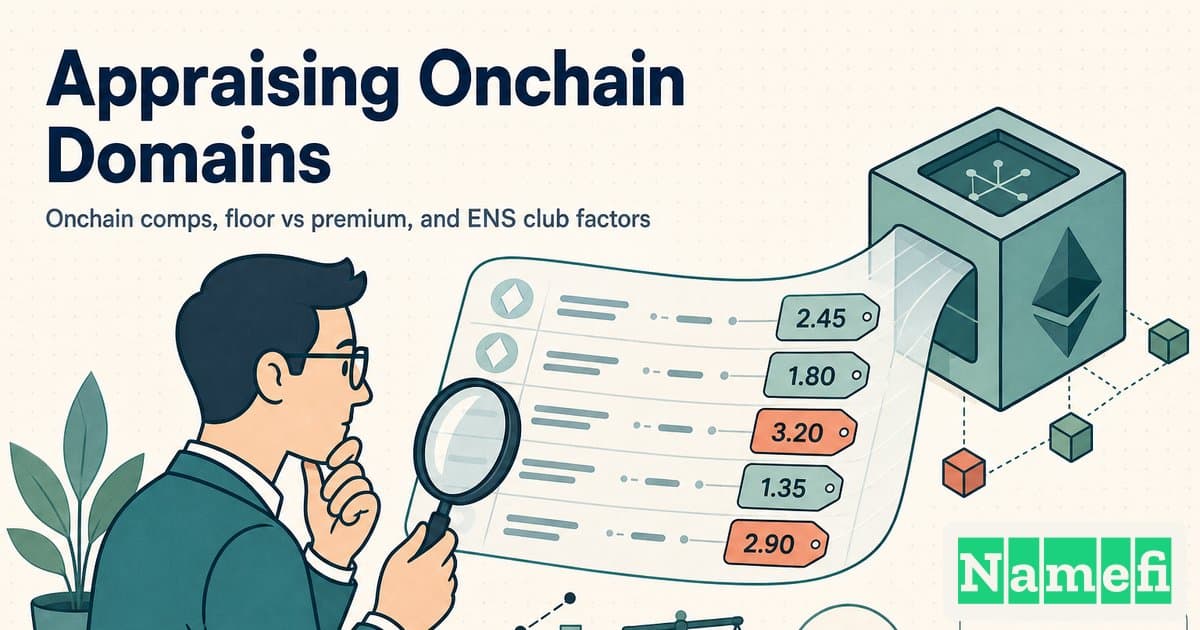
Appraising ENS and Tokenized Domains: Reading Onchain Comps
How to appraise ENS and tokenized domains using onchain comps, floor-versus-premium reasoning, and ENS club factors — and why it differs from DNS.
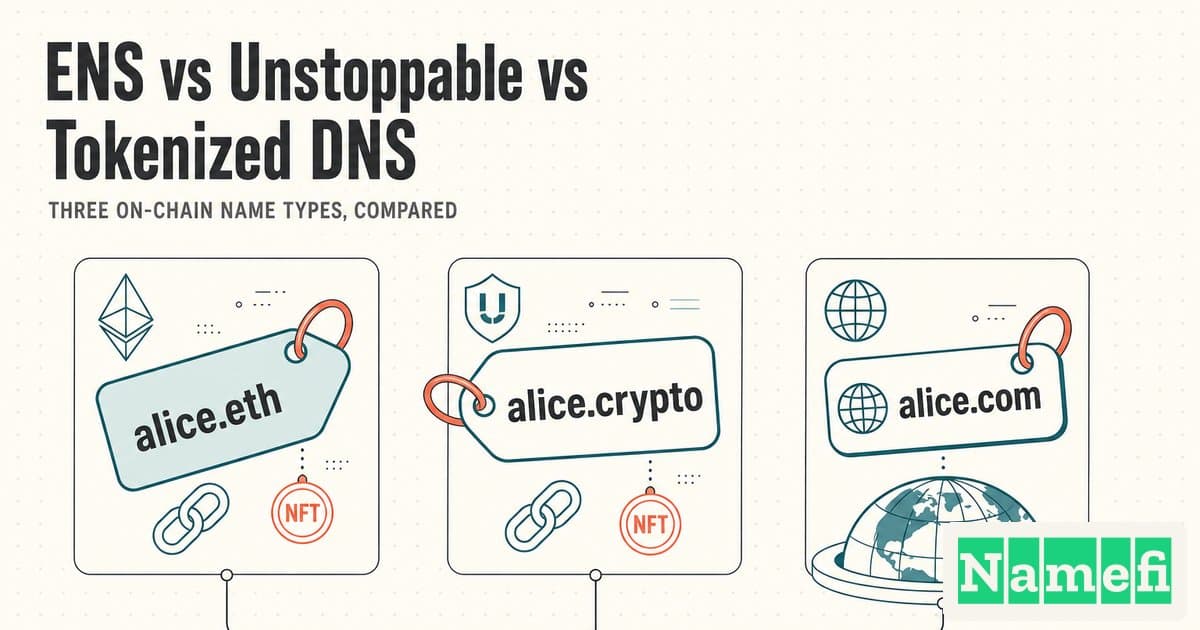
ENS vs Unstoppable vs Tokenized DNS Domains
ENS vs Unstoppable Domains vs tokenized ICANN DNS, compared on browser resolvability, renewals, and who actually controls the name.
How Tokenization Changes Domain Flipping
How bringing a domain on-chain can reshape flipping through verifiable token control, compatible marketplaces, and programmable settlement without removing registrar dependencies.
Onchain Domain Flipping: Trading ENS and Tokenized Domains
How onchain domain flipping works — trading ENS and tokenized domains through wallets and compatible NFT marketplaces, and how it differs from registrar flipping.
Onchain Domain Marketplaces Compared: OpenSea, Seaport, and Beyond
OpenSea, Seaport-based, and domain-native onchain marketplaces compared on fees, reach, and custody — which venue fits which tokenized-domain sale.
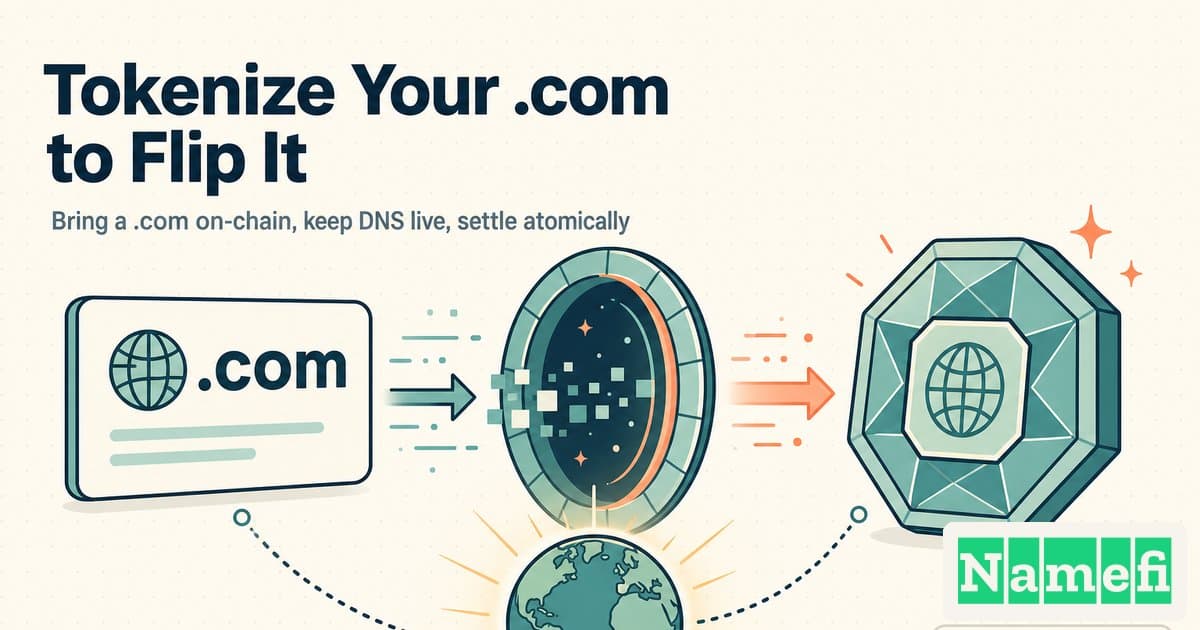
Tokenize Your .com to Flip It: A Namefi Walkthrough
A Namefi walkthrough: add an on-chain token-control layer to a .com, preserve standard DNS, and use atomic payment-and-token settlement without conflating the token with legal title.
Brandable vs Keyword Domains: Which Sell Better?
Brandable invented names vs exact-match keyword domains: who buys each, which resells more reliably, and the trademark angle every flipper should know.
Cybersquatting vs Legitimate Domaining: UDRP and ACPA Explained
Where legitimate domaining ends and cybersquatting begins: the UDRP three-part test, the ACPA, reverse domain hijacking, and how to stay safe.
Domain Backorders and Drop-Catching, Explained
Learn what a domain backorder commits you to, how drop-catching differs from expiry auctions, and which payment and auction rules to check.
Domain Flipping and the Law: Trademarks, UDRP, and Scams
The legal landscape every domain flipper needs: trademark basics, UDRP and ACPA, escrow at closing, hijacking defense, and how to dodge sale scams.
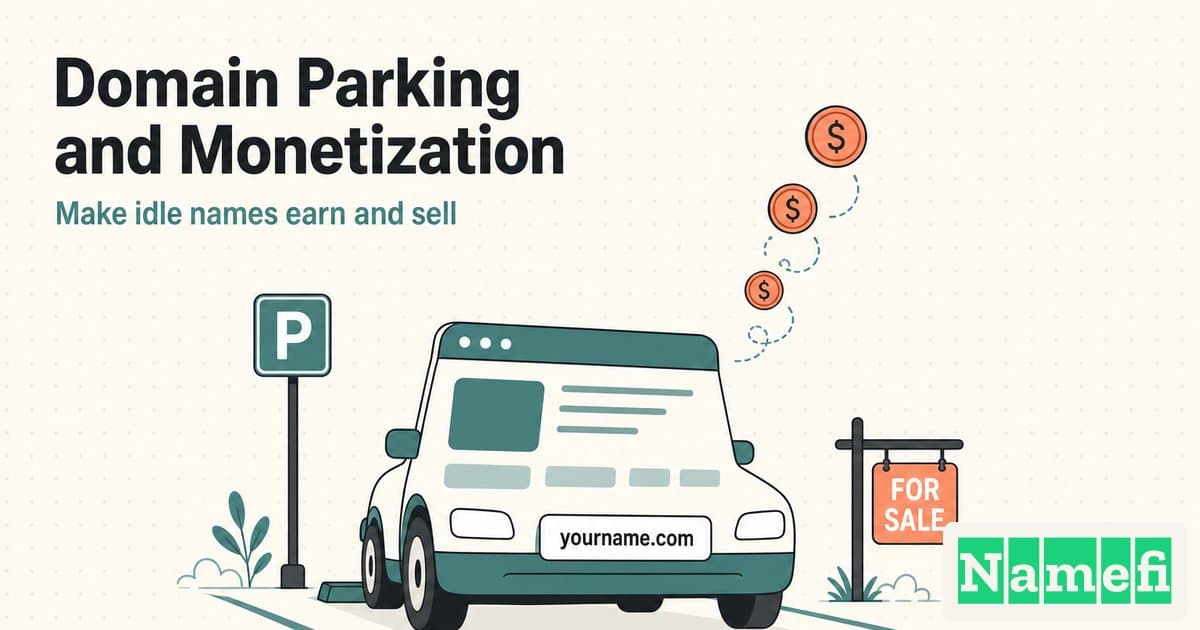
What Is Domain Parking? Parked Domains and Monetization
Learn what a parked domain is, why people park domains, and how parking, sale landing pages, and monetization differ.
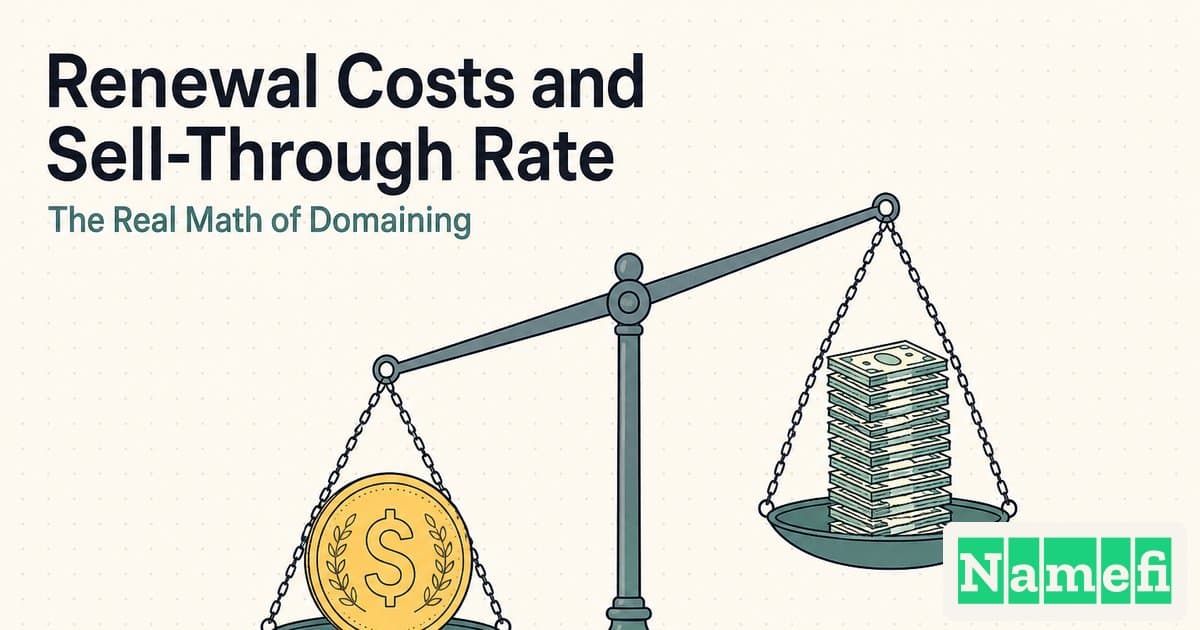
Renewal Costs and Sell-Through Rate: The Real Math of Domaining
The honest economics of domaining: renewal drag, sell-through rate as a rule of thumb, and why one good sale has to fund many years of renewals.
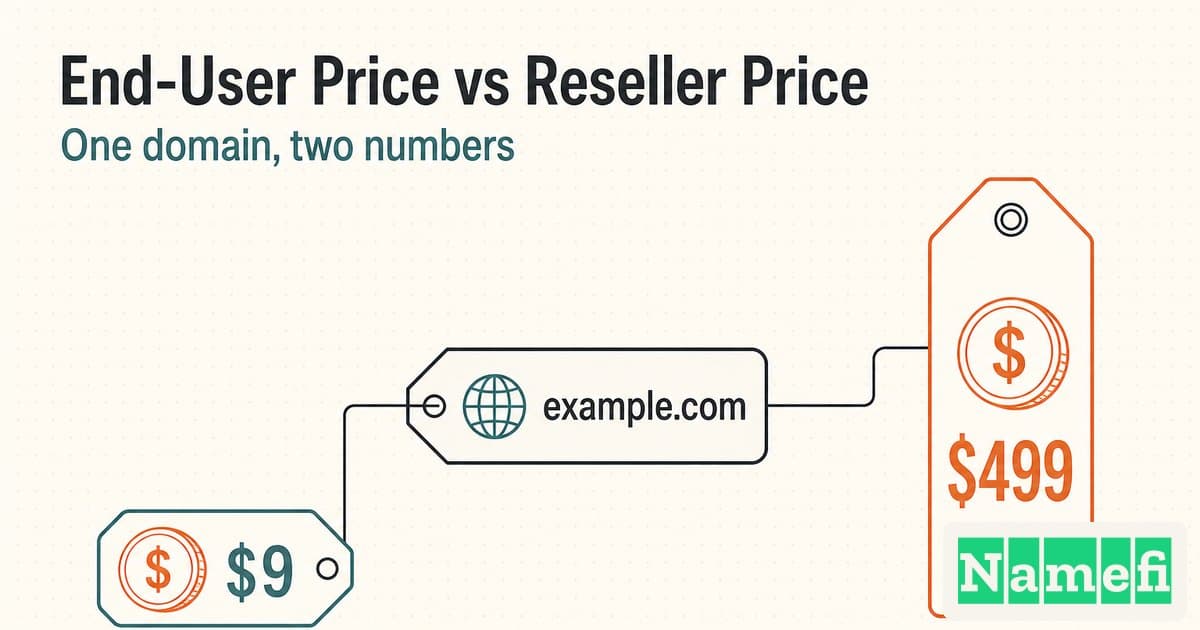
End-User Price vs Reseller Price: Why One Domain Has Two Numbers
Why a domain has a low wholesale/reseller price and a much higher end-user price, how big the spread is, and which number applies to your sale.
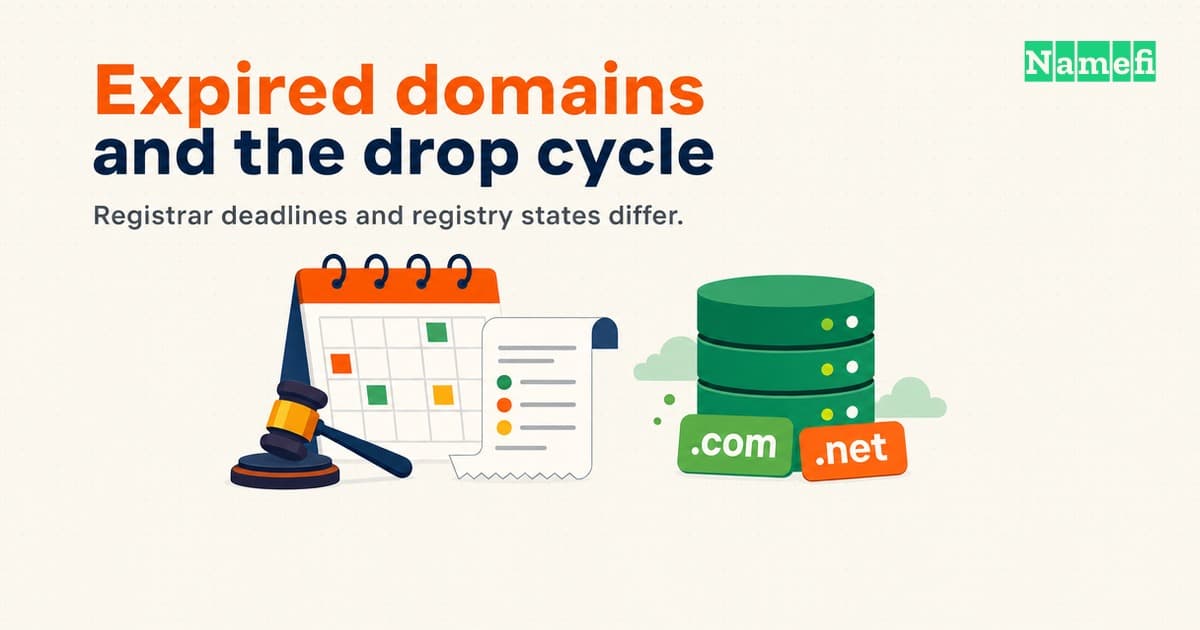
Expired Domains and the Drop Cycle, Explained
Separate registrar deadlines from registry deletion: understand redemption, pending delete, expired auctions and drop catching without a false countdown.
Hand-Registering Domains to Flip: Finding Available Gems
How to find still-available domains worth a registration fee: wordlists, TLD permutations, brandable patterns, and the filters that beat impulse buys.
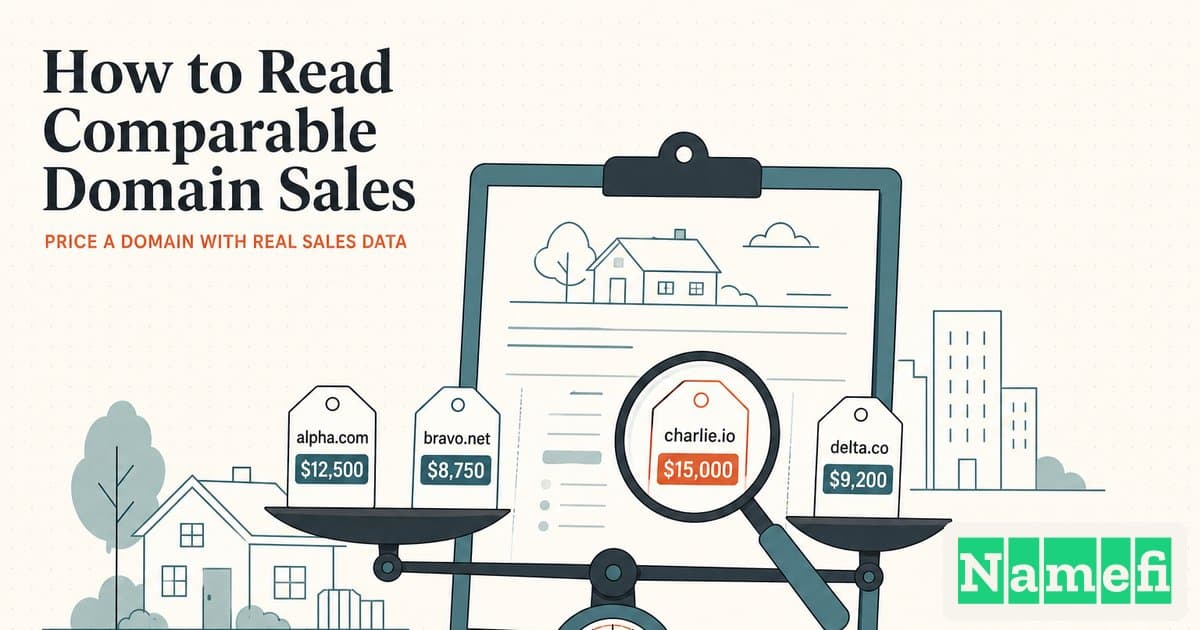
How to Read Comparable Domain Sales (Comps)
How to use NameBio-style sales history to price a domain: finding true comparables, adjusting for TLD, length and keyword, and avoiding cherry-picking.
How to Sell Domains for Profit
The end-to-end playbook for selling domains: inbound vs outbound, pricing format, where to list, when to use a broker, and closing the deal safely.
Marketing Your Domains for Sale
How to market domains for sale: parking pages, for-sale landers, and listing SEO that put the right name in front of the right buyer.
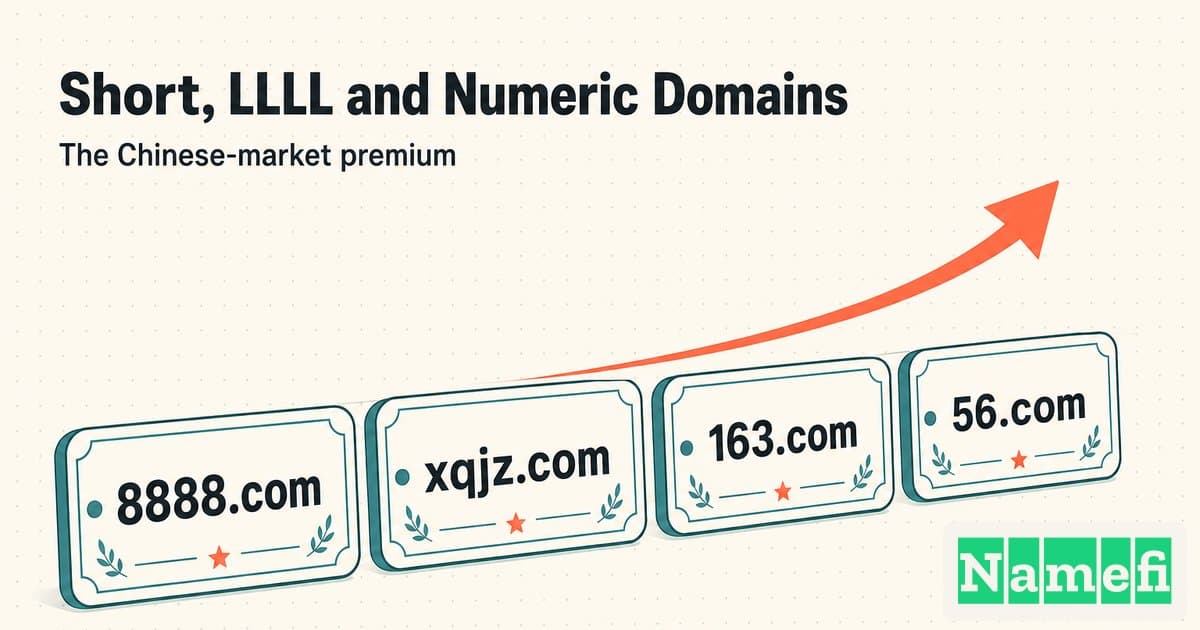
Short, LLLL, and Numeric Domains: The Chinese-Market Premium
Why Chinese buyers price short, four-letter, and numeric .com domains as a distinct asset class — pinyin, no-vowel premiums, and lucky 8 vs unlucky 4.
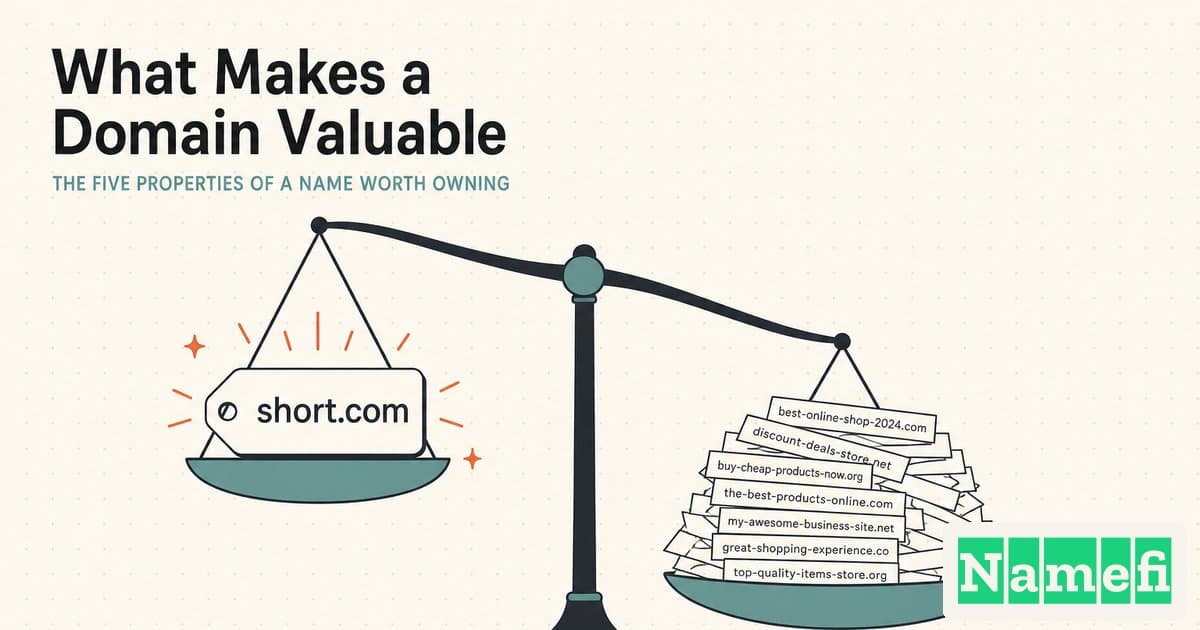
What Makes a Domain Name Valuable
Why one string of letters is worth thousands and a near-identical one is worth nothing: length, real words, the .com premium, intent, and brandability.
When to Drop a Domain (and Cut Your Losers)
How to decide when to let a domain expire: renewal cost vs realistic resale odds, the sunk-cost trap, and the signals a name will never sell.
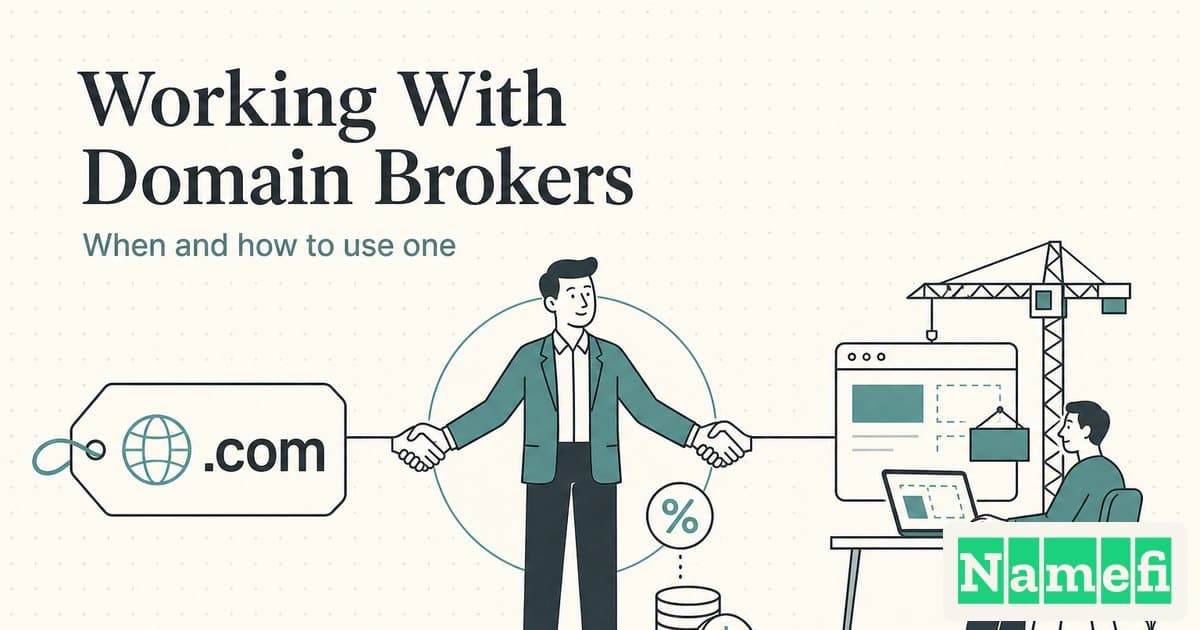
What Does a Domain Broker Do? Fees, Services, and How to Choose
Learn when a domain broker helps, how buyer and seller representation differ, and which fees, incentives, and terms to check before hiring one.
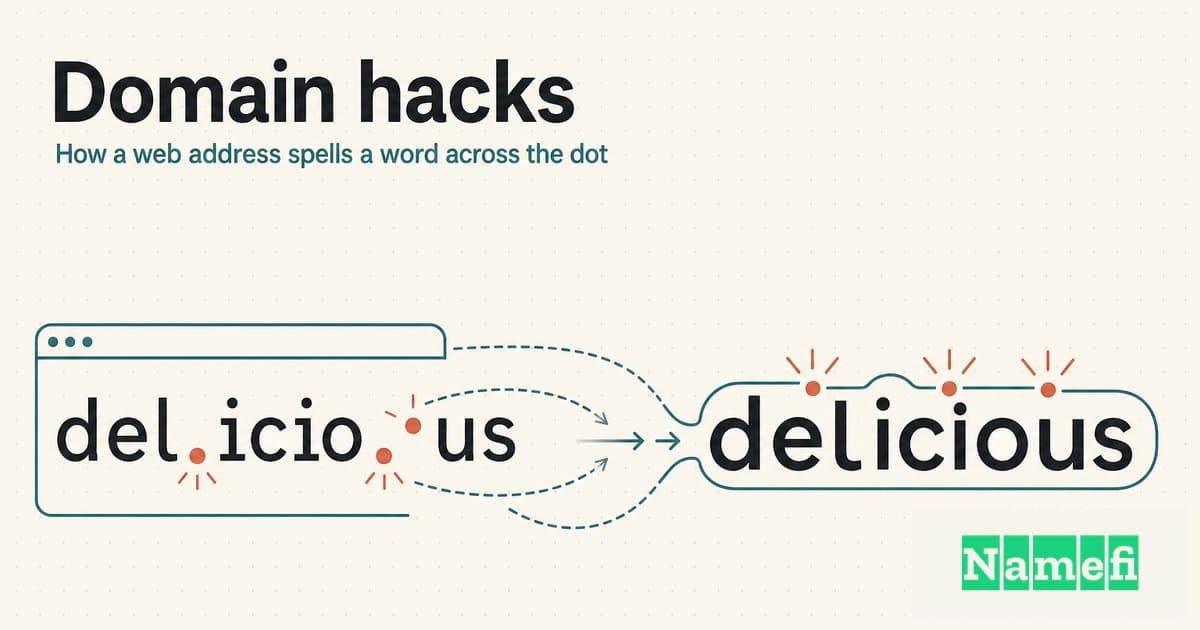
What Is a Domain Hack? Examples and Extension Tradeoffs
See how domain hacks form words across the dot, explore examples, and learn what country-code rules can mean for choosing one.
Domain Valuation: How to Estimate What a Domain Is Worth
Estimate a domain’s value using comparable sales, naming quality, buyer demand, and holding costs, and understand the limits of automated appraisals.
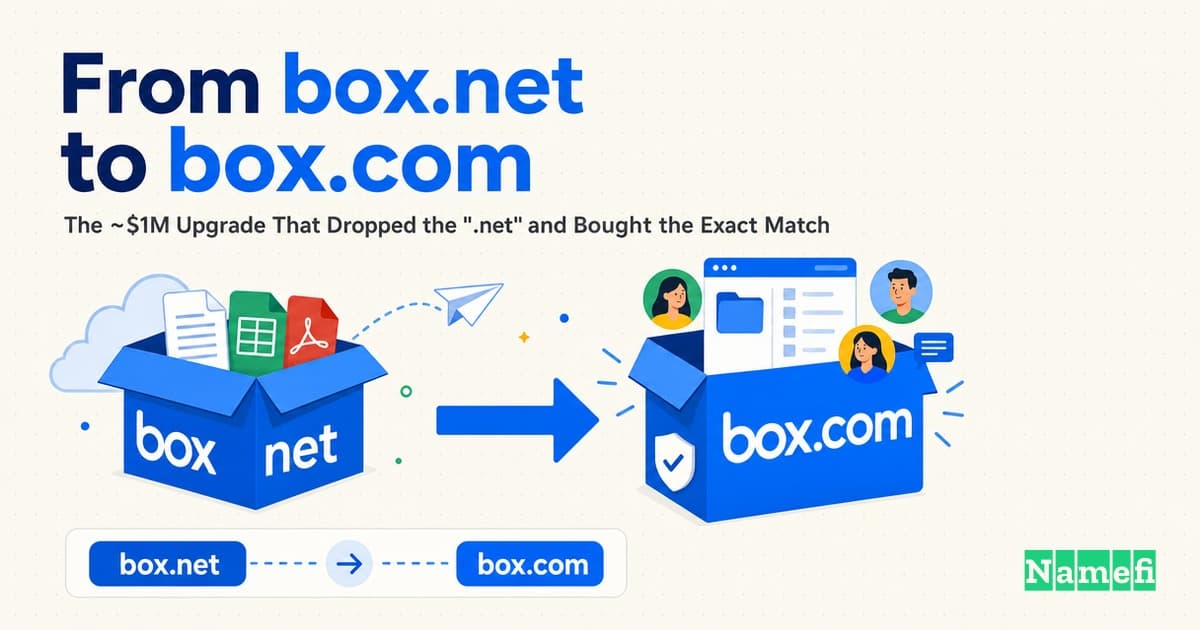
From Box.net to Box.com: The ~$1M Upgrade That Dropped the ".net" and Bought the Exact Match
How Box launched in 2005 on Box.net because Box.com was taken, pivoted from consumer storage to the enterprise, and in 2011 paid Digimedia close to $1 million for the exact-match Box.com — a .net-to-.com upgrade that landed right as the company became simply "Box."
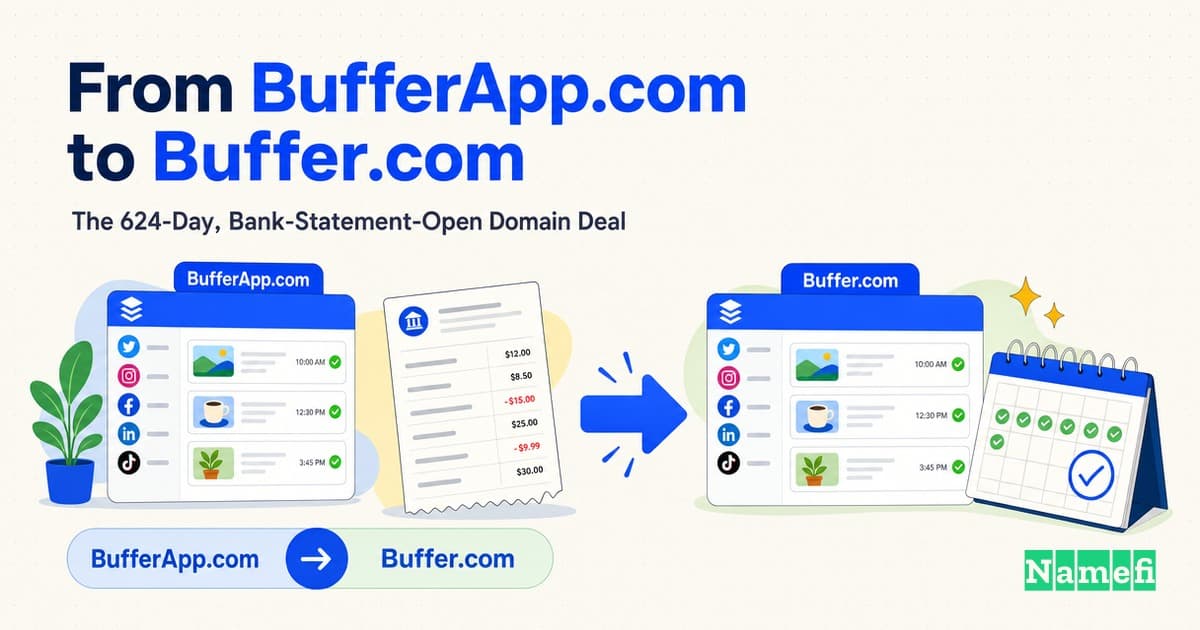
From BufferApp.com to Buffer.com: The 624-Day, Bank-Statement-Open Domain Deal
How Buffer launched in 2010 on BufferApp.com because Buffer.com was taken, then spent 624 days acquiring the exact-match domain — even showing the seller its bank balance — and why a company famous for radical transparency stayed quiet on the one number everyone wanted: the price.
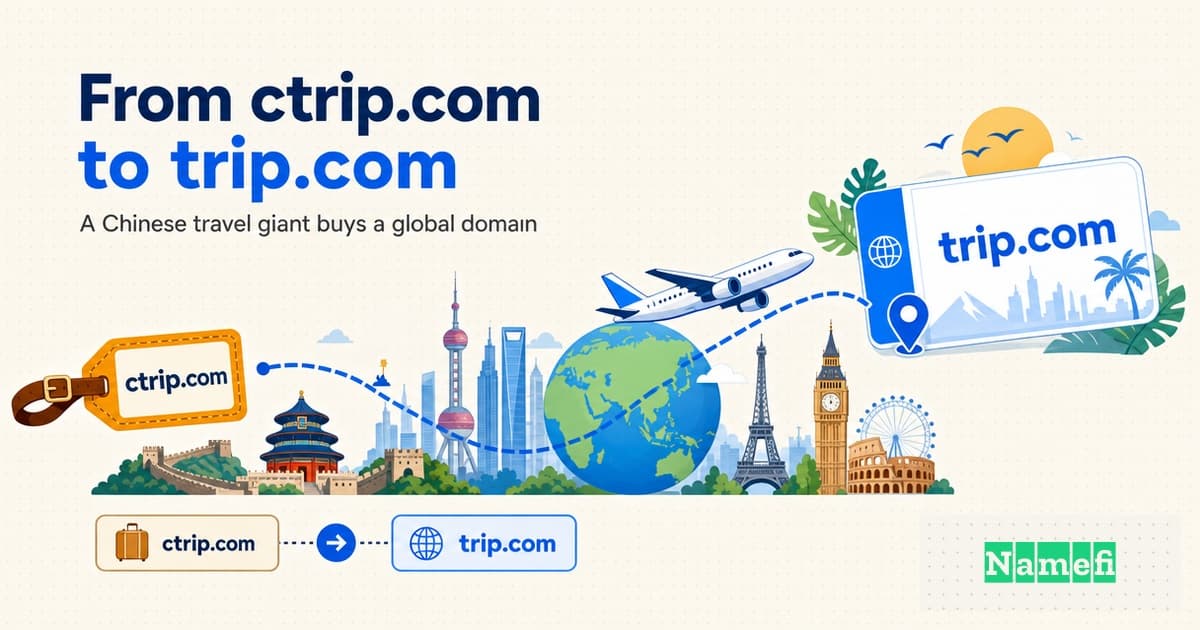
Who Owns Trip.com? Ctrip, Trip.com Group, and the Rebrand
Understand how Trip.com relates to Ctrip and Trip.com Group, and trace the acquisition and company-name changes behind the travel brand.
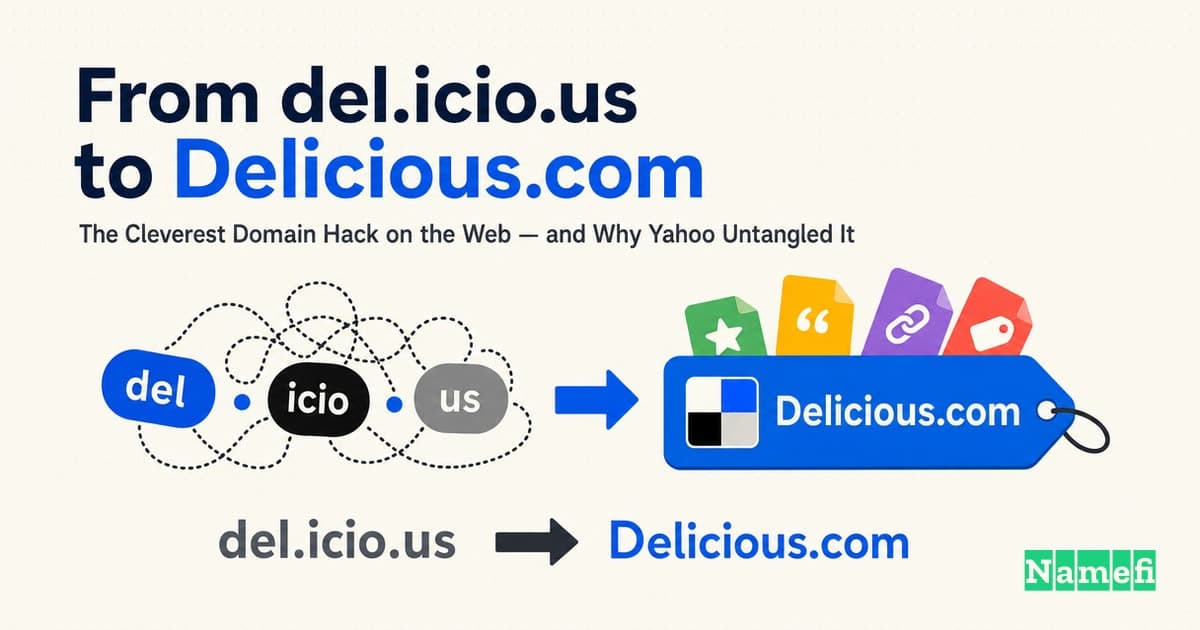
From del.icio.us to Delicious.com: The Cleverest Domain Hack on the Web — and Why Yahoo Untangled It
How the pioneering social-bookmarking site launched in 2003 as the famous domain hack "del.icio.us," why those dots became a permanent tax on every mention, and how Yahoo moved it to the cleaner Delicious.com in 2008.
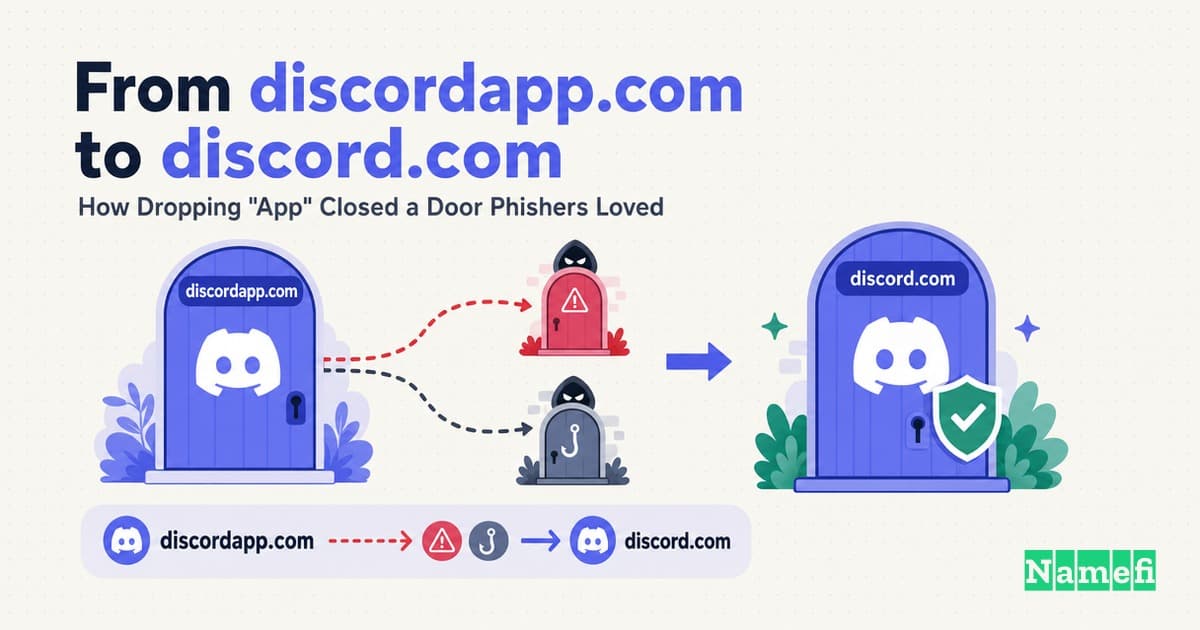
From DiscordApp.com to Discord.com: How Dropping "App" Closed a Door Phishers Loved
How Discord launched in 2015 on DiscordApp.com because Discord.com was taken, quietly bought the bare word, and in 2020 made discord.com its primary home — partly for brand cleanliness, partly because the "discordapp.com" vs "discord.com" split was a gift to phishers and malware crews.
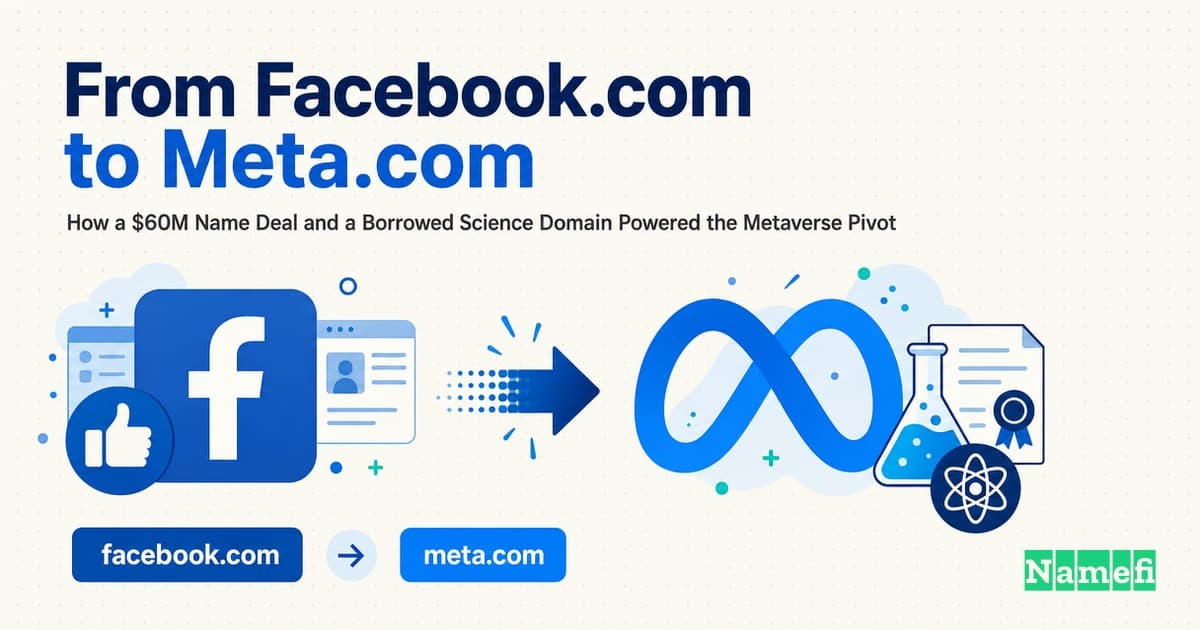
From Facebook.com to Meta.com: How a $60M Name Deal and a Borrowed Science Domain Powered the Metaverse Pivot
How Facebook, Inc. became Meta in October 2021, why Meta.com was already a Zuckerberg-related asset forwarding from a science search engine, and how a separate $60M deal bought the "Meta" name from a Sioux Falls bank — while the Facebook app kept Facebook.com.
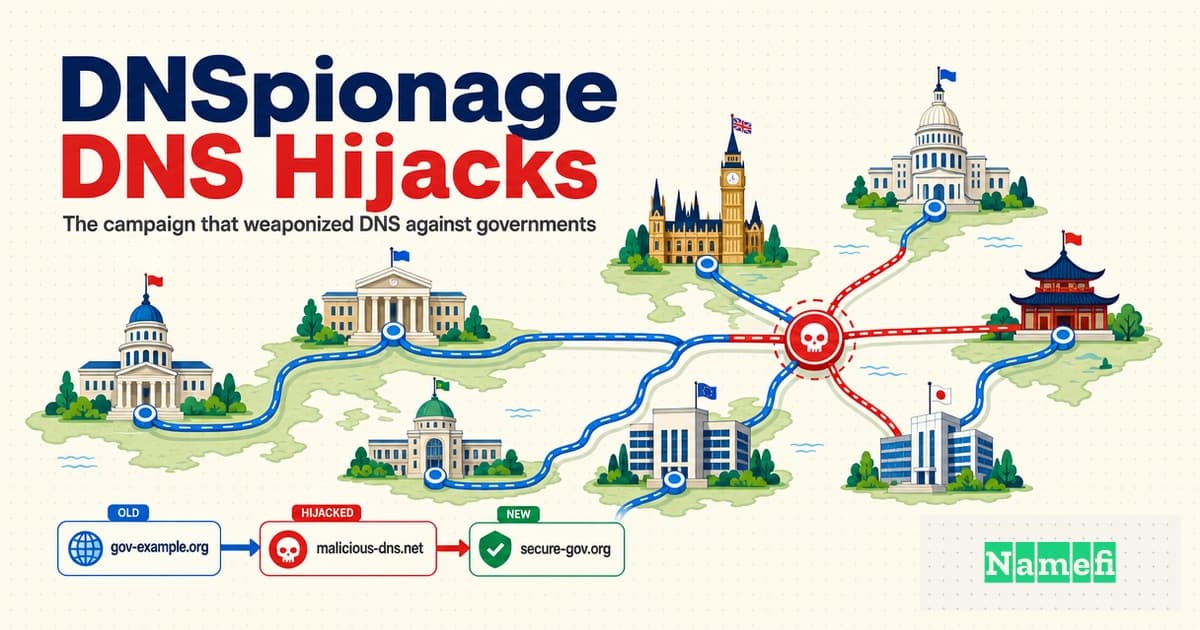
DNSpionage: The Campaign That Weaponized DNS Against Governments
In late 2018, Cisco Talos disclosed DNSpionage — a campaign later linked by researchers to Iranian interests that included malware and a separate DNS-redirection operation against government and company domains. In January 2019, CISA ordered federal agencies to audit and secure DNS infrastructure through Emergency Directive 19-01.
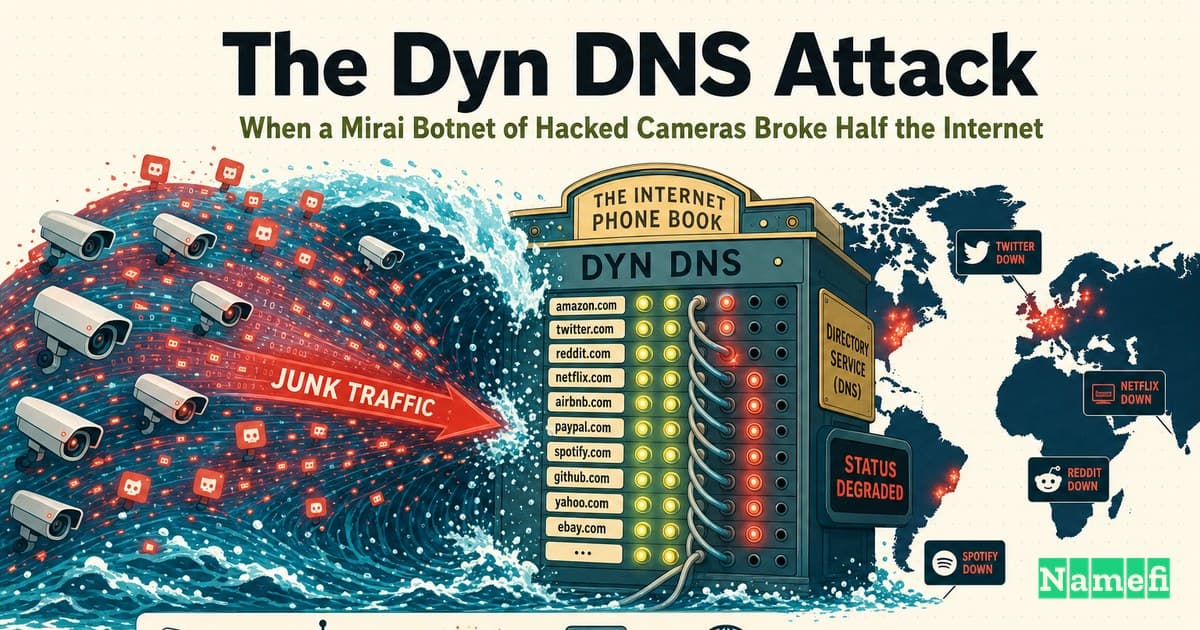
The Dyn DNS Attack: When a Mirai Botnet Disrupted Major Internet Services
On October 21, 2016, a DDoS attack powered by the Mirai IoT botnet hit DNS provider Dyn in three waves, making Twitter, Netflix, Reddit, Spotify, GitHub, Airbnb, PayPal, and other services unreachable for many users — a Domain Mayday case study in DNS provider concentration.
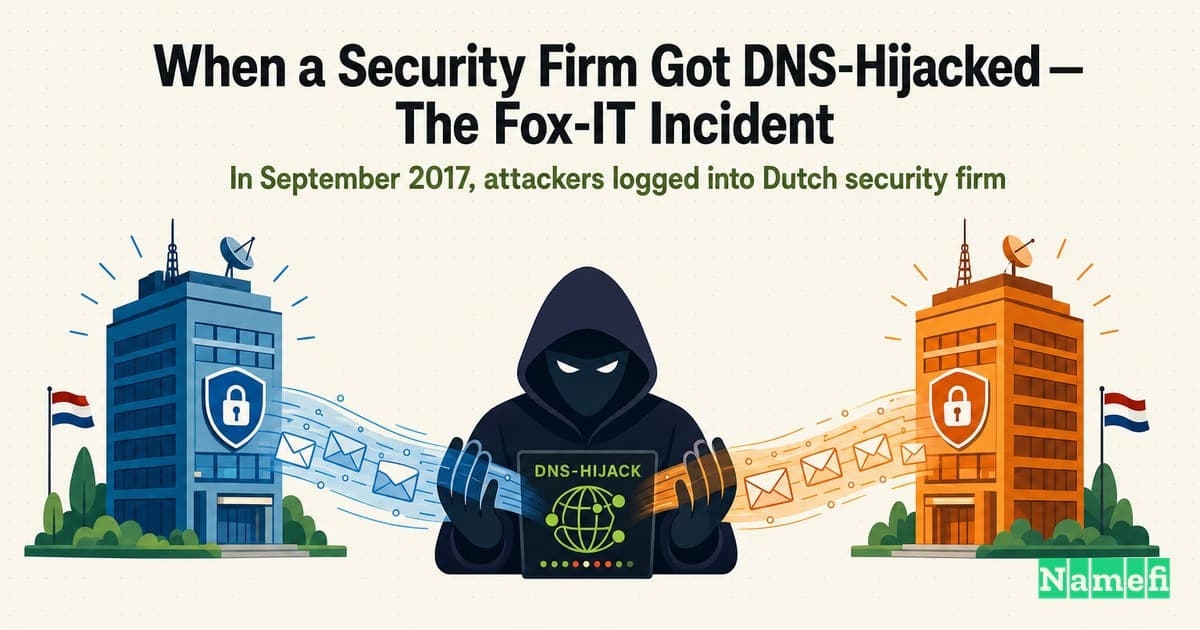
Domain Mayday EP14: When a Security Firm Got DNS-Hijacked — The Fox-IT Incident
In September 2017, attackers logged into Dutch security firm Fox-IT's third-party domain registrar, changed its DNS, fraudulently obtained a TLS certificate, and ran a 10-hour man-in-the-middle on client traffic — until Fox-IT caught it and published one of the most transparent post-mortems in the industry.
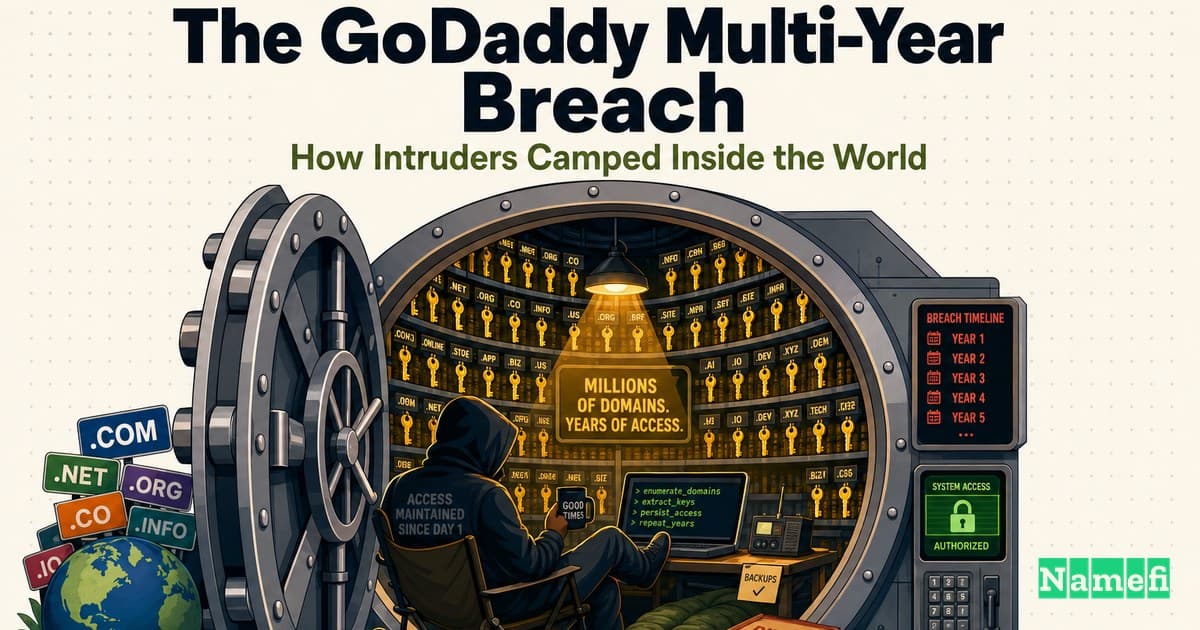
The GoDaddy Multi-Year Campaign: Hosting Breaches, Exposed Credentials, and Malicious Redirects
GoDaddy says hosting incidents disclosed between 2020 and 2022 were part of a multi-year threat campaign that exposed 1.2 million Managed WordPress customers and redirected some hosted websites. A close look at provider concentration risk — and at what the disclosures do not establish.
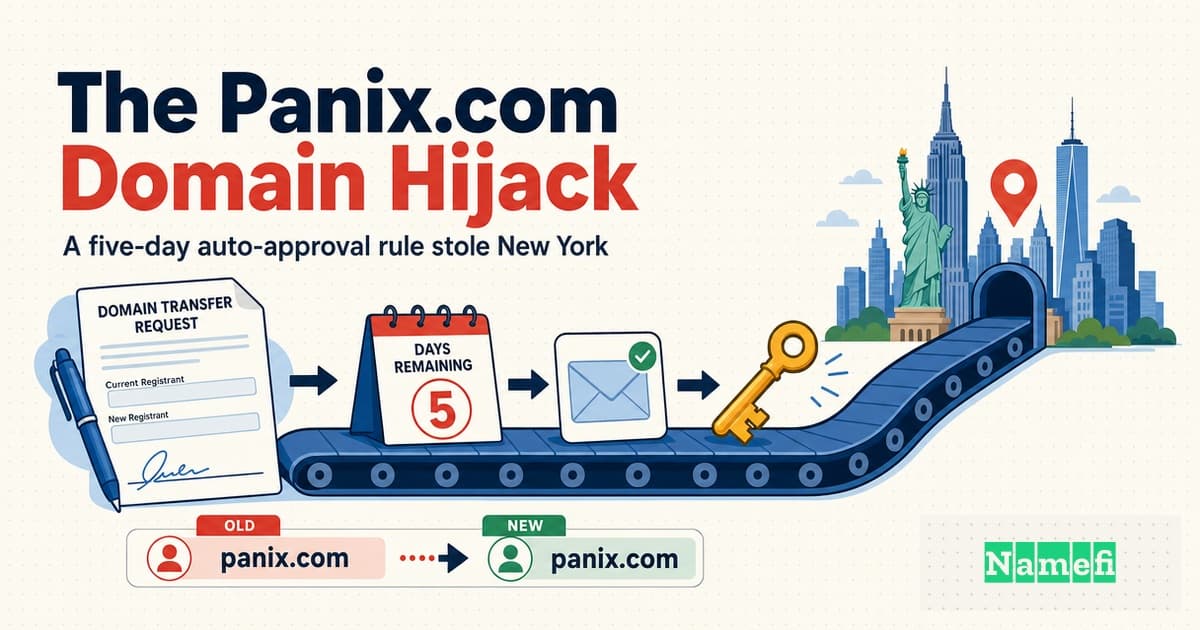
The Panix.com Domain Hijack: A Fraudulent Transfer of New York's Oldest ISP
In January 2005, panix.com — the domain of New York's oldest commercial ISP — was fraudulently transferred through a reseller account opened with stolen credit-card details. ICANN's review found a failure to obtain express authorization, not a flaw introduced by the then-new transfer policy.
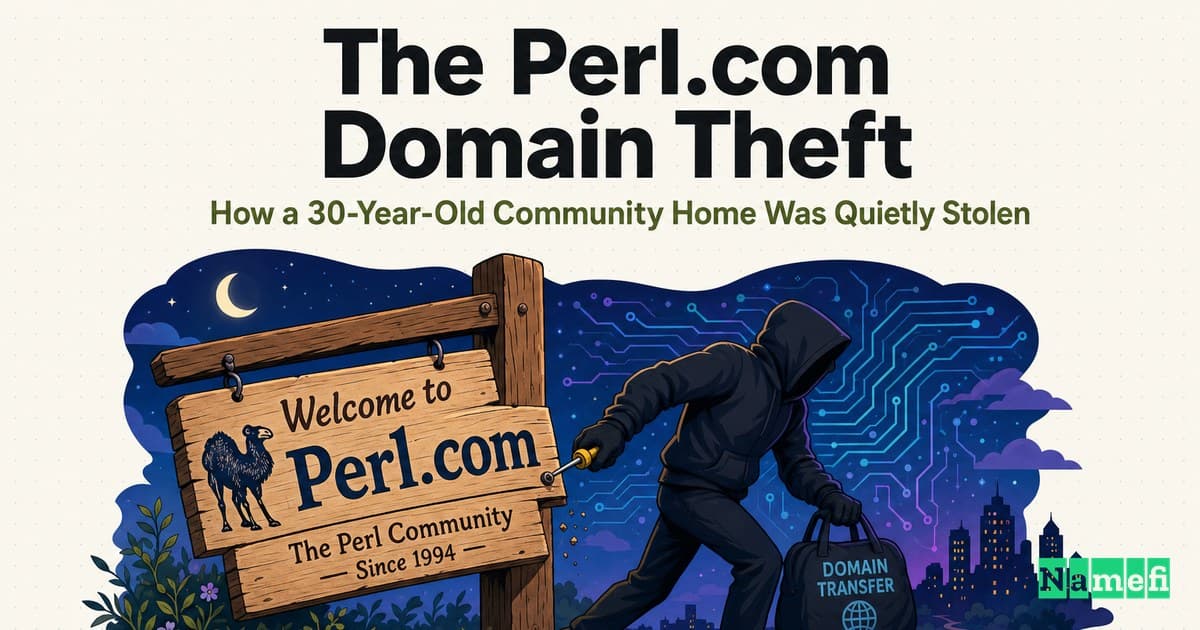
The Perl.com Domain Theft: How a 30-Year-Old Community Home Was Quietly Stolen
In late January 2021, perl.com — a decades-old home of the Perl programming community — was stolen via a registrar-level account compromise, transferred through China, pointed at a malware-linked IP, and listed for $190,000. Here is how it happened, how it was recovered, and what it teaches about registrar account security.
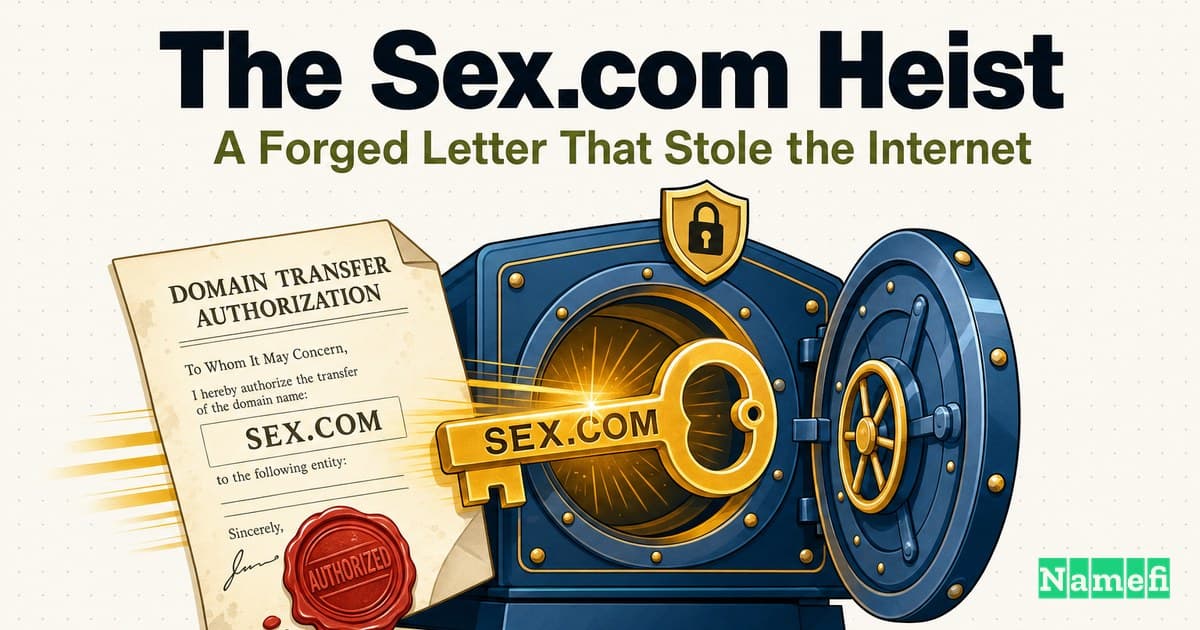
The Sex.com Heist: A Forged Letter That Stole the Internet's Most Valuable Domain
In 1995 a con man named Stephen Cohen stole sex.com from rightful owner Gary Kremen with a single forged letter to Network Solutions. The years-long fight to win it back ended in a $65 million judgment, a fugitive in Mexico, and a landmark ruling that domains are property.
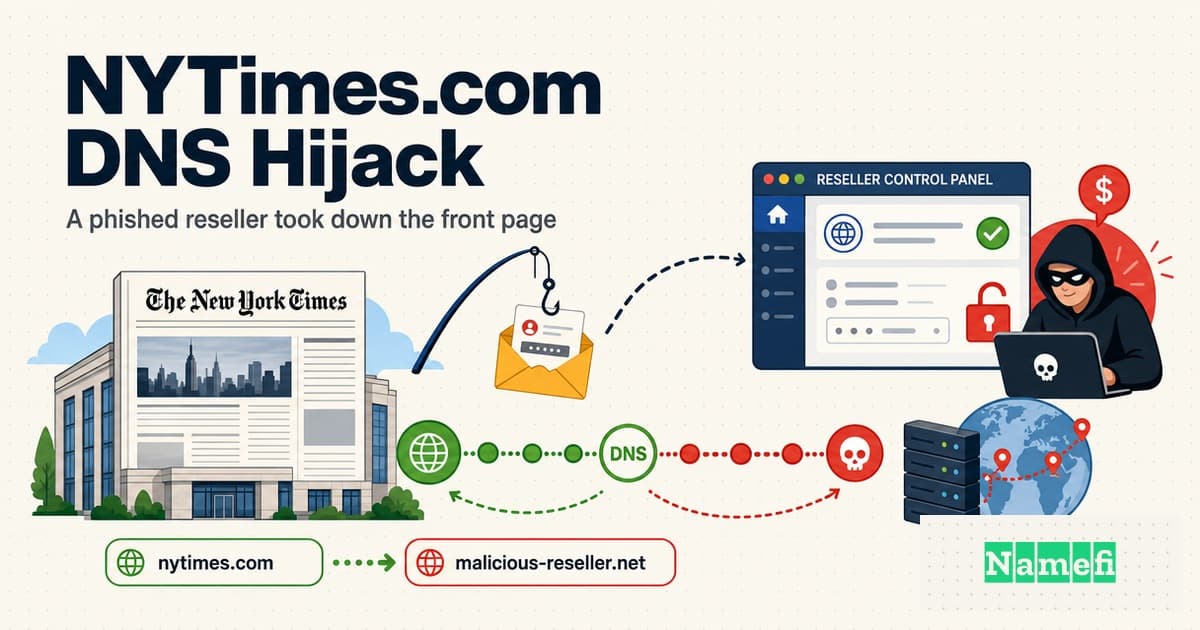
Domain Mayday EP10: How the Syrian Electronic Army Took Down NYTimes.com Through a Phished Reseller
On August 27, 2013, the Syrian Electronic Army phished a Melbourne IT reseller, rewrote the DNS records for nytimes.com and Twitter's domains, and took the New York Times offline for hours. A deep dive into how a registrar-chain weak link became a newspaper's front-door failure — and what registry locks would have changed.
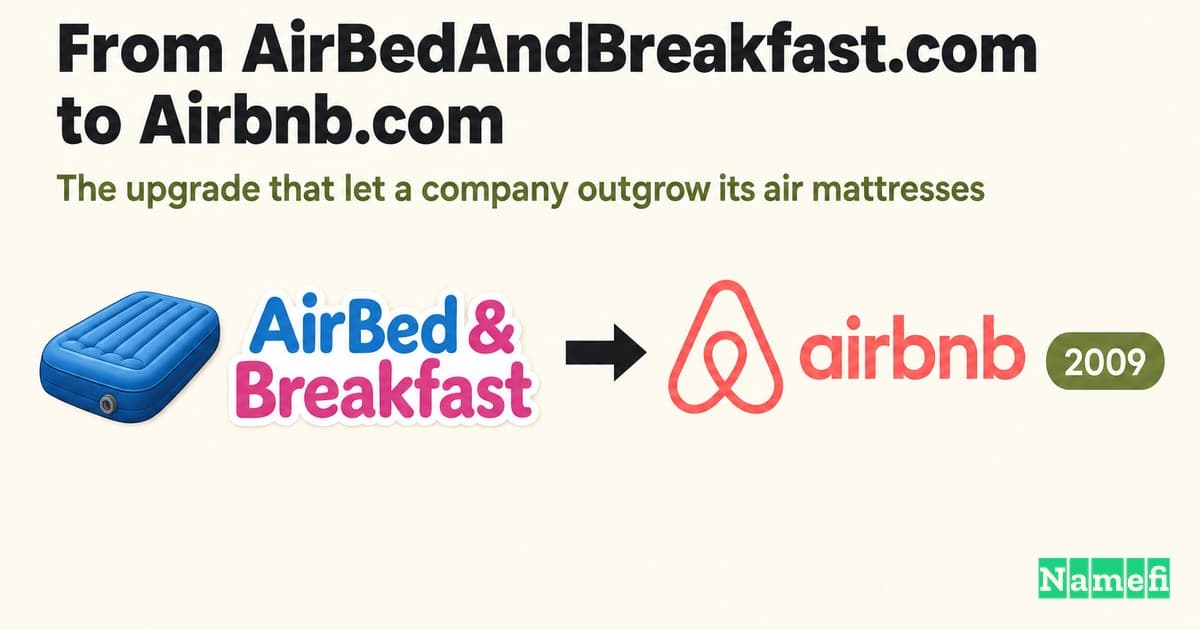
From AirBedAndBreakfast.com to Airbnb.com: The Domain Upgrade That Let a Company Outgrow Its Air Mattresses
How Airbnb launched in 2008 as AirBed & Breakfast on AirBedAndBreakfast.com, then shortened to Airbnb.com in 2009 to escape the literal air-mattress name and become a scalable global brand.
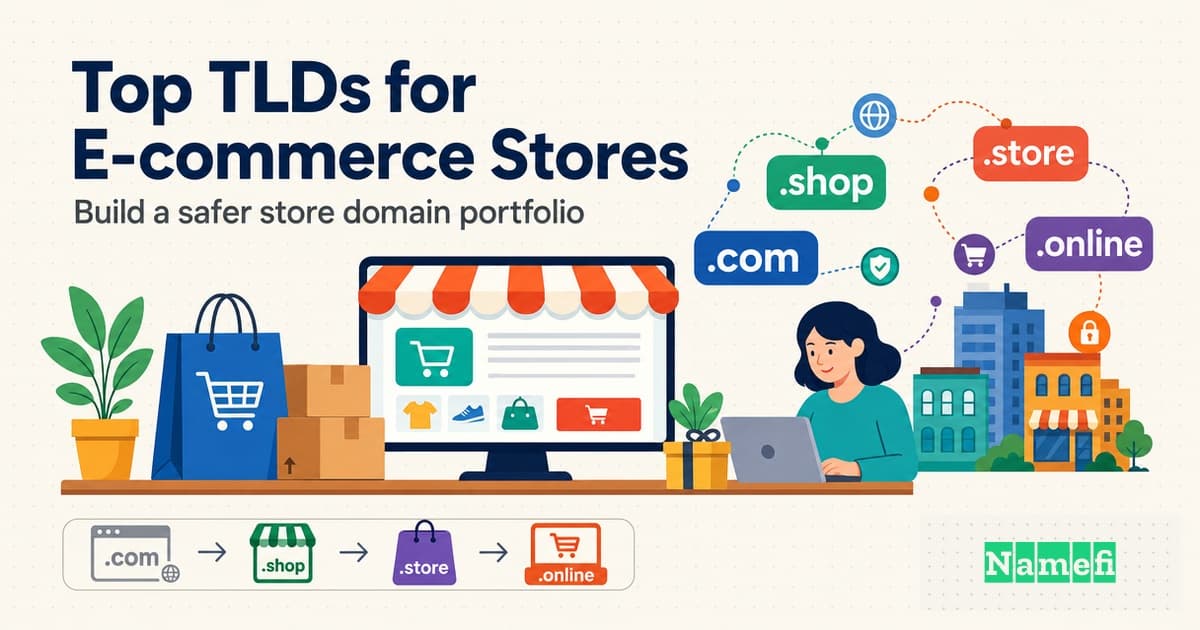
Top 10 TLDs You Should Secure for Your E-commerce Store
The top 10 TLDs to secure for your e-commerce store, from .com to .shop and .store, plus a defensive registration strategy to protect your retail brand.

Top 10 TLDs You Should Secure for Your Fashion Brand
A practical guide to the top 10 TLDs to secure for your fashion brand, covering brand protection, retail intent, and defensive domain registration strategy.
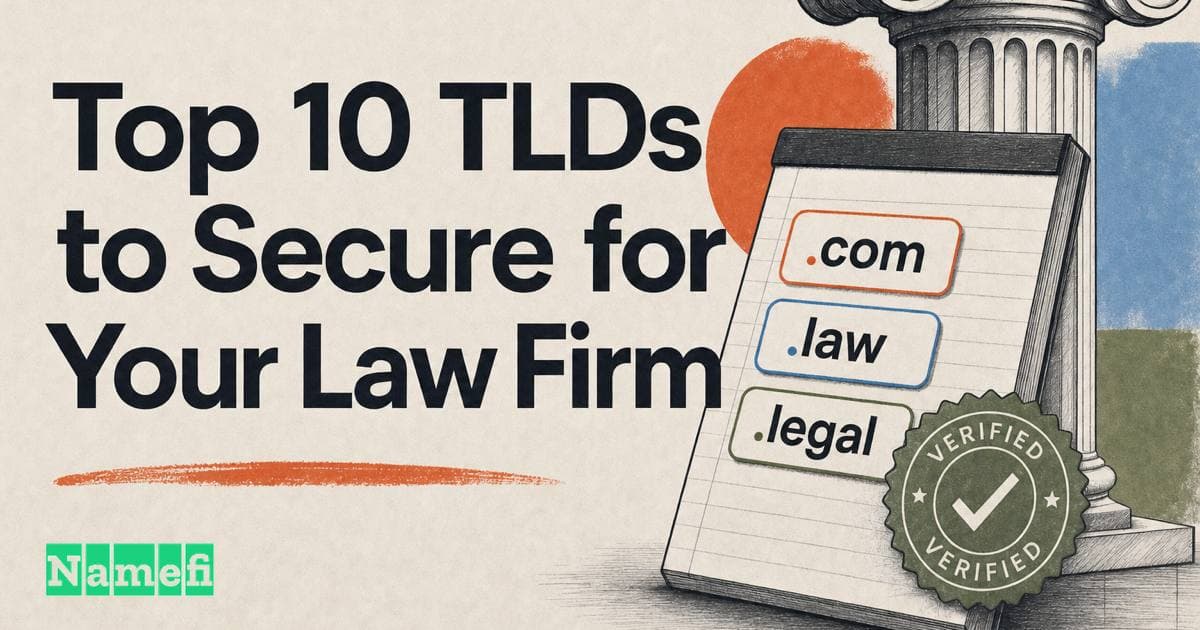
Top 10 TLDs You Should Secure for Your Law Firm
Ten TLDs a law firm can evaluate, including credential restrictions on .law and .abogado, current .esq policy, and a defensive-registration strategy that requires live eligibility checks.
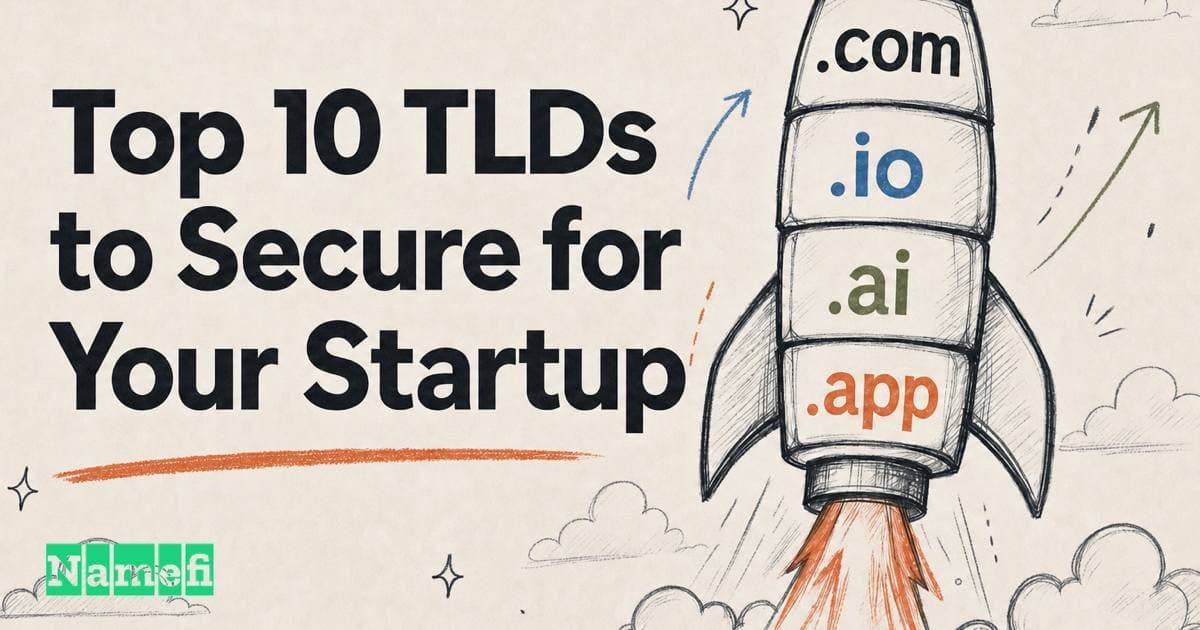
Top 10 TLDs to Evaluate for Your Startup
Evaluate ten TLDs for a startup, from .com to .ai, and build a budgeted defensive-registration plan without confusing exact-match coverage with typosquatting protection.
How to Name Your Project: A Founder's Field Guide
A practical, research-backed guide for founders naming a project, product, or company: clear it legally, make it easy to say, generate strong candidates, check it across cultures, and run the searches that matter before you commit.
.ai vs .io Domains: Meaning, Cost, and Which Fits Your Project
Compare .ai and .io domains by meaning, cost considerations, brand fit, and registry context before choosing an extension for your project.
Domain Escrow Explained: How Safe Domain Transactions Work
A plain-English guide to escrow and domain escrow — what an escrow account is, how escrow works step by step in a domain sale, why it matters for avoiding fraud, traditional escrow services vs. the modern tokenized approach, and how smart contracts can replace escrow with atomic on-chain settlement.
From TeslaMotors.com to Tesla.com: The $11M Domain Upgrade That Took a Decade
How Tesla spent over a decade and a reported $11M to move from TeslaMotors.com to the exact-match Tesla.com, and why the domain upgrade arrived right before the company dropped "Motors" from its name.
Premium Web3 TLDs: A 2026 Guide to Tokenized DNS Domains
A 2026 guide to the ambiguous term "Web3 TLD," the difference between blockchain-native names and tokenized DNS domains, and how to evaluate extensions without assuming liquidity, lending support, or future value.
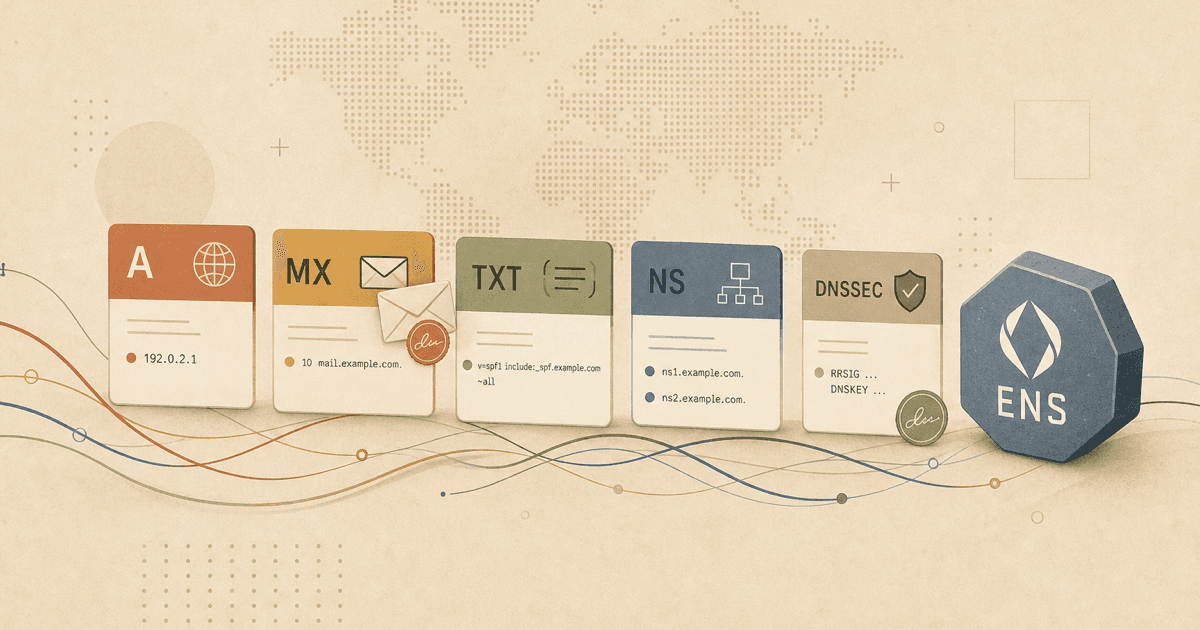
DNS Still Works: Nameservers, Email, and DNSSEC on a Tokenized Domain
A practical look at how regular DNS — nameservers, A/AAAA, MX, TXT, DNSSEC, CAA — keeps working after you tokenize an ICANN domain. What changes, what doesn't, and where to point your existing DNS provider.
Famous Domain Industry Media: News Sites, Sales Reports, and Podcasts Worth Following
A guide to the news outlets, sales-data sites, and podcasts that cover the domain name industry as journalism — DomainNameWire, DNJournal, TheDomains, NameBio, DomainSherpa, CircleID, and more.

Famous Domainer Blogs, Substacks, and Newsletters: Who to Read in 2026
A curated list of the individual domainers, brokers, and traders whose blogs, newsletters, and Substacks are worth reading in 2026 — what each one is known for, and how they fit together.
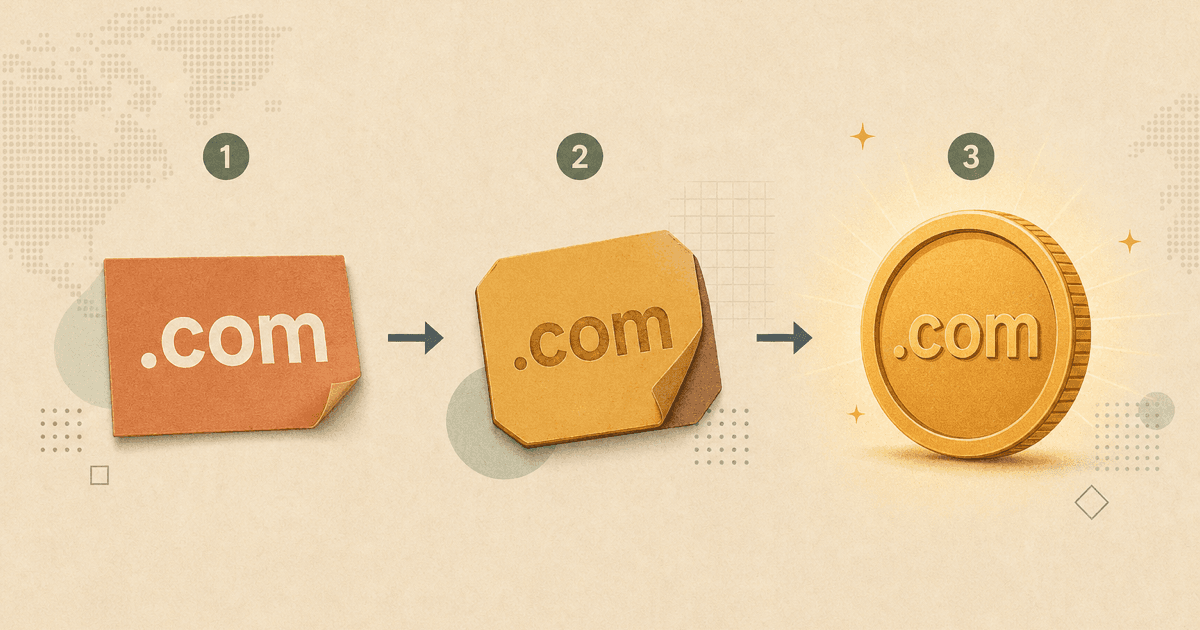
How to Tokenize Your .com: A Step-by-Step Guide (2026)
A practical walkthrough of Namefi's current import flow: EPP auth code, cart, checkout, registrar transfer, and automatic NFT minting.
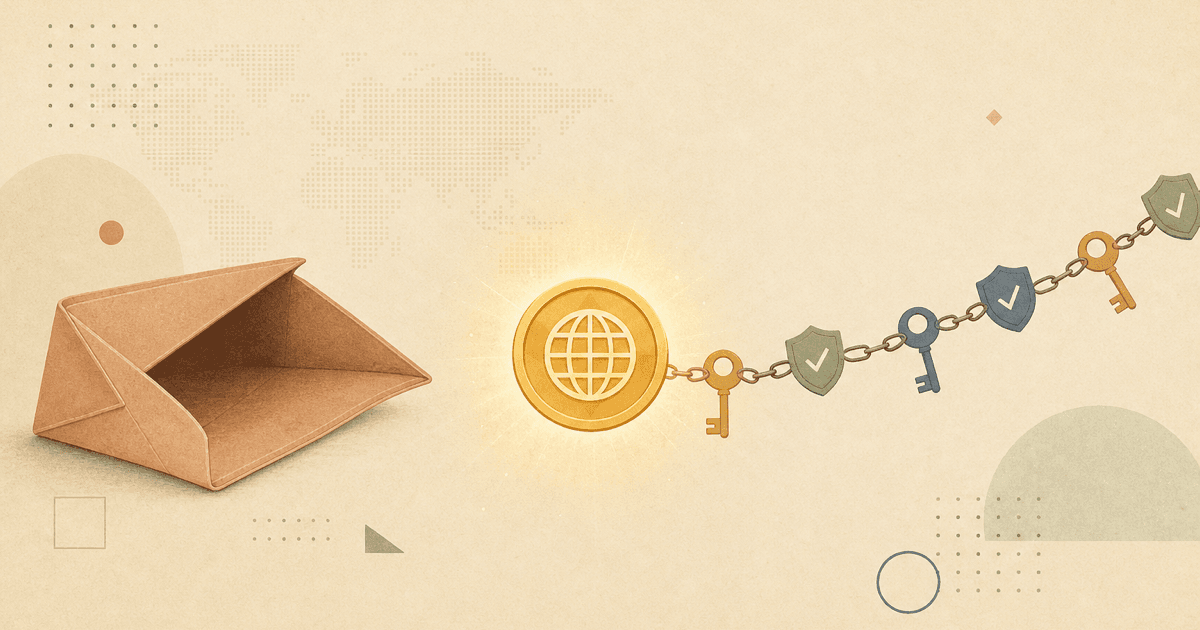
Recovering a Tokenized Domain After Wallet Loss: A Survival Guide
What actually happens if you lose access to the wallet that holds your tokenized domain — and the operational steps to reduce the chance of getting there in the first place. Backups, multisig, hardware wallets, social recovery, and the limits of what any platform can do.

Tax and Accounting Questions for Tokenized Domains (Things to Discuss with Your Professional)
A non-advice, plain-language survey of the tax and accounting questions tokenized domain owners commonly ask — cost basis, sales, holding period, business vs personal, gifting, estates. Bring these questions to a real professional.
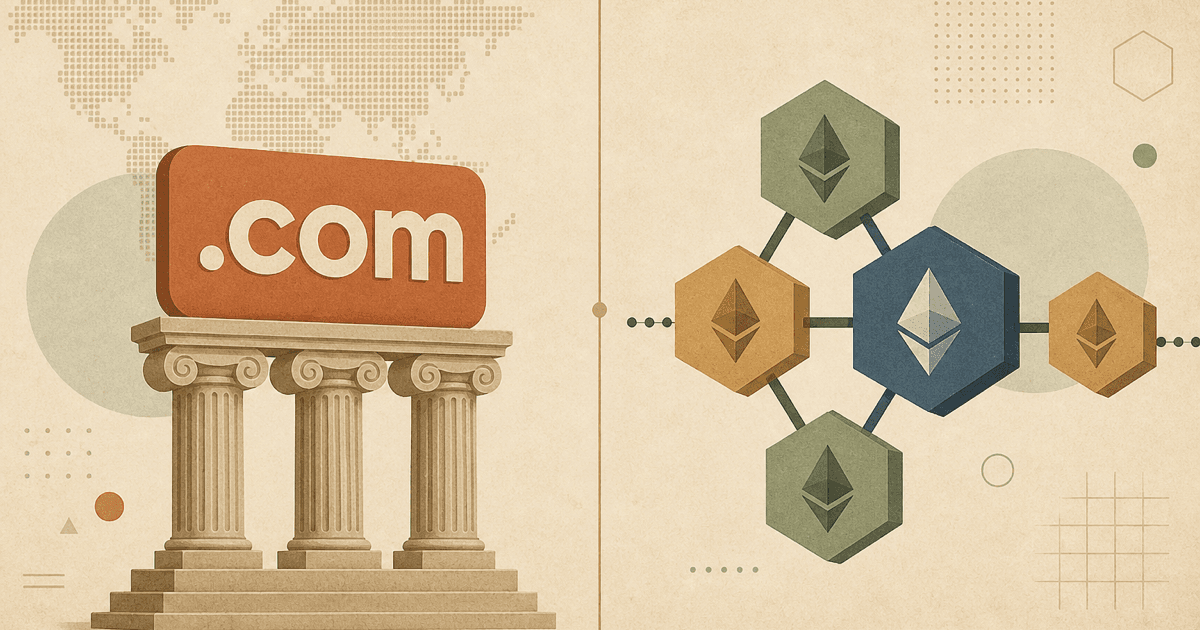
Tokenized Domain vs Web3 Domain (ENS, .crypto): What's the Difference?
A clear, practical comparison of tokenized ICANN domains (like a tokenized .com) and Web3-native names (like name.eth, name.crypto). When does each one work? Where do they overlap? Why do many people hold both?
Perfect vs Computational Zero-Knowledge: What the Distinction Actually Means
Zero-knowledge protocols can provide perfect, statistical, or computational privacy. This guide explains those definitions, why proof-system families do not have one universal flavor, and how privacy differs from soundness and post-quantum security.
Domain Hijacking vs DNS Hijacking: How Attacks Happen
Understand how domain and DNS hijacking happen, where control can be lost, and which protections address the common attack paths.
Do Multisig Wallets Actually Improve Security? A Threat-Model View
Multisignature wallets are widely treated as the default secure custody pattern in crypto, but the answer to "do they actually improve security?" depends entirely on the threat model. This post walks through what multisig defeats, what it does not, and where it can make things worse.
Introducing Route402 — an x402 facilitator router
A multi-tenant router that lets you integrate x402 once and route requests by policy and facilitator capability, without pushing routing logic into your app.
Google Unveils ‘Universal Commerce Protocol’ to Power the Next Generation of AI Shopping Agents
UCP is an open-source commerce standard for connecting AI shopping surfaces with merchants and payment providers.
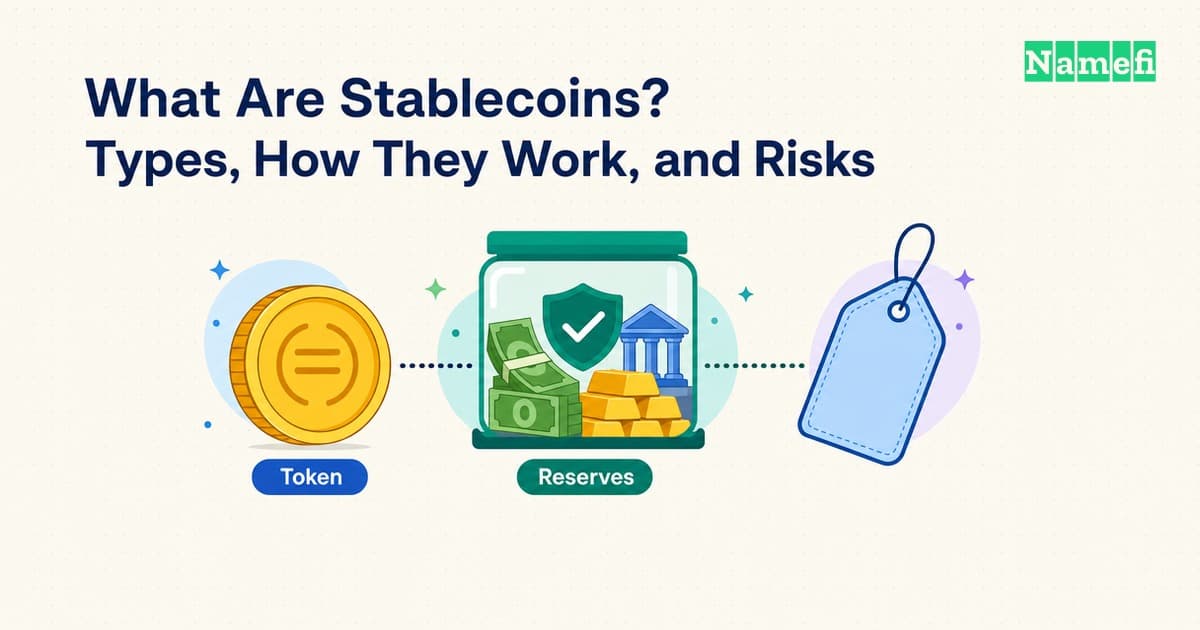
What Are Stablecoins? Types, How They Work, and Risks
Learn how stablecoins aim to track a reference asset, compare fiat-backed, crypto-backed, and algorithmic designs, and understand their risks.
Building for People, Not Wallets: Lessons on Usability from Henri Stern of Privy
A conversation-driven exploration of Henri Stern’s journey building Privy, focusing on usability, customer-led product development, and the shift from crypto complexity to human-centered design.
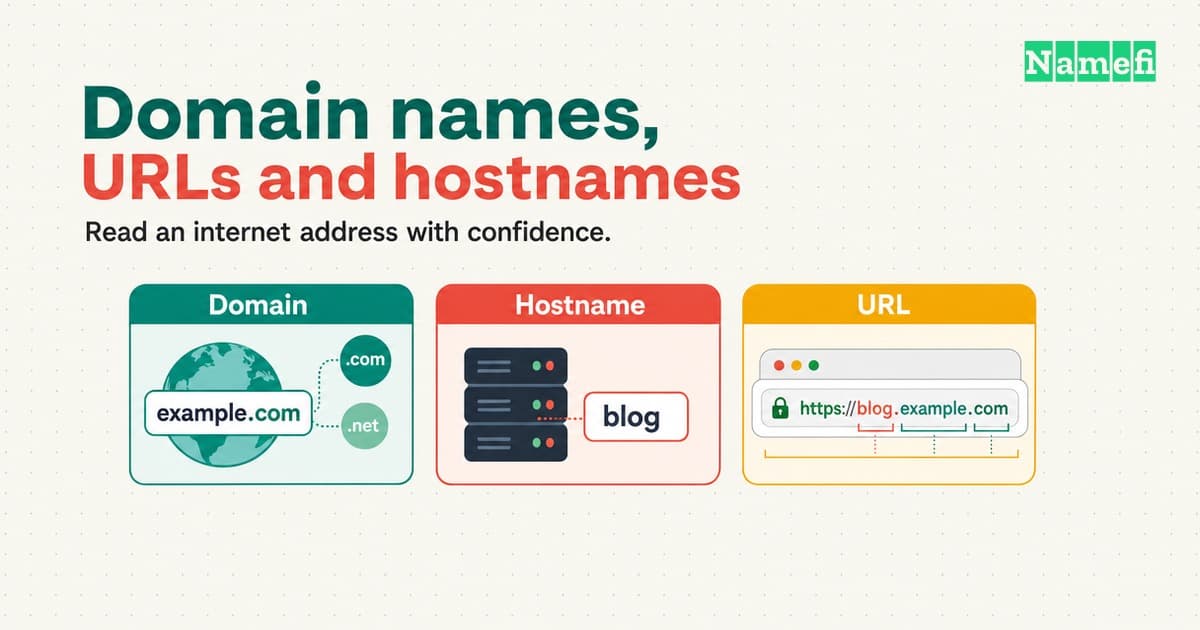
Complete Domain Name Terminology Guide - Essential Terms for Domain Investors
Learn domain terminology, including domain names, URLs, hostnames and the domain name space, plus essential domain investing terms.
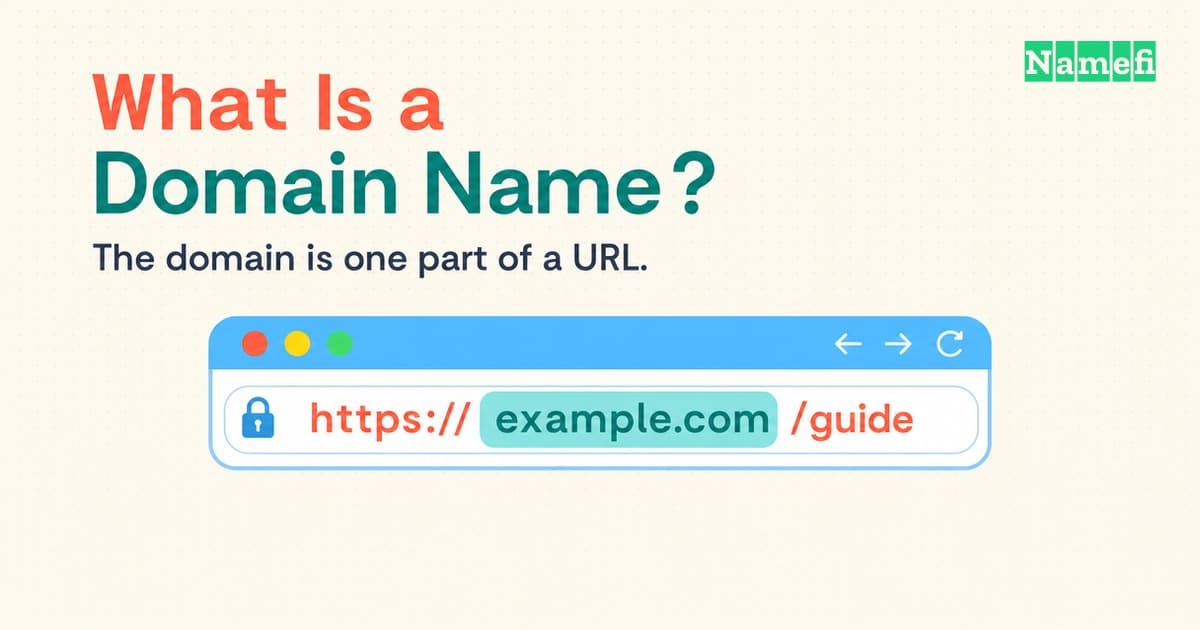
What Is a Domain Name? Examples, Structure, and URLs
Understand domain names, root, TLD, second-level domains, subdomains, registration boundaries, and the difference between a domain and a URL.