
- 9 min read
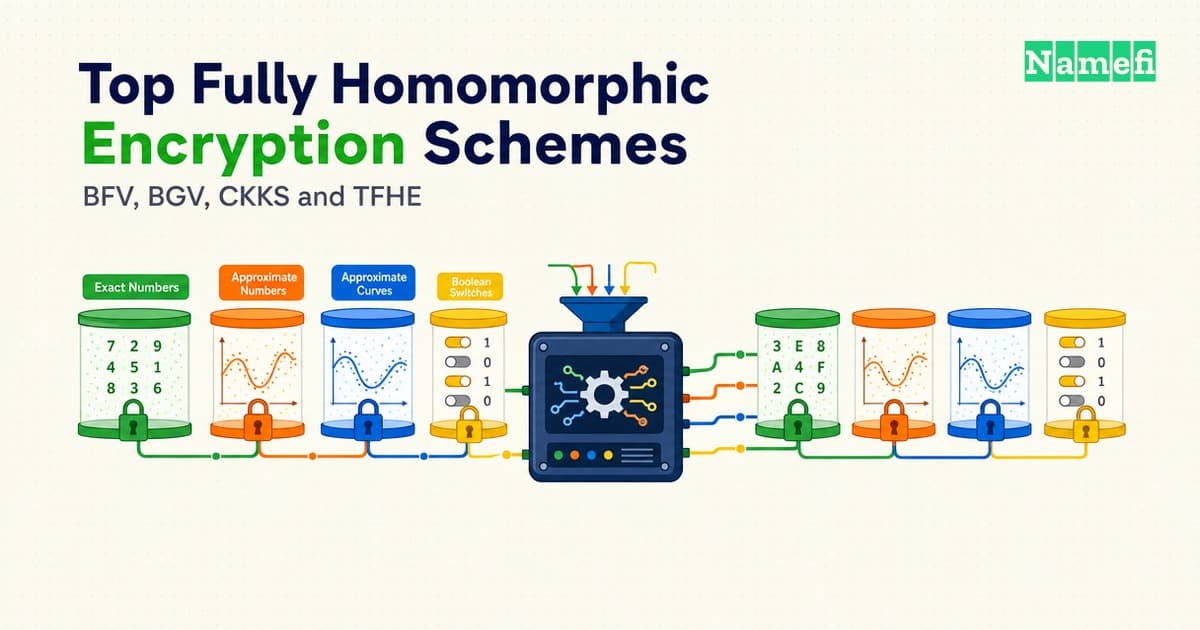
Top Fully Homomorphic Encryption Schemes: BFV, BGV, CKKS and TFHE
A practical comparison of BFV, BGV, CKKS, and TFHE by data type, bootstrapping cost, workload fit, maturity, and available libraries.
guide

- 9 min read
Top Rollup Types: Optimistic, ZK, Validium and Volition Compared
Compare optimistic rollups, ZK rollups, validiums, and volitions by data availability, security inheritance, withdrawal delay, cost, and networks.
guide

- 10 min read
Top Zero-Knowledge Proof Systems: Groth16, PLONK, STARKs, Halo2 and Nova
A practical comparison of Groth16, PLONK, STARKs, Halo2, and Nova across proof size, proving speed, setup, verification, and EVM fit.
guide

- 7 min read
Domain vs Hosting: What You Need to Put a Website Online
Understand the difference between a domain name and web hosting, what each provides, and how to connect them when using different providers.
domainsguide
- 7 min read
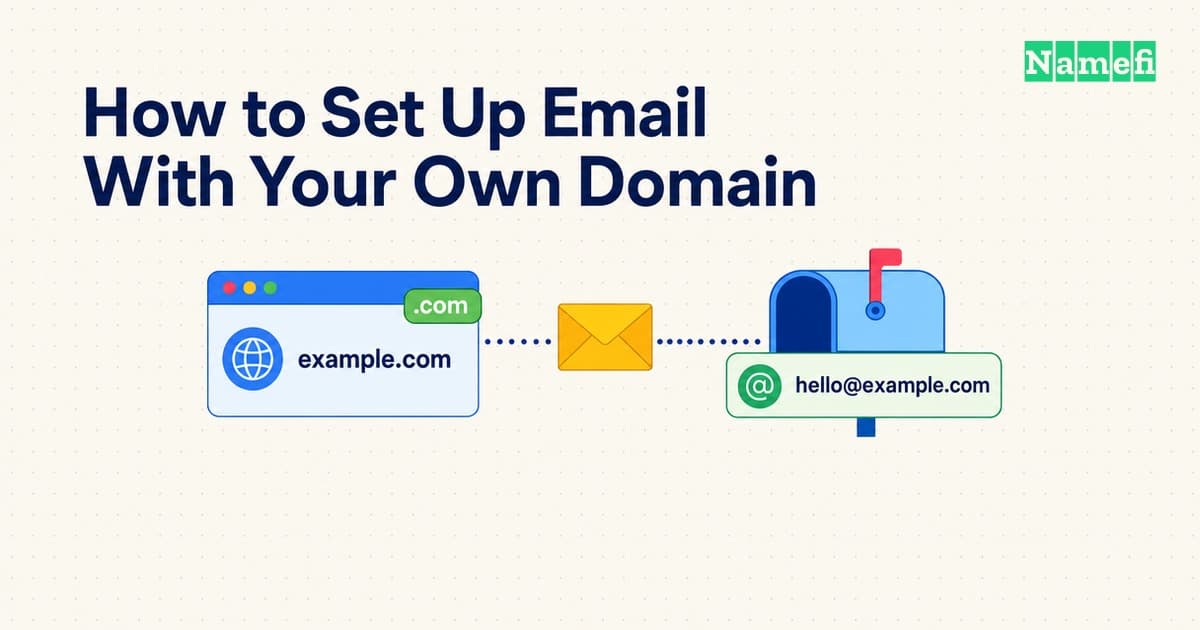
How to Set Up Email With Your Own Domain
Set up email on your domain by choosing an email host, verifying ownership, adding the required DNS records, and testing sending and receiving.
domainsguide

- 7 min read
Subdomain vs Subdirectory: Differences, SEO, and When to Use Each
Compare subdomains and subdirectories for content, apps, and international sites, with practical management tradeoffs and Google's stated SEO guidance.
domainsguideseo
- 7 min read
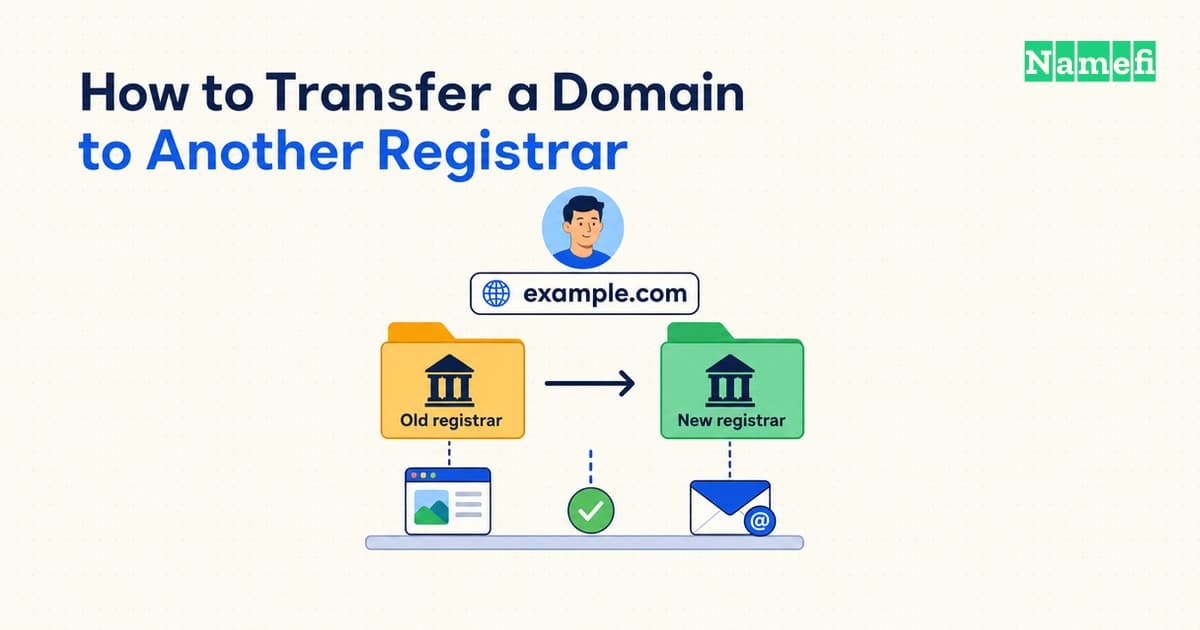
How to Transfer a Domain to Another Registrar
Plan a registrar transfer, check eligibility and locks, obtain the required authorization, and verify website and email continuity after the move.
domainsguide

- 6 min read
Brandable Domain Names: Examples and What Makes Them Work
Explore brandable domain name examples and the naming qualities behind them, from pronunciation and memorability to flexibility and fit.
domainsguide
- 6 min read
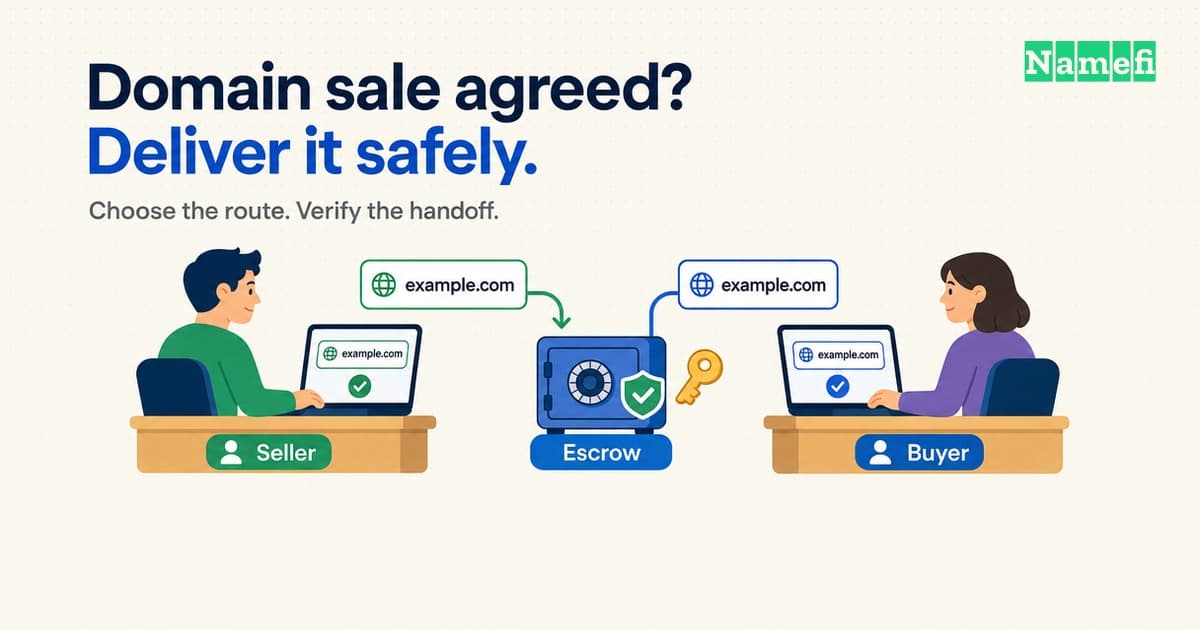
How to Transfer a Domain to a Buyer After a Sale
A seller’s handoff checklist: choose an account push or registrar transfer, confirm payment, protect website and email service, and verify delivery.
domainsguide
- 5 min read
Keyword Domains and SEO: When Is an Exact-Match Name Worth Buying?
Separate a keyword domain’s business value from ranking claims, evaluate a seller’s evidence, and decide what the name is worth to your project.
domainsguide

- 8 min read
- By Sid Jain
Bringing WebMCP to Namefi: let your agent work with your domains
How Namefi brings agents onto its website with WebMCP, shared MCP contracts, domain search, cart tools, and DNS plans you can review.
ai-agentsdomainsdnswebmcp

- 14 min read
- By Aileen Wright
HTTP vs HTTPS: Encryption, Certificates, and How HTTPS Works
Compare HTTP and HTTPS, then learn how TLS encryption, certificates, ports, and automated certificate renewal protect web connections.
httpstlscertificatessecuritynetworking

- 13 min read
- By Sid Jain
How We Cut AI Buyer Discovery Cost by 85%: Start Lean, Escalate With Evidence
A practical method for cheaper buyer discovery using progressive model escalation, LLM-as-judge gates, and Laminar traces and evals.
domainsdomain-investingdomain-flippingaianalysis

- 10 min read
- By Aileen Wright
What Is Agent Payment, and Why Is Everybody Rushing to Provide It?
Agent payment lets AI agents spend with scoped, revocable authority. Inside Stripe's Link wallet for agents, Mercury's agent cards, and the 2025–26 rush.
ai-agentspaymentsexplainer

- 19 min read
- By Aileen Wright
MCP vs REST API vs CLI: Differences and When to Use Each
Compare MCP, REST APIs, and CLIs for AI agents: tool discovery, context use, authentication, and the cases where each approach fits.
ai-agentsdomainsexplainer
- 24 min read
- By Aileen Wright
The Cat-and-Mouse War of Email Sender Reputation
A source-backed history of the thirty-year arms race over email sender reputation—the open relays, botnets, image spam, snowshoe campaigns, warmup networks, and other tricks bulk senders used to look trustworthy, the named operators who ran them, and the year and mechanism by which each trick was detected and shut down.
emailsender-reputationdeliverabilitydmarcdomain-security

- 13 min read
- By Aileen Wright
What Is an Agent-Native Domain Registrar?
Registrars have had APIs for decades, but an API alone isn't agent-native. The checklist: discovery, docs, errors, payment, and policy hooks.
ai-agentsdomainsexplainer
- 11 min read
- By Aileen Wright
Can an AI Agent Own a Domain? WHOIS, Custody & Tokens
The registrant must be a legal person, but custody can be delegated. WHOIS, API keys, and tokenized domains — the custody spectrum explained.
ai-agentsdomainsweb3
- 12 min read
- By Aileen Wright
How AI Agents Buy Domains Without a Human (2026)
In April 2026, domain registration moved into the agent layer. How AI agents search, price, and register domains — and the guardrails that still matter.
ai-agentsdomainsexplainer

- 20 min read
- By Fenwei Bian
How to Register a Domain with Your AI Agent on Namefi
The canonical guide to registering a domain on Namefi with any AI agent — Claude, Codex, Cursor, and more — via MCP, REST, or wallet checkout.
ai-agentsguide

- 15 min read
- By Aileen Wright
AI-Agentic Domain Platforms: The 2026 Guide
Every platform where an AI agent can search, price, and register a domain in 2026 — Cloudflare, Name.com, Namefi — by interface, payment, autonomy.
ai-agentsdomainsguide
- 9 min read
- By Fenwei Bian
"AI Domain Search" Means Two Different Things in 2026
"AI domain search" can mean an assistant that suggests or an agent that buys. A two-column test to know which you need and where to get each.
ai-agentsdomainsexplainer
- 12 min read
- By Fenwei Bian
Best .ai Domain Registrars for AI Startups (2026)
Where AI startups should register .ai in 2026: verified price bands and renewal terms across five registrars, plus which ones an AI agent can actually use.
ai-agentscomparison

- 13 min read
- By Fenwei Bian
GoDaddy Airo vs Namecheap AI vs Namefi: Key Differences
GoDaddy Airo and Namecheap AI suggest names; Namefi's agent registers them. What each product's AI actually does, compared in one table.
ai-agentsdomainscomparison

- 14 min read
- By Fenwei Bian
Best AI Domain Tools 2026: Generators vs Agent Platforms
Ranked 2026 guide to AI domain tools across three tiers: name generators, registrar assistants, and fully agentic platforms that register for you.
ai-agentsdomainsroundup

- 13 min read
- By Fenwei Bian
Beyond the AI Domain Name Generator: The Agent Era
AI name generators stop at suggestions. The capability ladder from suggest to search, configure, transact, and manage — and who ships each rung.
ai-agentsdomainsexplainer

- 13 min read
- By Aileen Wright
Cloudflare vs Name.com vs Namefi: Agent-Native Registrars
Feature-by-feature comparison of the three agent-native registrars: pricing, MCP support, crypto checkout, tokenized ownership, and when to pick each.
ai-agentscomparison
- 13 min read
- By Fenwei Bian
Buy a Domain with Claude: Namefi MCP Step-by-Step Guide
Connect Claude to the Namefi MCP server and register a real domain from one conversation. Exact config, an annotated transcript, and troubleshooting.
ai-agentsdomainsguide
- 11 min read
- By Aileen Wright
What Is llms.txt? Format, Examples, and How It Works
Learn what llms.txt does, how its format works, and how it differs from robots.txt and MCP, with a real domain API example.
ai-agentsdomainsexplainer

- 12 min read
- By Fenwei Bian
Namefi MCP Quickstart: Claude Code, Cursor & Windsurf
Per-editor OAuth and API-key MCP setup for Claude Code, Cursor, and Windsurf, then a five-step quickstart from a new app to a live custom domain.
ai-agentsguide

- 14 min read
- By Aileen Wright
Namefi MCP Server: Domain Tools for AI Agents
The Namefi MCP server's current /v-next tool surface: search, registration, DNS, renewals, outbound workflows, OAuth and API-key authentication, plus separate x402 and MPP HTTP payment paths.
ai-agentsdomainsweb3

- 11 min read
- By Fenwei Bian
How to Buy a Domain with Natural Language (2026)
A step-by-step walkthrough from a natural-language prompt to a registered domain with DNS configured — no browser checkout, with guardrails you control.
ai-agentsguide
- 14 min read
- By Fenwei Bian
The State of Agentic Domain Management, 2026
Domain registration's shift to the agent layer: a sourced timeline, a shipped-vs-announced audit including Namefi, and falsifiable 2027 predictions.
ai-agentsdomainsanalysis

- 9 min read
- By Aileen Wright
Vibe Coding Needs a Domain: Register Without Leaving Flow
Many vibe-coded apps deploy to a hosting-platform subdomain. How the same agent that built your app can name it and register a domain without breaking flow.
ai-agentsdomainsguide

- 14 min read
- By Fenwei Bian
Pay for Domains with a Crypto Wallet: No Account Needed
How Namefi's wallet-signed checkout lets an AI agent buy a domain with crypto, no account required — flow, security model, and spend policies.
ai-agentspayments

- 11 min read
- By Fenwei Bian
Top Blockchain Consensus Mechanisms: Proof of Work, Proof of Stake and Beyond
A clear guide to blockchain consensus mechanisms—Proof of Work, Proof of Stake, Delegated Proof of Stake, BFT consensus, and how each secures a network.
guide

- 12 min read
- By Aileen Wright
Top Cryptographic Primitives Behind Every Blockchain
A guide to the core cryptographic primitives that make blockchains work—hash functions, digital signatures, Merkle trees, elliptic-curve crypto, and commitments.
guide

- 15 min read
- By Aileen Wright
Top Blockchain Privacy Technologies: Zero-Knowledge Proofs, FHE, MPC, TEEs and Ring Signatures
A plain-language guide to the five leading blockchain privacy technologies—zero-knowledge proofs, FHE, MPC, TEEs, and ring signatures—compared side by side.
guide

- 10 min read
- By Fenwei Bian
Top Blockchain Scaling Approaches: Rollups, Sidechains, Channels and Sharding
A learner's guide to blockchain scaling — optimistic rollups, ZK rollups, sidechains, payment channels, sharding, and data availability layers compared.
guide

- 12 min read
- By Aileen Wright
Top Blockchain Virtual Machines: EVM, SVM, MoveVM, WebAssembly/RISC-V and CairoVM
A guide to top blockchain virtual machines—EVM, SVM, MoveVM, WebAssembly and RISC-V VMs, and CairoVM—comparing languages, execution models, and ecosystems.
guide
- 10 min read
- By Fenwei Bian
How Much Does a Domain Name Cost? Registration and Renewal
Compare domain registration, renewal, transfer, and recovery costs, and learn how to spot introductory prices that hide a higher ongoing bill.
domainsdomain-investingdomain-pricingguide
- 10 min read
- By Fenwei Bian
Appraising ENS and Tokenized Domains: Reading Onchain Comps
How to appraise ENS and tokenized domains using onchain comps, floor-versus-premium reasoning, and ENS club factors — and why it differs from DNS.
domainsdomain-flippingweb3analysis
- 11 min read
- By Aileen Wright
ENS vs DNS Domain Flipping: What's Different
How flipping ENS .eth names differs from flipping traditional DNS domains: ownership, liquidity, renewal, gas, and what each is good for.
domainsdomain-flippingweb3comparison

- 10 min read
- By Fenwei Bian
ENS vs Unstoppable vs Tokenized DNS Domains
ENS vs Unstoppable Domains vs tokenized ICANN DNS, compared on browser resolvability, renewals, and who actually controls the name.
domainsdomain-flippingweb3comparison

- 10 min read
- By Fenwei Bian
How Tokenization Changes Domain Flipping
How bringing a domain on-chain can reshape flipping through verifiable token control, compatible marketplaces, and programmable settlement without removing registrar dependencies.
domainsdomain-flippingweb3explainer
- 12 min read
- By Aileen Wright
Onchain Domain Custody, Wallets, and Recovery
How custody really works for onchain domains: wallets, multisig, seed-phrase risk, and recovering a tokenized domain after wallet loss.
domainsdomain-flippingweb3explainer

- 10 min read
- By Fenwei Bian
Onchain Domain Flipping: Trading ENS and Tokenized Domains
How onchain domain flipping works — trading ENS and tokenized domains through wallets and compatible NFT marketplaces, and how it differs from registrar flipping.
domainsdomain-flippingweb3guide
- 10 min read
- By Fenwei Bian
Onchain Domain Marketplaces Compared: OpenSea, Seaport, and Beyond
OpenSea, Seaport-based, and domain-native onchain marketplaces compared on fees, reach, and custody — which venue fits which tokenized-domain sale.
domainsdomain-flippingweb3comparison
- 11 min read
- By Aileen Wright
Selling Domains as NFTs: Onchain Liquidity
How selling a domain as an NFT works: listing mechanics, Seaport and OpenSea, buyer-restricted private sales, royalties, and gas and scam traps.
domainsdomain-flippingweb3guide

- 10 min read
- By Fenwei Bian
Tokenize Your .com to Flip It: A Namefi Walkthrough
A Namefi walkthrough: add an on-chain token-control layer to a .com, preserve standard DNS, and use atomic payment-and-token settlement without conflating the token with legal title.
domainsdomain-flippingweb3guide

- 14 min read
- By Aileen Wright
Why a DAO Should Control the Main Domain
The main domain is a critical control point for an online movement. Here is how a DAO can govern it while preserving legal, registrar, DNS, security, and operational safeguards.
governancedaoweb3namefi space

- 11 min read
- By Aileen Wright
How to Avoid Domain Sale Scams
The common domain-sale scams — fake escrow, fake buyers, overpayment chargebacks, transfer-before-payment — and the habits that keep your sales safe.
domainssecuritydomain-flippingguide
- 11 min read
- By Fenwei Bian
Brandable vs Keyword Domains: Which Sell Better?
Brandable invented names vs exact-match keyword domains: who buys each, which resells more reliably, and the trademark angle every flipper should know.
domainsdomain-investingdomain-flippingcomparison
- 11 min read
- By Fenwei Bian
Cybersquatting vs Legitimate Domaining: UDRP and ACPA Explained
Where legitimate domaining ends and cybersquatting begins: the UDRP three-part test, the ACPA, reverse domain hijacking, and how to stay safe.
domainssecuritydomain-flippingexplainer

- 10 min read
- By Aileen Wright
Domain Appraisal Tools Compared: Estibot vs GoDaddy vs Reality
How automated domain appraisers like Estibot and GoDaddy actually work, where they systematically miss, and how to use them as a first filter.
domainsdomain-investingdomain-flippingcomparison

- 11 min read
- By Fenwei Bian
Domain Backorders and Drop-Catching, Explained
What domain backorders and drop-catching are, how services race to grab a name the instant it releases, and when a backorder is worth paying for.
domainsdomain-investingdomain-flippingexplainer
- 12 min read
- By Fenwei Bian
Domain Flipping and the Law: Trademarks, UDRP, and Scams
The legal landscape every domain flipper needs: trademark basics, UDRP and ACPA, escrow at closing, hijacking defense, and how to dodge sale scams.
domainssecuritydomain-flippingexplainer
- 10 min read
- By Aileen Wright
For-Sale Landing Pages That Convert
How to build a domain for-sale landing page that converts: a clear price or offer path, real trust signals, and a frictionless way to buy or make an offer.
domainsdomain-investingdomain-flippingguide

- 10 min read
- By Fenwei Bian
What Is Domain Parking? Parked Domains and Monetization
Learn what a parked domain is, why people park domains, and how parking, sale landing pages, and monetization differ.
domainsdomain-investingdomain-flippingexplainer
- 11 min read
- By Aileen Wright
Running a Domain Portfolio Like a Business
Run your domains like inventory: track cost basis, watch sell-through rate, control renewal drag, prune losers, and keep the books clean.
domainsdomain-investingdomain-flippingguide
- 10 min read
- By Aileen Wright
Domain Pricing Psychology: Buy-Now vs Make-Offer
How listing mode and initial numbers can influence a domain sale: anchoring, when to name a price, planned concessions, and buy-now vs make-offer.
domainsdomain-investingdomain-flippingguide
- 12 min read
- By Fenwei Bian
Renewal Costs and Sell-Through Rate: The Real Math of Domaining
The honest economics of domaining: renewal drag, sell-through rate as a rule of thumb, and why one good sale has to fund many years of renewals.
domainsdomain-investingdomain-flippinganalysis

- 13 min read
- By Fenwei Bian
End-User Price vs Reseller Price: Why One Domain Has Two Numbers
Why a domain has a low wholesale/reseller price and a much higher end-user price, how big the spread is, and which number applies to your sale.
domainsdomain-investingdomain-flippingexplainer
- 12 min read
- By Fenwei Bian
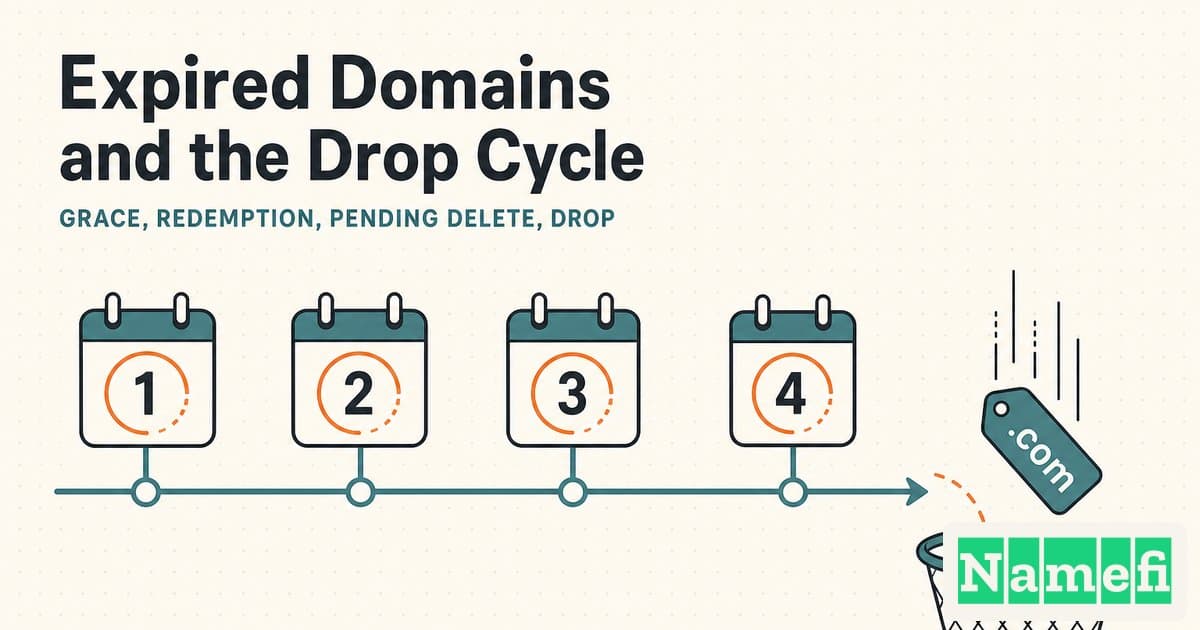
Expired Domains and the Drop Cycle, Explained
How a domain expires and drops: grace period, the 30-day redemption window, 5-day pending delete, release — and where dropped names surface for flippers.
domainsdomain-investingdomain-flippingexplainer
- 10 min read
- By Fenwei Bian
Hand-Registering Domains to Flip: Finding Available Gems
How to find still-available domains worth a registration fee: wordlists, TLD permutations, brandable patterns, and the filters that beat impulse buys.
domainsdomain-investingdomain-flippingguide

- 12 min read
- By Aileen Wright
How the TLD Affects a Domain's Value
How the extension after the dot moves a domain's price: the .com premium, the .io/.ai/.co context, and the policy and geopolitical risk behind ccTLDs.
domainstlddomain-flippinganalysis
- 10 min read
- By Aileen Wright
How to Find Domains to Flip: Every Sourcing Channel
The four ways to source domains to flip — hand-registration, expired drops, auctions, and the aftermarket — and each channel's risk and price profile.
domainsdomain-investingdomain-flippingguide

- 11 min read
- By Fenwei Bian
How to Read Comparable Domain Sales (Comps)
How to use NameBio-style sales history to price a domain: finding true comparables, adjusting for TLD, length and keyword, and avoiding cherry-picking.
domainsdomain-investingdomain-flippingguide
- 11 min read
- By Fenwei Bian
How to Sell Domains for Profit
The end-to-end playbook for selling domains: inbound vs outbound, pricing format, where to list, when to use a broker, and closing the deal safely.
domainsdomain-investingdomain-flippingguide

- 12 min read
- By Aileen Wright
How to Win Domain Auctions Without Overpaying
How aftermarket domain auctions actually work — proxy bids, sniping, hard maxes, reading demand, and dodging the overpay and shill traps.
domainsdomain-investingdomain-flippingguide

- 10 min read
- By Aileen Wright
Inbound vs Outbound Domain Sales
Inbound vs outbound domain sales: when each works, the effort-and-return tradeoff, and how to run both without your outreach reading as spam.
domainsdomain-investingdomain-flippingexplainer
- 11 min read
- By Fenwei Bian
Marketing Your Domains for Sale
How to market domains for sale: parking pages, for-sale landers, and listing SEO that put the right name in front of the right buyer.
domainsdomain-investingdomain-flippingguide
- 8 min read
- By Aileen Wright
Marketplace Discoverability for Domain Listings: Afternic and Sedo
How domain listings are discovered on Afternic and Sedo, which seller-controlled fields each platform actually exposes, and how registrar distribution, pricing, landers, and promotion differ.
domainsdomain-investingdomain-flippingguide
- 10 min read
- By Fenwei Bian
Short, LLLL, and Numeric Domains: The Chinese-Market Premium
Why Chinese buyers price short, four-letter, and numeric .com domains as a distinct asset class — pinyin, no-vowel premiums, and lucky 8 vs unlucky 4.
domainstlddomain-flippinganalysis
- 11 min read
- By Aileen Wright
Taxes and Accounting for Domain Investors
How domain investors handle taxes: inventory vs. capital assets, cost basis, when income is recognized, and expensing renewals. Educational, not advice.
domainsdomain-investingdomain-flippingfaq

- 12 min read
- By Fenwei Bian
What Makes a Domain Name Valuable
Why one string of letters is worth thousands and a near-identical one is worth nothing: length, real words, the .com premium, intent, and brandability.
domainsdomain-investingdomain-flippingexplainer

- 11 min read
- By Fenwei Bian
When to Drop a Domain (and Cut Your Losers)
How to decide when to let a domain expire: renewal cost vs realistic resale odds, the sunk-cost trap, and the signals a name will never sell.
domainsdomain-investingdomain-flippingguide
- 10 min read
- By Aileen Wright
Where to Sell Domains: Afternic vs Sedo vs Dan vs Namefi
Afternic vs Sedo vs Dan vs onchain marketplaces compared on reach, fees, and fast transfer — plus how to list one name across several at once.
domainsdomain-investingdomain-flippingcomparison

- 11 min read
- By Fenwei Bian
What Does a Domain Broker Do? Fees, Services, and How to Choose
Learn when a domain broker helps, how buyer and seller representation differ, and which fees, incentives, and terms to check before hiring one.
domainsdomain-investingdomain-flippingexplainer

- 11 min read
- By Aileen Wright
Domain Flipping: How It Works, Costs, Risks, and Selling Basics
Learn how domain flipping works, from finding and valuing names to selling them, with realistic costs, risks, and holding-period tradeoffs.
domainsdomain-investingdomain-flippingguide

- 13 min read
- By Fenwei Bian
What Is a Domain Hack? Examples and Extension Tradeoffs
See how domain hacks form words across the dot, explore examples, and learn what country-code rules can mean for choosing one.
domainsdomain-investingbrandingdomain-flipping

- 12 min read
- By Fenwei Bian
Domain Valuation: How to Estimate What a Domain Is Worth
Estimate a domain’s value using comparable sales, naming quality, buyer demand, and holding costs, and understand the limits of automated appraisals.
domainsdomain-investingdomain-flippingguide

- 14 min read
- By Fenwei Bian
From Box.net to Box.com: The ~$1M Upgrade That Dropped the ".net" and Bought the Exact Match
How Box launched in 2005 on Box.net because Box.com was taken, pivoted from consumer storage to the enterprise, and in 2011 paid Digimedia close to $1 million for the exact-match Box.com — a .net-to-.com upgrade that landed right as the company became simply "Box."
domainsbrandingstartupsdomain-upgrades

- 15 min read
- By Fenwei Bian
From BufferApp.com to Buffer.com: The 624-Day, Bank-Statement-Open Domain Deal
How Buffer launched in 2010 on BufferApp.com because Buffer.com was taken, then spent 624 days acquiring the exact-match domain — even showing the seller its bank balance — and why a company famous for radical transparency stayed quiet on the one number everyone wanted: the price.
domainsbrandingstartupsdomain-upgrades

- 16 min read
- By Fenwei Bian
Who Owns Trip.com? Ctrip, Trip.com Group, and the Rebrand
Understand how Trip.com relates to Ctrip and Trip.com Group, and trace the acquisition and company-name changes behind the travel brand.
domainsbrandingstartupsdomain-upgrades
- 15 min read
- By Fenwei Bian
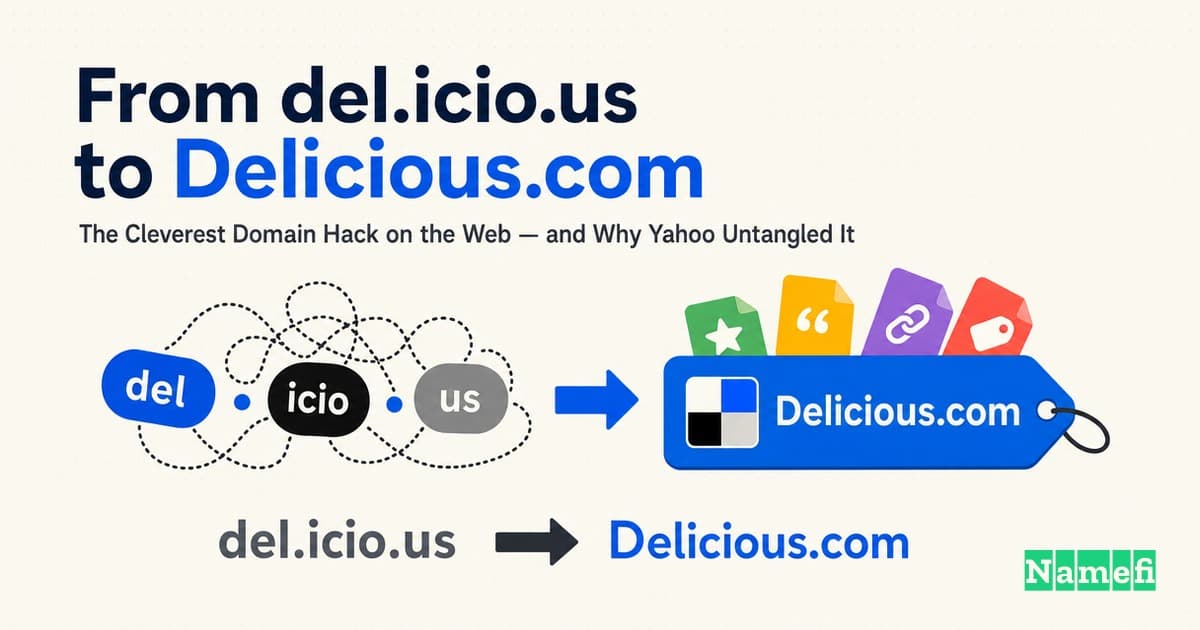
From del.icio.us to Delicious.com: The Cleverest Domain Hack on the Web — and Why Yahoo Untangled It
How the pioneering social-bookmarking site launched in 2003 as the famous domain hack "del.icio.us," why those dots became a permanent tax on every mention, and how Yahoo moved it to the cleaner Delicious.com in 2008.
domainsbrandingstartupsdomain-upgrades

- 14 min read
- By Fenwei Bian
From DiscordApp.com to Discord.com: How Dropping "App" Closed a Door Phishers Loved
How Discord launched in 2015 on DiscordApp.com because Discord.com was taken, quietly bought the bare word, and in 2020 made discord.com its primary home — partly for brand cleanliness, partly because the "discordapp.com" vs "discord.com" split was a gift to phishers and malware crews.
domainsbrandingstartupsdomain-upgrades

- 14 min read
- By Fenwei Bian
From Facebook.com to Meta.com: How a $60M Name Deal and a Borrowed Science Domain Powered the Metaverse Pivot
How Facebook, Inc. became Meta in October 2021, why Meta.com was already a Zuckerberg-related asset forwarding from a science search engine, and how a separate $60M deal bought the "Meta" name from a Sioux Falls bank — while the Facebook app kept Facebook.com.
domainsbrandingstartupsdomain-upgrades
- 13 min read
- By Aileen Wright
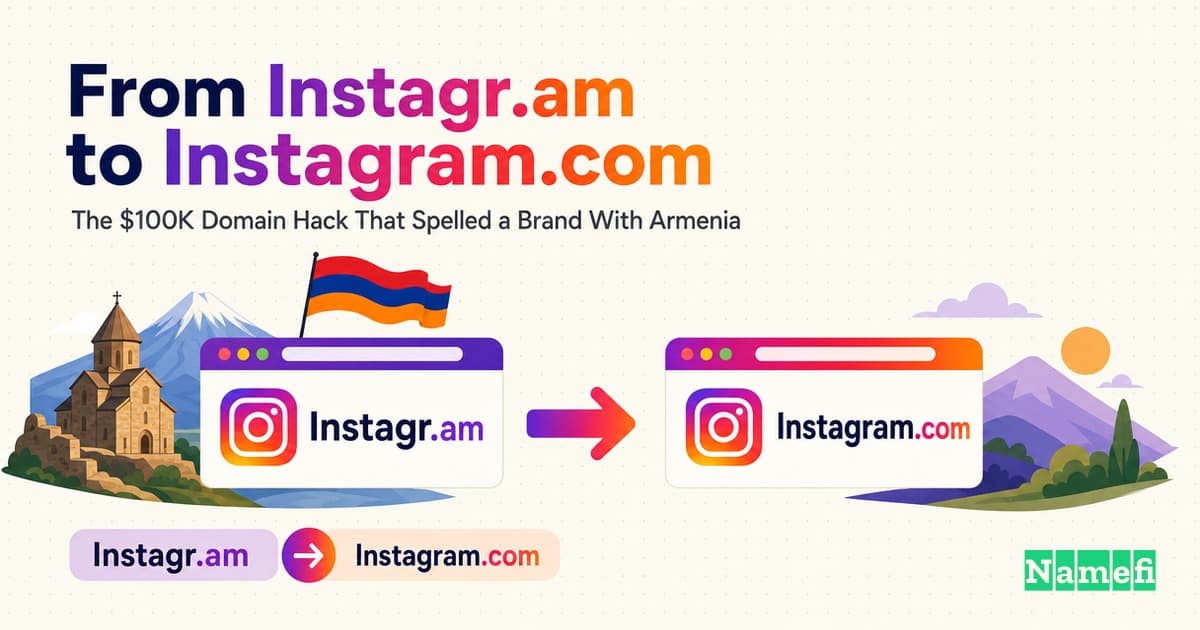
From Instagr.am to Instagram.com: The $100K Domain Hack That Spelled a Brand With Armenia
How Instagram launched in 2010 on the instagr.am domain hack — borrowing Armenia's .am ccTLD to spell its own name — then paid $100,000 to consolidate on Instagram.com, and what the tradeoffs of a clever ccTLD hack teach founders.
domainsbrandingstartupsdomain-upgrades

- 12 min read
- By Aileen Wright
From JambaJuice.com to Jamba.com: How a Smoothie Chain Dropped a Word — and Already Owned the Domain
How Jamba Juice spent 29 years explaining itself with the word "Juice," why it dropped that word in 2019 to become simply "Jamba," and the quiet advantage almost no one noticed: Jamba.com was already an established company domain before the rebrand.
domainsbrandingstartupsdomain-upgrades

- 14 min read
- By Aileen Wright
From Massdrop.com to Drop.com: How a Group-Buy Community Dropped Half Its Name to Own One Word
How Massdrop spent seven years building an enthusiast group-buying community, then rebranded to Drop in 2019 — quietly acquiring the premium Drop.com domain (asking price once $800,000) before the rename, and why dropping "Mass" mattered.
domainsbrandingstartupsdomain-upgrades

- 14 min read
- By Aileen Wright
From Mona.co to Crypto.com: How Monaco Paid Millions for the Domain a Cryptographer Held for 25 Years
How the crypto-card startup Monaco rebranded to Crypto.com in 2018 by buying the ultra-premium Crypto.com domain — registered in 1993 by cryptographer Matt Blaze, who refused to sell for 25 years — in a deal experts valued at up to $10 million.
domainsbrandingstartupsdomain-upgrades
- 14 min read
- By Aileen Wright
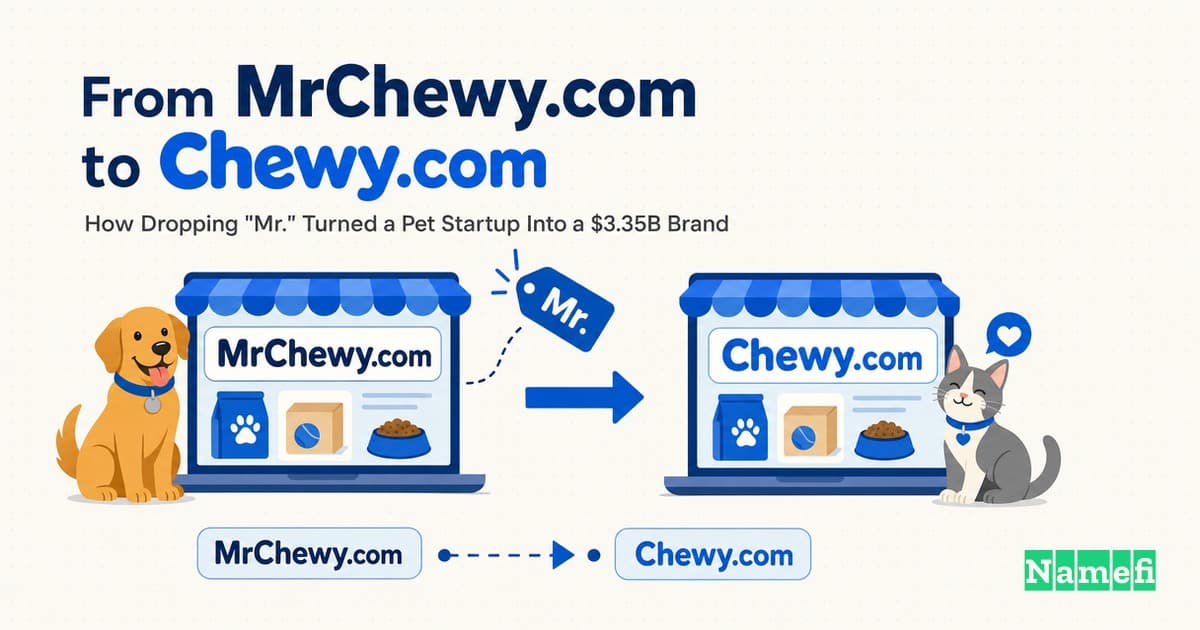
From Mr. Chewy to Chewy: The Name and Domain Change
Learn how Mr. Chewy became Chewy and how the shorter name and domain fit the company’s brand evolution.
domainsbrandingstartupsdomain-upgrades

- 15 min read
- By Aileen Wright
Why Did Twitter Become X? The Rebrand and X.com Story
Trace Twitter’s change to X, the history of X.com, and how the name, domain, and redirect changes fit into the rebrand.
domainsbrandingstartupsdomain-upgrades

- 13 min read
- By Aileen Wright
From UrbanCompass.com to Compass.com: How Dropping "Urban" Turned a NYC Rental App Into a National Brokerage
How Urban Compass launched in 2012 as a New York rental app on UrbanCompass.com, dropped "Urban" in its February 2015 rebrand, and upgraded to the exact-match Compass.com — a domain that had been listed at auction for $1 million — right as it set out to go national.
domainsbrandingstartupsdomain-upgrades

- 11 min read
- By Aileen Wright
The $12 Minute: When Google Domains Accepted a Google.com Order
In September 2015, Google Domains accepted a $12 order for google.com from former employee Sanmay Ved, then canceled it about a minute later. What the incident proves, what remains uncertain, and why the $6,006.13 bounty still matters for domain security.
domainssecuritydnsdomain-security
- 11 min read
- By Aileen Wright
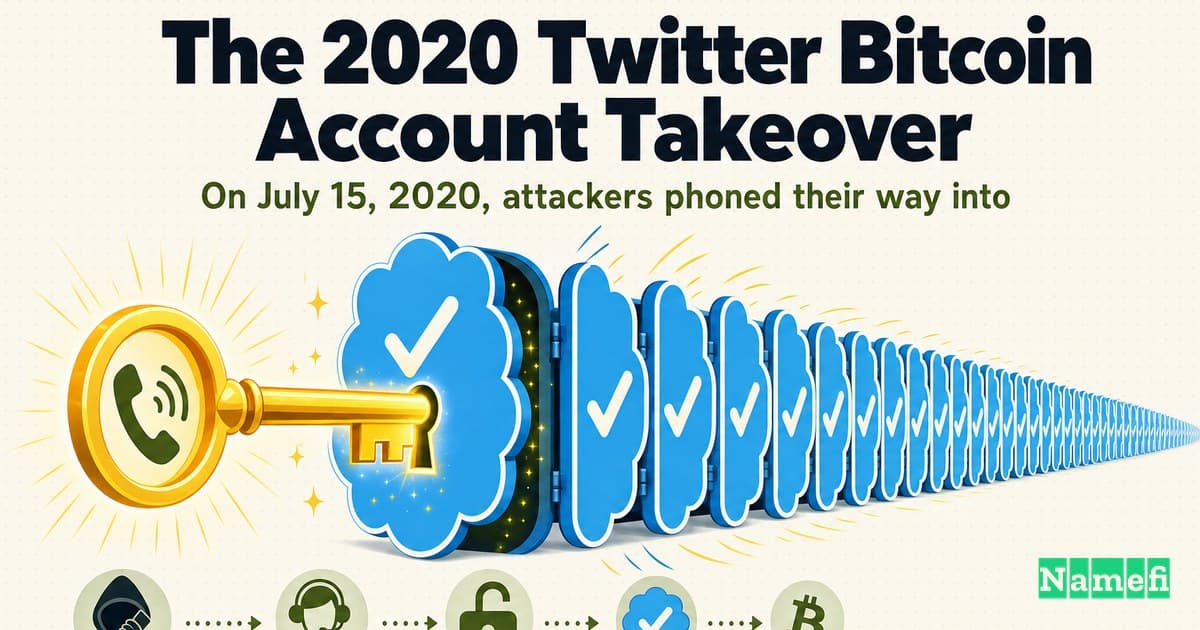
Domain Mayday EP03: The 2020 Twitter Bitcoin Account Takeover
On July 15, 2020, attackers phoned their way into Twitter, hijacked the verified accounts of Obama, Biden, Musk, Gates, Apple and Uber, and ran a Bitcoin doubling scam — netting about $118,000. A deep-dive on how control of an online identity was stolen, and what it teaches about owning a name.
domainssecuritydnsdomain-security
- 11 min read
- By Aileen Wright
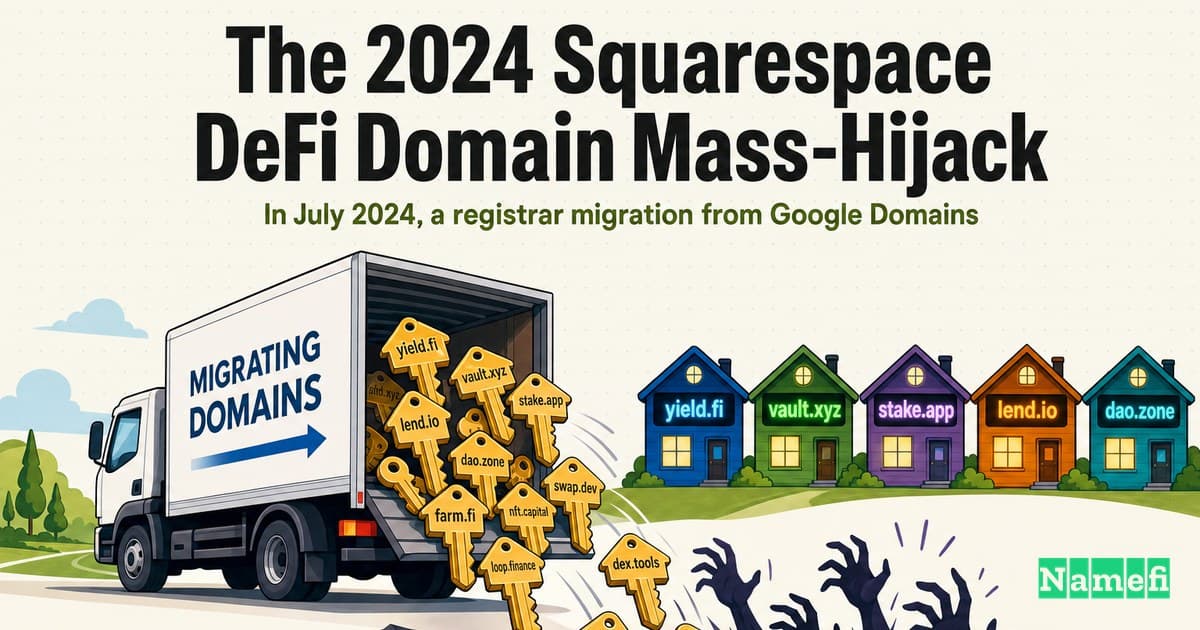
Domain Mayday EP05: The 2024 Squarespace DeFi Domain Mass-Hijack
In July 2024, a registrar migration from Google Domains to Squarespace turned weak default authentication into a mass attack surface. Attackers hijacked the domains of crypto and DeFi projects — Compound Finance, Celer Network, Pendle, Unstoppable Domains — and pointed them at wallet-drainer phishing sites. Here is how a "seamless" migration created hundreds of unlocked front doors, and what it teaches about registrar security and MFA.
domainssecuritydnsdomain-security

- 12 min read
- By Aileen Wright
The BadgerDAO Front-End Attack: $120M Drained Through One Injected Script
In December 2021, attackers compromised BadgerDAO's Cloudflare account and injected one malicious script into its website front-end. The audited smart contracts were never touched — yet ~$120M walked out the door through wallet approvals users signed without knowing. A deep-dive on why the website is part of your security surface.
domainssecuritydnsdomain-security
- 11 min read
- By Aileen Wright
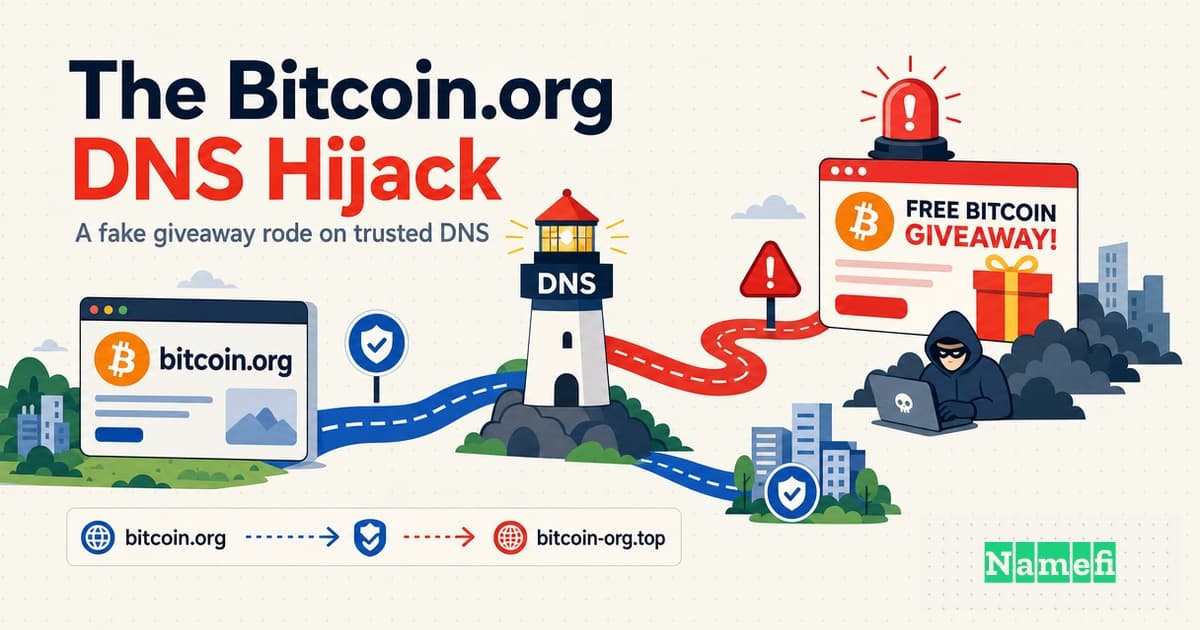
The Bitcoin.org Website Hijack: How Bitcoin's Home Page Became a "Double Your Coins" Scam
In September 2021, Bitcoin.org — the long-time informational home of Bitcoin run by the pseudonymous operator Cobra — displayed a fake "double your Bitcoin" giveaway before the site was pulled offline. Nameserver and WHOIS changes led observers to suspect DNS compromise, but the public root cause remained unconfirmed. Here is what the incident teaches about crypto-native sites depending on ordinary domain infrastructure.
domainssecuritydnsdomain-security
- 12 min read
- By Aileen Wright
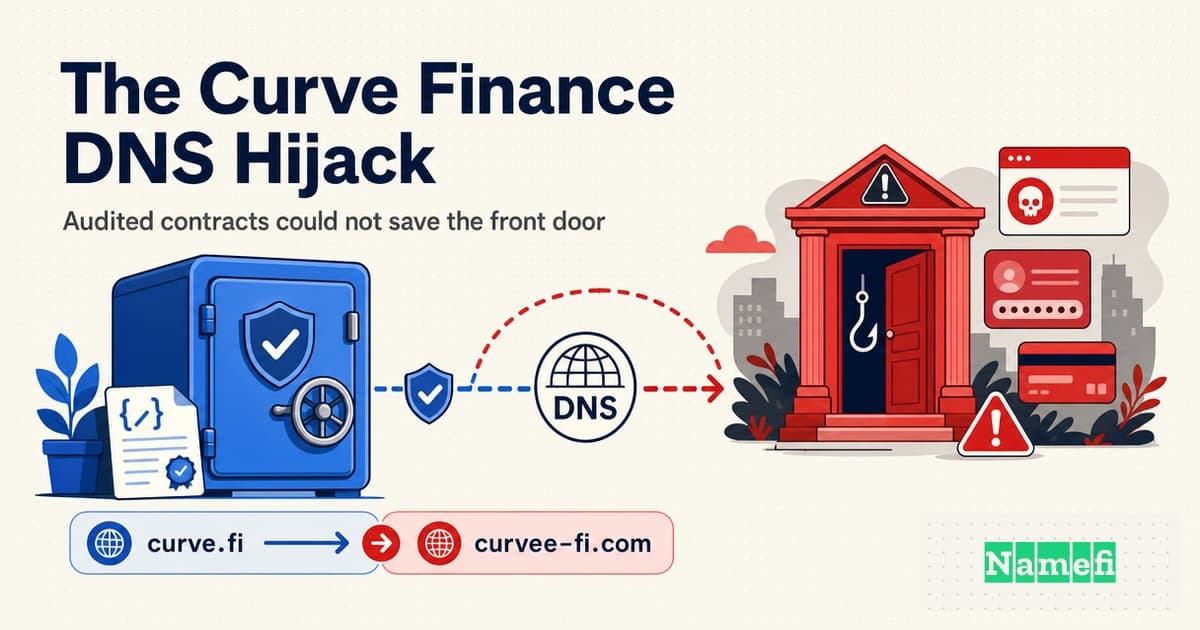
The Curve Finance DNS Hijack: When "Audited Contracts" Couldn't Save the Front Door
In August 2022, Curve Finance's smart contracts were untouched — but attackers hijacked the curve.fi domain at its registrar, cloned the site, and drained roughly $570K from users. A deep-dive into the DNS attack on a DeFi front-end, and what it teaches about domain security.
domainssecuritydnsdomain-security

- 12 min read
- By Fenwei Bian
DNSpionage: The Campaign That Weaponized DNS Against Governments
In late 2018, Cisco Talos disclosed DNSpionage — a campaign later linked by researchers to Iranian interests that included malware and a separate DNS-redirection operation against government and company domains. In January 2019, CISA ordered federal agencies to audit and secure DNS infrastructure through Emergency Directive 19-01.
domainssecuritydnsdomain-security

- 10 min read
- By Fenwei Bian
The Dyn DNS Attack: When a Mirai Botnet Disrupted Major Internet Services
On October 21, 2016, a DDoS attack powered by the Mirai IoT botnet hit DNS provider Dyn in three waves, making Twitter, Netflix, Reddit, Spotify, GitHub, Airbnb, PayPal, and other services unreachable for many users — a Domain Mayday case study in DNS provider concentration.
domainssecuritydnsdomain-security
- 12 min read
- By Fenwei Bian
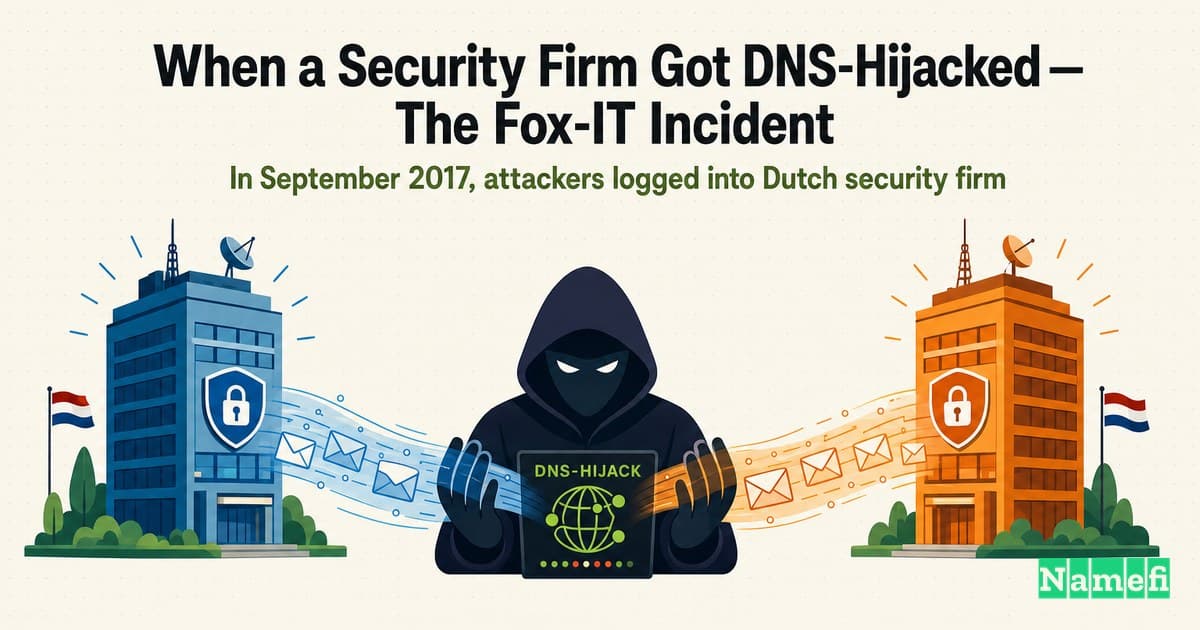
Domain Mayday EP14: When a Security Firm Got DNS-Hijacked — The Fox-IT Incident
In September 2017, attackers logged into Dutch security firm Fox-IT's third-party domain registrar, changed its DNS, fraudulently obtained a TLS certificate, and ran a 10-hour man-in-the-middle on client traffic — until Fox-IT caught it and published one of the most transparent post-mortems in the industry.
domainssecuritydnsdomain-security

- 12 min read
- By Fenwei Bian
The GoDaddy Multi-Year Campaign: Hosting Breaches, Exposed Credentials, and Malicious Redirects
GoDaddy says hosting incidents disclosed between 2020 and 2022 were part of a multi-year threat campaign that exposed 1.2 million Managed WordPress customers and redirected some hosted websites. A close look at provider concentration risk — and at what the disclosures do not establish.
domainssecuritydnsdomain-security
- 10 min read
- By Aileen Wright
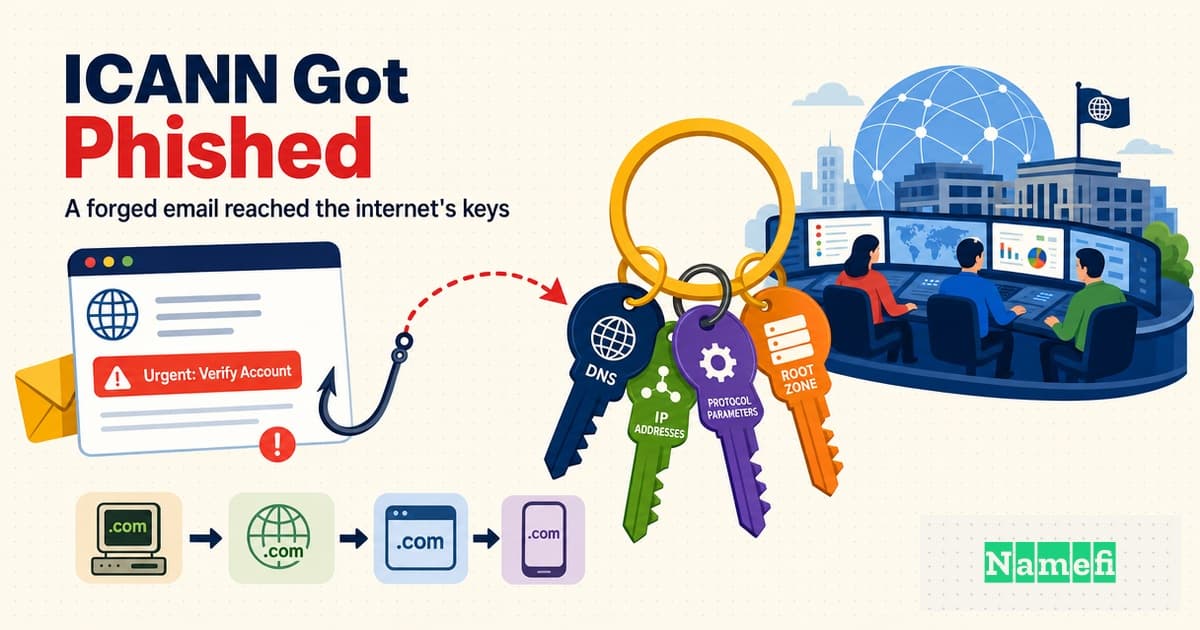
When ICANN Staff Got Phished: The 2014 CZDS Data Breach
In late 2014, spear-phishing emails spoofing ICANN's domain harvested staff credentials and enabled administrative access to files in the Centralized Zone Data System. A close look at the copied gTLD zone data and user information that were exposed — and the critical IANA systems that were not affected.
domainssecuritydnsdomain-security
- 11 min read
- By Aileen Wright
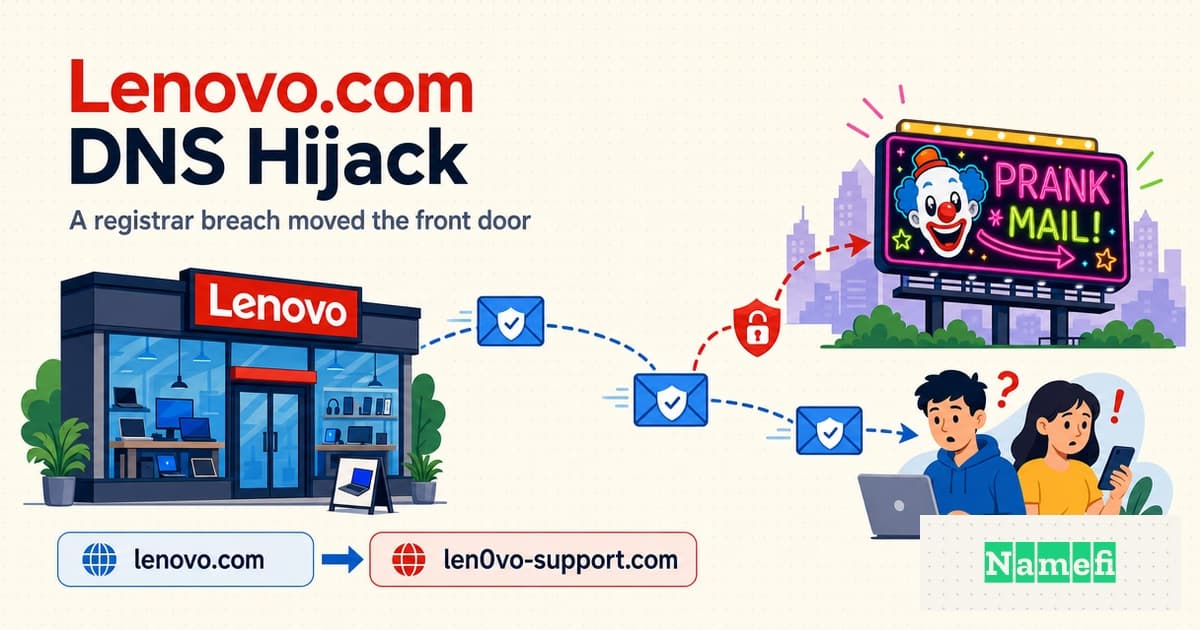
The Lenovo.com DNS Hijack: When Lizard Squad Took a Hardware Giant's Front Door
On February 25, 2015, attackers changed Lenovo.com's nameserver and mail routing, sending visitors to a webcam slideshow and exposing some email traffic. Researchers attributed the incident to a Webnic compromise, but Webnic did not publicly confirm their reported exploit chain.
domainssecuritydnsdomain-security

- 10 min read
- By Aileen Wright
The Malaysia Airlines DNS Hijack: "404 — Plane Not Found"
In January 2015, Lizard Squad hijacked the DNS of malaysiaairlines.com and replaced the airline site with a tuxedo-wearing lizard and the taunt "404 — Plane Not Found." No server was breached — the attackers simply changed where the domain pointed. A Domain Mayday deep-dive into how DNS became the airline's most exposed front door.
domainssecuritydnsdomain-security

- 12 min read
- By Aileen Wright
The MyEtherWallet BGP + DNS Attack: How Hijacked Internet Routing Drained $150K in ETH
On April 24, 2018, attackers hijacked the internet routing for Amazon Route 53, poisoned DNS answers for myetherwallet.com, and served a phishing clone behind a self-signed certificate — draining roughly $150,000 in Ethereum. A Domain Mayday deep-dive into why DNS rides on a routing layer that trusts by default.
domainssecuritydnsdomain-security

- 10 min read
- By Fenwei Bian
The Panix.com Domain Hijack: A Fraudulent Transfer of New York's Oldest ISP
In January 2005, panix.com — the domain of New York's oldest commercial ISP — was fraudulently transferred through a reseller account opened with stolen credit-card details. ICANN's review found a failure to obtain express authorization, not a flaw introduced by the then-new transfer policy.
domainssecuritydnsdomain-security

- 11 min read
- By Fenwei Bian
The Perl.com Domain Theft: How a 30-Year-Old Community Home Was Quietly Stolen
In late January 2021, perl.com — a decades-old home of the Perl programming community — was stolen via a registrar-level account compromise, transferred through China, pointed at a malware-linked IP, and listed for $190,000. Here is how it happened, how it was recovered, and what it teaches about registrar account security.
domainssecuritydnsdomain-security
- 11 min read
- By Aileen Wright
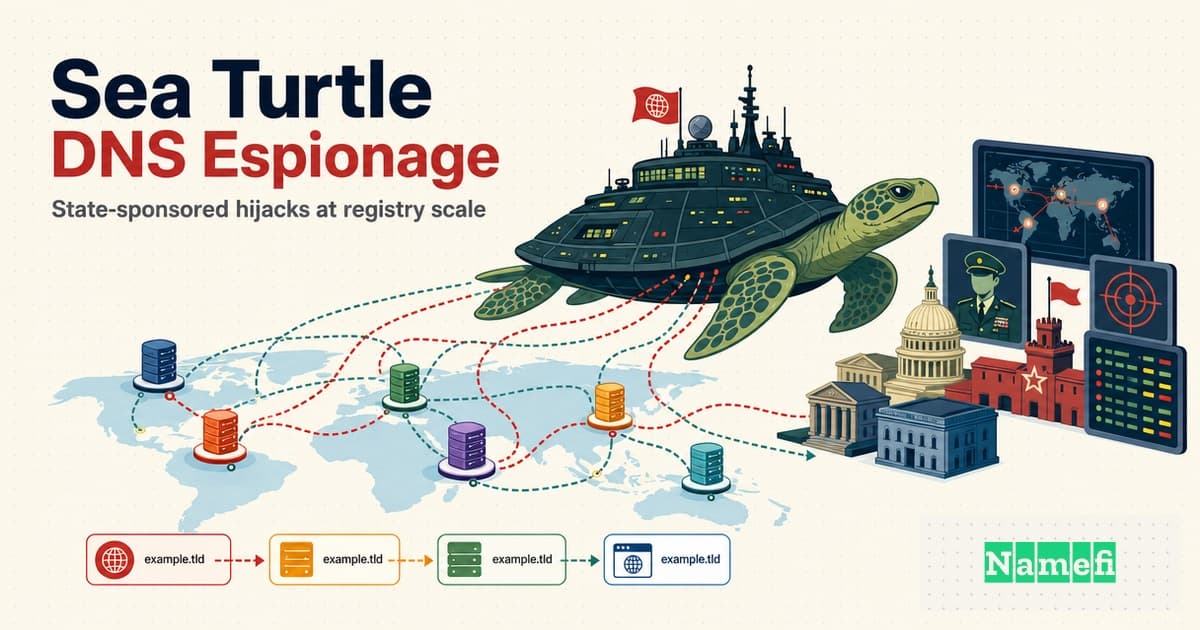
Sea Turtle: The State-Sponsored Campaign That Hijacked DNS to Spy on Governments
How "Sea Turtle," a state-sponsored campaign disclosed by Cisco Talos in 2019, hijacked DNS through registrars, registries, and DNS providers — redirecting governments, ministries, and energy firms to attacker servers, obtaining CA-signed and other certificates for interception, and breaching a national TLD registry.
domainssecuritydnsdomain-security
- 12 min read
- By Fenwei Bian
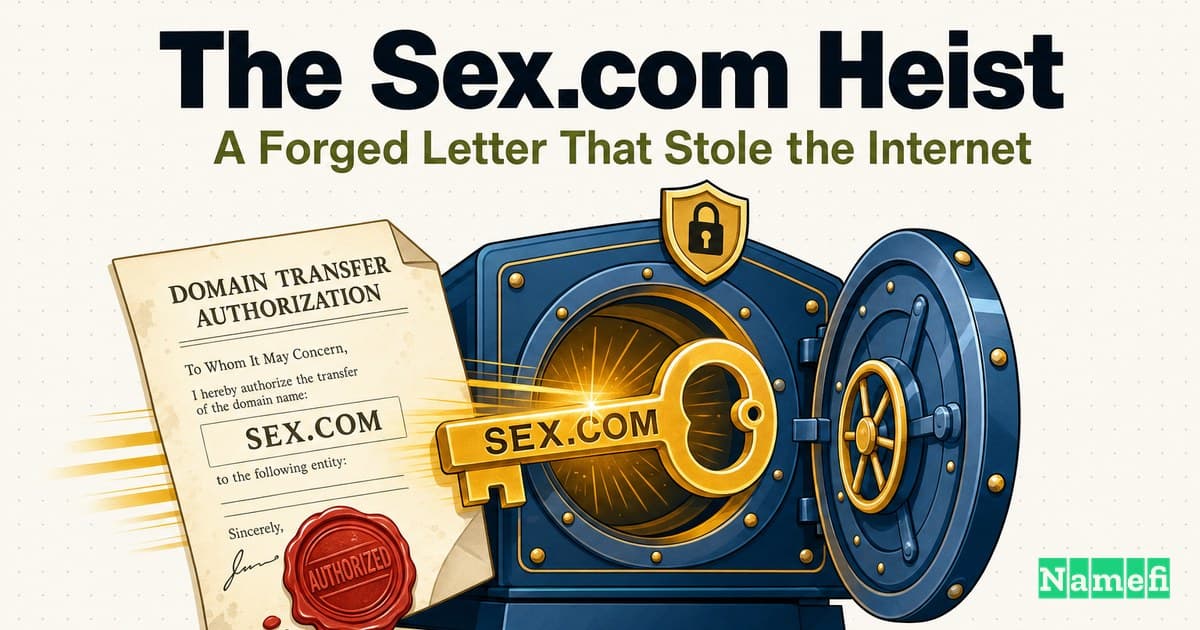
The Sex.com Heist: A Forged Letter That Stole the Internet's Most Valuable Domain
In 1995 a con man named Stephen Cohen stole sex.com from rightful owner Gary Kremen with a single forged letter to Network Solutions. The years-long fight to win it back ended in a $65 million judgment, a fugitive in Mexico, and a landmark ruling that domains are property.
domainssecuritydnsdomain-security
- 10 min read
- By Aileen Wright
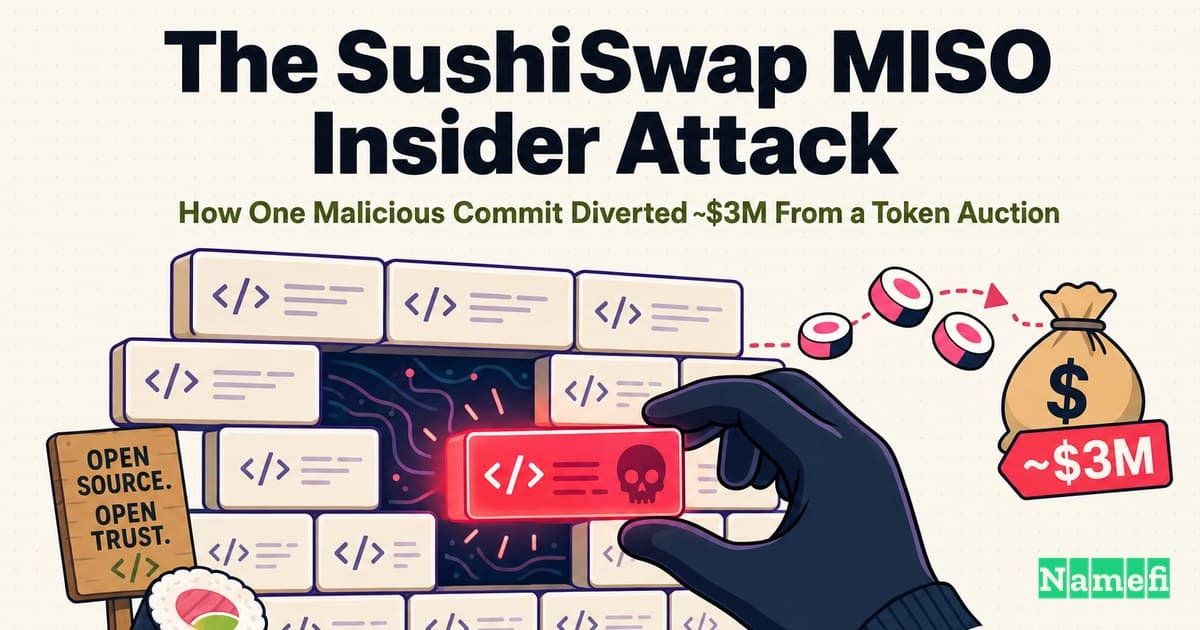
The SushiSwap MISO Insider Attack: How One Malicious Commit Diverted ~$3M From a Token Auction
In September 2021 an anonymous contractor slipped their own wallet address into SushiSwap's MISO launchpad front-end via a malicious commit, diverting 864.8 ETH (~$3M) from the Jay Pegs Auto Mart auction. A Domain Mayday deep-dive on code supply chains, front-end trust, and what it teaches about verifiable ownership.
domainssecuritydnsdomain-security
- 10 min read
- By Fenwei Bian
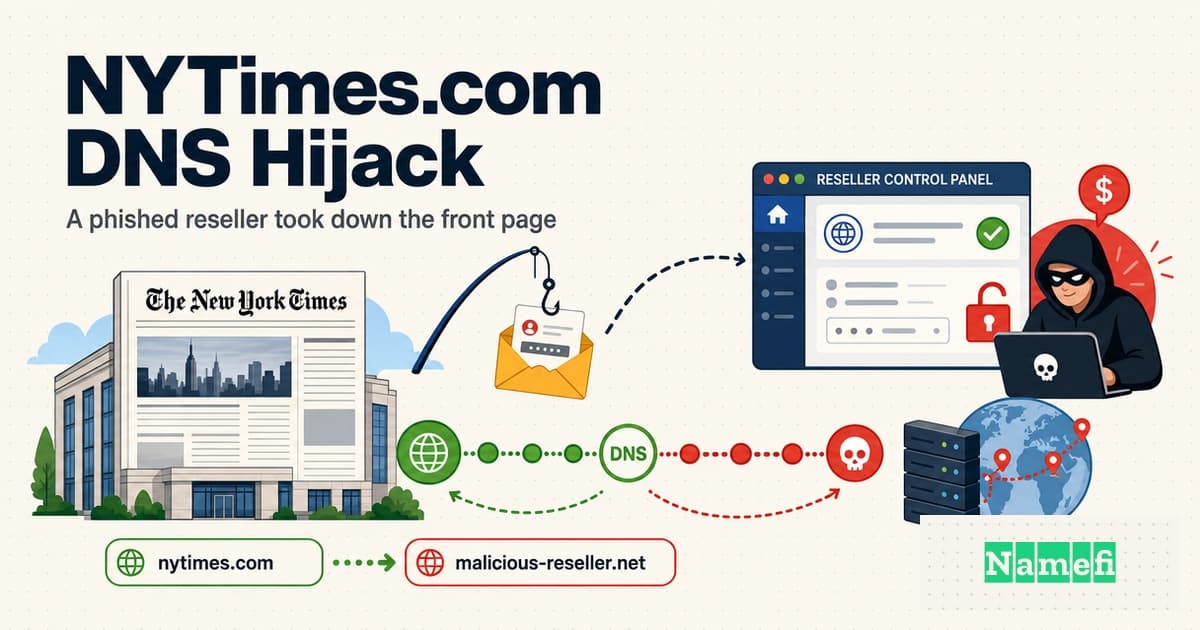
Domain Mayday EP10: How the Syrian Electronic Army Took Down NYTimes.com Through a Phished Reseller
On August 27, 2013, the Syrian Electronic Army phished a Melbourne IT reseller, rewrote the DNS records for nytimes.com and Twitter's domains, and took the New York Times offline for hours. A deep dive into how a registrar-chain weak link became a newspaper's front-door failure — and what registry locks would have changed.
domainssecuritydnsdomain-security
- 11 min read
- By Fenwei Bian
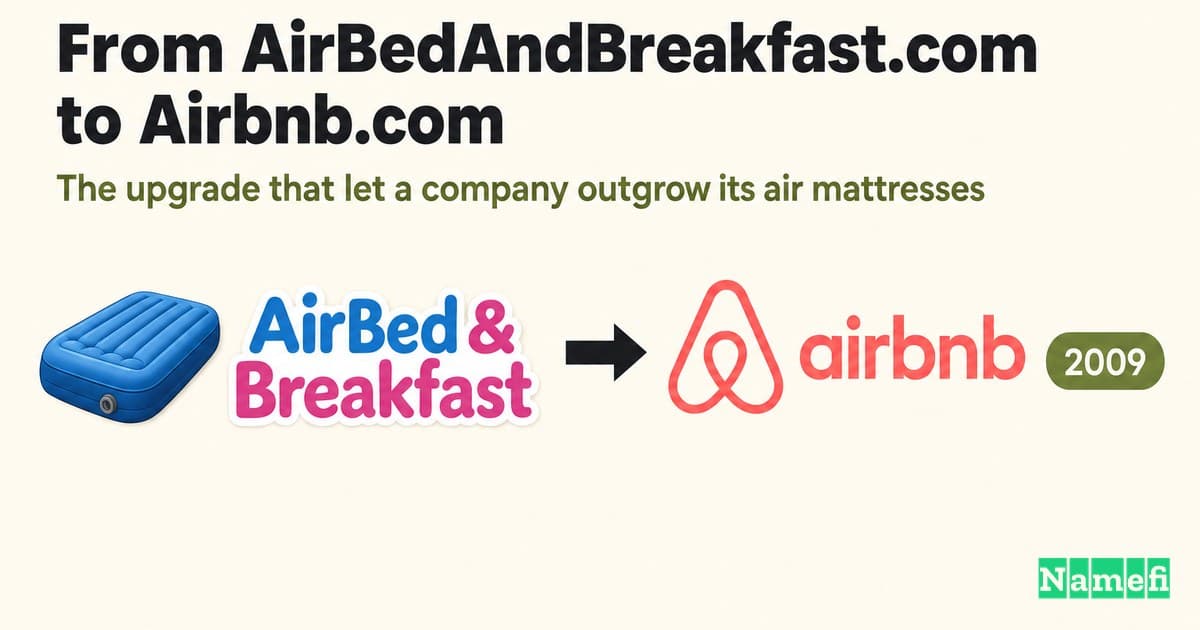
From AirBedAndBreakfast.com to Airbnb.com: The Domain Upgrade That Let a Company Outgrow Its Air Mattresses
How Airbnb launched in 2008 as AirBed & Breakfast on AirBedAndBreakfast.com, then shortened to Airbnb.com in 2009 to escape the literal air-mattress name and become a scalable global brand.
domainsbrandingstartupsdomain-upgrades

- 12 min read
- By Aileen Wright
From GetDropbox.com to Dropbox.com: The $300K Upgrade That Dropped "Get" and a Bottle of Champagne
How Dropbox launched on GetDropbox.com because Dropbox.com was taken, fought a trademark and squatting battle, and finally bought the exact-match Dropbox.com for a reported $300,000 in cash.
domainsbrandingstartupsdomain-upgrades

- 12 min read
- By Aileen Wright
From SlackHQ.com to Slack.com: The $60K Upgrade That Dropped the "HQ"
How Slack launched on SlackHQ.com because someone else had Slack.com, paid a reported $60,000 to buy the exact-match domain, dropped the "HQ" — and why @SlackHQ still survives on social to this day.
domainsbrandingstartupsdomain-upgrades

- 13 min read
- By Aileen Wright
From Snapchat.com to Snap.com: The $5M Domain That Turned an App Into a Camera Company
How Snapchat quietly bought Snap.com from Idealab for a reported $5M in 2014, then in September 2016 renamed itself Snap Inc., "a camera company," and let the short exact-match domain carry an identity bigger than any single app.
domainsbrandingstartupsdomain-upgrades

- 15 min read
- By Aileen Wright
Uber’s Original Name: Why UberCab Became Uber
Discover Uber’s original name, why UberCab became Uber, and how its domain change supported a broader brand.
domainsbrandingstartupsdomain-upgrades
- 8 min read
- By Aileen Wright
Top 10 TLDs to Evaluate for Your Accounting Firm
Ten TLDs an accounting firm can evaluate — from restricted .cpa to defensive .com, .net, and .org registrations, with eligibility and recurring-cost caveats.
tlddomains
- 8 min read
- By Aileen Wright
Top 10 TLDs You Should Secure for Your Business
Discover the top TLDs to secure for your business, why defensive domain registration protects your brand, and how to register them the smart way.
tlddomains
- 7 min read
- By Fenwei Bian
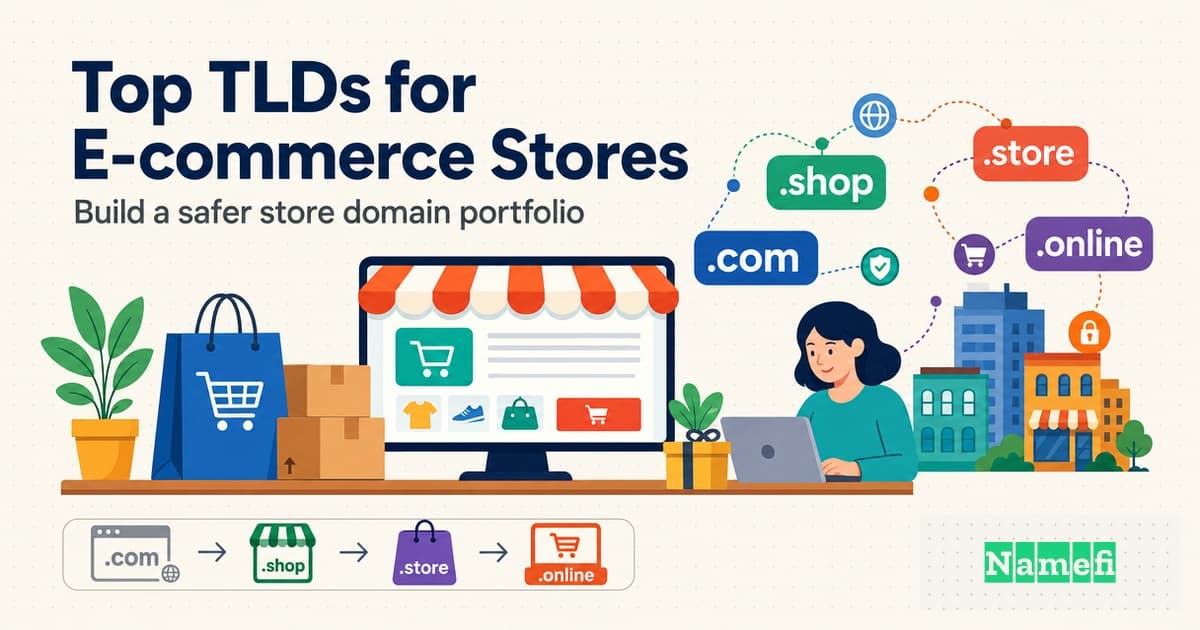
Top 10 TLDs You Should Secure for Your E-commerce Store
The top 10 TLDs to secure for your e-commerce store, from .com to .shop and .store, plus a defensive registration strategy to protect your retail brand.
tlddomains

- 7 min read
- By Fenwei Bian
Top 10 TLDs You Should Secure for Your Fashion Brand
A practical guide to the top 10 TLDs to secure for your fashion brand, covering brand protection, retail intent, and defensive domain registration strategy.
tlddomains
- 7 min read
- By Fenwei Bian
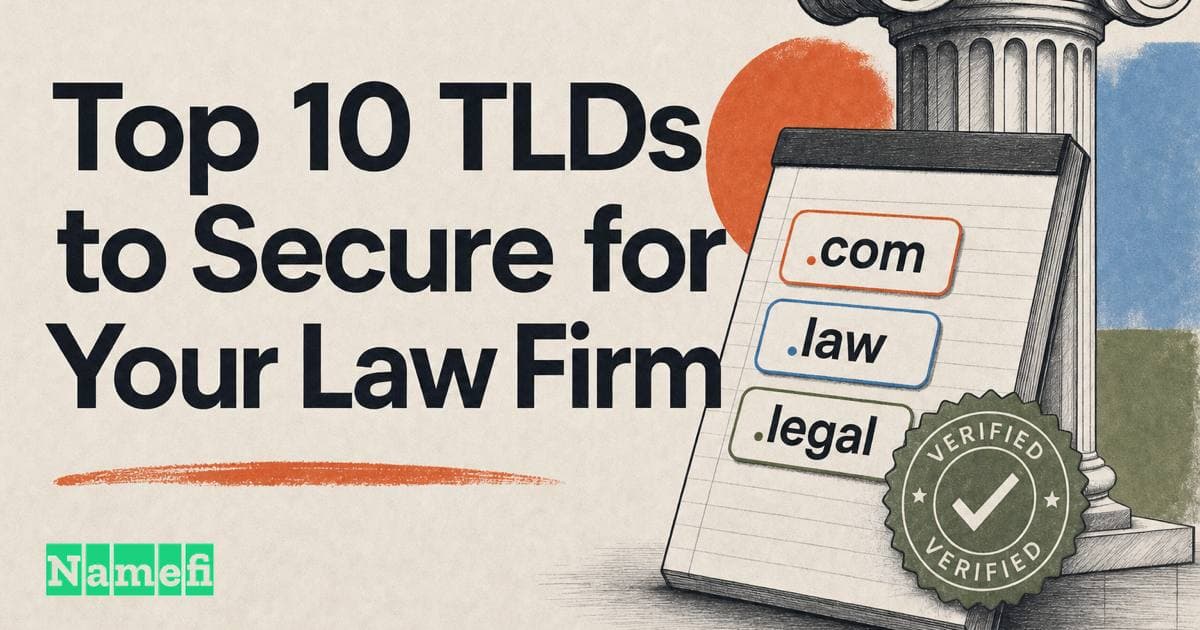
Top 10 TLDs You Should Secure for Your Law Firm
Ten TLDs a law firm can evaluate, including credential restrictions on .law and .abogado, current .esq policy, and a defensive-registration strategy that requires live eligibility checks.
tlddomains

- 7 min read
- By Aileen Wright
Top 10 TLDs You Should Secure as a Realtor
The top 10 TLDs every realtor should secure for brand protection, including .realtor eligibility rules, defensive registration tips, and where to register.
tlddomains
- 8 min read
- By Aileen Wright
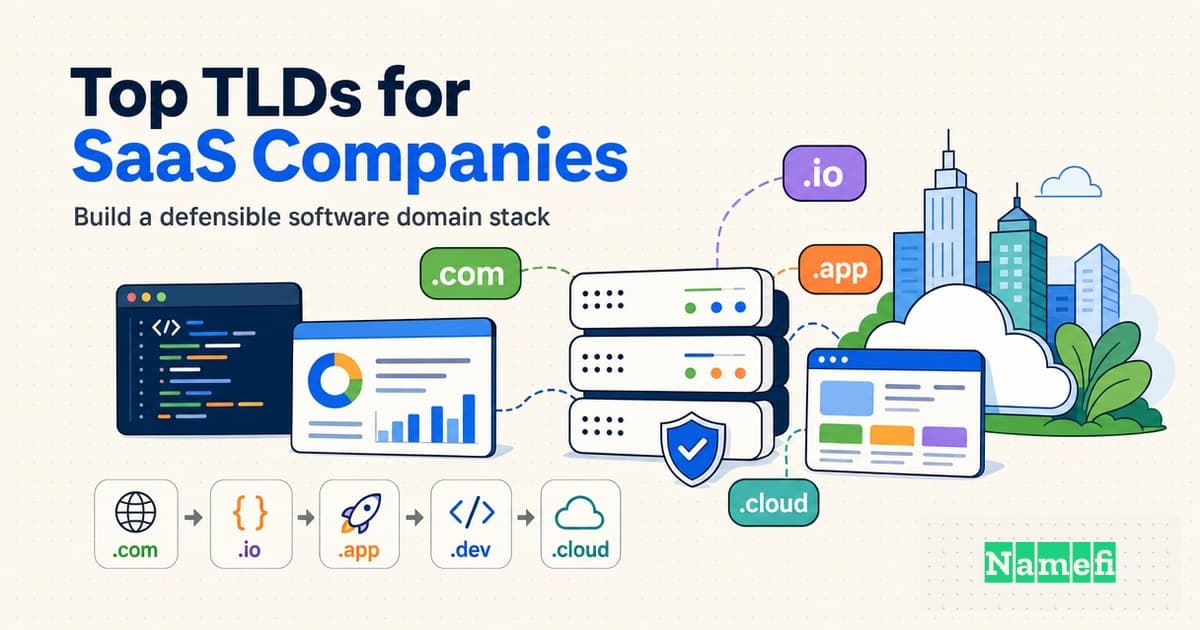
Top 10 TLDs You Should Secure for Your SaaS
The top 10 TLDs to secure for your SaaS — from .com and .io to .app and .ai — with defensive registration tips and authoritative registry facts.
tlddomains
- 8 min read
- By Fenwei Bian
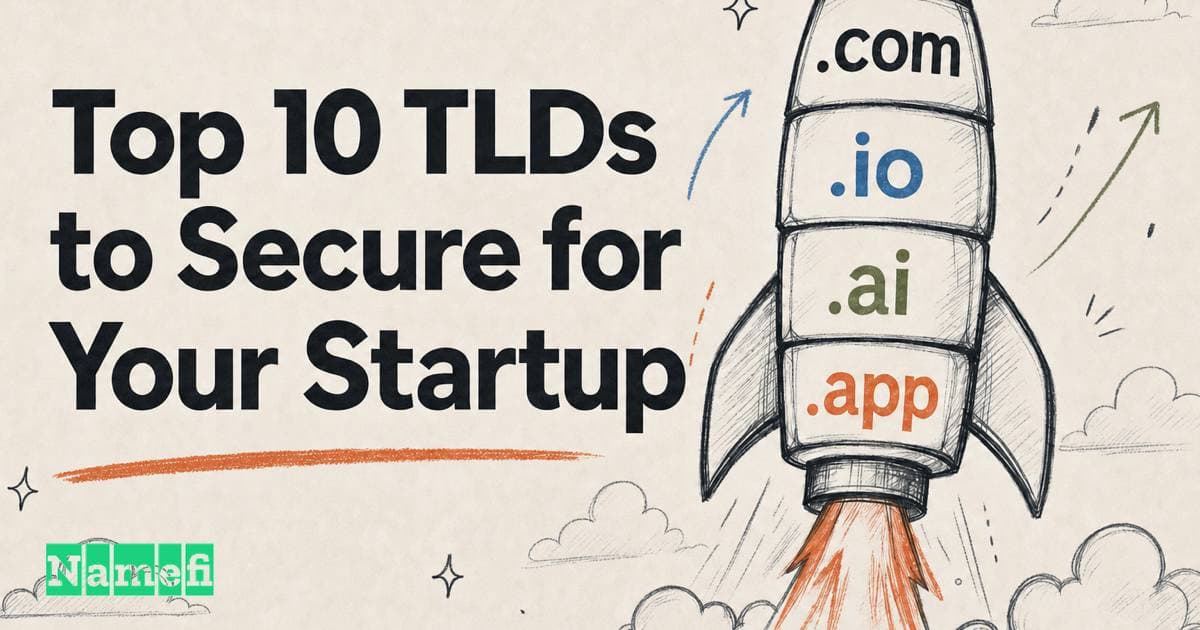
Top 10 TLDs to Evaluate for Your Startup
Evaluate ten TLDs for a startup, from .com to .ai, and build a budgeted defensive-registration plan without confusing exact-match coverage with typosquatting protection.
tlddomains

- 12 min read
- By Fenwei Bian
How to Name Your Project: A Founder's Field Guide
A practical, research-backed guide for founders naming a project, product, or company: clear it legally, make it easy to say, generate strong candidates, check it across cultures, and run the searches that matter before you commit.
brandingstartupsguidenamingdomains
- 9 min read
- By Fenwei Bian
.ai vs .io Domains: Meaning, Cost, and Which Fits Your Project
Compare .ai and .io domains by meaning, cost considerations, brand fit, and registry context before choosing an extension for your project.
guide
- 10 min read
- By Fenwei Bian
Domain Escrow Explained: How Safe Domain Transactions Work
A plain-English guide to escrow and domain escrow — what an escrow account is, how escrow works step by step in a domain sale, why it matters for avoiding fraud, traditional escrow services vs. the modern tokenized approach, and how smart contracts can replace escrow with atomic on-chain settlement.
guidedomainsdomain-investingdomain-flipping

- 12 min read
- By Fenwei Bian
From TeslaMotors.com to Tesla.com: The $11M Domain Upgrade That Took a Decade
How Tesla spent over a decade and a reported $11M to move from TeslaMotors.com to the exact-match Tesla.com, and why the domain upgrade arrived right before the company dropped "Motors" from its name.
domainsbrandingstartupsdomain-upgrades

- 13 min read
- By Aileen Wright
From TheFacebook to Facebook: Why the Name and Domain Changed
Explore why TheFacebook became Facebook, how the domain acquisition fit the rebrand, and what the move changed for the growing company.
domainsbrandingstartupsdomain-upgrades
- 10 min read
- By Fenwei Bian
Premium Web3 TLDs: A 2026 Guide to Tokenized DNS Domains
A 2026 guide to the ambiguous term "Web3 TLD," the difference between blockchain-native names and tokenized DNS domains, and how to evaluate extensions without assuming liquidity, lending support, or future value.
guide
- 13 min read
- By Aileen Wright
What Is a Top-Level Domain (TLD)? Types and Examples
Understand what a TLD is, where it appears in a domain name, and how generic, country-code, and branded extensions differ.
guide
- 12 min read
- By Aileen Wright
What Is UDRP? Domain Name Dispute Resolution Explained
UDRP explained for domain owners and investors: the three elements a complainant must prove, the process and timeline, outcomes, UDRP vs URS vs court, and how to respond.
guide
- 9 min read
- By Aileen Wright
Why Are .io Domains Expensive? Pricing and Renewal Explained
Learn what contributes to .io registration and renewal prices, how premium names differ, and what to compare across registrars.
guide
- 15 min read
- By Aileen Wright
How to Sell a Domain Name You Own: A Practical Checklist
A practical, seller-first checklist for pricing a domain, finding likely buyers, handling outreach, avoiding scams, and closing the transfer safely.
domainsguidedomain-investingoutbounddomain-flipping

- 8 min read
- By Aileen Wright
Namefi vs Doma/D3 vs 3DNS vs GBM: Choosing a Domain Tokenization Platform
An honest, side-by-side look at the major domain tokenization platforms — what each one is actually good at, where they overlap, where they don't, and how to pick the one that fits how you intend to use your domains.
comparison

- 7 min read
- By Fenwei Bian
DNS Still Works: Nameservers, Email, and DNSSEC on a Tokenized Domain
A practical look at how regular DNS — nameservers, A/AAAA, MX, TXT, DNSSEC, CAA — keeps working after you tokenize an ICANN domain. What changes, what doesn't, and where to point your existing DNS provider.
guide
- 5 min read
- By Fenwei Bian
Famous Domain Industry Media: News Sites, Sales Reports, and Podcasts Worth Following
A guide to the news outlets, sales-data sites, and podcasts that cover the domain name industry as journalism — DomainNameWire, DNJournal, TheDomains, NameBio, DomainSherpa, CircleID, and more.
domainsmedianewscommunitydomain-investing

- 5 min read
- By Fenwei Bian
Famous Domainer Blogs, Substacks, and Newsletters: Who to Read in 2026
A curated list of the individual domainers, brokers, and traders whose blogs, newsletters, and Substacks are worth reading in 2026 — what each one is known for, and how they fit together.
domainsdomain-investingblogsnewsletterscommunity

- 7 min read
- By Fenwei Bian
How to Tokenize Your .com: A Step-by-Step Guide (2026)
A practical walkthrough of Namefi's current import flow: EPP auth code, cart, checkout, registrar transfer, and automatic NFT minting.
guide

- 10 min read
- By Aileen Wright
From Listing to Settlement: How Tokenized Marketplaces Can Replace Escrow
How tokenized-domain marketplaces can settle payment and an NFT atomically, while registrar claims, record updates, fees, and platform-specific risks may remain.
guide
- 9 min read
- By Fenwei Bian
Recovering a Tokenized Domain After Wallet Loss: A Survival Guide
What actually happens if you lose access to the wallet that holds your tokenized domain — and the operational steps to reduce the chance of getting there in the first place. Backups, multisig, hardware wallets, social recovery, and the limits of what any platform can do.
guidesecurity

- 8 min read
- By Fenwei Bian
Tax and Accounting Questions for Tokenized Domains (Things to Discuss with Your Professional)
A non-advice, plain-language survey of the tax and accounting questions tokenized domain owners commonly ask — cost basis, sales, holding period, business vs personal, gifting, estates. Bring these questions to a real professional.
guide

- 9 min read
- By Aileen Wright
Use Cases for Tokenized Domains in 2026: Lending, Leasing, Fractional, AI Agents
A platform-neutral tour of what tokenized domains are actually being used for in 2026 — DeFi lending, leasing, fractional ownership, AI agent identity, and the use cases that haven't quite landed yet.
thesis

- 8 min read
- By Fenwei Bian
Tokenized Domain vs Web3 Domain (ENS, .crypto): What's the Difference?
A clear, practical comparison of tokenized ICANN domains (like a tokenized .com) and Web3-native names (like name.eth, name.crypto). When does each one work? Where do they overlap? Why do many people hold both?
comparison

- 5 min read
- By Aileen Wright
Top Domain Trader Forums in English: Where Domainers Actually Talk in 2026
A practical guide to active English-language domain-investing forums and other public channels in 2026, with dead forum listings removed.
domainscommunitydomain-investingforums
- 14 min read
- By Aileen Wright
What Are Tokenized Domains? Domain Tokenization Explained
Tokenized domains explained in plain language. Learn what a tokenized domain is, how to tokenize a domain, how domain tokenization works, and how tokenized domain ownership differs from traditional domains and Web3 names like ENS.
faq

- 8 min read
- By Fenwei Bian
Perfect vs Computational Zero-Knowledge: What the Distinction Actually Means
Zero-knowledge protocols can provide perfect, statistical, or computational privacy. This guide explains those definitions, why proof-system families do not have one universal flavor, and how privacy differs from soundness and post-quantum security.
cryptographyzero-knowledgezk-snarktheory

- 9 min read
- By Fenwei Bian
Domain Hijacking vs DNS Hijacking: How Attacks Happen
Understand how domain and DNS hijacking happen, where control can be lost, and which protections address the common attack paths.
securitydomainsregistrarincident-responsedomain-flipping

- 9 min read
- By Fenwei Bian
Do Multisig Wallets Actually Improve Security? A Threat-Model View
Multisignature wallets are widely treated as the default secure custody pattern in crypto, but the answer to "do they actually improve security?" depends entirely on the threat model. This post walks through what multisig defeats, what it does not, and where it can make things worse.
securitywalletsmultisigweb3key-management

- 11 min read
- By Aileen Wright
DNS over HTTPS vs Enterprise Split-Horizon DNS: A Standoff That Will Not Resolve Itself
DNS over HTTPS (DoH) protects user privacy by encrypting DNS queries inside HTTPS. Enterprise split-horizon DNS relies on the network being able to see those queries. The collision between the two is reshaping how corporate networks, browsers, and operating systems handle name resolution.
dnsdohenterprisesecuritynetworking
- 7 min read
- By Aileen Wright
ccTLD Market Share by Registration Volume: Who Actually Runs the National Namespace?
A look at which country-code top-level domains command the largest share of registrations worldwide, why the leaders differ from what most people expect, and what the volume numbers tell us about how the internet is actually used.
cctlddomainsmarket-analysisregistry
- 3 min read
- By Fenwei Bian
Introducing Route402 — an x402 facilitator router
A multi-tenant router that lets you integrate x402 once and route requests by policy and facilitator capability, without pushing routing logic into your app.
infrastructurepaymentsx402
- 2 min read
- By Fenwei Bian
Google Unveils ‘Universal Commerce Protocol’ to Power the Next Generation of AI Shopping Agents
UCP is an open-source commerce standard for connecting AI shopping surfaces with merchants and payment providers.
InfrastructureAI AgentsDigital Commerce
- 7 min read
- By Fenwei Bian
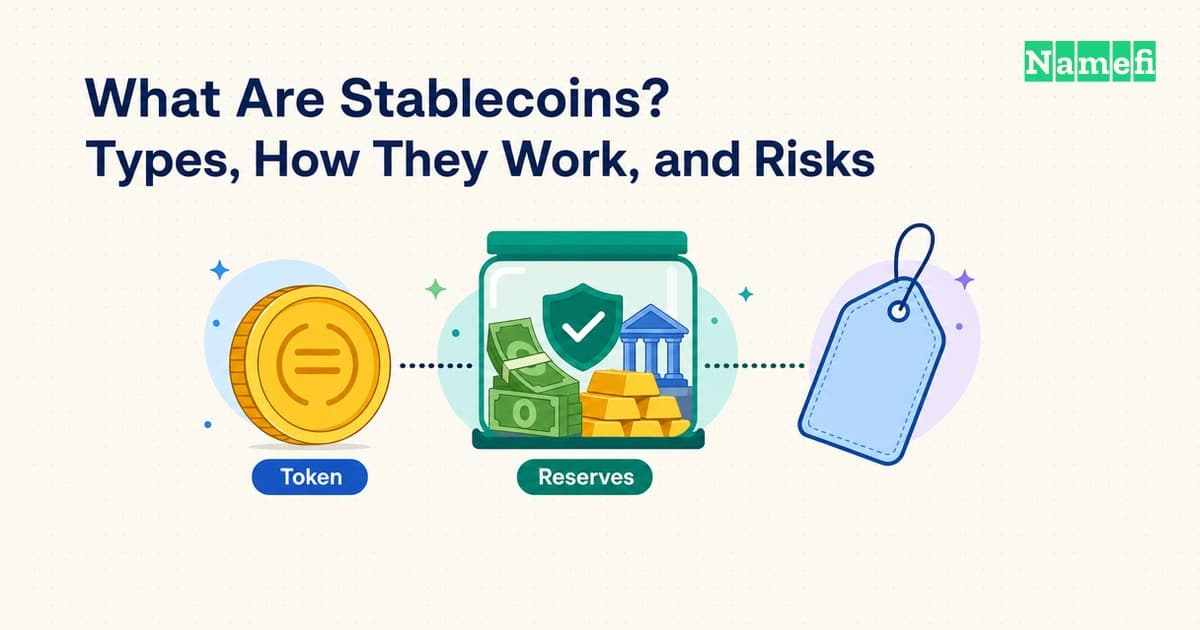
What Are Stablecoins? Types, How They Work, and Risks
Learn how stablecoins aim to track a reference asset, compare fiat-backed, crypto-backed, and algorithmic designs, and understand their risks.
web3cryptocurrencydefiblockchainfinance
- 5 min read
- By Fenwei Bian
Building for People, Not Wallets: Lessons on Usability from Henri Stern of Privy
A conversation-driven exploration of Henri Stern’s journey building Privy, focusing on usability, customer-led product development, and the shift from crypto complexity to human-centered design.
partnersnamefi space

- 6 min read
- By Aileen Wright
Behind the Scenes of the Oct 20, 2025 AWS Outage
A registrar/DNS‑operations perspective on the October 20, 2025 AWS incident, how DNS actually works, why this failure propagated so widely, and what resilient internet teams can do about it.
dnsawsresilienceincident-explainer
- 9 min read
- By Aileen Wright
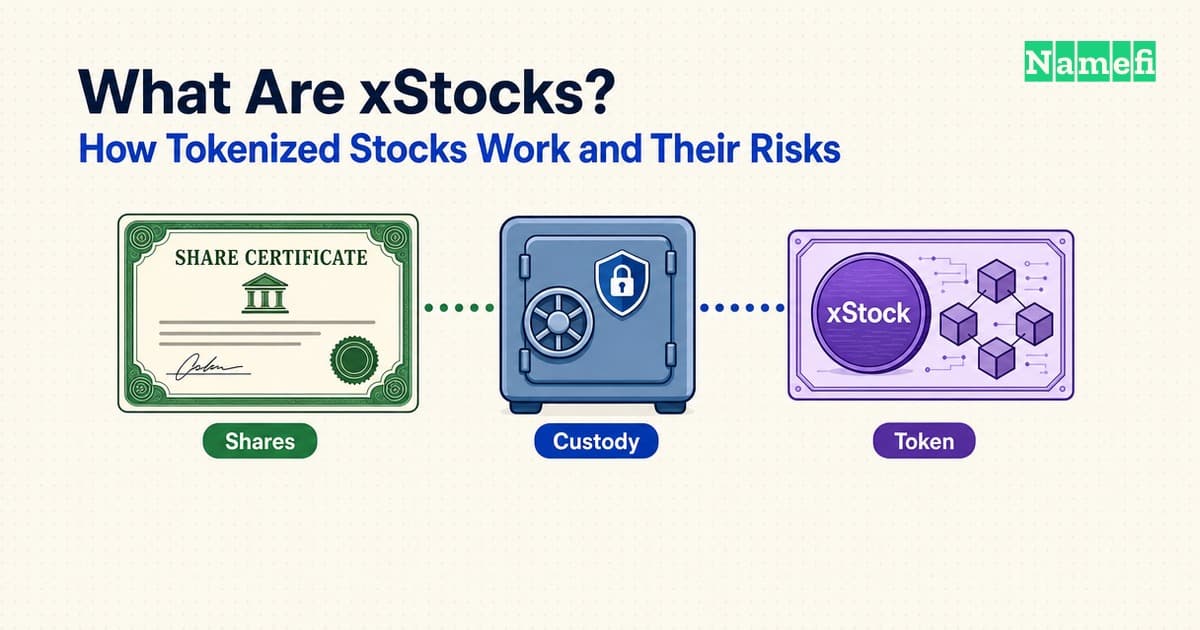
What Are xStocks? How Tokenized Stocks Work and Their Risks
Understand what xStocks are, how they work, how they differ from owning shares, and the custody, trading, and eligibility risks to check.
faqdomainstokenization
- 8 min read
- By Aileen Wright
Why Tokenize Domains On-Chain? Isn't That Redundant?
This article explains why traditional domains can add an on-chain token-control layer, including its interoperability benefits and the registration and legal limits that remain.
faq
- 7 min read
- By Fenwei Bian
Complete Domain Name Terminology Guide - Essential Terms for Domain Investors
Master domain investing with our comprehensive guide to essential domain terminology. From basic concepts to advanced trading strategies, learn the language of domain professionals.
faqdomains
- 4 min read
- By Fenwei Bian
What Is a Domain Name? Examples, Structure, and URLs
Learn what a domain name is, how its parts work, and how a domain differs from a full URL, with clear examples of websites and subdomains.
faq
- 5 min read
- By Victor Zhou
The Manifesto of Digital Trust
A vision statement of D3Serve — why digitizing trust, much like the digitization of information before it, promises a leap in productivity, loss-less precision, lower cost, and automation.
visiondigital-trust